Shingles Vaccine Linked to Reduced Dementia Risk and Progression
Summary:
The video discusses a serendipitous discovery in medicine: the shingles vaccine may significantly reduce the risk and slow the progression of dementia.
- The varicella zoster virus (VZV), which causes chickenpox and later shingles, is a suspect in dementia pathology as it stimulates the production of amyloid plaques.
- Observational studies initially suggested a link between the shingles vaccine and lower dementia risk.
- A "natural experiment" in Wales, where a birthdate cutoff determined vaccine eligibility, provided stronger evidence.
- This study found that being eligible for the shingles vaccine led to an 8.5% relative risk reduction in new dementia diagnoses over seven years, with those actually vaccinated seeing a nearly 20% reduction.
- Further analysis showed the vaccine also reduced new diagnoses of mild cognitive impairment and decreased the death rate due to dementia by almost 30% in individuals already diagnosed.
- The newer recombinant shingles vaccine has also been associated with a lower risk of dementia, addressing concerns about vaccine type.
- Other strategies to reduce dementia risk include addressing hearing loss and potentially using supplements like multivitamins, omega-3s, creatine, and TMG.

A Serendipitous Breakthrough for Dementia [ 00:00:40 ]
Serendipitous Moments in Medicine [0:00]
- Medical breakthroughs often come from unexpected areas of research.
- A similar serendipitous breakthrough appears to have occurred for dementia.
A Serendipitous Breakthrough for Dementia [ 00:00:40 ] - Recent research found a surprising protective effect from a vaccine seemingly unrelated to dementia.

Worldwide, ten million new cases of dementia occur each year and there are no interventions that prevent dementia. [ 00:01:02 ]
- Recent research found a surprising protective effect from a vaccine seemingly unrelated to dementia.


The Varicella Zoster Virus and Dementia [1:35]
- Scientists are increasingly recognizing viruses as potential contributors to dementia.
- Experiments in mice showed viruses stimulate a protein in the brain to fight infection.
- This same protein clumps to form amyloid plaques, a key feature of Alzheimer's disease, suggesting the brain's defenses can backfire and accelerate dementia.

Growing scientific recognition that viruses may play a role in the pathogenesis of dementia. [ 00:01:19 ]
- This same protein clumps to form amyloid plaques, a key feature of Alzheimer's disease, suggesting the brain's defenses can backfire and accelerate dementia.
- Experiments in mice showed viruses stimulate a protein in the brain to fight infection.
- The varicella zoster virus (VZV) is a chief suspect.
- VZV causes chickenpox in childhood and can reemerge later in life as painful shingles.
- Even asymptomatic reawakenings of VZV can act as a chronic stressor to the immune system.
- This drives brain inflammation and interferes with immune functioning, contributing to dementia.

Clinical and subclinical reactivations of the neurotropic herpesvirus may constitute a chronic immune stressor. [ 00:02:10 ]
- This drives brain inflammation and interferes with immune functioning, contributing to dementia.
- VZV is linked to both Alzheimer's-type brain changes (amyloid plaques) and damage associated with vascular dementia (problems in brain blood vessels like high blood pressure, plaque buildup, and strokes).
The Shingles Vaccine and Dementia [2:34]
- The question arose: could preventing VZV flare-ups (shingles) also prevent or slow dementia?
- Observational studies initially suggested a positive answer.
- One study analyzing health records from two large US databases found a 31-35% risk reduction in dementia for those who received the shingles vaccine over an 8-year follow-up.

Shingles vaccination was significantly associated with lower dementia risk. [ 00:03:05 ] - However, observational studies can suffer from confounding factors (e.g., healthier individuals being more likely to get vaccinated), making it difficult to establish causality.

Correlation does not equal causation, shown by autism diagnoses versus organic food sales. [ 00:03:32 ] - Randomized controlled trials are the gold standard for causality, but an ethical dilemma prevents direct trials for the shingles vaccine against dementia, as it's already a recommended treatment for shingles due to proven benefits.

Why Strong Evidence Requires Randomization [ 00:03:42 ] 
Overall vaccine efficacy against herpes zoster was 97.2% [ 00:04:03 ]
- One study analyzing health records from two large US databases found a 31-35% risk reduction in dementia for those who received the shingles vaccine over an 8-year follow-up.
The Wales Dementia Study [4:13]
- Researchers in Wales identified a unique "natural experiment" due to a policy decision in 2013 regarding shingles vaccine eligibility.

When Policy Set the Stage for Discovery in Wales [ 00:04:21 ] - The Welsh healthcare system made the shingles vaccine available to those born on or after September 2, 1933, but not those born before this date.

Eligibility for the herpes zoster vaccine in Wales was determined based on the exact date of birth of individuals. [ 00:04:59 ] - This created two groups of individuals, essentially the same age (around 80 in 2013), with one group eligible for the vaccine and the other not, closely resembling a randomized controlled trial.
- The Welsh healthcare system made the shingles vaccine available to those born on or after September 2, 1933, but not those born before this date.
- The study aimed to compare dementia rates between these two groups.

A Crucial Test Before Any Conclusions: vaccine use diverging between groups. [ 00:05:49 ] - For those born before the cutoff, the vaccine uptake was 0.1%.
- For those born after the cutoff (eligible), vaccine uptake was over 47%.
- Impact on Dementia Incidence:
- Comparing the groups as a whole, those eligible for the vaccine had a 1.3% lower absolute risk and an 8.5% lower relative risk of a new dementia diagnosis over a 7-year follow-up.

Being eligible for the zoster vaccine caused an 8.5% relative reduction in new dementia diagnosis over seven years. [ 00:06:22 ] - Using statistical techniques to account for the fact that only about half the eligible group was vaccinated, researchers estimated that for those who actually received the vaccine, there was a 3.5% lower absolute risk reduction and a nearly 20% relative risk reduction in dementia diagnoses.
- This 3.5% absolute risk reduction is a major finding in clinical research, translating to thousands of prevented dementia cases at a population level.
- The benefit is also likely to grow over time beyond the 7-year follow-up.
- Comparing the groups as a whole, those eligible for the vaccine had a 1.3% lower absolute risk and an 8.5% lower relative risk of a new dementia diagnosis over a 7-year follow-up.
The Impact of the Shingles Vaccine [6:33]
- The protective effects extended beyond just preventing new dementia diagnoses.
- The vaccine also appeared to reduce new diagnoses of mild cognitive impairment (MCI), an earlier transitional stage to dementia.
- For individuals already diagnosed with dementia before the vaccine program, receiving the vaccine was associated with a nearly 30 percentage point reduction in the death rate due to dementia over a 9-year follow-up.
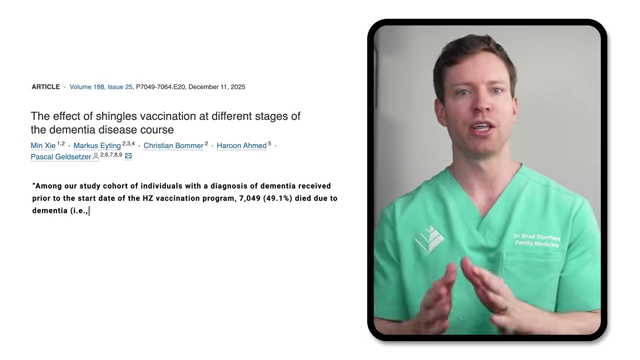
Among individuals with a diagnosis of dementia prior to the start of the vaccination program, 49.1% died due to dementia. [ 00:08:36 ] - While confidence intervals were wide, indicating lower certainty about the exact magnitude, the point estimates suggest a significant effect.
- The findings primarily pertain to individuals aged 79-80 at baseline, and further research is needed for younger age groups.
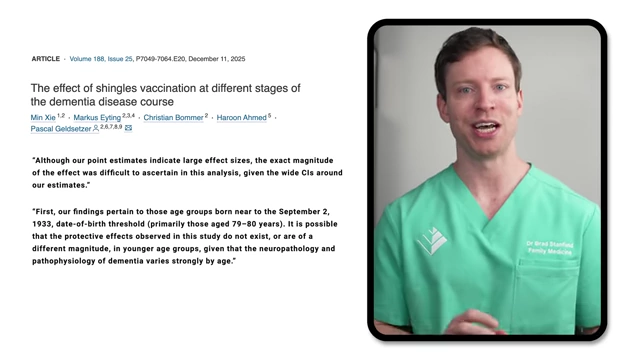
Point estimates indicate large effect sizes, but the exact magnitude was difficult to ascertain, with wide confidence intervals. [ 00:09:14 ]
- The shingles vaccine is a readily available, safe, and effective intervention with benefits that vastly outweigh the risks.
Addressing Potential Objections [7:09]
- The researchers addressed potential confounding factors to strengthen their findings:
- They checked if the eligible group was generally more engaged in preventative care, finding no significant difference in other preventive behaviors.
- They confirmed that no other significant health intervention used the same arbitrary birthdate cutoff.

No prevalence of other preventive behaviors or other intervention used the identical date of birth as an eligibility cutoff. [ 00:07:33 ] - Unlike some observational studies, the two groups did not differ in other common health problems, suggesting the observed divergence was specific to dementia rates.
The New Shingles Vaccine [9:33]
- The original vaccine used in the Wales study was a live-attenuated virus vaccine (Zostavax), which is being replaced by a newer recombinant vaccine (Shingrix).
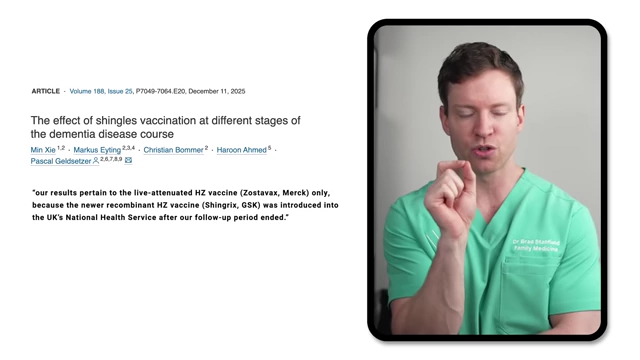
Results pertain to the live-attenuated HZ vaccine (Zostavax), as the newer recombinant HZ vaccine (Shingrix) was introduced after the follow-up period ended. [ 00:09:55 ] - A concern was whether the newer vaccine would be as effective, as some evidence suggests broader health benefits are stronger with live-attenuated vaccines.
- A study in the US investigated this during a rapid shift from the old to the new vaccine after 2017.
- The results were reassuring: the newer recombinant vaccine was associated with an even lower risk of dementia.

Graph showing the rapid shift in shingles vaccination from live vaccine to recombinant vaccine in the US after 2017. [ 00:10:12 ] - This suggests the new vaccine maintains or improves the protective effect against dementia.
- The results were reassuring: the newer recombinant vaccine was associated with an even lower risk of dementia.
Other Potential Strategies to Reduce Dementia Risk [10:24]
- Beyond vaccination, other recent developments offer strategies to reduce dementia risk:
- Lithium Orotate: Exciting evidence suggests this specific form of lithium could slow Alzheimer's development.
- A mouse study showed it blocked key hallmarks of disease progression.

When Lithium Orotate was administered to mice, it almost completely prevented amyloid-beta plaque deposition and phospho-tau accumulation. [ 00:10:40 ]
- A mouse study showed it blocked key hallmarks of disease progression.
- Addressing Hearing Loss: This intervention also yields significant benefits.
- A systematic review found that people with hearing loss who used hearing aids had a significantly lower risk of cognitive decline and dementia compared to those who did not.

Systematic review and meta-analysis reported that people with hearing loss who used hearing aids had a significantly lower risk of cognitive decline and dementia. [ 00:10:52 ]
- A systematic review found that people with hearing loss who used hearing aids had a significantly lower risk of cognitive decline and dementia compared to those who did not.
- Lithium Orotate: Exciting evidence suggests this specific form of lithium could slow Alzheimer's development.
Supplements That May Lower Dementia Risk [11:02]
- Research suggests certain supplements may protect the brain and lower dementia risk:
- Multivitamin and Mineral Supplement:
- A large trial over two years showed relative improvements in overall cognition scores and memory.
- The effect on cognition was equivalent to reducing the speed of brain aging by two years.

Daily multivitamin-mineral supplementation leads to significantly more favorable 2-year change in episodic memory, reducing cognitive aging by 2 years. [ 00:11:19 ]
- Omega-3 Fatty Acids:
- Naturally found in fatty fish, these are critical for brain health.
- A 2019 study found omega-3 supplements improved brain performance by 7.1% and reduced dementia symptoms by 22.3%.

Omega-3 fatty acid supplementation improved cognitive performance by 7.1% and reduced dementia symptoms by 22.3%. [ 00:11:47 ] - Adequate B vitamins were crucial for these benefits, further supporting multivitamin use.
- Creatine:
- Known for boosting exercise performance, creatine is also abundant in the brain and vital for energy production.

Creatine Is Not Just for Muscle [ 00:12:06 ] - Research suggests creatine supplements can increase brain creatine levels, supporting memory and thinking.
- A 2022 meta-analysis showed improved memory performance, particularly in older adults.

Creatine supplementation enhanced measures of memory performance, especially in older adults. [ 00:12:23 ]
- Known for boosting exercise performance, creatine is also abundant in the brain and vital for energy production.
- TMG (Trimethylglycine):
- TMG is linked to Alzheimer's disease through homocysteine levels.
- High levels of homocysteine (an amino acid) are strongly linked to Alzheimer's disease.
- TMG lowers homocysteine, suggesting it may lower a key risk factor for Alzheimer's.
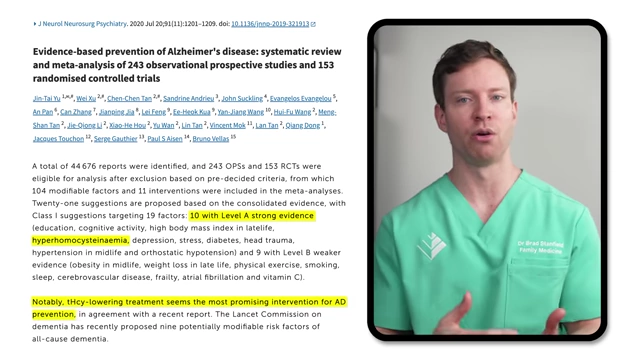
High levels of hyperhomocysteinemia is a risk factor for Alzheimer's disease; homocysteine-lowering treatment seems promising. [ 00:12:53 ]
- Multivitamin and Mineral Supplement:
Conclusions & Key Takeaways [13:12]
- The findings regarding the shingles vaccine offer a promising, simple, and cheap intervention to prevent and treat dementia.
- While more research is ongoing, the evidence is compelling.