How to Use ChatGPT to Learn French Faster and More Effectively
Summary:
This video discusses the paradox of AI in language learning, where technology makes it seemingly unnecessary to learn languages, yet also makes it easier. The speaker argues that learning a language remains valuable for cognitive stimulation and cultural understanding, rather than just practical necessity. He then outlines four key ways to leverage ChatGPT for French language acquisition:
- Getting to Know Your Level and Goals: Chat GPT adapts to your specific needs, level, and objectives. You can initiate a conversation by stating your current French level (e.g., A2) and asking to converse in French while receiving corrections.
- Building a Customized Learning Plan: Although not a fan of rigid plans, the speaker demonstrates how to ask Chat GPT to create a detailed study plan (e.g., reaching B2 in one year by studying 15 minutes daily). He emphasizes using this as a flexible recommendation, adapting it to individual learning styles.
- Practicing Grammar and Vocabulary Daily: ChatGPT can send daily grammar rules and vocabulary words with example sentences, tailored to your target proficiency level. The speaker advises learning vocabulary in context (sentences) rather than isolated lists and mentions using tools like Migaku or Anki for flashcards.
- Content Adaptation and Conversation Practice: ChatGPT excels at creating adapted content (e.g., a 1000-word text on French football history, using the 2000 most frequent French words, at your level). It can also facilitate direct conversation practice, correcting mistakes and providing transcripts, although the voice might be robotic with a noticeable accent.
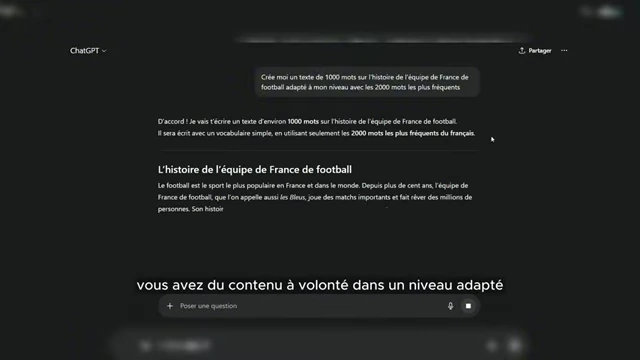
ChatGPT generating customized content based on user prompts [ 00:09:01 ]
The Paradox of AI in Language Learning [00:00:00]
The speaker highlights a significant paradox in language learning in the age of artificial intelligence.
- Uselessness vs. Ease: While AI makes it seem unnecessary to learn languages due to automatic translation and dubbing, it simultaneously makes language learning easier than ever before.
- Ubiquitous Translation: Examples include YouTube videos being translated and dubbed into various languages (e.g., watching "Mr. Beast" in French), and Google Translate's camera feature for instant text translation in foreign alphabets (e.g., Japanese, Chinese).
- Automation of Knowledge: AI can provide summaries of vast amounts of information (e.g., French history) in seconds, reducing the perceived need to retain such knowledge manually.
The Enduring Value of Language Learning [00:01:34]
Despite AI's capabilities, the speaker asserts that learning a language remains valuable for intrinsic reasons.
- Intrinsic Benefits:
- Interest and Fun: Learning a language is inherently interesting, enjoyable, and stimulating.
- Cognitive Development: It exercises memory, brain function, and modifies one's way of thinking.
- Cultural Connection: It opens doors to other cultures and broader perspectives.
- Beyond Practical Constraints:
- Skill Valuation: While skills like speaking English are currently valued in professional contexts (e.g., working internationally), this practical value may diminish as AI translation improves.
- Analogy to Physical Activities: The speaker draws a parallel to activities like rock climbing or running marathons. Even though technology offers easier alternatives (helicopters, cars), people still engage in these activities for personal fulfillment and challenge, not just necessity.
- Core Motivation: Learning a language should stem from interest and personal growth, not solely from external constraints or job market demands.
How to Leverage ChatGPT for Language Learning [00:03:31]
The video then shifts to practical applications of ChatGPT, emphasizing that it is a tool to aid learning, not a replacement for effort.
- Key Principle: ChatGPT will not make you bilingual; consistent daily habit (15-60 minutes) is crucial. It is a tool to facilitate learning, not to do the learning for you.
- 1. Getting to Know You (Personalization) [00:04:12]
- Adaptive Learning: ChatGPT adapts to your needs, language level, and objectives.
- Weakness Identification: As you communicate in the target language, ChatGPT identifies your weaknesses and helps you improve them.
Identifying weaknesses for personalized learning [ 00:04:18 ] - Initial Prompt Example: "I am A2 in French. To improve, can we speak in French, and you correct my mistakes if necessary?"
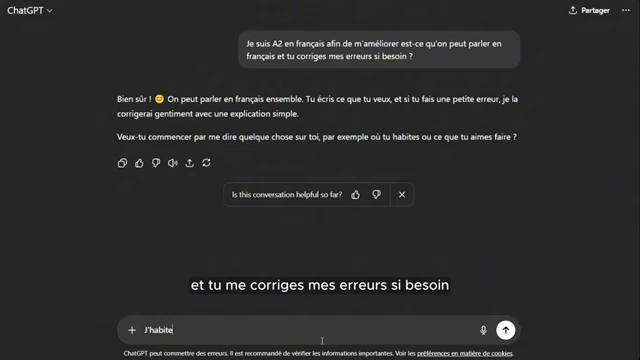
Initial ChatGPT prompt to start a French conversation and get corrections [ 00:05:01 ] - Benefits of Conversation History: All interactions and mistakes are remembered, allowing ChatGPT to better understand and target your specific areas for improvement.
- 2. Building a Customized Learning Plan [00:05:24]
- Goal-Oriented Planning: You can ask ChatGPT to create a detailed study plan (e.g., "I am A2 level and want to be B2 in a year by working 15 minutes a day; make me a detailed plan").
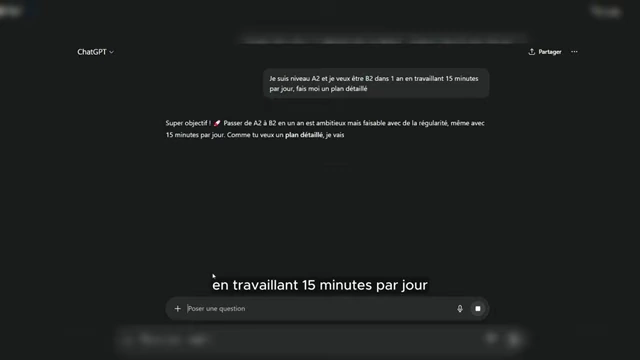
Requesting a customized French learning plan from ChatGPT [ 00:05:38 ] - Caution on Plan Adherence: The speaker advises treating these plans as recommendations, not rigid rules, as learning effectiveness varies by individual.
- Example of Imbalance: ChatGPT might suggest 3 months of listening comprehension followed by 3 months of reading, which could be unbalanced and not align with personal preferences.
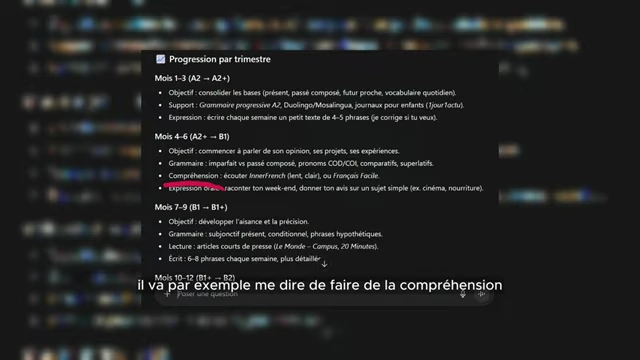
A sample quarterly progression plan generated by ChatGPT [ 00:06:19 ]
- Example of Imbalance: ChatGPT might suggest 3 months of listening comprehension followed by 3 months of reading, which could be unbalanced and not align with personal preferences.
- Focus on Habits, Not Just Goals: Success comes from consistent habits rather than merely setting objectives.
- Goal-Oriented Planning: You can ask ChatGPT to create a detailed study plan (e.g., "I am A2 level and want to be B2 in a year by working 15 minutes a day; make me a detailed plan").
- 3. Practicing Grammar and Vocabulary Daily [00:06:51]
- Daily Drills: Request daily grammar rules and vocabulary words with example sentences, tailored to your target proficiency level (e.g., JLPT N2 for Japanese).
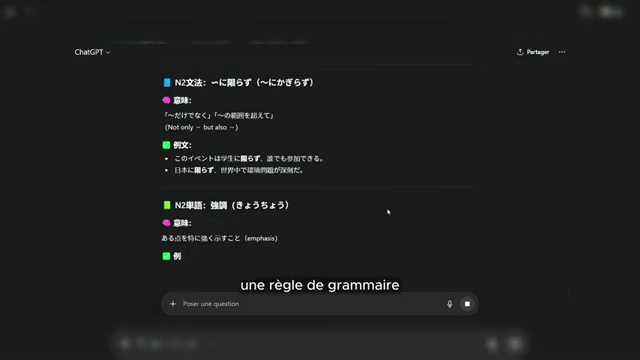
Daily Japanese grammar rule and vocabulary word with example sentences provided by ChatGPT [ 00:07:06 ] - Vocabulary Best Practice: Always learn vocabulary in full sentences, not isolated lists, for better retention and contextual understanding.
- Integrating with SRS: Convert ChatGPT-provided content into flashcards using tools like Migaku or Anki for spaced repetition.
- Daily Drills: Request daily grammar rules and vocabulary words with example sentences, tailored to your target proficiency level (e.g., JLPT N2 for Japanese).
- 4. Content Adaptation [00:07:48]
- Ideal Content Creation: ChatGPT can generate content that is both interesting and slightly above your current language level, promoting effective learning.
- Frequency-Based Vocabulary: Leverage the "Pareto law" of languages (80% of communication uses 20% of words) by asking ChatGPT to create texts using the most frequent words.
- Example Prompt: "Create me a 1000-word text on the history of the French football team, adapted to my level, using the 2000 most frequent words in French."
ChatGPT generating a customized text on French football history using frequent words [ 00:09:01 ]
- Example Prompt: "Create me a 1000-word text on the history of the French football team, adapted to my level, using the 2000 most frequent words in French."
- Automated Anki Cards: Content generated can be used to create Anki cards, with potential for automation.
- 5. Conversation Practice [00:09:14]
- Direct Spoken Interaction: ChatGPT allows for direct spoken conversations in the target language, providing corrections and practice.
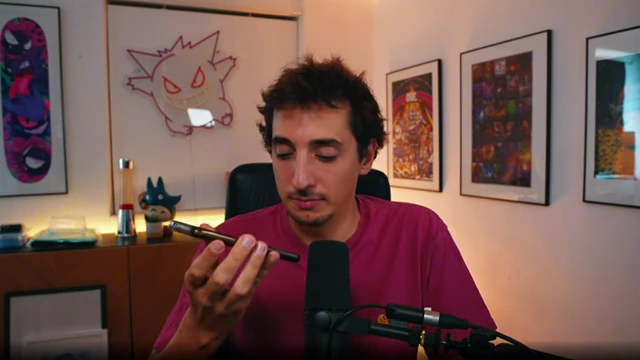
Demonstrating spoken conversation practice with ChatGPT on a mobile device [ 00:10:02 ] - Benefits: Convenient for practicing conversation anytime on any subject. Provides transcripts and allows re-listening to messages.
- Limitations: The voice can be robotic and may have an accent (e.g., American accent in French, or in Japanese), which is not ideal for natural pronunciation practice.
- Direct Spoken Interaction: ChatGPT allows for direct spoken conversations in the target language, providing corrections and practice.
Conclusion [00:11:42]
- Reiteration that ChatGPT is a powerful learning tool, but personal effort and consistent daily practice are essential for progress.