5 Simple Rules to Get Ahead and Achieve Success
This video presents five key rules to achieve success and get ahead in life, emphasizing that it's not about being inherently smart or talented, but about consistent effort and mindset.
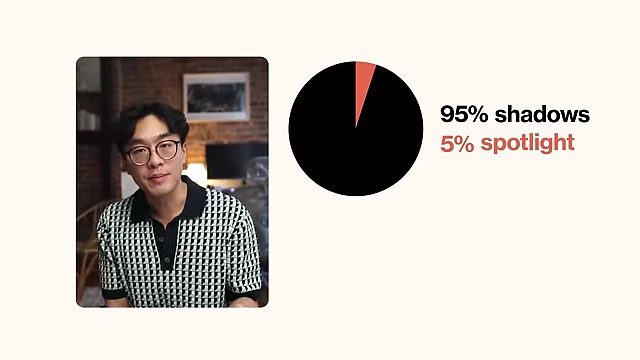
- The 95/5 Rule: Focus on the mundane, consistent "shadow" work (95%) rather than just the visible "spotlight" (5%) of success.
- Use Discomfort as Motivation: Leverage the pain of staying stagnant to fuel change and avoid future regret.
- The Pygmalion Effect: Recognize that expectations shape performance; cultivate positive beliefs about your capabilities and opportunities.
- The 1:2 Principle (1 in, 2 out): Optimize your time by calculating your hourly rate and outsourcing tasks cheaper than your time, freeing up valuable time for impactful work.
- Move from Low to High Accountability: Transition from easily replaceable, entry-level tasks to positions requiring broad, multidisciplinary "T-shaped" skills that solve complex problems and provide unique value.
Start Here [00:00]
The speaker shares his journey from working in a supermarket to achieving financial success in his twenties, highlighting that success isn't about intelligence, talent, or being born rich, but rather hyper-awareness and implementing five key rules.
The 95/5 Rule [00:16]
This rule emphasizes that the visible "spotlight" of success (5%) is built upon the consistent, often mundane work done "in the shadows" (95%).
- Most perceive success through social media's glamorous portrayal (fancy trips, luxurious events).
- True success is found in consistently tackling tasks that are often avoided.
- Kobe Bryant Example:
- Kobe, an elite player, arrived at the gym at 4 AM for 45 minutes of intense basic footwork and drills before his scheduled trainer session.
- When asked why he did basic drills, he responded that his excellence came from never getting bored with the basics.
- Application:
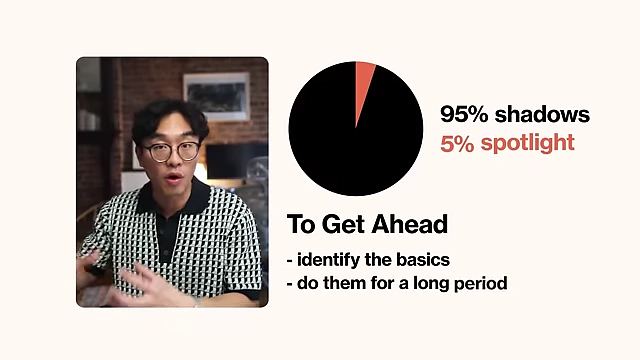
To get ahead, identify the basics and do them consistently over a long period. [ 00:01:25 ] - Identify the fundamental, often boring, tasks related to your goals.
- Commit to doing them consistently over a long period.
- Simplicity is key: Complex plans are harder to stick with.

Basics are often boring and not fun, making them challenging despite their simplicity. [ 00:01:34 ]
Use Discomfort [02:08]
Discomfort can be a powerful motivator for change and progress.
- Tony Robbins' Principle:
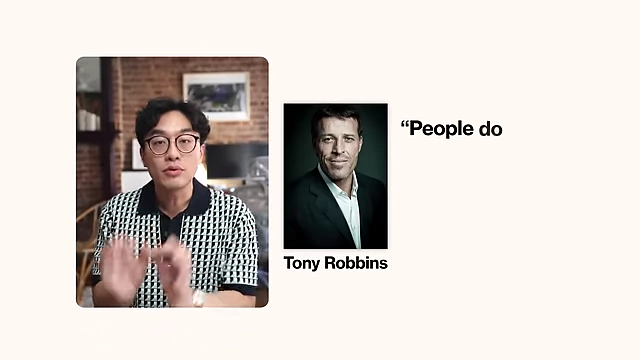
Tony Robbins' principle states that people only change when the pain of staying the same becomes greater than the pain of change. [ 00:02:15 ] - People only change when the pain of staying the same becomes greater than the pain of change.
- Speaker's Personal Story:
- After college, he secured a "perfect" Wall Street job with good benefits and salary, making his parents proud.
- Six months in, he felt suffocated and would delay going to work.
- The breaking point was a five-year growth trajectory meeting with his manager, where he realized he needed a change.
- He planned to quit and start his own business, even declining a 30% raise.
- The initial seven months of his business were very challenging, but the fear of "what if" (regret at 93) was more powerful than the fear of failing.
- Actionable Takeaway:
- Reflect on where you'll be in a year if you keep procrastinating; use that discomfort as fuel to act now and avoid future regret.
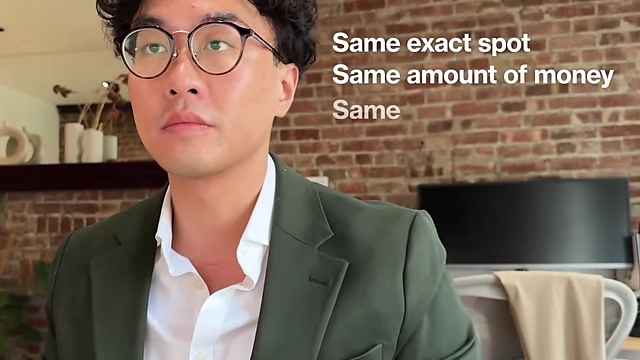
If you keep procrastinating, you'll be in the same exact spot with the same amount of money, daily routine, and excuses, while others make progress. [ 00:04:07 ]
- Reflect on where you'll be in a year if you keep procrastinating; use that discomfort as fuel to act now and avoid future regret.
The Pygmalion Effect [04:28]
This effect states that people tend to perform in accordance with their expectations.
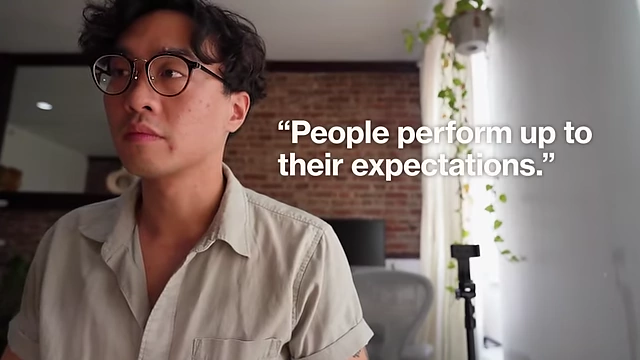
- Founder Friend's Example:
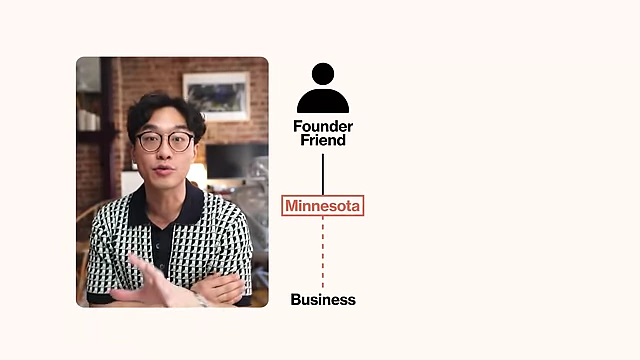
A founder friend from a tiny Minnesota town delayed starting her business because she believed success was only for those in big cities. [ 00:04:47 ] - A friend delayed starting her business until age 48 because she came from a tiny Minnesota town and believed success was only for those in big cities.
- She found "proof" that she couldn't succeed in her location.

Her previous mindset sought "proof that she couldn't succeed" in her location. [ 00:05:17 ] - Her perspective shifted after meeting a 7-figure software business founder from an even smaller town.
- Once she stopped looking for reasons she couldn't succeed and started looking for reasons she could, her jewelry business soon crossed $1 million in sales.
- Confirmation Bias:

Our brains are good at finding information that fits our narratives and beliefs, while ignoring contradictory evidence. [ 00:05:34 ] - Our brains actively seek information that confirms our existing beliefs and narratives, while ignoring contradictory evidence.

This diagram illustrates how an initial belief that someone is out to get you can lead to a cold interaction, confirming your original suspicion. [ 00:05:48 ]
- Our brains actively seek information that confirms our existing beliefs and narratives, while ignoring contradictory evidence.
- Application:
- If you believe in abundant opportunity and your own potential for success, your brain will work to prove that belief.
- Intentionally direct your thoughts towards empowering beliefs that foster progress.
The 1:2 Principle (1 in, 2 out) [06:37]
This principle focuses on optimizing time by outsourcing tasks that are less valuable than your hourly rate.
- Speaker's Past Mistakes: He used to spend days learning to build websites, design logos, or file taxes to save money, not realizing he was sacrificing his most valuable resource: time.
- "The Almanac of Naval Ravikant" Concept:
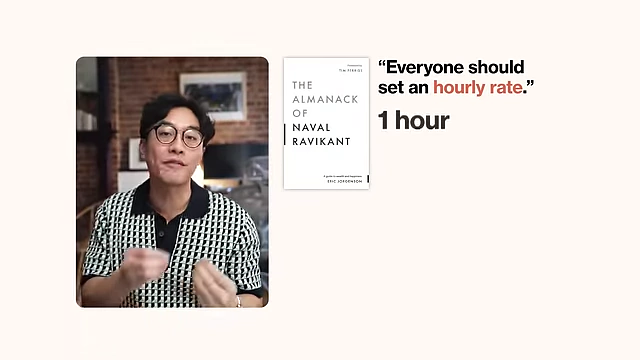
The book "The Almanac of Naval Ravikant" suggests that everyone should set an hourly rate for their time. [ 00:07:25 ] - Calculate your personal hourly rate.
- Refuse to perform tasks that can be outsourced for less than this rate.
- Example Calculation:
- Annual income: $100,000
- Work hours per year: ~2,000 (40 hours/week)
- Hourly rate: $50
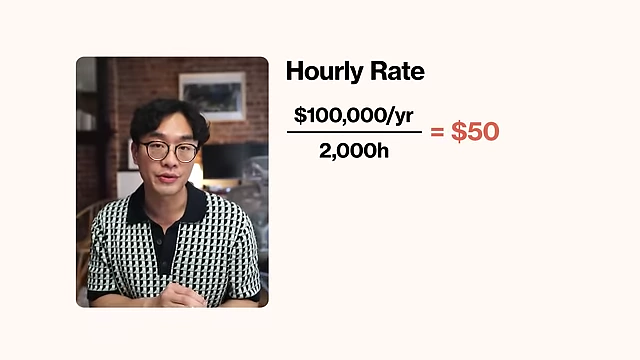
To calculate your hourly rate, divide your annual income ($100,000/yr) by your approximate working hours per year (2,000h), resulting in $50/hour. [ 00:08:13 ] - If making PowerPoint slides takes 5 hours (costing you $250 of your time), outsource it if a freelancer or AI can do it for less.
- Modern Outsourcing: Beyond hiring people, leverage AI tools (e.g., Tana for notes/tasks, Grammarly for writing, Claude for ideas) to automate or streamline less valuable tasks.

ChatGPT can be used to write emails and other tasks, automating less valuable activities. [ 00:07:44 ] 
Tana can be used for notes, tasks, and transcribing meetings. [ 00:08:50 ] 
Grammarly helps fix grammar and improve writing. [ 00:08:53 ] 
Claude can assist with generating ideas and creative content. [ 00:08:57 ] - Goal: Free up time to focus on high-impact activities like developing business strategy or working on more valuable projects.

Free up time to focus on more valuable activities like developing business strategy or working on impactful projects. [ 00:08:43 ]
Low/High Accountability [09:08]
To get ahead, shift from low-accountability positions to high-accountability ones.
- Low Accountability Jobs:
- Examples: Entry-level data entry.
- Characteristics: Tasks that many people can do, making workers easily replaceable; stakes are low for the employer.
- Result: Limited potential for significant success or wealth.
- High Accountability Positions:
- Defined by providing unique, impactful value that others cannot easily replicate.
- Employers value individuals who can solve complex problems.
- The Hybrid Job Economy (Study Insight):

A study on The Hybrid Job Economy highlights the demand for complex, multi-disciplinary jobs, which they call "hybrid" roles, and their increasing value. [ 00:10:33 ] - High-paying jobs of the future are complex, multi-disciplinary, and "hybrid."
- These roles require a broad set of skills from different fields (e.g., data science, security analysis, product management).
- Hybrid jobs are growing over twice the rate of traditional jobs and pay 20-40% higher.
- Example: Marketing managers with SQL skills earn 41% more than those without.
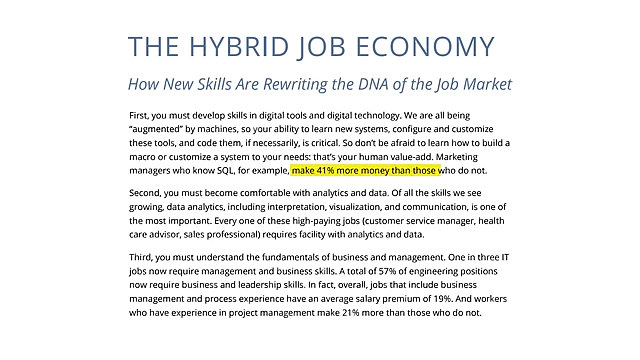
Marketing managers with SQL skills earn 41% more than those without, illustrating the value of hybrid skills in high-paying jobs. [ 00:10:46 ]
- T-Shaped Skills Model:
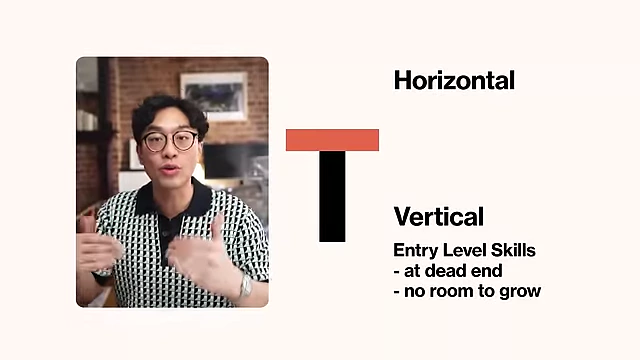
The T-shaped skills model illustrates how a deep entry-level skill (vertical bar) combined with broad knowledge across diverse domains (horizontal bar) leads to greater value and growth. [ 00:11:18 ] - Vertical Bar: Represents deep expertise in one specific, often entry-level, skill (e.g., data entry). If you only have this, you're at a dead end with little growth.
- Horizontal Bar: Represents broad knowledge and skills across multiple, diverse domains.
- Synergy: The horizontal skills make your core (vertical) skill more valuable (e.g., combining data entry with Tableau for visualization or digital marketing for strategic analysis).
- Analogy: Like in fighting games, broader skills create more unique combos, increasing your likelihood of success.