The Impact of Aging Political Leadership on Governance, Generational Equity, and Social Stability
Summary:
- Globally, politicians are getting older, with leaders like Cameroon's 92-year-old president seeking an eighth term and a third of US senators being 70 or older.
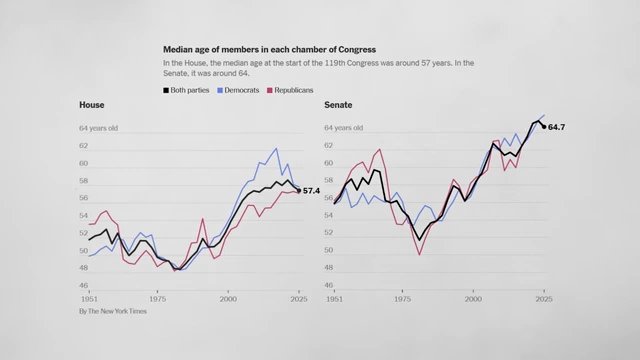
Graph illustrating the rising median age of members in both the US House and Senate [ 00:02:12 ] - This aging leadership often leads to a disconnect from modern issues, particularly technology, and contributes to policy stagnation, as seen in instances where US legislative efforts faltered due to age-related deaths of senators.
- The concentration of power among older generations is partly attributed to high voter turnout among the elderly and campaign finance laws in the US that favor well-funded, often older, candidates.
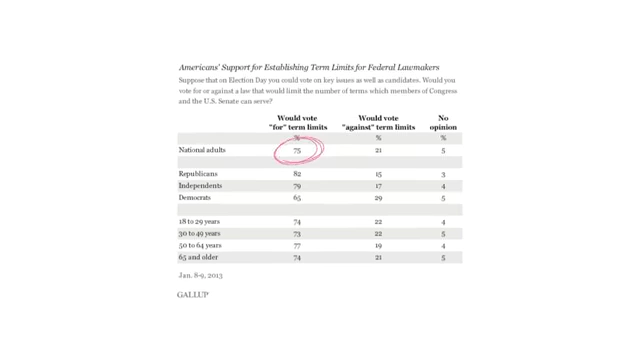
Table showing 75% public support for term limits for federal lawmakers [ 00:02:55 ] - In France, a generous pension system, benefiting retirees more than working adults, has created a significant financial burden on younger generations, leading to widespread protests against reform efforts.
- The video highlights Nepal as a "breaking point" example, where rampant youth unemployment, corruption, and the government's ban on social media ignited a youth-led revolution, culminating in the burning of parliament and a new leader chosen via Discord.
- The speaker concludes that nations face a choice: implement significant reforms now to address generational imbalances or risk similar revolutionary outcomes when material conditions for the youth become unbearable.
The Global Trend of Aging Political Leadership [0:00:00]
The video begins by highlighting the increasing age of political leaders worldwide, illustrating this trend with several examples and discussing its implications.
- Extreme Cases of Elderly Rulers [0:00:04]
- Paul Biya, the 92-year-old President of Cameroon, announced his bid for an eighth presidential term, potentially extending his rule until age 99. This demonstrates an extreme example of long-term elderly leadership.

Article headline about Paul Biya seeking an eighth term [ 00:00:16 ] - The issue is not confined to one region; even wealthy countries are affected.
- Paul Biya, the 92-year-old President of Cameroon, announced his bid for an eighth presidential term, potentially extending his rule until age 99. This demonstrates an extreme example of long-term elderly leadership.
- Aging US Legislature and its Consequences [0:00:32]
- In the US, approximately one-third of senators are 70 years old or older, a demographic that predates common modern technologies like color TVs and microwaves.
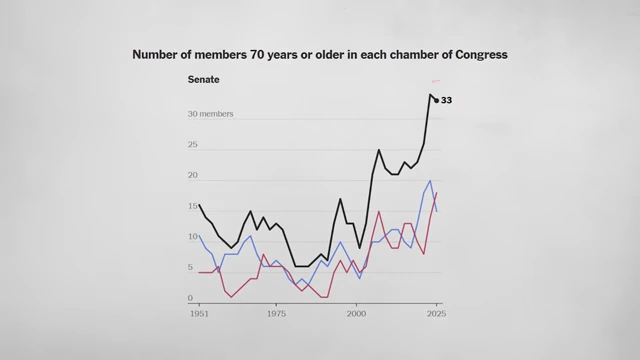
Graph showing the increasing number of US Senators and House members aged 70 or older [ 00:00:35 ] - The advanced age of some politicians has directly impacted legislative outcomes, with key votes lost due to the deaths of senators from age-related illnesses.

Article highlighting the impact of elderly politicians' deaths on legislative outcomes [ 00:00:48 ] - There is a clear disconnect between these elder statesmen and the rapidly evolving technological landscape, leading to inadequate legislation on critical digital issues.
- Graphs demonstrate a consistent increase in the median age of members across both the House and Senate over recent decades.
Graph illustrating the rising median age of members in both the US House and Senate [ 00:02:12 ]
- In the US, approximately one-third of senators are 70 years old or older, a demographic that predates common modern technologies like color TVs and microwaves.
- Public Opinion and Obstacles to Reform [0:02:52]
- An overwhelming 75% of Americans support establishing term limits for politicians, but such reforms are unlikely to be implemented when a significant portion of the legislative body (e.g., one-third of the Senate) is over 70.
Table showing 75% public support for term limits for federal lawmakers [ 00:02:55 ] - Factors contributing to the longevity of older politicians:
- Voter Turnout: Older individuals tend to have higher voter turnout rates compared to younger demographics.

Graph showing life expectancy trends in the US, Canada, and UK [ 00:03:13 ] - Campaign Finance: The 2010 Citizens United v. FEC Supreme Court decision allowed unlimited spending in elections, making campaigns incredibly expensive. Candidates, often older and with established networks, need access to billions of dollars in capital to compete effectively.

Wikipedia entry for the Citizens United v. FEC Supreme Court case [ 00:03:33 ] - This system inherently favors wealthier, older candidates who can amass the necessary funds, making it nearly impossible for younger candidates to raise competitive amounts (e.g., over $100 million for some Senate races).

Table listing the top 5 US Senate races by total money spent [ 00:03:51 ]
- Voter Turnout: Older individuals tend to have higher voter turnout rates compared to younger demographics.
- An overwhelming 75% of Americans support establishing term limits for politicians, but such reforms are unlikely to be implemented when a significant portion of the legislative body (e.g., one-third of the Senate) is over 70.
Generational Imbalance in France's Pension System [0:04:10]
The video shifts focus to France, demonstrating how policies heavily favoring the elderly, even under younger leadership, can create severe generational disparities.
- Pensioners Out-earning Workers [0:04:31]
- Despite having a younger leader (President Macron, who is under 50), France struggles with generational equity.
- French pensioners currently have higher average incomes than working-age adults.
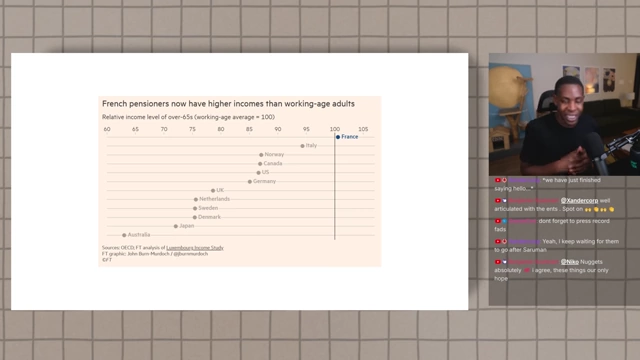
Graph comparing the relative income level of over-65s to working-age adults across several countries, highlighting France [ 00:04:34 ]
- Generous Retirement Age and Financial Strain [0:04:54]
- France maintains a legal retirement age of 62, significantly lower than neighboring European countries like Spain and Germany, where it is 67.
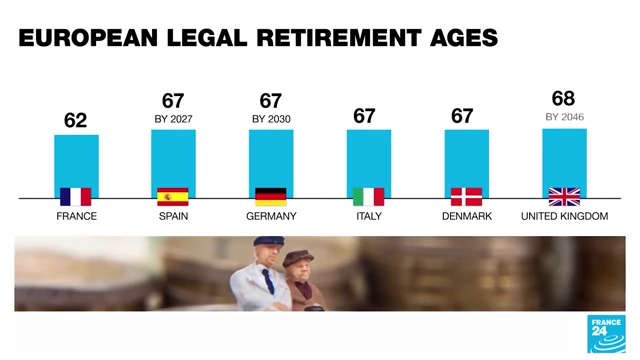
Bar chart comparing legal retirement ages across European countries [ 00:04:57 ] - This generous system places an immense financial burden on the younger, currently working population through taxes and government borrowing, creating a growing pension deficit that is projected to more than double in a decade.

News headline stating France's pension deficit is projected to more than double [ 00:05:10 ] - Efforts to raise the retirement age to bring it in line with other European nations have repeatedly led to widespread protests and even government collapses, highlighting the deep-seated resistance to altering these "sacred cows" of public policy.
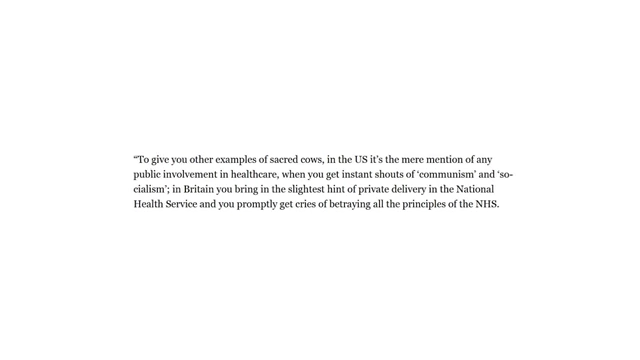
Text slide explaining "sacred cows" in policy for different countries [ 00:06:13 ] 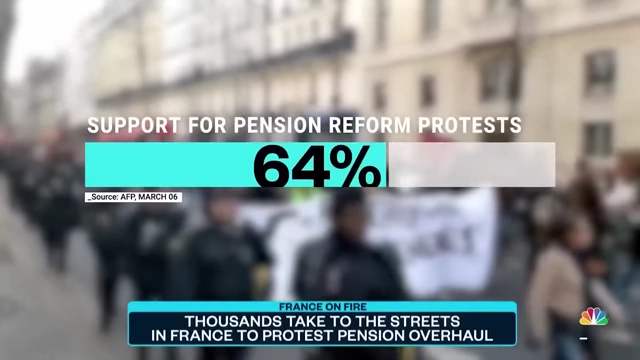
On-screen graphic showing 64% public support for pension reform protests in France [ 00:06:58 ]
- France maintains a legal retirement age of 62, significantly lower than neighboring European countries like Spain and Germany, where it is 67.
- Economic Disparity Reflected in Consumer Behavior [0:07:11]
- The economic imbalance is evident in consumer patterns, with the average age of a new car buyer in France being 54, indicating that disposable income is largely concentrated among older demographics.
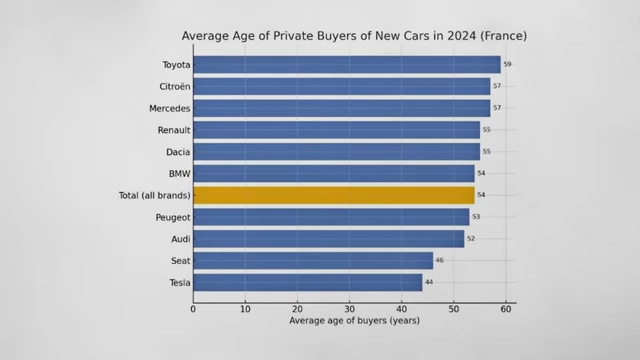
Bar chart showing the average age of new car buyers in France by brand [ 00:07:14 ]
- The economic imbalance is evident in consumer patterns, with the average age of a new car buyer in France being 54, indicating that disposable income is largely concentrated among older demographics.
Nepal's Youth Revolution as a Warning [0:07:31]
The video presents Nepal as a stark example of what can happen when generational disparities reach a breaking point, leading to social unrest and political upheaval.
- Extreme Demographics and Discontent [0:08:45]
- Nepal has a remarkably young population with a median age of 25, contrasted sharply with its previous leader who was in his mid-70s.
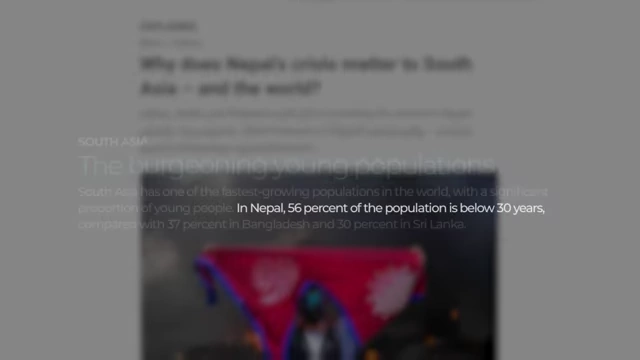
Text highlighting that 56% of Nepal's population is under 30 [ 00:08:50 ] - High youth unemployment, hovering around 21%, coupled with pervasive corruption and the conspicuous display of wealth by "Nepo Kids" (children of the elite) on social media, fueled widespread outrage among young people.

News article headline about "Nepo Kids" fueling outrage in Nepal [ 00:07:59 ] 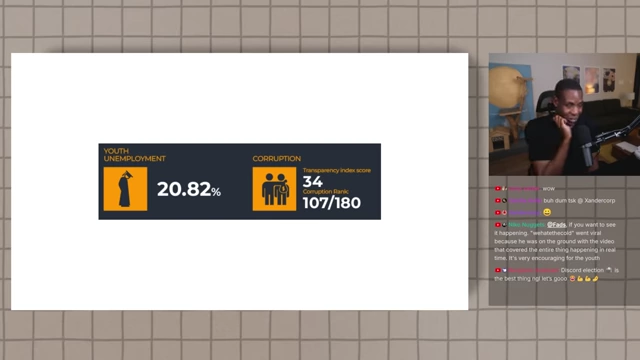
Infographic displaying Nepal's youth unemployment rate and corruption ranking [ 00:08:58 ]
- Nepal has a remarkably young population with a median age of 25, contrasted sharply with its previous leader who was in his mid-70s.
- Government Crackdown and Escalation [0:08:01]
- The government responded to the online protests by banning Facebook, YouTube, and 23 other social media platforms, effectively removing a key outlet for youth expression and connection.

News headline reporting Nepal's ban on multiple social media platforms [ 00:08:04 ] - This suppression, combined with dire material conditions (struggling to afford basics, and a significant portion of the economy relying on remittances from citizens working abroad in harsh conditions), created a "recipe for disaster."
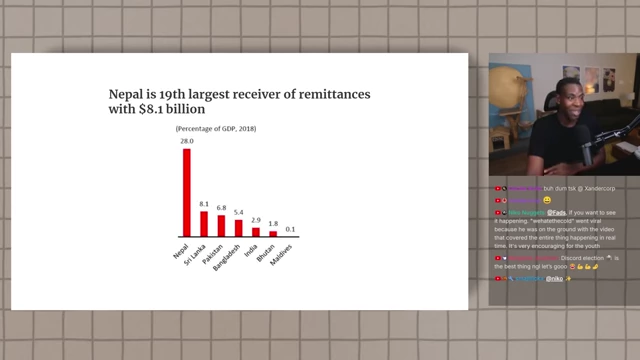
Bar chart showing remittances as a percentage of GDP for Nepal and other South Asian countries [ 00:09:18 ]
- The government responded to the online protests by banning Facebook, YouTube, and 23 other social media platforms, effectively removing a key outlet for youth expression and connection.
- Rapid Revolution and New Leadership [0:08:22]
- The escalating discontent culminated in widespread protests where Gen Z demonstrators torched the parliament building and effectively took over the state in just three days.

Nepal's parliament building on fire during protests [ 00:08:28 ] - A new leader was elected through an unconventional means: a gaming app called Discord.

News article headline on Nepal's Gen Z electing a PM via Discord [ 00:08:34 ]
- The escalating discontent culminated in widespread protests where Gen Z demonstrators torched the parliament building and effectively took over the state in just three days.
The Impending Crisis and Possible Solutions [0:10:07]
The video concludes by reflecting on the broader implications for wealthier nations and outlining two potential paths forward.
- Why Wealthier Nations Haven't Reached Breaking Point (Yet) [0:10:32]
- Wealthier countries have a relatively smaller youth population compared to the elderly.
- The quality of life, while potentially declining for youth, is still high enough that widespread revolutionary action is not yet seen as a worthwhile risk. People still have access to social media and basic consumer goods, which may temporarily mitigate extreme discontent.
- Two Paths Forward for Global Governance [0:10:50]
- Path 1: Proactive Reform: Implement substantial reforms now to ensure that younger generations have genuine prospects for a stable and prosperous future. This would involve rebalancing policies to prioritize their well-being and long-term societal stability.
- Path 2: Inevitable Revolution: Continue to pass the burden onto younger generations until their material conditions deteriorate to a point where the perceived reward of protesting and revolution outweighs the risk of inaction. This "inflection point" will inevitably lead to aggressive social and political upheaval.