Porsche's Taycan Depreciation Crisis: An In-Depth Analysis of the Reasons
Summary:
Here's a summary of the reasons for the Porsche Taycan's sharp depreciation in the used car market:
- Battery Technology and Maintenance Issues: Rapidly evolving and complex battery technology leads to frequent failures and high replacement costs, with a new battery costing as much as a used Macan S.
- Lack of Infrastructure and Service Problems: Initially, there was a lack of over-the-air updates and qualified mechanics for the 800-volt architecture, leading to long service visits.
- First-Generation Range Issues: The first generation Taycan Turbo had a real-world range of only about 200 miles, which was disappointing compared to competitors like Tesla and Lucid.
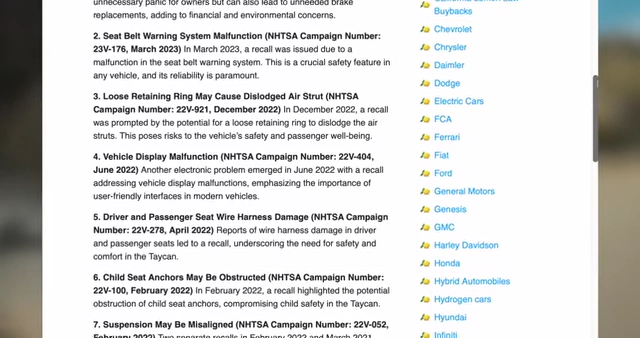
- Numerous Recalls and "Lemon Law" Problems: Although recalls were often minor, repeated repairs for the same issues and associated "Lemon Law" buybacks led to a loss of customer confidence.
- General Decline in EV Demand: Despite the prestigious Porsche badge, overall demand for EVs has decreased, further exacerbating the Taycan's depreciation.
- Excellent Driving Characteristics and Future Improvements: However, the latest generation Taycan, such as the 4 Cross Turismo, offers improved range, performance, and an excellent driving experience, which will hopefully lead to better value stability.

Porsche Taycan price development on the used car market [ 00:00:10 ]

The Battery Technology Predicament [0:39]
- Complexity and Evolution: Battery technology in electric vehicles is extremely complex and constantly evolving as manufacturers try to develop more powerful and efficient batteries.
- This leads to the constant development of new technologies and protocols.
- This evolution can lead to partial or complete failure of the batteries.

Porsche Taycan chassis with battery arrangement [ 00:00:40 ]
- Costs and Repair: The battery is the largest and most expensive component of an electric vehicle.
- A new Taycan battery can cost as much as a used Macan S. [1:41]
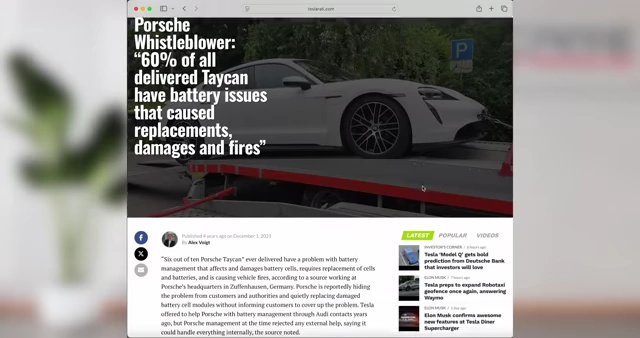
News about battery problems with the Porsche Taycan [ 00:02:05 ] - Porsche mechanics are frustrated with the constant training required to keep up with evolving technology. [1:48]
Milad Davoodi, COO of Xcelerate Auto, talks about battery technology [ 00:01:07 ] 
Worker assembles battery modules in a Porsche factory [ 00:03:11 ]
- A new Taycan battery can cost as much as a used Macan S. [1:41]
- Infrastructure Shortcomings: The service infrastructure for electric vehicles lags behind the development of the cars. [3:24]
- In 2020-2021 there were problems with battery cooling and contactors. [2:03]
- The Taycan was one of the first mass-produced vehicles with 800-volt architecture, which was new to many, including Porsche. [2:11]
- Initially, there were no over-the-air software updates, meaning vehicles had to be taken to the dealer for software issues. [2:20]
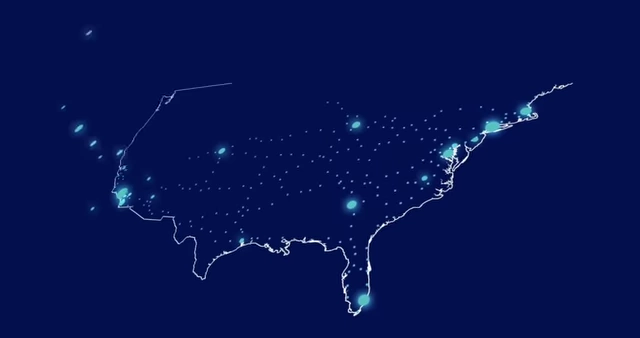
Map of electric car charging infrastructure in the USA [ 00:03:34 ]
- Maintenance Challenges: Repairing battery modules by Porsche is a complex and time-consuming process that is not practiced by all manufacturers. [3:00]
- This contributes to longer repair times and discourages potential buyers.
- Speculation and Domino Effect: The early problems and high repair costs may have led to a domino effect. [3:51]
- Reports of long service stays and recurring problems unnerve potential buyers.
- This can lead to Taycans sitting on dealer lots for longer, resulting in discounts.
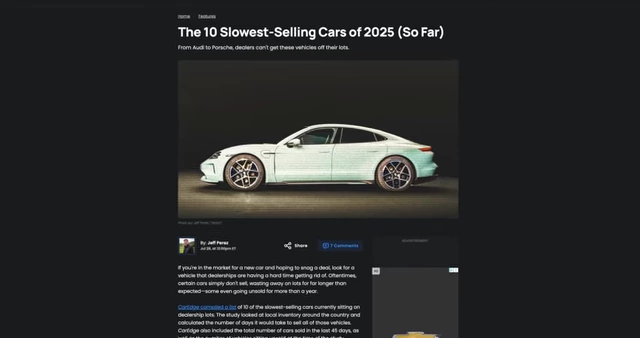
News about the slowest selling cars [ 00:04:04 ]
The Importance of Range in EVs [4:25]
- The Expectation of EV Enthusiasts: Range is as important to EV enthusiasts as 0-60 mph acceleration is to performance car enthusiasts. [4:25]
- A low real-world range, even with a large battery capacity, is perceived negatively.
- First Generation Taycan Issues: The first generation Taycan had significant range issues. [4:48]
- Owners often reported only about 280 miles (450 km) of range. [4:54]

User reports on the range of the Taycan [ 00:04:59 ] - The Taycan Turbo often achieved only 200 miles (320 km) of real-world range, which was poor compared to competitors like Lucid and Tesla. [5:52]
Morten Hannesbo, Automotive Industry Analyst, talks about range [ 00:05:16 ] 
Displayed real range of the Taycan Turbo (200-240 miles) [ 00:05:56 ] 
Lucid Air as range competitor [ 00:06:03 ] 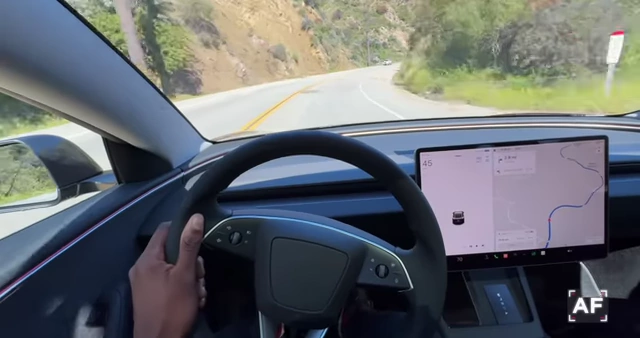
Tesla interior as range competitor [ 00:06:05 ]
- Owners often reported only about 280 miles (450 km) of range. [4:54]
- Software Improvements: Porsche has improved the range of the 4S model to 280-300 miles (450-480 km) with software updates, except in cold weather. [5:34]
- Impact on Reputation: The initial range and efficiency weaknesses of the first Taycan generation have severely impacted the vehicle's reputation as a practical EV. [6:30]
- Buyer Types: There are two main types of Taycan buyers: [7:20]
- Porsche Enthusiasts: Charge at home/work and do not have high range requirements.
- Practically Oriented Buyers: Want a Porsche but are unwilling to compromise on range and efficiency and pay more for it than for competitors.
- Future Prospects: Although the second-generation Taycan is objectively better in range and efficiency, this is unlikely to significantly improve the general perception and residual values. [7:46]
- Porsche would have to take radical measures, such as a significantly longer warranty, to restore confidence. [8:16]
Recalls, "Lemon Law" and the General EV Market [9:01]
- Perceived Reliability: The reliability of the Taycan has suffered from several recalls. [9:01]
- Problems in the Repair Process: Many issues were not resolved by dealers the first time, leading to repeated service visits for the same vehicle. [9:33]
- "Lemon Law" Cases: Around 5% of Taycans for sale are "Lemon Law" vehicles, which is comparable to Mercedes EQS and Hyundai Ioniq 5. [12:13]
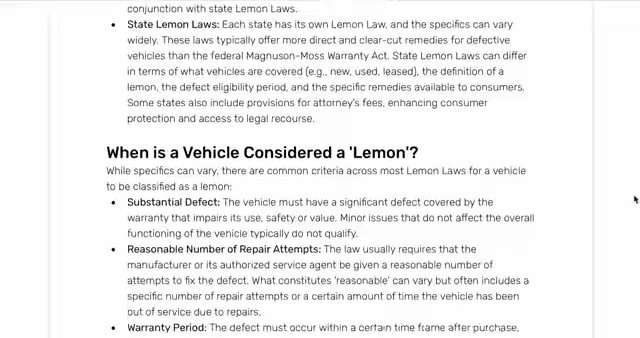
Explanation of 'Lemon Law' for vehicles [ 00:12:19 ] - However, the drastic price drop of the expensive Taycan is more noticeable than for cheaper EVs.
- Media Distortion: Recalls are often exaggerated to generate clicks. [11:14]

News about general electric car recalls [ 00:11:16 ] - The Reality of the EV Market: The Taycan is a new model for Porsche and is not yet fully understood. [13:39]
- The main reason for the depreciation is that it is an electric car. [13:56]
- Demand for electric cars has declined overall, both in the premium and non-premium segments. [14:02]
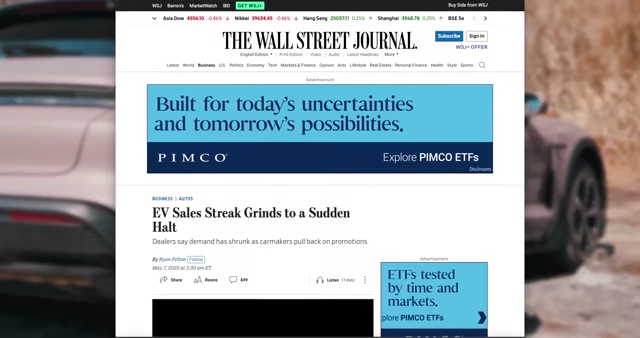
News article about the decline in demand for electric cars [ 00:14:03 ] 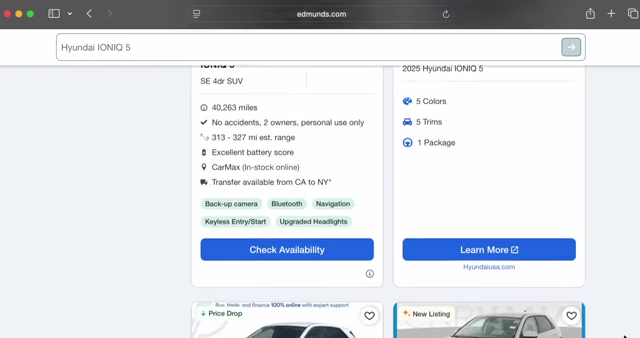
Ad for a used Hyundai Ioniq 5 with a sharp price drop [ 00:12:34 ]
- Comparison with Panamera: The Panamera, another four-door Porsche model, also suffered depreciation, but not as extreme as the Taycan. [14:07]
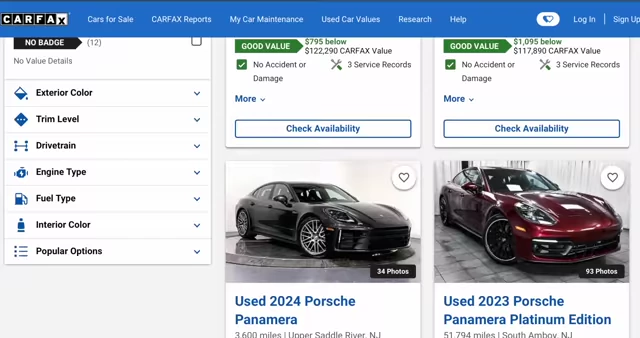
Ad for a used Porsche Panamera [ 00:14:09 ]
The New Taycan 4 Cross Turismo: A Review [14:42]
- Driving Characteristics and Design: The Taycan 4 Cross Turismo is a very enjoyable station wagon with excellent driving characteristics. [14:45]

The Porsche Taycan 4 Cross Turismo in action [ 00:15:20 ] - Technology and Handling: The Taycan features Porsche Torque Vectoring Plus and rear axle steering, resulting in dreamlike handling. [15:02]
- Performance and Acceleration: Although the 4 Cross Turismo with 430 hp from two electric motors and a 105 kWh battery pack is the "slowest" Taycan model, it feels very agile. [15:21]
- Steering Feel: Porsche offers the best steering feel among all EV manufacturers, only Lucid comes close. [16:03]
- Wishes for the Future: The speaker would like to see a pure rear-wheel drive mode for the all-wheel drive models, similar to the BMW X-Drive system. [18:53]
- Summary: The new generation of the Taycan is an improvement over the previous generation in almost every respect, with better range, performance, and technology. [19:31]

