Poles Return from Germany: Why Economic Stagnation in Germany and Growth in Poland are Shifting Migration Trends
For the first time in 25 years, more Poles are leaving Germany than arriving, with nearly 10,000 more Poles departing in 2024. This significant shift indicates Germany is losing its appeal due to a broad economic crisis, characterized by:
- German Economic Challenges: Stagnation since 2018, technical recession in 2023-2024 (GDP drops of 0.3% and 0.2%), stagnant private investment, housing market issues, declining consumer sentiment, high energy prices, excessive bureaucracy, and labor shortages (projected 728,000 unfilled jobs by 2027).
- Poland's Growing Attractiveness: Poland's economy has grown over 10-fold in 30 years. The wage gap with Germany (based on purchasing power parity) has shrunk from 58% in 2004 to 30% in 2024. Poland boasts one of the lowest unemployment rates in the EU (2.7% in March 2025), rapid infrastructure development, digitalization of services, and record industrial investments.
- Declining Safety in Germany: An increase in political crimes (40% rise in 2024) and knife crimes (over 29,000 in 2024, averaging 79 per day) contributes to a perceived lack of security, contrasting with 86% of Poles feeling safe in Poland.
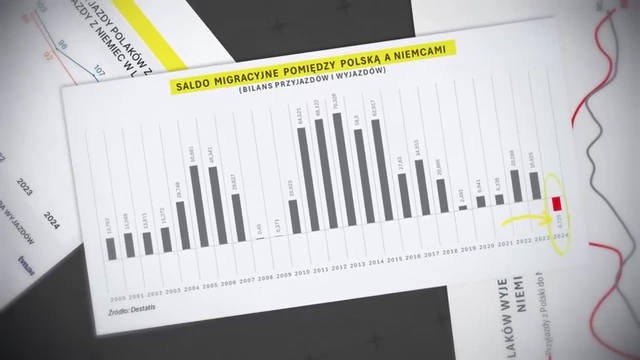
Poles leaving Germany migration balance [ 00:04:09 ]
Poles Returning to Poland from Germany [0:00]
For the first time in 25 years, German Statistical Office data reveals that in 2024, nearly 10,000 more Poles left Germany than arrived.
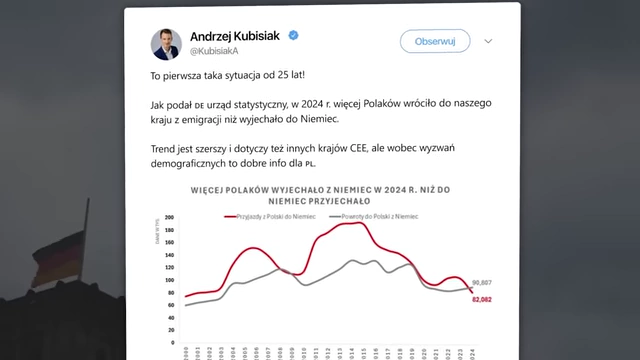
- This marks a significant negative migration balance, signaling a deeper, long-term change.
- The term "saksy" traditionally referred to Poles undertaking temporary work in Germany, often in agriculture (e.g., asparagus, strawberries), but now applies to temporary foreign trips in general.
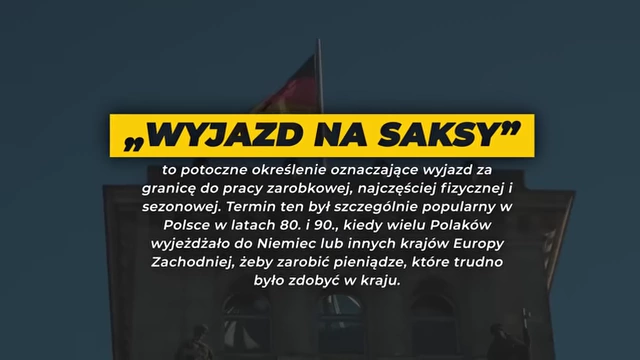
Definition of "Saksy" [ 00:00:34 ] - This shift indicates the potential end of an era where going to Germany for work was a common and obvious choice for many Poles.
Germany Began to Push Away Instead of Attract [4:02]
Germany, historically a symbol of stability, prosperity, and predictability, is losing its attractiveness to Poles.
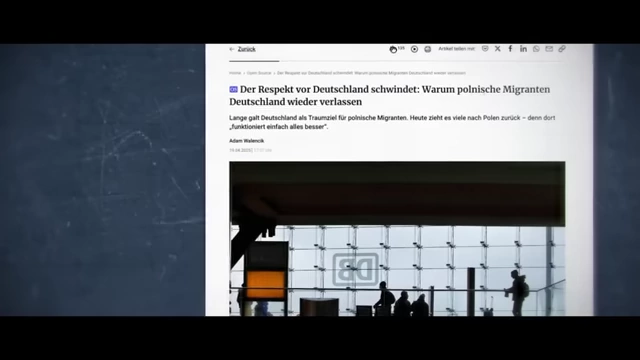
- This change is not solely due to migration issues but is linked to a broader crisis in the German economy.
- A Polish individual, Christoph, who moved from Germany to Poland 4.5 years ago, highlights Poland's more advanced digitalization compared to Germany, where reliance on faxes is still prevalent. This represents a modern aspect that Germany could learn from Poland.
Crisis of the German Economy and Significant Growth of Poland in Recent Years [5:18]
German Economic Crisis:
Germany's economy has faced serious challenges for years.
- Stagnation and Recession: Since 2018, Germany has not seen significant productivity growth. Real GDP fell by 0.3% in 2023 and 0.2% in 2024, confirming a technical recession.
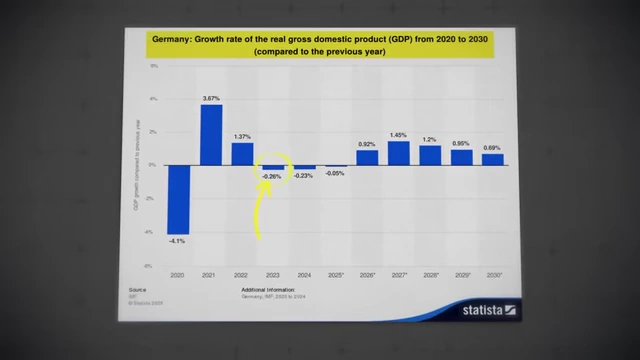
Germany's Real GDP Growth (2020-2030) [ 00:05:38 ] - These numbers lead to real consequences, including stagnation of private investment, deepening problems in the housing market, and a drastic decline in consumer sentiment.
- Rising energy prices and uncertainty surrounding climate policy have accelerated the erosion of confidence in the German economy.
- Experts like Veronika Grimm note that Germany is no longer an attractive investment location due to bureaucracy, high energy prices, and companies preferring to invest elsewhere.
- Labor Shortages: The Institute of the German Economy (IW) forecasts a worsening shortage of qualified labor.
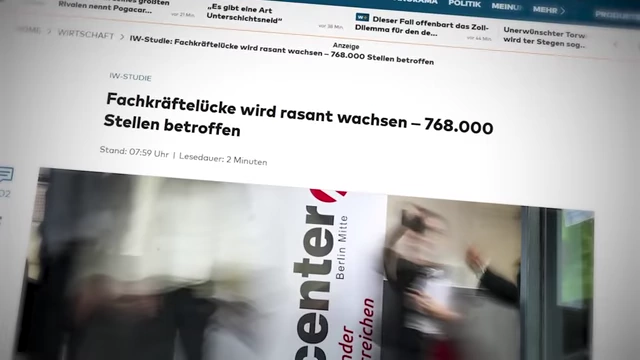
German article headline on growing labor shortage [ 00:10:44 ] - By 2027, an estimated 728,000 jobs across various industries could be unfilled.
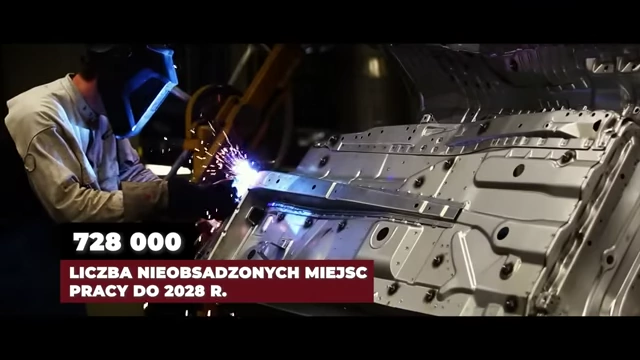
Projected number of unfilled jobs in Germany by 2028 [ 00:10:53 ] - Until now, Poles, next to Turks, were the second largest group of immigrants in Germany.
![Immigrants in Germany [<a href="https://youtube.com/watch?v=q60YLxPKdOE&t=2024">2024</a>] with data for Turks and Poles](https://storage.googleapis.com/summarizer-images/images/q60YLxPKdOE/sc0011_t00.02.33.webp)
Immigrants in Germany [<a href="https://youtube.com/watch?v=q60YLxPKdOE&t=2024">2024</a>] with data for Turks and Poles [ 00:02:33 ]
- By 2027, an estimated 728,000 jobs across various industries could be unfilled.
Poland's Significant Growth:
Poland's increasing attractiveness is a major factor in the return migration.
- Economic Growth and Wages: The Polish economy has grown more than tenfold over the last 30 years.
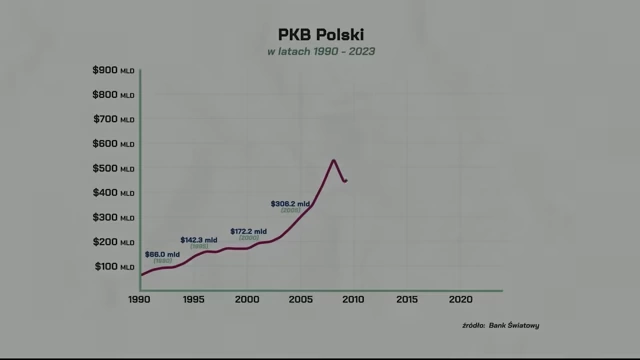
Poland's GDP Growth (1990-2023) [ 00:01:32 ] - The wage gap between Poland and Germany, based on purchasing power parity, has significantly decreased from 58% in 2004 to approximately 30% in 2024. This means Polish wages are much more competitive relative to the cost of living.
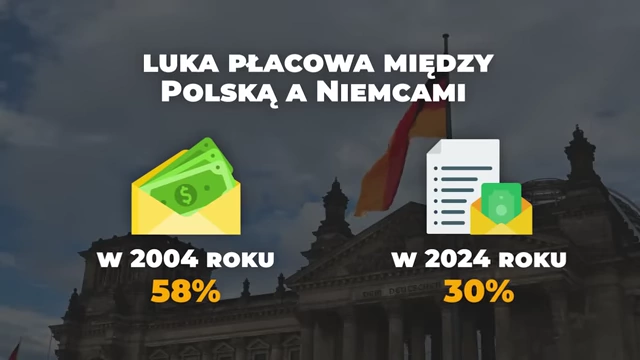
Wage gap between Poland and Germany (2004 vs 2024) [ 00:07:13 ] - Eurostat data indicates Poland has one of the lowest unemployment rates in the EU, at 2.7% in March 2025, compared to Germany's 3.5%.
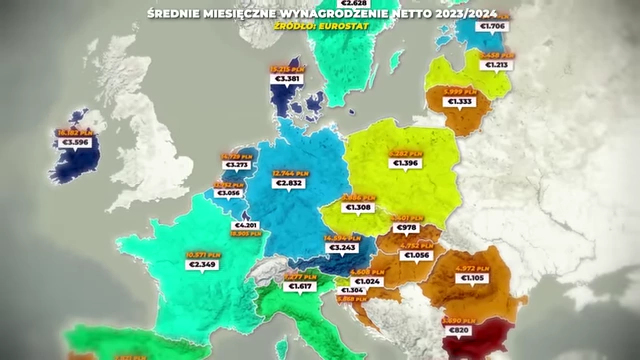
Average monthly net wages in Europe (2023/2024) [ 00:13:31 ] 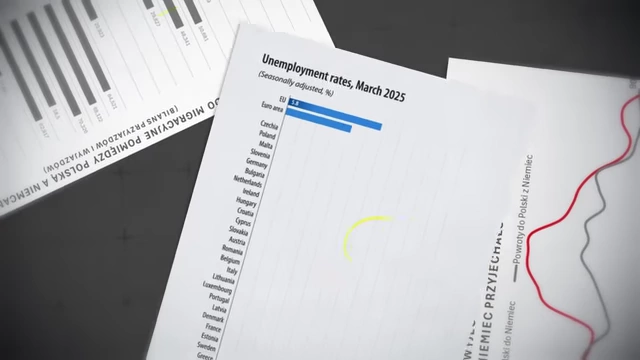
Unemployment rates in EU countries, March 2025 [ 00:07:36 ]
- The wage gap between Poland and Germany, based on purchasing power parity, has significantly decreased from 58% in 2004 to approximately 30% in 2024. This means Polish wages are much more competitive relative to the cost of living.
- Infrastructure and Investment: Poland is experiencing rapid development in public infrastructure, digitalization of administrative services, and record investments in the industrial sector.
- Gross fixed capital formation in Poland increased by 11.2% year-on-year in 2024.
- GDP Milestones:
- Poland's GDP is projected to reach USD 980 billion in 2025, surpassing Switzerland.
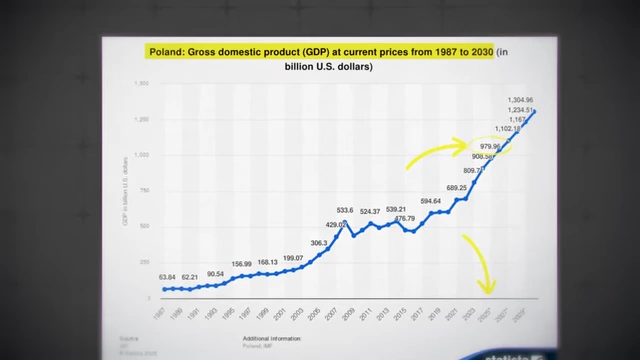
Poland's GDP growth at current prices (1987-2030) [ 00:08:37 ] 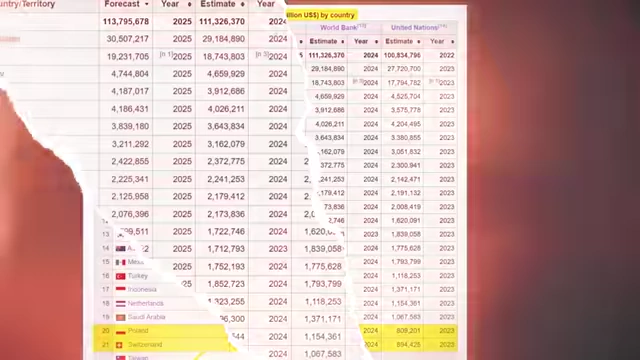
Table showing Poland's projected GDP surpassing Switzerland [ 00:08:50 ] - In 2026, the IMF and World Bank estimate Poland's economic growth at around 3.5%, breaking the historic barrier of one trillion dollars for the first time.
- This growth demonstrates Poland's convergence with Western economies, serving as a positive example of economic development.
- Poland's GDP is projected to reach USD 980 billion in 2025, surpassing Switzerland.
- Human Development Index (HDI): Poland ranks 35th globally with a score of just over 0.9, ahead of countries like Qatar, Croatia, Portugal, and Estonia, and just behind Israel, Italy, and Spain. This indicates a high standard of living, with the difference compared to Germany being "cosmetic."
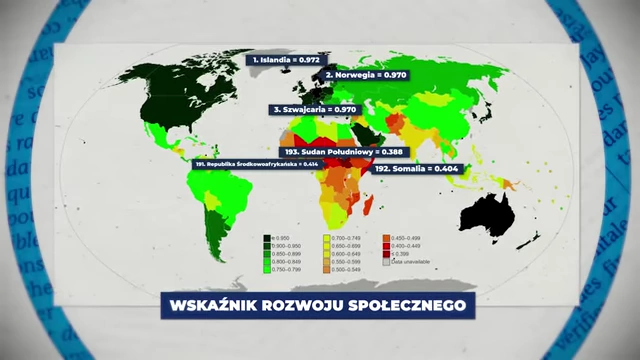
Human Development Index (HDI) World Map [ 00:09:46 ]
Crime in Germany [11:59]
Germany faces a significant increase in threats from extremism, street crime, and cyberattacks.
- Rising Crime Rates: 2024 saw a record 40% increase in politically motivated crimes, totaling 84,172 incidents.
![Politically motivated crimes in Germany [<a href="https://youtube.com/watch?v=q60YLxPKdOE&t=2024">2024</a>]](https://storage.googleapis.com/summarizer-images/images/q60YLxPKdOE/sc0074_t00.12.09.webp)
Politically motivated crimes in Germany [<a href="https://youtube.com/watch?v=q60YLxPKdOE&t=2024">2024</a>] [ 00:12:09 ] - There is a growing wave of knife crimes, with over 29,000 recorded in 2024, a 10.8% increase from the previous year, averaging 79 attacks per day.
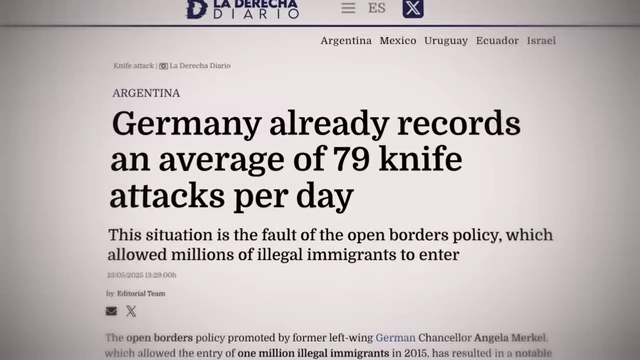
Article "Germany records an average of 79 knife attacks per day" [ 00:12:15 ]
- There is a growing wave of knife crimes, with over 29,000 recorded in 2024, a 10.8% increase from the previous year, averaging 79 attacks per day.
- Perceived Insecurity: Personal accounts describe cities like Frankfurt with increasing numbers of homeless people and drug addicts. Interviewees report open drug dealing even near police presence, creating a sense of insecurity.
- Tourists visiting Frankfurt are reportedly shocked by the visible decline in safety.
- Safety in Poland: In contrast, 86% of Poles feel safe living in Poland.
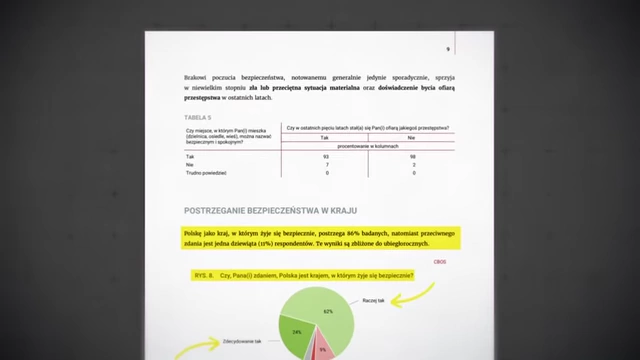
Perceived safety in Poland [ 00:10:28 ]
Why are Poles Returning? [13:04]
The primary reasons for Poles returning are security and economic issues.
- Economic Incentives:
- Wages are continuously rising in Poland, as shown by the consistent increase in minimum wage from 2014 to 2025.
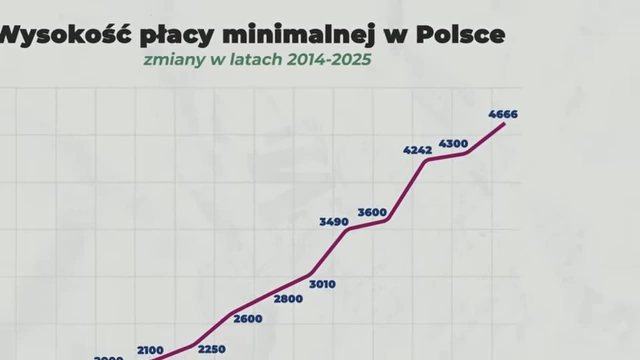
Changes in minimum wage in Poland (2014-2025) [ 00:13:14 ] - Lower living costs and the dynamic development of the SME (Small and Medium-sized Enterprise) sector attract both investors and returning emigrants.
- Although the average net salary in Poland (around €1,500) is still lower than in Germany (over €2,500), this difference is systematically decreasing.
- Better conditions for doing business, simplified procedures, and lower operating costs compared to Germany also make Poland attractive.
- Wages are continuously rising in Poland, as shown by the consistent increase in minimum wage from 2014 to 2025.
- Remaining Challenges: While many Poles still thrive in Germany, often in well-paid positions or as business owners, the overall trend of return is strong.
![Distribution of Poles living in Germany [<a href="https://youtube.com/watch?v=q60YLxPKdOE&t=2011">2011</a>]](https://storage.googleapis.com/summarizer-images/images/q60YLxPKdOE/sc0095_t00.13.49.webp)
Distribution of Poles living in Germany [<a href="https://youtube.com/watch?v=q60YLxPKdOE&t=2011">2011</a>] [ 00:13:49 ] - A significant area for improvement in Poland is the welfare of pensioners; the average German pension (€1,769.40 gross in 2024) is almost double that of Poland, which can be an incentive for people to work abroad.
![Average gross monthly pension in Germany [<a href="https://youtube.com/watch?v=q60YLxPKdOE&t=2024">2024</a>]](https://storage.googleapis.com/summarizer-images/images/q60YLxPKdOE/sc0105_t00.14.34.webp)
Average gross monthly pension in Germany [<a href="https://youtube.com/watch?v=q60YLxPKdOE&t=2024">2024</a>] [ 00:14:34 ]
- A significant area for improvement in Poland is the welfare of pensioners; the average German pension (€1,769.40 gross in 2024) is almost double that of Poland, which can be an incentive for people to work abroad.
The video concludes that while Poland still has areas to improve, particularly concerning pensions, the country is on a path of continuous growth, making it an increasingly attractive place for its citizens to live and work.