The Dynamics of Housing Booms and Busts: Political Influence, Interest Rates, and Economic Consequences
Summary:
- New Zealand's recent housing market downturn serves as a case study, demonstrating how an economy built on ever-rising house prices faces significant challenges when prices fall, leading to negative equity and construction firm insolvencies.
- Politicians often incentivize rising house prices through subsidies, tax breaks, and restrictive building policies, to satisfy homeowner voters, despite these measures making homes less affordable in the long run.
- Land appreciation, rather than improvements to the physical structure, drives property value increases, a non-productive form of wealth generation, as argued by Henry George with his concept of a land value tax.
- Falling interest rates significantly increase borrowing power, inflating house prices over decades, but rising rates lead to decreased affordability and market freezes, especially in countries with variable-rate mortgages.
- An inefficient housing market can lead to a "brain drain" of young professionals leaving for more affordable regions and can undermine national productivity by making commercial centers prohibitively expensive for skilled labor.
- Economist Edward Leamer's theory, "Housing is the Business Cycle," highlights how housing market activity heavily influences overall economic cycles, with major recessions often preceded by drops in housing activity and transaction volumes.
- Policy choices during a bust involve either a prolonged, painful deflation (like Japan) or a swift, chaotic correction (like the US and Ireland in 2008) that clears market imbalances and redirects capital.
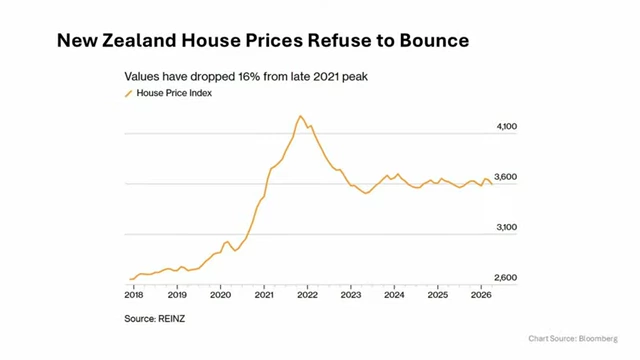
New Zealand House Price Index shows a 16% drop from its late 2021 peak [ 00:01:20 ]
The New Zealand Housing Market: A Case Study in Boom and Bust [00:00:00]
- The "Dunger" Phenomenon [00:00:00]
- In early 2021, a dilapidated three-bedroom property in Auckland, described as a "dunger" (New Zealand slang for something old, broken down, and barely functional), sold for $1.81 million NZD.
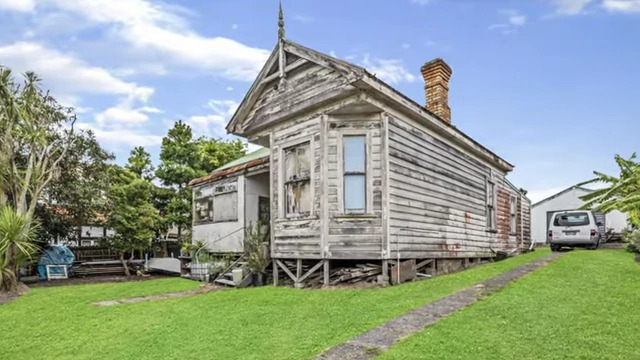
Dilapidated "dunger" property in Auckland, New Zealand [ 00:00:07 ] - At its peak in early 2022, the average home in Auckland cost approximately $1.4 million NZD, which was 35 times the median income.
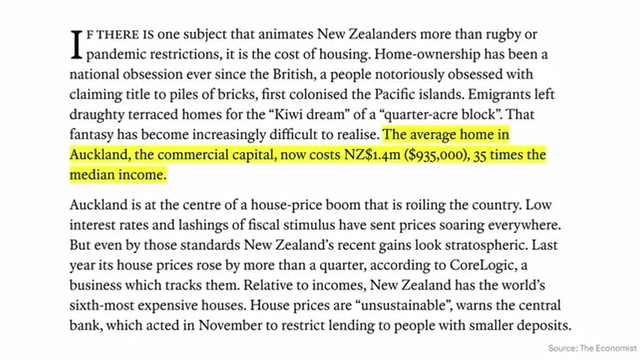
The Economist highlights Auckland home prices at 35 times the median income [ 00:01:04 ] - Market Downturn [00:01:12]
- Over the past few years, the New Zealand property market has experienced a significant downturn.
- Prices have fallen by 16% nationwide from their peak, and in some areas like Wellington, they are down by 27%.
New Zealand House Price Index shows a 16% drop from its late 2021 peak [ 00:01:20 ] - Factoring in inflation, the real value of these homes has dropped by about a third, leaving many recent buyers in negative equity.
- This situation forced some homeowners to sell at a loss and adopt alternative living arrangements, like living in a bus.
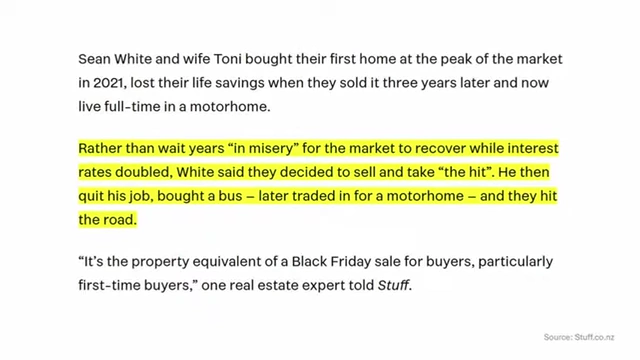
Article detailing a couple selling their home at a loss to live in a motorhome [ 00:01:43 ]
- In early 2021, a dilapidated three-bedroom property in Auckland, described as a "dunger" (New Zealand slang for something old, broken down, and barely functional), sold for $1.81 million NZD.
- New Zealand as an Economic Laboratory [00:02:00]
- New Zealand's experience is presented as a "laboratory" for understanding what happens when a national economy relies on the assumption of perpetually rising house prices.
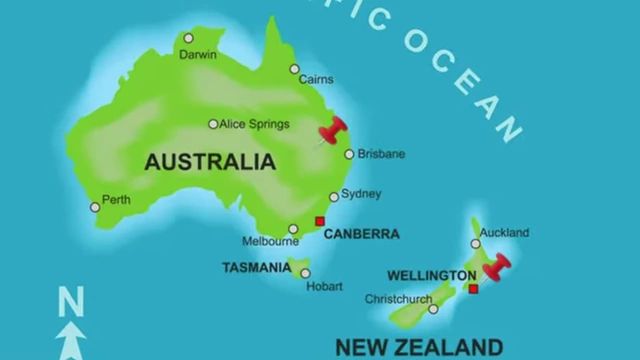
Map showing Australia and New Zealand [ 00:02:06 ] - The video argues that trading increasingly expensive, dilapidated properties does not generate real wealth for the economy.
- This scenario highlights the dangers when a family home transforms from a dwelling into a leveraged investment.

A small house graphic overlaid with "Property Investment" text [ 00:03:43 ]
- New Zealand's experience is presented as a "laboratory" for understanding what happens when a national economy relies on the assumption of perpetually rising house prices.
Political Incentives and Distorted Housing Policies [00:02:32]
- Politicians' Motivations [00:02:32]
- Politicians prioritize the interests of homeowners, especially older voters who reliably turn out, by ensuring house prices rise or at least do not fall.

Various political leaders from around the world [ 00:02:37 ] - Allowing prices to fall would anger reliable voters and lead to electoral losses.
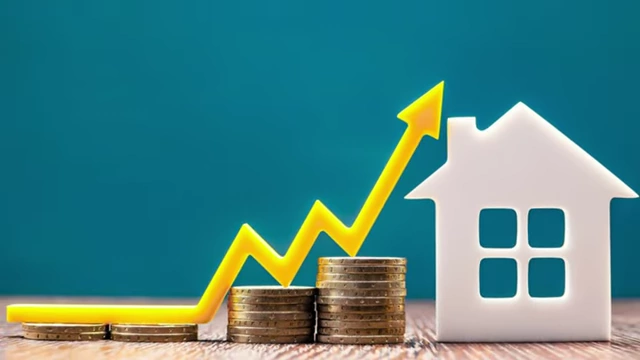
Graphic depicting rising house prices with an upward arrow and stacks of coins [ 00:03:06 ]
- Politicians prioritize the interests of homeowners, especially older voters who reliably turn out, by ensuring house prices rise or at least do not fall.
- Government Policies Fueling Price Hikes [00:03:45]
- Housing policies across the developed world, regardless of the ruling party, tend to support rising prices.
- Governments avoid restricting factors that push prices up and instead implement measures that inadvertently make homes more expensive:
- Subsidizing mortgages.
- Offering tax breaks to landlords.
- Providing first-home buyer grants that primarily enable higher bids.
- Making new construction difficult through regulations.
- These measures, presented as aids to affordability, ultimately increase housing costs.
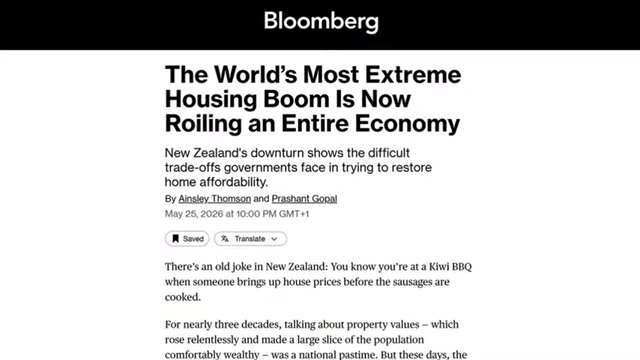
Bloomberg article headline: "The World's Most Extreme Housing Boom Is Now Roiling an Entire Economy" [ 00:04:24 ]
Housing as a Non-Productive Asset and the Land Value Tax [00:06:04]
- Contrast with Productive Investment [00:06:04]
- Investing in a business generates wealth through building factories, inventing products, and providing services, leading to earnings and economic growth.

People supporting an upward-trending graph, symbolizing economic growth [ 00:06:13 ] - A house, conversely, does not generate productive wealth; its physical structure depreciates over time, requiring maintenance.
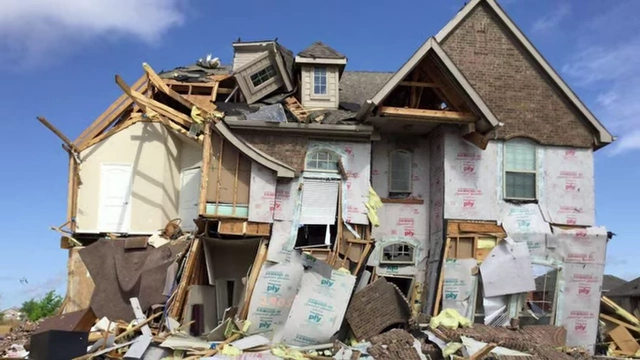
A house partially destroyed, illustrating physical depreciation [ 00:06:34 ]
- Investing in a business generates wealth through building factories, inventing products, and providing services, leading to earnings and economic growth.
- Henry George's Observation on Land Value [00:06:42]
- The primary component of property that appreciates is the land itself, not the building.
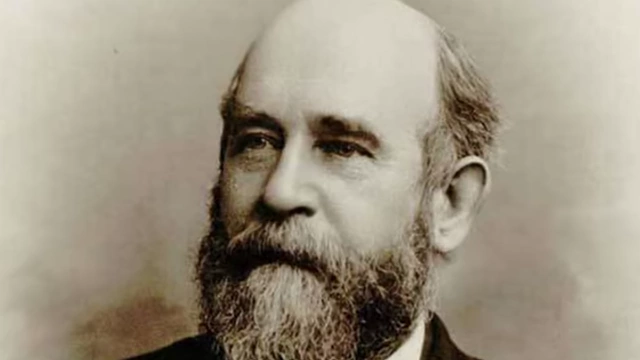
Portrait of American political economist Henry George [ 00:06:47 ] - 19th-century American political economist Henry George observed that land value increases are due to community development (e.g., new infrastructure, schools, businesses), not the owner's efforts.
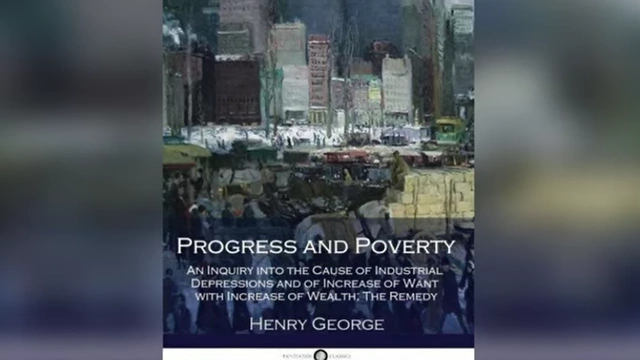
Book cover for Henry George's "Progress and Poverty" [ 00:07:26 ] - The Land Value Tax (LVT) [00:07:22]
- George proposed a single tax on the underlying value of land, detailed in his 1879 book "Progress and Poverty."
- His logic: Taxing work or production discourages those activities, but taxing land does not, as land remains fixed.
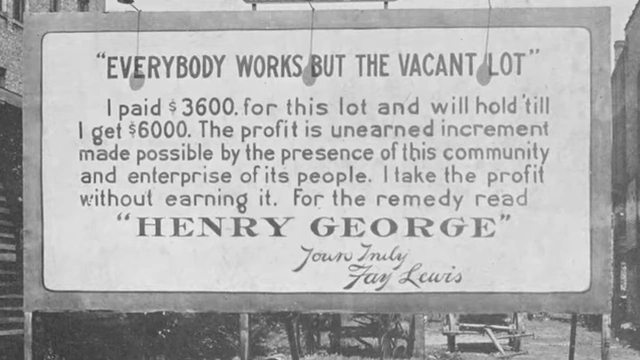
Billboard quoting Henry George about unearned increment from vacant land [ 00:08:00 ] - Economists across the political spectrum generally view a land value tax favorably for its economic efficiency, though practical implementation remains a debated challenge.
- The core idea is that land appreciation is a zero-sum game; one person's gain is another's increased cost, leading to wealth transfer from young buyers to older homeowners.
- The primary component of property that appreciates is the land itself, not the building.
The Role of Interest Rates in Property Affordability [00:10:06]
- Interest Rate Impact on Borrowing Power [00:10:06]
- Most home buyers determine affordability based on monthly cash flow and mortgage payments, where the interest rate is the most critical factor.
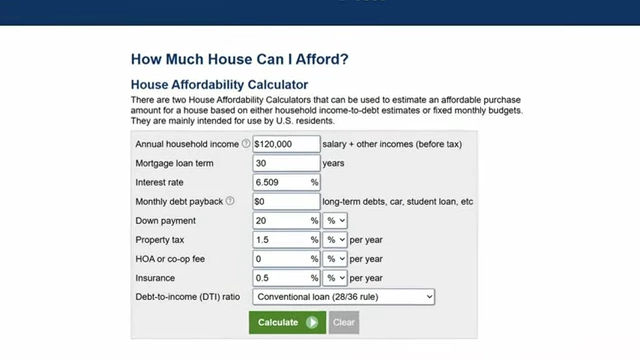
A "House Affordability Calculator" interface [ 00:10:35 ] - Example Scenarios:
- In 1981, with 20% mortgage rates, $1,500/month could borrow $90,000.
- In January 2021, with record-low 2.65% rates, the same $1,500/month could borrow $370,000 (over four times as much).
- Today (2026 reference in video), with rates around 6.5%, $1,500/month borrows approximately $236,000.
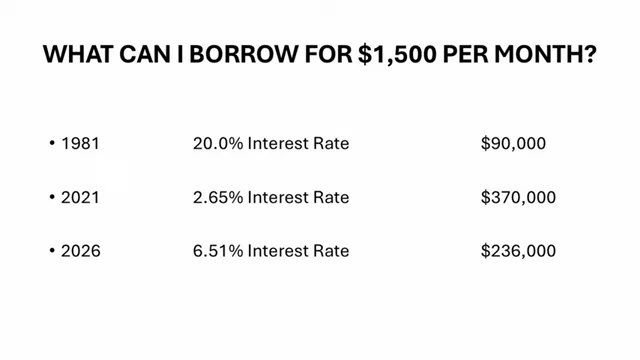
Table showing borrowing power for $1,500 per month at different interest rates across decades [ 00:11:40 ]
- This demonstrates that falling rates inflate home prices, while rising rates deflate them, irrespective of wage growth.
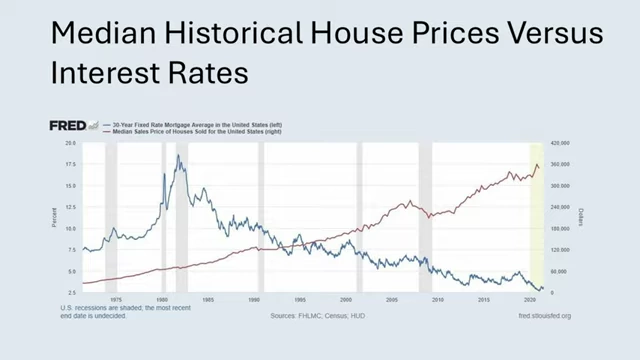
Graph showing the inverse relationship between median historical house prices and interest rates [ 00:12:17 ]
- Most home buyers determine affordability based on monthly cash flow and mortgage payments, where the interest rate is the most critical factor.
- Differential Impact of Mortgage Types [00:12:33]
- United States: Homeowners with fixed-rate 30-year mortgages (e.g., 2.65% in 2021) are "locked in" and reluctant to sell, as selling would mean giving up their cheap mortgage for a much more expensive one, leading to a frozen housing market.
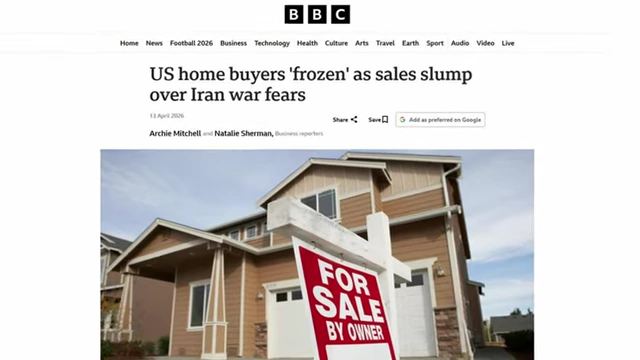
BBC article headline: "US home buyers 'frozen' as sales slump" [ 00:12:37 ] 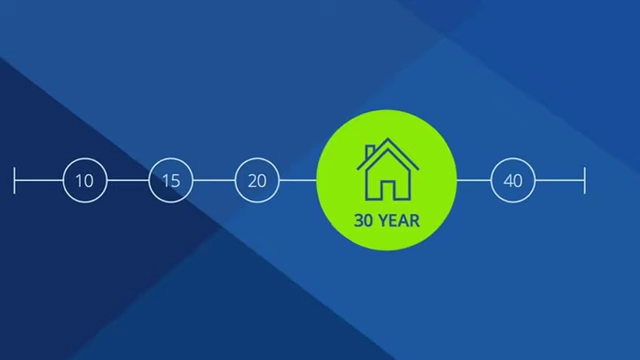
Graphic highlighting a 30-year fixed mortgage term [ 00:12:49 ] - Rest of the World (e.g., New Zealand): Mortgages are typically fixed for only a few years or are variable. When rates rise, monthly payments increase directly, forcing borrowers to find more money, renegotiate, or sell, thus translating rising rates into immediate market pain.
- United States: Homeowners with fixed-rate 30-year mortgages (e.g., 2.65% in 2021) are "locked in" and reluctant to sell, as selling would mean giving up their cheap mortgage for a much more expensive one, leading to a frozen housing market.
- End of Deflationary Tailwinds [00:14:34]
- For 40 years, central bankers could lower rates without sparking consumer price inflation due to globalization and favorable demographics.
- However, these deflationary forces have reversed, with demographic shifts and fracturing globalization contributing to rising consumer prices.

Book cover for "The Unanchored Central Banker" [ 00:14:54 ] - Central banks are now forced to keep interest rates elevated to maintain price stability, despite the negative impact on real estate.

Map showing the Strait of Hormuz with a "CLOSED!" stamp, indicating an energy shock [ 00:15:32 ] 
New York Times article on rising U.S. prices [ 00:15:42 ] - The Reserve Bank of New Zealand, for instance, faced a tie-breaking vote on interest rate hikes due to geopolitical energy shocks, demonstrating the necessity to prioritize inflation control over property values.
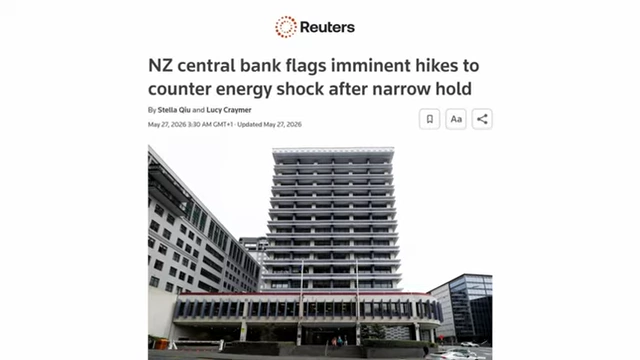
Reuters article on New Zealand central bank's imminent rate hikes to counter energy shocks [ 00:16:06 ]
Economic Consequences of Housing Busts and Inefficient Markets [00:16:49]
- Impact on Construction Industry [00:16:49]
- Since 2022, over 2,000 construction firms in New Zealand have gone bankrupt, hitting a decade high in insolvencies.

RNZ article reporting high construction insolvencies in New Zealand [ 00:16:53 ] - While property values drop during a bust, affordability doesn't necessarily improve due to higher interest rates.
- A housing bust paradoxically undermines the construction industry needed to address housing shortages.
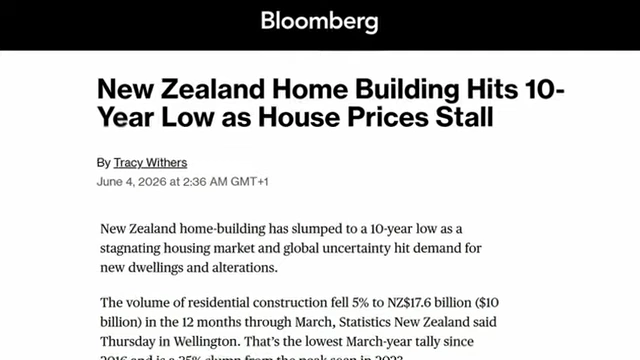
Bloomberg article on New Zealand home building hitting a 10-year low [ 00:17:23 ] 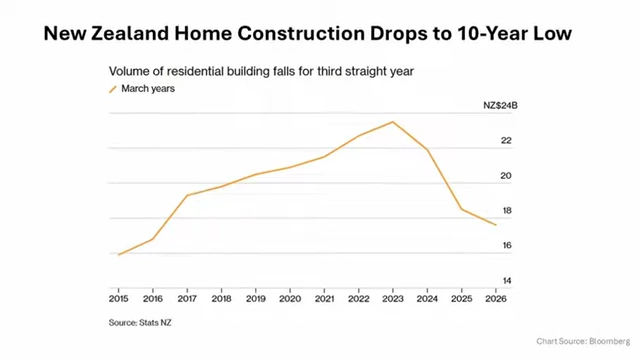
Graph showing New Zealand home construction volume falling to a 10-year low [ 00:17:31 ]
- Since 2022, over 2,000 construction firms in New Zealand have gone bankrupt, hitting a decade high in insolvencies.
- Planning Laws and Supply Restrictions [00:17:33]
- In Auckland, plans for increased housing density in wealthier neighborhoods were scaled back due to homeowner resistance, highlighting a global reluctance to build.
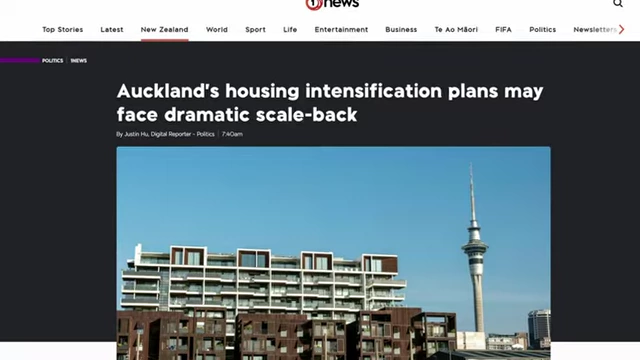
1 News article on Auckland's scaled-back housing intensification plans [ 00:17:46 ] - The UK's planning laws, rooted in the 1947 Town and Country Planning Act, restrict development and create green belts, limiting supply and driving up prices.

Cartoon of a couple on a "property ladder" to different sized houses [ 00:18:15 ] 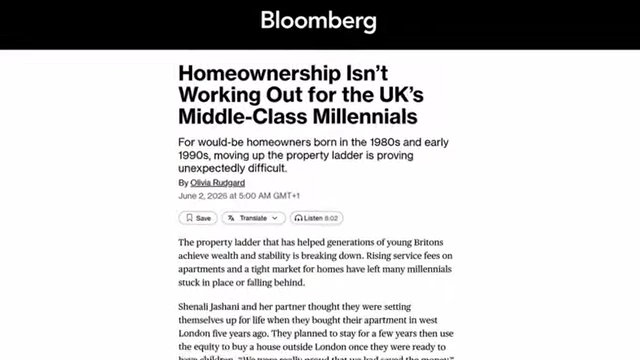
Bloomberg article about homeownership challenges for UK millennials [ 00:18:24 ] 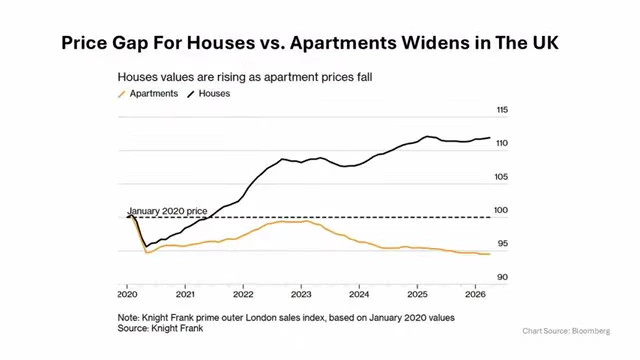
Graph showing the widening price gap between houses and apartments in the UK [ 00:18:30 ] 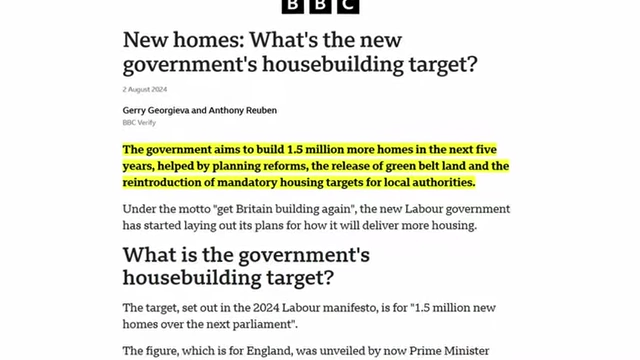
BBC article about the UK government's housebuilding targets [ 00:19:02 ] 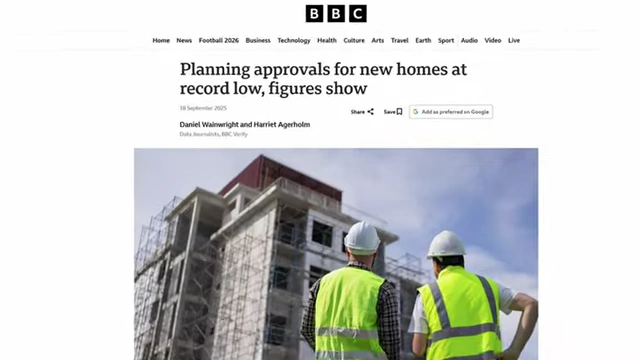
BBC article reporting record low planning approvals for new homes in the UK [ 00:19:06 ] 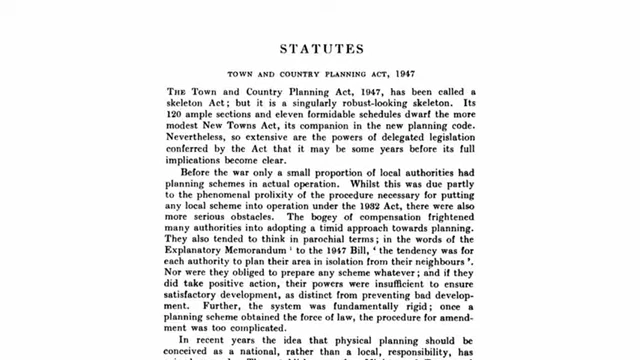
Excerpt from the Town and Country Planning Act, 1947 [ 00:19:11 ] - This is not unique to Britain; in California, post-wildfire rebuilding efforts were fast-tracked only if homeowners rebuilt the exact same (often fire-prone) structures, preventing needed housing innovation.

Wildfires being fought by a helicopter in California [ 00:19:52 ] 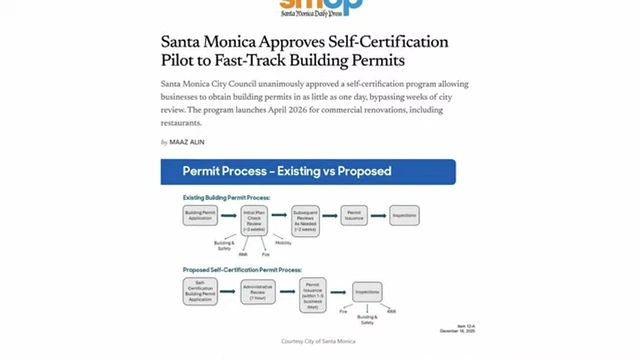
Chart comparing existing vs. proposed permit processes in Santa Monica, California [ 00:20:11 ] - In the UK, the "property ladder" is broken: flat prices in London have fallen by 5.5% since Jan 2020, while house prices rose over 10%, making it harder for millennials to trade up.
- In Auckland, plans for increased housing density in wealthier neighborhoods were scaled back due to homeowner resistance, highlighting a global reluctance to build.
- Brain Drain and Economic Productivity [00:21:11]
- When housing markets price out an entire generation, young workers emigrate.
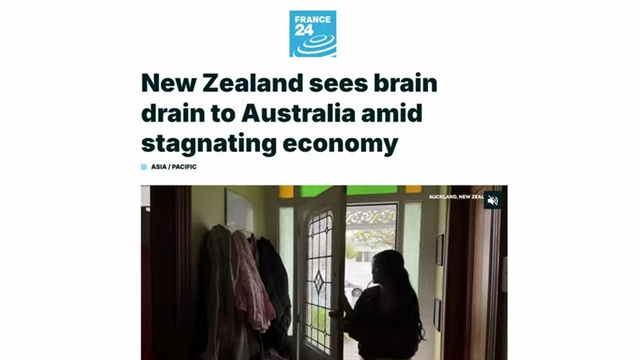
France 24 article on New Zealand's "brain drain" to Australia [ 00:21:37 ] - New Zealand has experienced a "brain drain" to Australia, with almost 200,000 New Zealanders moving in three years for higher wages and better living standards.
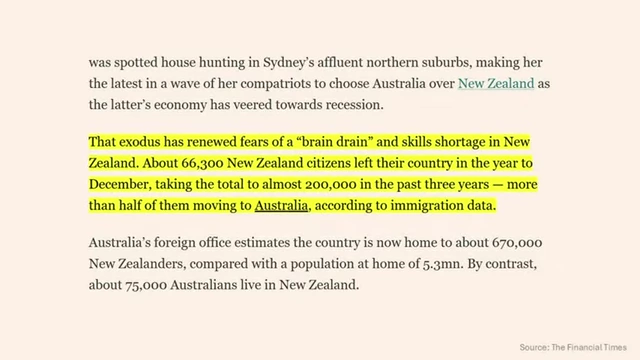
Financial Times article details almost 200,000 New Zealanders moving to Australia in three years [ 00:21:50 ] 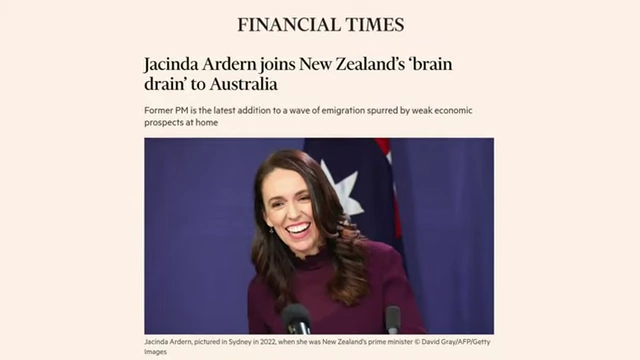
Financial Times article reporting Jacinda Ardern joining New Zealand's "brain drain." [ 00:22:01 ] - Similar dynamics are seen in the US, with workers leaving expensive coastal cities for more affordable places like Texas.
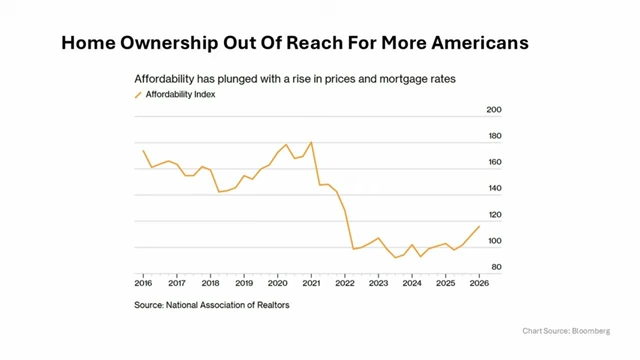
Graph showing U.S. home affordability index plunging [ 00:22:15 ] 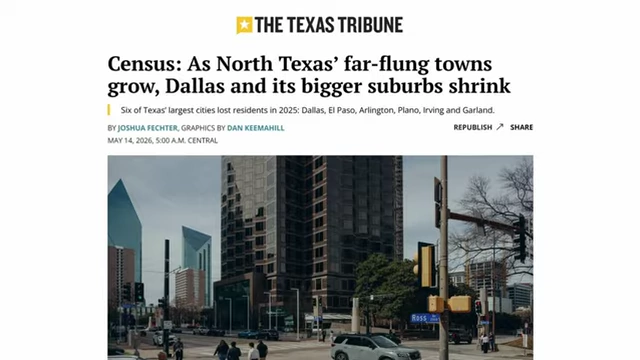
The Texas Tribune reports on growth in North Texas towns while Dallas suburbs shrink [ 00:22:31 ] 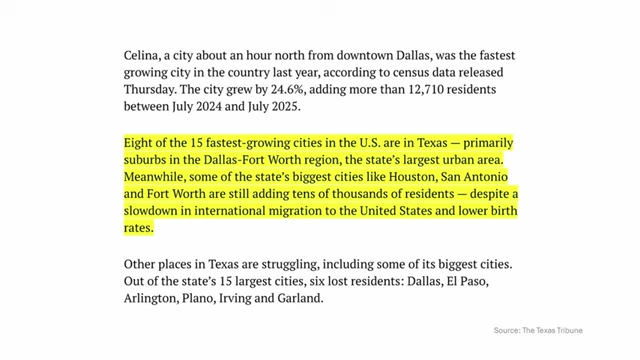
Article stating eight of the 15 fastest-growing U.S. cities are in Texas suburbs [ 00:22:40 ] - An inefficient property market means workers cannot afford to live near productive commercial centers, either making businesses expensive or depriving them of talent, which ultimately stifles economic growth.

Silhouette of a person with luggage at an airport [ 00:23:12 ]
- When housing markets price out an entire generation, young workers emigrate.
How Property Bubbles End and Policy Choices [00:24:20]
- Housing's Central Role in Business Cycles [00:24:20]
- Economist Edward Leamer's 2007 paper, "Housing IS the Business Cycle," argues that housing is not merely a component but the primary driver of economic cycles.
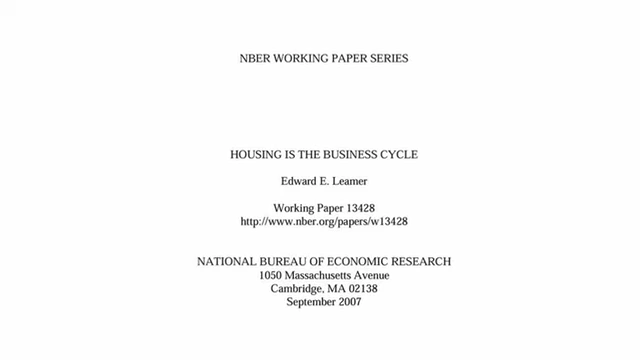
Title page of Edward Leamer's NBER working paper "Housing IS the Business Cycle." [ 00:24:44 ] - Most major US recessions since WWII were preceded by a sharp drop in housing activity.
- Housing differs from the stock market: when the housing market cools, sellers often refuse to lower prices, leading to a collapse in transaction volume rather than an immediate price drop.
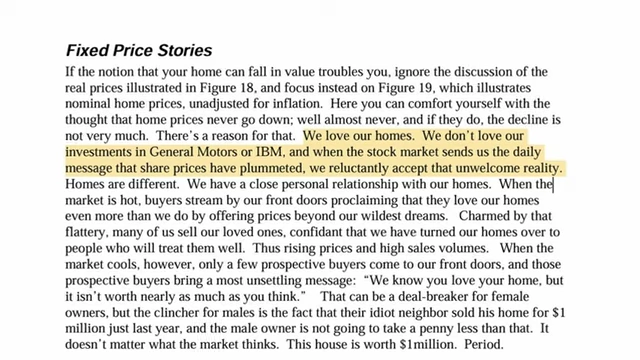
Excerpt from Edward Leamer's paper explaining why home sellers resist lowering prices [ 00:25:38 ] - This collapse impacts construction workers, mortgage brokers, and real estate agents, dragging down the wider economy.
- Economist Edward Leamer's 2007 paper, "Housing IS the Business Cycle," argues that housing is not merely a component but the primary driver of economic cycles.
- Policy Options During a Bust [00:26:10]
- 1. The Japanese Path (Slow Deflation): After their 1991 real estate bubble, Japan gently managed the decline, leading to decades of slow, painful deflation and a "zombie economy" and banking system.
Title page of an IMF working paper on demographics and Japan's housing market. [ 00:26:19 ] - 2. The US/Irish Path (Hard and Fast Crash): Following the 2008 financial crisis, the US and Ireland experienced rapid housing market crashes. While painful, this cleared the "rot," reset prices to more affordable levels, and redirected capital to productive businesses.
- 1. The Japanese Path (Slow Deflation): After their 1991 real estate bubble, Japan gently managed the decline, leading to decades of slow, painful deflation and a "zombie economy" and banking system.
- Conclusion: Redefining Housing's Purpose [00:27:20]
- The fundamental problem is treating the family home as a leveraged investment rather than a place to live and raise a family.
- The desire to keep house prices perpetually rising leads to supply restrictions, blocked development, and the quiet pricing out of new generations, a strategy that ultimately fails and hollows out the economy.
- Returning to a model where housing is primarily valued as a dwelling, not a speculative asset, is essential for a functioning and growing economy.