The Complete Playbook for Building, Growing, and Monetizing Your Personal Brand as a Creative
Summary:
- Personal Branding is Permanent: Personal branding is essential in the modern workforce, offering a way to stand out amidst AI and remote work, increasing enterprise value and career opportunities.

Modern Creative Journey Diagram [ 00:02:16 ] - 4 Levels of Personal Brand: From casual content creation (Level 0-1) to becoming a recognized figure (Level 2) and a trend-influencing guru (Level 3), understanding your goal is crucial.
- "No Competition" Mindset: Out of 100 people who start, only 3 will consistently create content in your niche for the long term, highlighting the power of persistence.
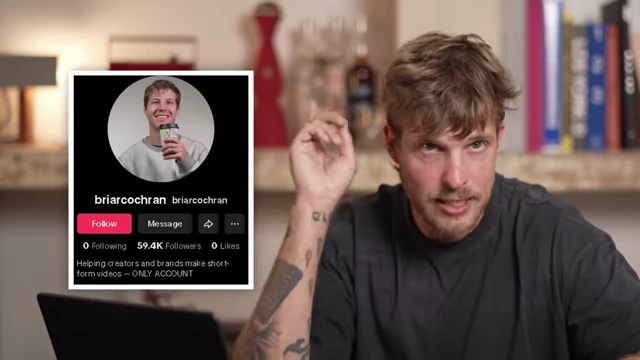
Briar Cochran's TikTok Profile Example [ 00:09:36 ] - Content Strategy: Focus on "content market fit" by targeting specific niches (niche-maxing) and understanding your "total available market" (Content TAM), always providing entertainment or value.

Content TAM / Niche-Maxing [ 00:15:29 ] - The Pillar System: Develop 4 consistent content approaches and regularly analyze their performance to iterate and improve.

Pillar System [ 00:17:39 ] - Content Formats & Positioning: Utilize various formats like green screen videos, quick hits, carousels, and text. Position your brand through counterpositioning, mirroring with a twist, or highlighting a standout demographic.

Feedback Loop for Content Improvement [ 00:20:58 ] - Growth & Monetization: Implement a feedback loop, prioritize view quality over virality, and learn to scale content. Monetize through services, low-ticket teaching, brand deals, and products by building an email list and creating landing pages.

Marquee Media Property Podcast Example [ 00:27:07 ] - The Power of Time: Personal branding is a long-term game; consistent effort over 1-5 years builds a solidified superpower that can lead to significant opportunities and financial gains.
Introduction to Personal Branding [00:00:00]
- The Inevitability of Personal Branding: In an era of AI-driven resumes, remote work, and reduced mentorship, a personal brand helps individuals stand out and navigate a noisy, complicated world. It's a permanent shift in how people advance their careers.
- Overcoming Overwhelm: Many feel overwhelmed by the idea of creating content in addition to their daily tasks. The speaker suggests channeling mental energy from sensationalist news and phone use into creating valuable content that yields future rewards.
- The Flattening of Content & Niche Opportunity: With more creators and advanced algorithms, broad "universal" content gets fewer views. This creates an opportunity for small personal brands to succeed by speaking to a niche of a few thousand people, achieving objectives without needing massive reach.
- The sweet spot for most personal brands is 3,000 to 10,000 views per video, reaching genuinely interested individuals.
The 4 Levels of Personal Brand [00:04:30]
- Distinguishing Personal Brand from Creator:
- Personal Brand: The primary goal is to aid your career or future endeavors, building a platform to help you achieve these.
- Creator: Focused on being employed as a creator, often with direct monetization goals.
- Level 0: Intrinsic Personal Brand: Everyone online inherently has a personal brand, representing the perception others have of you even when you're not present.
- Level 1: Casual Content Creation [00:05:10]
- Description: Your personal brand is an extension of what you do, but does not define you. You create content to tell your story and showcase your unique qualities, without aspiring to be a full-time creator.
- 5 Archetypes of Level 1 Personal Brands:
- Carousel Dumper: Posts photo carousels on platforms like Instagram to share work or life events in rapid succession (e.g., a creative director showcasing projects).
- Documentarian [00:06:08]: Documents life, brand, and career milestones (e.g., promotions, project completions) on platforms like LinkedIn.
- Hobbyist [00:06:25]: Creates content about a passion or hobby that adds depth to their personality, especially powerful when aligned or tangential to their profession (e.g., a real estate agent sharing interior design mood boards).
- This develops a portfolio and showcases content skills outside of direct work.
- Casual Poster [00:07:13]: Posts informally about their life, often through talking to the camera (yapping) or short skits, without high production value. Common among Gen Z.
- Journeyman/Woman [00:07:37]: Documents a specific journey or goal over a set timeframe (e.g., "learning to draw in 60 days"), demonstrating a plan and consistent effort.
- Value of Level 1: Helps you understand content creation, makes you more valuable in the workforce, and increases awareness of you. Most people don't need to go beyond this level.
- Level 2: Personal Brand as Part of Your Life [00:08:14]
- Description: Your personal brand begins to define you both online and offline. You're known for it, may earn some money, and might consider it a full-time pursuit.
- Career Impact: Initial awkwardness as colleagues discover your online presence, but later becomes an asset, especially if recognized from the start.
- Level 3: Larger than Life (Guru Status) [00:08:54]
- Description: Your personal brand transcends your direct posts, influencing trends and becoming widely referenced. This level was once reserved for authors and traditional thought leaders, but is now achievable by consistent online content creators (e.g., Gary Vaynerchuk).
- Recommendation: The speaker advises most people to aim for Level 1, but encourages understanding the full spectrum to choose a direction.
The "No Competition" Model [00:09:32]
- The Scarcity Principle: The speaker introduces a model illustrating the lack of true competition in personal branding:
- 100 people start with the intention of building a personal brand in your niche.
- 80 will never start (fail to break 0 to 1). You're already ahead by simply starting.
- 10 will quit early (e.g., after a few attempts).
- 5 will get "shiny object syndrome" and switch to a different niche or interest.
- 2 will be unlucky due to life events (e.g., injury, personal issues).
- 3 remain: These are the only people truly creating consistent content in your niche, making genuine competition almost nonexistent.
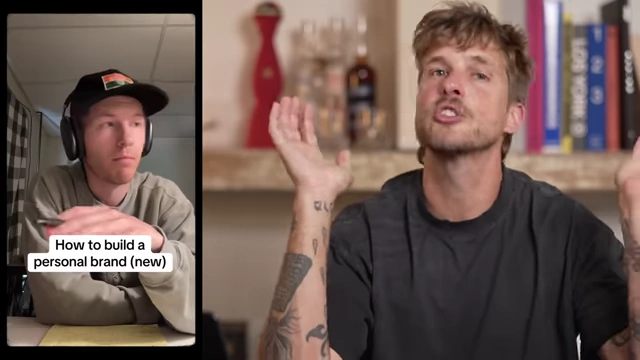
Briar Cochran's TikTok Video Example [ 00:09:41 ]
- Application: This model highlights that persistence is the greatest differentiator, even in seemingly saturated fields like marketing on YouTube. You can stand out regardless of your starting point.
- The speaker points to Kane Callaway as another example of a marketing creator.

Kane Callaway's YouTube Video Thumbnail [ 00:11:05 ]
- The speaker points to Kane Callaway as another example of a marketing creator.
Content Strategy & Formats [00:13:28]
Content Toolkit - Available Formats:
- Video:
- Green Screen: Highly effective for talking over visuals (easily done in CapCut, editing apps, or native platform tools). Engages viewers visually and with text.
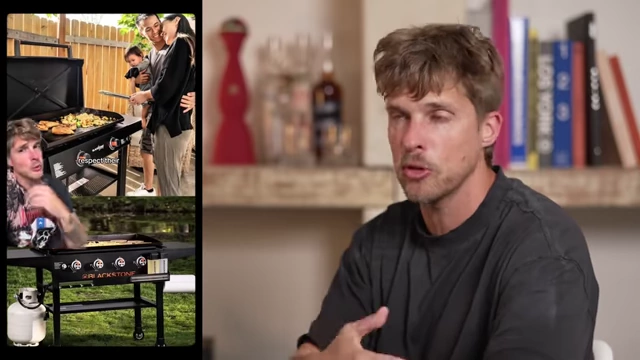
Green Screen Video Example [ 00:13:45 ] - Yapping: Simply talking to the camera. Works best on TikTok but is an option across platforms.

Yapping Video Example [ 00:14:02 ] - Quick Hits: Short video clips with overlaid text (no talking). Underrated format for being clever and useful, often forming the basis of many personal brands.
- Vlogs: Slightly longer videos, often with voiceovers, telling real stories.

Vlog Style Video Example [ 00:14:24 ]
- Green Screen: Highly effective for talking over visuals (easily done in CapCut, editing apps, or native platform tools). Engages viewers visually and with text.
- Carousels:
- Carousel Dump: Casual posting of multiple photos/videos.
- Produced Carousels: Designed carousels using templates (e.g., from Creative Market) to share opinions or information.
- Text: Posts on LinkedIn or Twitter. While easily replicable (especially with AI) and less engaging, it can be a starting point.
- Format: Subject (news, trend, personal experience) + Response (opinion, analysis).
- Recommendation: Convert text ideas into more visually engaging carousel or video formats for wider reach.
- Video:
Content Market Fit [00:15:22]
Content TAM / Niche-Maxing [ 00:15:29 ] - Niche-Maxing: Focusing on a super specific interest to reach a highly engaged, targeted audience. Views may be smaller, but they are "views that matter" for career or specific goals.
- Content Total Available Market (TAM): How many people are interested in your niche?
- Example: The speaker enjoys "the math of money" (small TAM, ultra-high value niche) and "aesthetic branding" (good middle TAM).
- Strategy: Identify your passions (personal and business), evaluate their TAM, and align it with your personal brand goals (e.g., getting hired, building freelance distribution, attracting a partner).
The Core Principle: Value or Entertainment [00:17:15]

No one cares about you - focus on value or entertainment [ 00:17:19 ] - To reach your TAM, remember: "No one gives a sht about you; they give a sht about them."
- Every piece of content must either entertain or provide value to the audience. Pure self-focus will limit reach.
The Pillar System [00:17:34]
Pillar System Diagram [ 00:17:39 ] - Description: A system for creators to scale content by developing 4 distinct content approaches (pillars).
- Process:
- Identify 4 primary content types/styles (e.g., marketing ideas, product development, creative travel).
- Track monthly metrics (saves, views, shares).
- Analyze performance: Is a pillar losing interest? Am I not performing well?
- Iterate: Remove/replace underperforming pillars or improve existing ones.
- Benefit: Provides a structured way to maintain creative strategy and adapt to audience interest.
Positioning Your Brand [00:18:20]

- Position Type 1: Counterpositioning [00:18:27]
- Identify common narratives or styles in your niche and present an opposite or alternative perspective (e.g., low-fi production against high-production, framing "easy" as "hard").
- Example: Briar Cochran's low-fi TikToks about personal brand content from a fresh perspective, contrasting with established "gurus" who emphasize past massive success.

Briar Cochran's TikTok Profile for Counterpositioning [ 00:18:28 ] 
Briar Cochran's TikTok Video for Counterpositioning [ 00:18:42 ]
- Position Type 2: Mirror with a Twist [00:19:13]
- Copy successful strategies or content types in your niche but add a radical change in production, aesthetic, or niche angle.
- Example: Taking written playbook content and presenting it on whiteboards (production twist) or discussing marketing concepts through "cult mimetics" (niche/aesthetic twist).

Mirror with a Twist Strategy [ 00:19:14 ] 
Cult Holdings Carousel Example [ 00:19:54 ] 
Steve Jobs Quote Carousel Example [ 00:19:59 ]
- Position Type 3: Standout Demographic [00:20:08]
- Offer a unique angle by appealing to a specific demographic based on gender, location, race, or lifestyle within an existing niche.
- Example: Shelby Sap's sales training specifically for women, creating a distinct identity within a broader field.
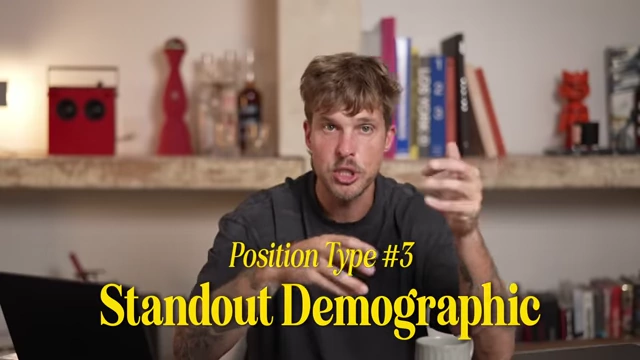
Standout Demographic Strategy [ 00:20:10 ] 
Shelby Sap's Sales Training Video Example [ 00:20:16 ]
Improving Content & Growth [00:20:51]
- The Feedback Loop [00:20:51]
- Process: Make posts -> Analyze performance -> Create variations based on analysis -> Produce more of what works.
Content Feedback Loop [ 00:20:58 ] - Variations: Instead of just reporting news, create a "playbook" of the news, reposition it with personal relevance, or do a "versus" comparison.
- Process: Make posts -> Analyze performance -> Create variations based on analysis -> Produce more of what works.
- Focus on View Quality, Not Just Virality [00:21:23]
- Viral content doesn't always translate to money or value. Prioritize reaching the 1,000 interested people who will help you achieve your specific personal brand goals.
- Importance of Presentation and Personality
- Memorable Visuals: Looking unique or memorable (styling, facial structure, body type) matters more than being perfect.

Memorable Content Example [ 00:21:51 ] - Care and Positivity: Care about your presentation, look good, and maintain genuine positivity to attract the right audience.

Positive Presentation Example [ 00:22:12 ]
- Memorable Visuals: Looking unique or memorable (styling, facial structure, body type) matters more than being perfect.
- Scaling Views & Consistency:
- 0-500 Views: Focus on "Why would anyone care?" Ensure content is entertaining or valuable, has good presentation, and hooks viewers.
- Above 1,000 Views: Concentrate on content structure: good ideas, strong hooks, technical quality, and following established formulas.
- 10,000-50,000 Views: Identify your "outliers" (best-performing content) and repeat them, but avoid oversaturation (e.g., "Product vs. Brand" series max 3 times a month).
- Above 100,000 Views [00:23:58]
- Requires robust systems, scale, and a dedicated team for consistent high-quality output. It becomes a process-driven operation.

Systems and Scale for High Views [ 00:23:58 ]
- Requires robust systems, scale, and a dedicated team for consistent high-quality output. It becomes a process-driven operation.
- Avoiding Oversaturation & Constant Testing [00:24:15]
- Don't overdo a successful content type; have multiple pillars to alternate.
- Continuously test new ideas, even if they don't immediately perform well, as what works today might not work forever.
- Remixing Ideas by Format [00:24:46]
- Attracting Initial Attention [00:25:24]
- Context & Attention Hacking: Leverage current interests and pop culture trends by attaching your niche content to them (e.g., a video about store design tied to a trending brand like Cracker Barrel).
Cracker Barrel Logo Example for Context Hacking [ 00:25:36 ] - Tribal Affinity: Use niche-specific "signaler" brands or concepts that only an in-group would recognize, demonstrating deep understanding and building connection (e.g., obscure outdoor gear brands).

Obscure Outdoor Gear Example for Tribal Affinity [ 00:25:53 ]
- Context & Attention Hacking: Leverage current interests and pop culture trends by attaching your niche content to them (e.g., a video about store design tied to a trending brand like Cracker Barrel).
- Personality & Community Engagement [00:26:14]
- Personality: Showcase a genuine personality (chill, fun, outgoing, authoritative) that people want to like.
- Showing Your Life: Share aspects of your personal life that add depth and relatability.
- Community Engagement: Actively reply to comments, create reply videos, and interact live to show you care about your audience, fostering a retained community.


Monetization Strategies (Advanced) [00:26:42]
- Marquee Media Property [00:26:51]
- Miniseries & Recurring Topics [00:27:30]
- Develop signature content series from your pillars that you become known for (e.g., "Product vs. Brand").
- Going Wide (Cross-Platform Distribution) [00:27:48]
- Maximize the value of your content by distributing it across as many platforms as possible (e.g., YouTube videos as Shorts, LinkedIn posts, Substack articles, YouTube community carousels).
- Making Money - Initial Steps [00:28:09]
- 1. Contact Info in Bio: Essential for 90% of creators.

Contact Info in Bio Reminder [ 00:30:47 ] - 2. Email List: Crucial for building a retained audience.
- Platforms: Substack (for social leverage), Beehiiv (for monetization), ConvertKit (low cost, easy landing pages).
- 3. Landing Pages: Simple pages to capture emails in exchange for lead magnets (e.g., summaries, reports, guides).
- 1. Contact Info in Bio: Essential for 90% of creators.
- Sales & Monetization Models:
- Principle: "Why they watch is why they buy." If they watch for marketing tips, they'll buy marketing tips.
- 1. Services: Showcase your expertise and offer specific services (e.g., "Here's how I would do X with my agency"). This is the easiest to sell.
- 2. Low-Ticket Teaching: Offer affordable, actionable guides or mini-courses (e.g., "$50 guide on home photography lighting"). This can lead to:
- 3. High-Ticket Done-for-You: Offer premium, personalized services (e.g., "$1,000 Zoom session to set up lighting").
- 4. Brand Deals: For established personal brands with niche audiences, brands will approach for partnerships.
- Strategy: Show value, talk about products/tools you genuinely use, make partnerships easy, and actively seek opportunities (e.g., run ads with brand content).
- 5. Products: The "hard way" but highly rewarding. Building expertise in a niche through personal branding makes launching related products significantly easier and more informed.
- Example: Make content about drinks for 2 years before launching a drink beverage.

Key Content Concepts to Consider [00:31:50]
- 1. Free Work [00:31:57]
- 2. Niche Playbook [00:32:15]
- Take an existing concept and hyper-niche it for a specific audience (e.g., "3 Chest Exercises for Men Over 50," "Workouts for Women Over 50," "Construction Companies in the Midwest").
- 3. "Don't Overthink It" Content [00:32:42]
- Demonstrate how complex concepts or products are often based on simple, resonant ideas by providing examples and breakdowns.
- 4. "Would and Wouldn't" Expertise [00:32:53]
- Share your expert opinions on what you "would and wouldn't do" within your niche (e.g., "10 Things I Would Buy at Trader Joe's as a Food Scientist").
- 5. Curation [00:33:03]
- Compile and share relevant news, trends, or resources within your niche. This saves your audience time and positions you as a valuable resource, even if you're early in your career.

GradGirl Marketing Curation Example [ 00:33:07 ]
- Compile and share relevant news, trends, or resources within your niche. This saves your audience time and positions you as a valuable resource, even if you're early in your career.


The Importance of Time [00:33:40]
- A Long-Term Horizon: Personal branding is a lifelong endeavor that requires delayed gratification.
- 30 Days: "I can do this" – Mental commitment after initial consistency.
- 100 Days: Routine is established – The habit is built, less likely to stop.
- 365 Days (1 Year) [00:34:02]: Expect to make money – Initial monetization becomes feasible.
- 2 Years: Enough knowledge to make a strategic plan for growth.
- 3 Years: Stay on the plan – Execute and refine the strategy.
- 5 Years [00:34:33]: Anything is possible – Your brand is solidified, a superpower for career and life goals.
- No "Too Late" or "Too Old": The only limitation is the willingness to invest the consistent time needed to see results, regardless of age.
Conclusion [00:35:06]
- The speaker encourages viewers to start their personal branding journey, emphasizing the 30-day and 100-day milestones, and never stopping to unlock its full potential.