7 Highly Effective and Underrated Exercises for Muscle Growth and Strength
This video introduces 7 underutilized exercises that offer significant benefits for muscle growth and overall strength, moving from more common to more obscure movements.
- 1. Dead Hangs: Improve shoulder health, forearm strength, core stability, spinal decompression, and muscular endurance.
- 2. Zottman Hammer Curls: Enhance bicep and forearm development by overloading both the positive (hammer grip) and negative (supinated grip) phases of the curl.
- 3. Incline Dumbbell Y-Raises: Target side deltoids effectively with a better tension profile and provide a more comfortable range of motion for shoulder health.
- 4. Side-Facing One-Arm Rear Delt Flyes: Ensure a full range of motion for the rear delts, allowing for a deeper stretch and more complete muscle engagement than traditional variations.
- 5. Dragon Flags: Build incredible core strength, especially in the lower and upper abs, obliques, and serratus, with isometric contraction.
- 6. Kelso Shrugs: Isolate mid-traps and rhomboids for superior back thickness, preventing fatigue in the lower back and biceps often experienced with traditional rows.
- 7. Seated Cable Deadlifts: Efficiently activate glutes and hamstrings with greater stability and less spinal fatigue compared to heavy barbell deadlifts.
Why These Exercises Are Effective [0:00]
The video highlights seven exercises that are often overlooked but offer significant benefits for muscle building and strength. These are not "gimmicky optimal tricks" but rather time-tested movements with scientific support that the speaker incorporates into his weekly routine. The exercises progress from relatively more common to increasingly obscure, ensuring that even experienced lifters might find new movements to try.

1. Dead Hangs [0:37]
Dead hangs are a simple yet highly effective exercise for various aspects of physical health and strength.
- Benefits:
- Improve shoulder health by opening the shoulder joint, allowing tendons and rotator cuff muscles to move more freely, potentially reducing shoulder pain.
- Increase forearm strength and muscular endurance.
- Enhance core strength.
- Provide spinal decompression, offering relief from back stiffness, especially after heavy squats or deadlifts.

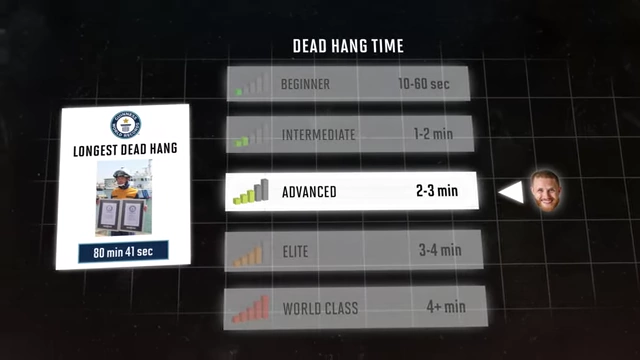
Diagram illustrating how dead hangs open the shoulder joint, reduce shoulder pain, and relieve back tension through spinal decompression [ 00:01:50 ] - Dead Hang Time Benchmarks:
- Beginner: 10-60 seconds
- Intermediate: 1-2 minutes
- Advanced: 2-3 minutes
- Elite: 3-4 minutes
- World Class: 4+ minutes
Dead Hang Time Benchmarks with the speaker's time noted and the world record [ 00:01:40 ]
- Technique:
- Use chalk for better grip.
- Grip the bar just outside shoulder width, using a bench if needed to reach.
- Start with a looser grip to avoid forearm fatigue, gradually gripping harder as you start to slip.
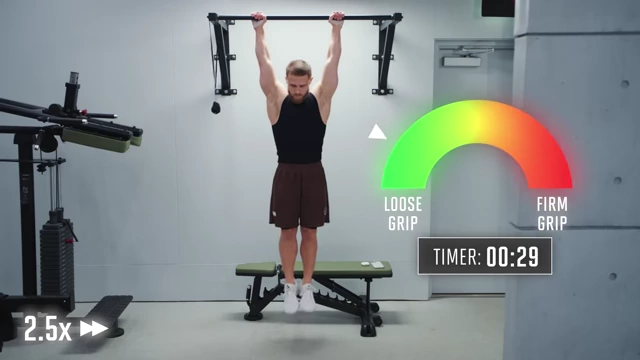
Visual demonstrating the pacing of grip strength during a dead hang (loose to firm) [ 00:02:13 ] - For max time: Brace your core but don't over-flex to avoid tiring out.
- For spinal decompression: Start with a braced core, then gradually let your hips sink down and stretch out.
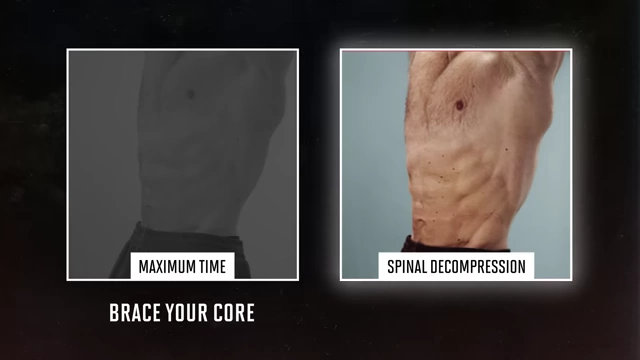
Comparison of core bracing for maximum time versus spinal decompression [ 00:02:25 ] - Keep legs straight down, feet together, and toes pointed down to prevent swinging.
- Focus on consistent breathing.
- Modifications:
- Beginners who can't dead hang with bodyweight can use an assistance band looped around the bar or an assisted pull-up machine.

Man demonstrating an assisted dead hang using a resistance band [ 00:02:51 ]
- Beginners who can't dead hang with bodyweight can use an assistance band looped around the bar or an assisted pull-up machine.
2. Zottman Hammer Curls [3:02]
This exercise modifies a standard dumbbell curl to more effectively overload the negative (eccentric) phase, which is crucial for muscle growth.
- Concept:
- The negative (lowering) phase of a lift is typically 40-50% stronger than the positive (lifting) phase.

Infographic comparing positive and negative strength, showing the negative phase is 40% stronger [ 00:03:23 ] - Standard dumbbell curls often under-challenge the negative phase.

Visual demonstrating that a standard curl overloads the positive phase more than the negative, which is under-challenged [ 00:03:30 ] - The Zottman Hammer Curl uses biomechanics to make the weight "effectively heavier" on the negative.
- The negative (lowering) phase of a lift is typically 40-50% stronger than the positive (lifting) phase.
- Technique:
- Grip the dumbbell in the middle of the handle.
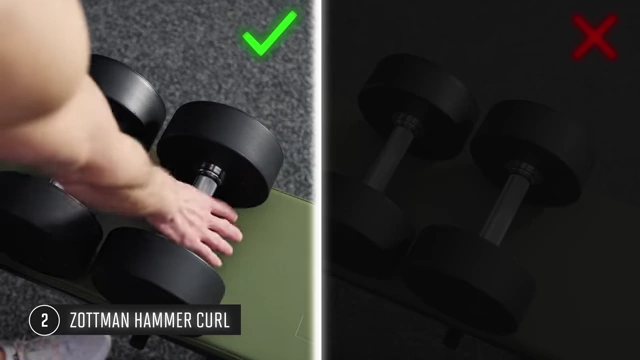
Proper dumbbell grip in the middle of the handle, avoiding the thumb resting against the head [ 00:04:11 ] - Curl the weight up with a hammer grip (palms facing each other), stopping just before your arm is vertical. This engages the brachialis and brachioradialis to assist.

Man curling a dumbbell with a hammer grip [ 00:03:57 ] 
Anatomy graphic showing brachialis and brachioradialis activation during the positive (hammer grip) phase [ 00:04:02 ] - At the top, rotate your palms up to a supinated grip.
- Lower the weight back down under control with the supinated grip, sweeping the weight out in a wide arc. This forces the biceps to take the load.
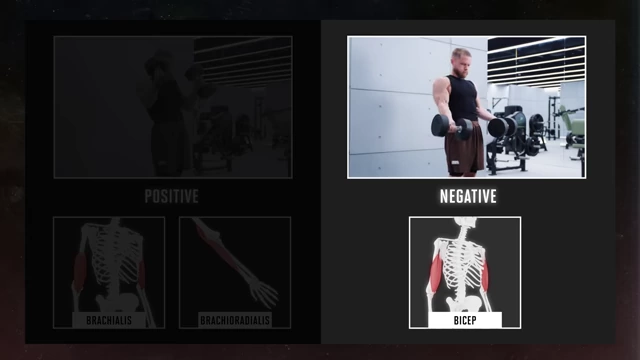
Anatomy graphic highlighting bicep activation during the negative (supinated grip) phase [ 00:04:07 ] - Once at the bottom, rotate palms back to a hammer grip and repeat.

Man demonstrating the Zottman Hammer Curl, showing the rotation from hammer grip to supinated grip for the eccentric [ 00:04:29 ] - Perform for 8-10 reps.
- Grip the dumbbell in the middle of the handle.
- Note: While not necessarily superior to standard curls, it's an effective variation. For standard curls, slowing down the negative helps even out the strength curve.
3. Incline Dumbbell Y-Raises [4:55]
An improvement on standard lateral raises, this exercise offers a better tension profile and targets specific shoulder fibers.
- Problem with Standard Lateral Raises:
- Due to gravity, there's zero tension on the delts at the bottom, and peak tension only hits at the very top of the movement.

Illustration showing low tension at the bottom and high tension at the top for a standard lateral raise, indicating a lopsided tension profile [ 00:05:13 ]
- Due to gravity, there's zero tension on the delts at the bottom, and peak tension only hits at the very top of the movement.
- Benefits of Incline Dumbbell Y-Raise:
- Provides more consistent tension throughout the range of motion.
- Targets fibers between the front and side deltoids, adding shape to the shoulders.
- Often feels more comfortable for the shoulders, as lifting occurs in the scapular plane (about 30° to the front).
- Technique:
- Set a bench at a 20-30° incline (leaning pretty far back).
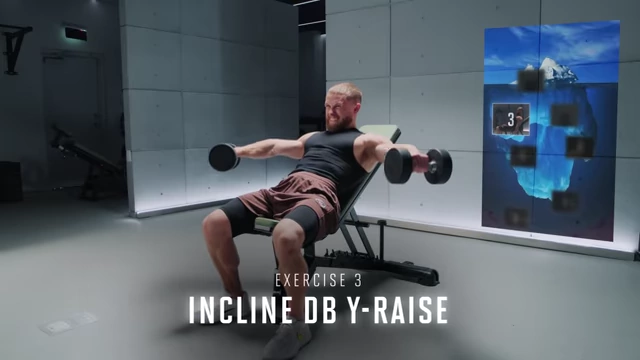
Man seated on an incline bench set at a 20-30 degree angle for Y-raises [ 00:05:06 ] - Brace your upper back against the bench and lift your chest up.
- With dumbbells at your sides, lift them up and out in a "Y" shape.

Man demonstrating the top position of the Incline Dumbbell Y-Raise [ 00:05:51 ] - Focus on squeezing side delt fibers together on the way up and feeling them stretch on the way down.
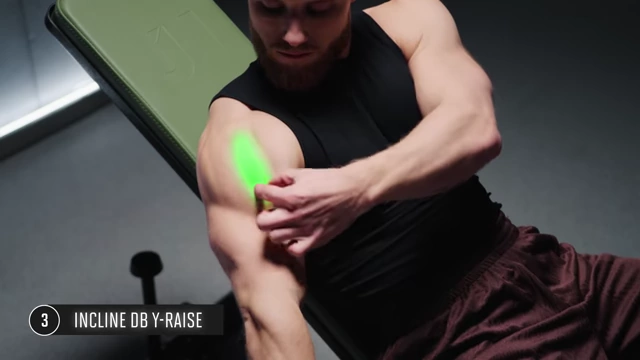
Close-up highlighting the targeted deltoid fibers for shape development during the Incline Dumbbell Y-Raise [ 00:06:18 ] - Stop once the dumbbells return to your sides; don't let them swing vertically to avoid losing tension.
- Set a bench at a 20-30° incline (leaning pretty far back).
4. Side-Facing One-Arm Rear Delt Flyes on Pec Deck [6:35]
This variation of the rear delt fly ensures a full range of motion, unlike traditional pec deck usage.
- Issue with Traditional Pec Deck Rear Delt Flyes:
- Traditional execution often results in half reps in a shortened position, failing to adequately lengthen the rear delts.

Diagram illustrating the limited range of motion of traditional reverse pec deck flyes [ 00:06:58 ]
- Traditional execution often results in half reps in a shortened position, failing to adequately lengthen the rear delts.
- Benefits of Side-Facing Variation:
- Allows the rear delts to reach a full stretch position by moving the arm across the body.

Diagram illustrating the full range of motion achieved by performing side-facing one-arm rear delt flyes [ 00:07:11 ] - Promotes more complete muscle development.
- Allows the rear delts to reach a full stretch position by moving the arm across the body.
- Technique (Pec Deck):
- Instead of sitting normally, turn sideways to the machine.
- Sweep your arm out across your body, focusing on using the rear delts to move the weight rather than back or biceps.
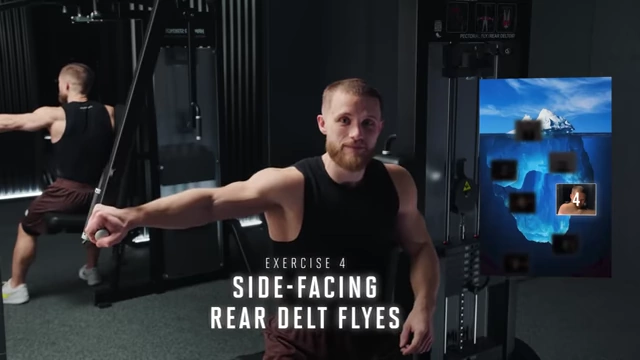
Man performing a side-facing one-arm rear delt fly on a pec deck machine [ 00:06:45 ] - Think about covering as much area as possible to engage the rear delts effectively.

Overhead view illustrating the sweeping arm motion for maximum rear delt engagement, conceptualized as collecting money [ 00:07:28 ]
- Alternatives:
- Cables: Stand sideways to a cable machine and reach your arm across your body for the full stretch.

Man performing a side-facing one-arm rear delt fly using a cable machine [ 00:07:39 ] - Dumbbells: Lie face down on a bench, stretch the dumbbell across your body, and lift it back up.

Man performing a side-facing one-arm rear delt fly with a dumbbell while lying on a bench [ 00:07:51 ]
- Cables: Stand sideways to a cable machine and reach your arm across your body for the full stretch.
5. Dragon Flags [8:10]
A challenging core exercise famously used by Bruce Lee, targeting the entire abdominal region.
- Muscles Worked:
- Primarily hits the lower abs, as you're lifting your legs.
- The entire rectus abdominis (six-pack) contracts isometrically to keep the spine extended.
- Obliques provide stability.
- Serratus muscles anchor the back and shoulders.
- Also engages the lats.
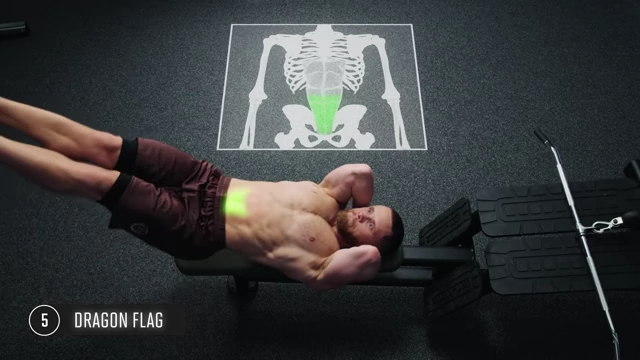
Anatomy graphic highlighting the activation of the lower abs, upper abs, and obliques during a Dragon Flag [ 00:08:29 ]
- Technique:
- Grab onto the top of a sturdy bench.
- With straight hips and knees, lift your entire body (including glutes) off the bench until your legs are at a roughly 60-80° angle.

Man demonstrating the peak position of the Dragon Flag exercise [ 00:08:18 ] - While keeping hips straight, lower your legs back down under control.
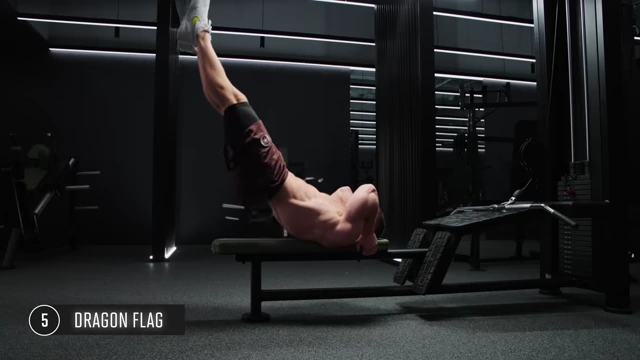
Man demonstrating the controlled descent of the Dragon Flag exercise [ 00:09:14 ] - Repeat for 4-8 reps.
- Progressions (from easier to harder):
- Lying Leg Raises: Lie flat on your back, lift legs up while bracing core (8-10 reps).
- Bent-Knee Dragon Flags: Bend knees to shorten the lever arm, making the exercise easier.
- Full Dragon Flags: Gradually progress to straight legs.
- Advantages over other ab exercises:
- Provides more torso stability than hanging leg raises, allowing for better abdominal tension without swinging.
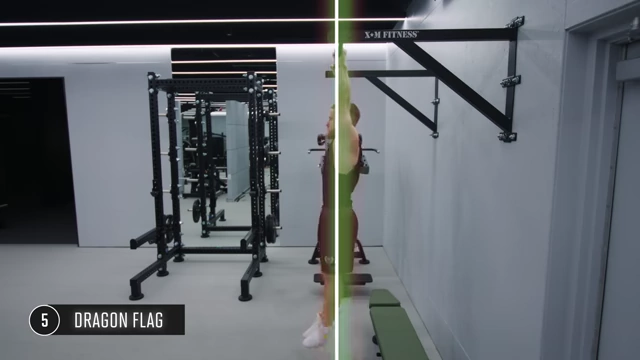
Visual illustrating the instability and swinging motion that can occur during hanging leg raises [ 00:09:55 ] - Less demand on back, arms, and shoulders than Roman chair leg raises.

Diagram of a Roman chair for leg raises, used for comparison to Dragon Flags [ 00:10:01 ]
- Provides more torso stability than hanging leg raises, allowing for better abdominal tension without swinging.
6. Kelso Shrugs [11:10]
An underrated back-builder that specifically isolates the mid-traps and rhomboids for thickness without fatiguing the lower back or biceps.
- Concept:
- Unlike standard rows where elbows bend and biceps are heavily involved, Kelso shrugs keep elbows locked.
- This isolates the "back squeeze" motion.
- Research indicates rows are not optimal for biceps growth (curls are twice as effective), and biceps can limit back stimulation in rows.

Graph comparing the increase in muscle thickness from rows versus curls, showing curls are more effective for biceps [ 00:11:54 ] - After hitting failure on a row, one can often perform additional Kelso shrugs, indicating the mid-back wasn't fully fatigued.
- Technique (T-Bar Row Machine):
- Load a chest-supported T-bar row machine.
- Brace your chest against the pad.
- Take a wide grip (around 1.5 times shoulder width).
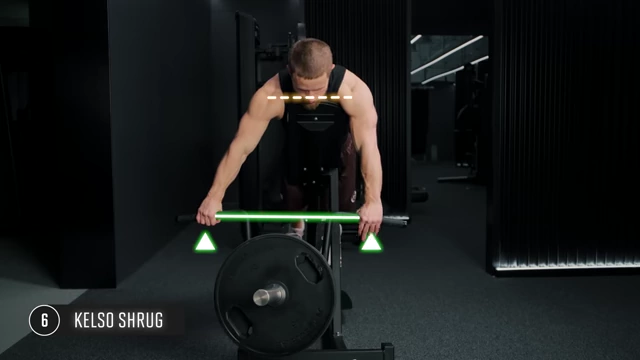
Man setting up for Kelso shrugs on a T-bar row machine with a wide grip and chest supported [ 00:12:26 ] - Unrack the weight.
- With completely locked arms, squeeze your shoulder blades together as hard as you can.
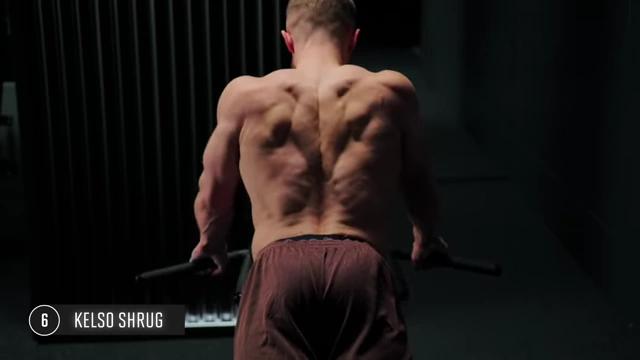
Man performing Kelso shrugs, showcasing the shoulder blade retraction and mid-back squeeze from a rear view [ 00:12:37 ] - Pause for about 1 second at the top.
- Let your shoulder blades peel apart on the negative.
- The weight should only move about 4-5 inches, representing the full range of motion for isolated mid-back retraction.
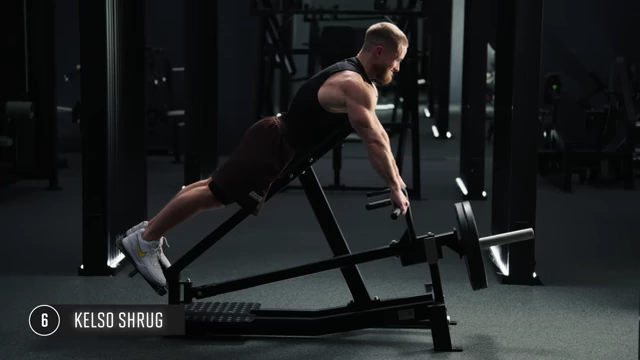
Man performing Kelso shrugs on a T-bar row machine, emphasizing locked arms and shoulder blade movement [ 00:11:31 ]
- Alternative:
- Can be performed by bracing against an incline bench and using dumbbells.
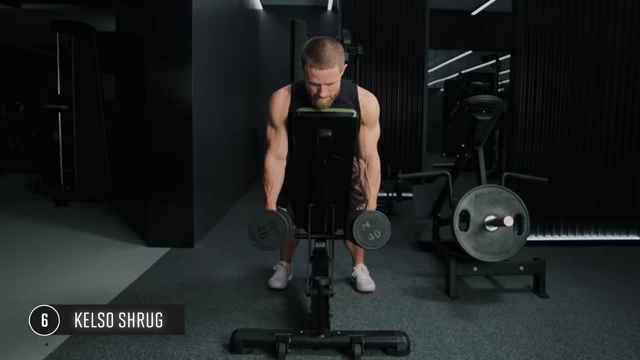
Man performing Kelso shrugs using dumbbells while bracing against an incline bench [ 00:13:13 ]
- Can be performed by bracing against an incline bench and using dumbbells.
7. Seated Cable Deadlifts [13:11]
This exercise offers an effective way to activate the glutes and hamstrings with less overall fatigue compared to heavy barbell deadlifts.
- Benefits:
- Activates glutes and hamstrings without the high fatigue demand of heavy barbell deadlifts.
- Increased stability due to fixed hips and planted glutes, reducing strain on the lower back, core, and quads.
- Can lead to a significant glute pump.
- Technique:
- Sit on a bench facing a cable machine.
- Take a grip just outside shoulder width on a straight bar attachment.

Man setting up for a Seated Cable Deadlift with a straight bar attachment [ 00:13:17 ] - Plant your feet on the platform with toes pointed slightly out to engage glutes.

Detailed view of foot placement for seated cable deadlifts, with toes pointed slightly outward to engage glutes [ 00:13:57 ] - Maintain a tall chest.
- Squat the weight up and extend your hips to a full body lockout position. Your glutes should remain planted throughout.
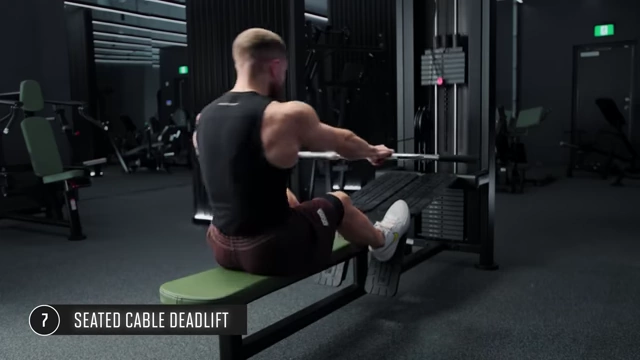
Man demonstrating the Seated Cable Deadlift during the lifting phase [ 00:13:50 ] - Begin the first rep by unlocking your hips and knees, lowering the bar while keeping it tight to your body.
- Go as low as possible without rounding your lower back (e.g., to your ankles).
- Squeeze your glutes hard to extend your hips, keeping shoulders back and chest up to complete the lockout.

Man demonstrating the lockout position of the Seated Cable Deadlift with a strong glute squeeze [ 00:14:42 ] - Avoid yanking with arms; use glutes to move the weight.
- A big glute squeeze at the top can enhance muscle connection.
- Variations:
- Can be done as Romanian deadlifts by keeping knees straighter for more hamstring emphasis.
- Single-leg variations are effective for addressing imbalances without balance concerns associated with free weights.
- Comparison to Barbell Deadlifts:
- Not necessarily "better" than barbell deadlifts but easier to recover from.
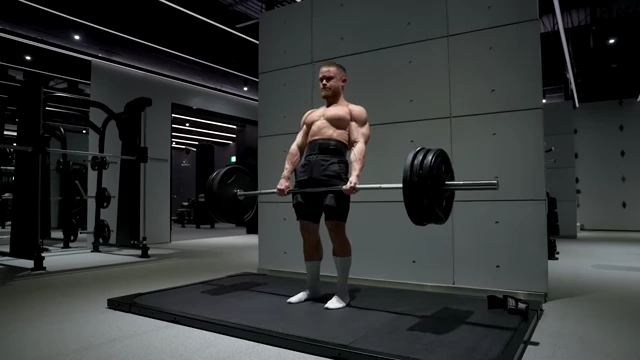
Man performing a traditional barbell deadlift for comparison with the seated cable deadlift [ 00:13:27 ] - The increased stability allows for a better mind-muscle connection with the glutes and hamstrings.
- Not necessarily "better" than barbell deadlifts but easier to recover from.