Hakka Steamed Pork Belly with Taro: A Detailed Recipe for Festive Meals
Summary:
This video provides a comprehensive guide to making Hakka Steamed Pork Belly with Taro, a traditional festive dish. The process involves several key steps:
- Selecting and preparing a 1kg piece of pork belly, emphasizing cuts with good fat distribution and having the butcher singe off any hairs.
- Blanching the pork belly for 15-20 minutes, then meticulously preparing its skin by piercing it, rubbing with vinegar and salt, and applying a light coat of dark soy sauce before inserting bamboo sticks to prevent curling.
- Deep-frying the pork belly skin-side down in cold oil until golden and crispy, followed by soaking in ice water for 30 minutes to tenderize the meat and expand the skin.
- Preparing 1kg of taro by cutting it into 1cm thick slices and frying them until softened and slightly golden to maintain shape and enhance flavor.
- Crafting a rich sauce with shallots, bean sauce, four pieces of fermented red bean curd, white pepper, five-spice powder, oyster sauce, soy sauce, honey, minced garlic, warm water, and Huadiao wine.
- Assembling the dish by slicing the pork belly and arranging it alternately with taro slices in a bowl, ensuring the pork skin is facing down for presentation.
- Steaming the assembled dish for 90 minutes on medium heat.
- The video also explores the difference between steaming with and without a cover, concluding that covering the dish yields a richer, more concentrated flavor with less diluted sauce.
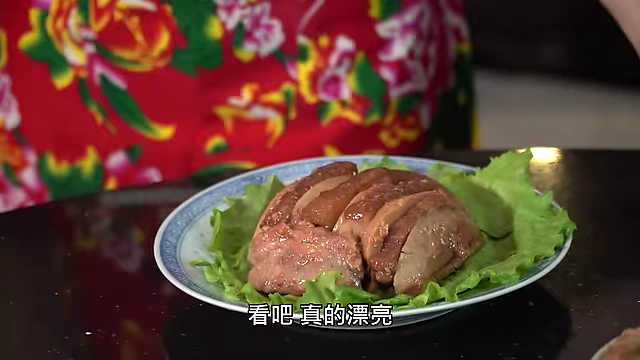
Plated Hakka Steamed Pork Belly with Taro [ 00:23:20 ]
Sourcing Ingredients: Pork Belly Selection [0:31]
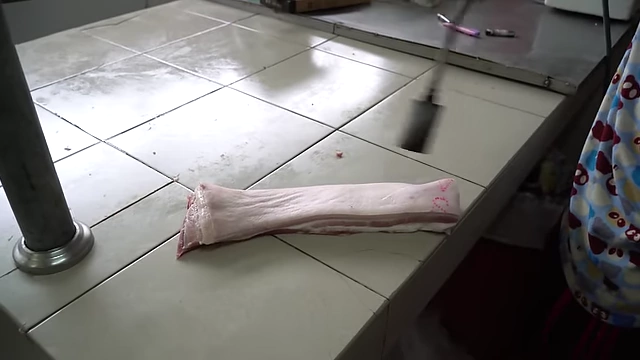
- Choosing the right pork belly:
- Select a piece that is half fat and half lean.
- Look for marbling, described as "snowflakes," for better texture and flavor.
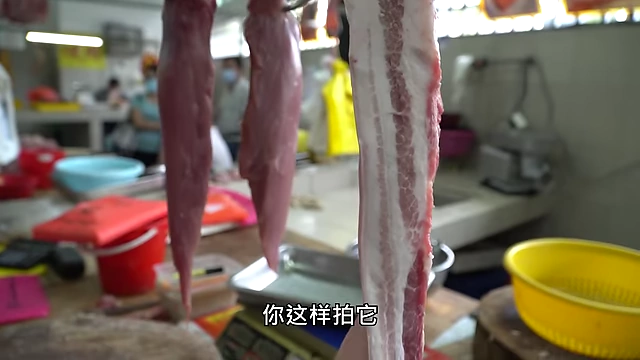
Close-up of pork belly showing desirable marbling or "snowflakes." [ 00:04:31 ]
- Pre-preparation at the market:
- Request the butcher to remove any hairs by burning them off.
- Consider the size of the pork belly in relation to the taro to ensure uniform slices for the final dish.
Preparing the Pork Belly [5:20]
- Blanching the Pork Belly [5:20][7:20][8:42]
- Place 1kg of pork belly, skin-side down, into a cold pan with cold water.
- Blanch for approximately 15-20 minutes.
- Start with high heat, then reduce to medium once the water begins to boil gently.
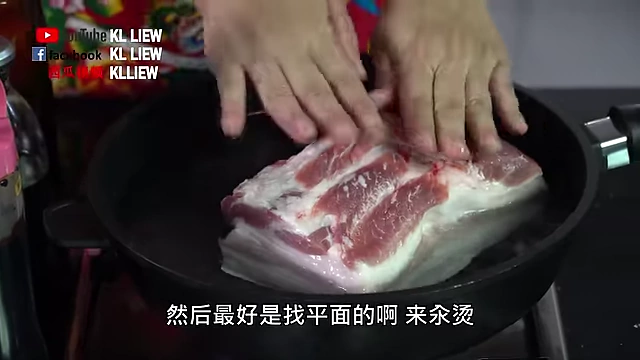
Pork belly placed skin-side down in cold water for blanching. [ 00:05:31 ] - Tip: If the pork is very fresh and odorless, there's no need to add ginger, scallions, or rice wine during blanching, as this preserves the natural pork flavor.
- Check for doneness by easily piercing the skin with a fork. Ensure all sides of the pork are blanched slowly and evenly.
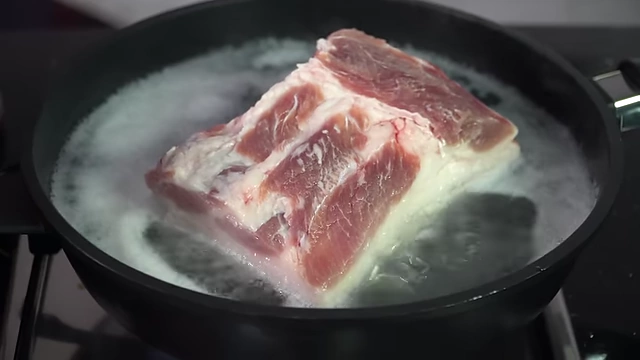
Pork belly blanching in boiling water. [ 00:07:20 ] 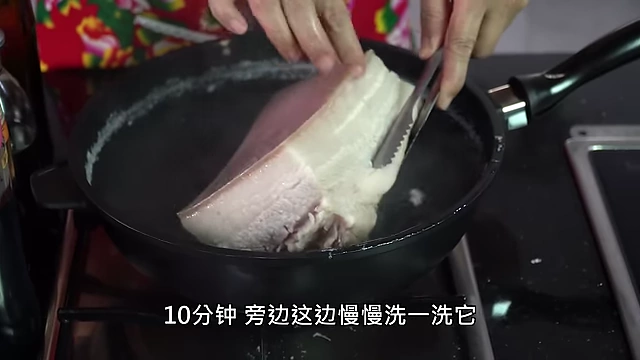
Blanching pork belly on its side to ensure even cooking. [ 00:08:58 ]
- Skin Preparation for Crisping [9:08][9:51][10:02][10:37][10:49]
- After blanching, wash the pork belly with cold water.
- Thoroughly puncture the entire skin surface using a meat tenderizer or a fork. More punctures lead to a crispier, more bubbly skin.
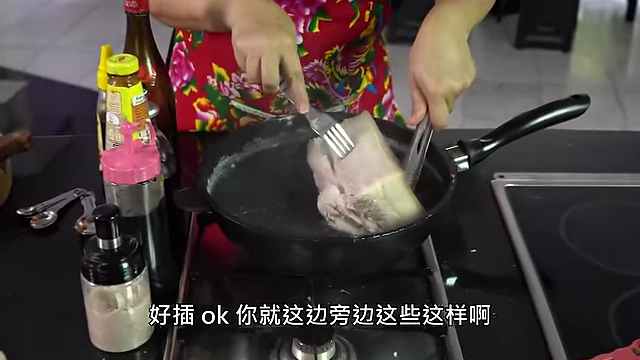
Piercing pork belly skin with a fork to ensure even crisping. [ 00:08:38 ] 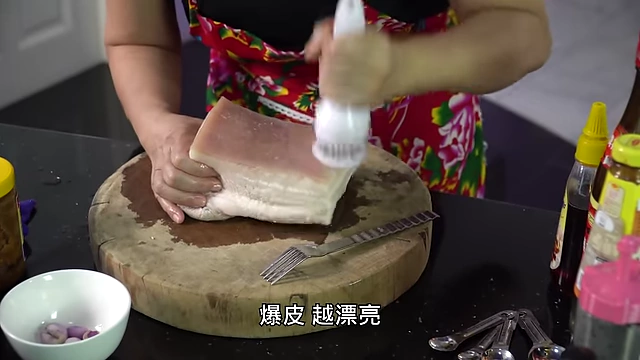
Puncturing pork belly skin with a meat tenderizer for crispiness. [ 00:09:30 ] 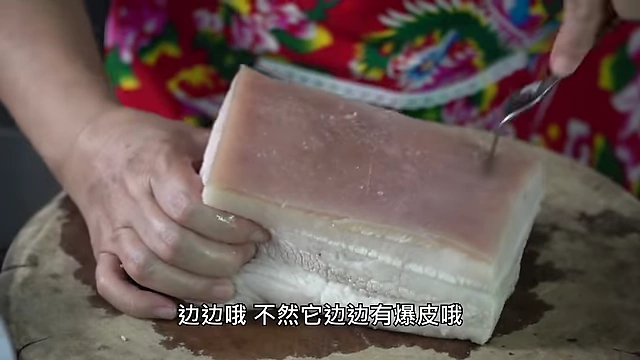
Ensuring skin is thoroughly punctured to the edges for a bubbly texture. [ 00:09:48 ] - Rub a small dash of white vinegar onto the skin only; avoid the meat.
- Apply 1 teaspoon of coarse or regular salt evenly over the skin. Let it sit for 5-10 minutes.
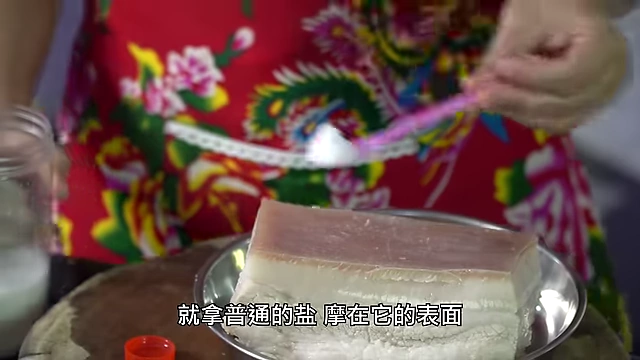
Applying salt evenly over the pork belly skin. [ 00:10:07 ] - After salting, wipe the skin completely dry to remove excess moisture and salt.
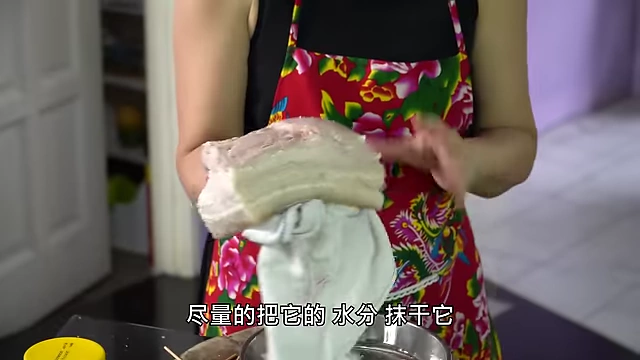
Wiping the pork belly skin dry after salting. [ 00:10:35 ] - Lightly rub a small amount of dark soy sauce on the skin for color. Be careful not to use too much, as it can cause the skin to burn during frying.
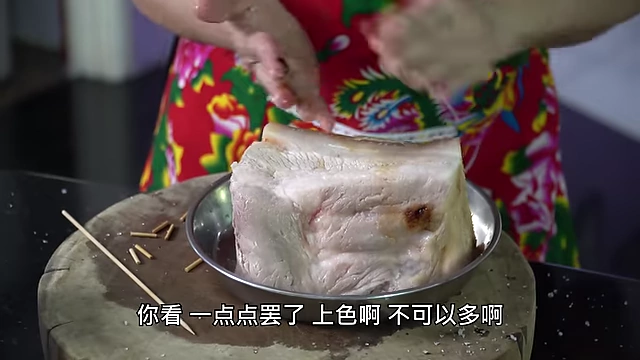
Lightly rubbing dark soy sauce on the skin for color. [ 00:11:00 ] - Insert 2-3 bamboo sticks or disposable chopsticks into the skin. This prevents the pork belly from curling up during the frying process.
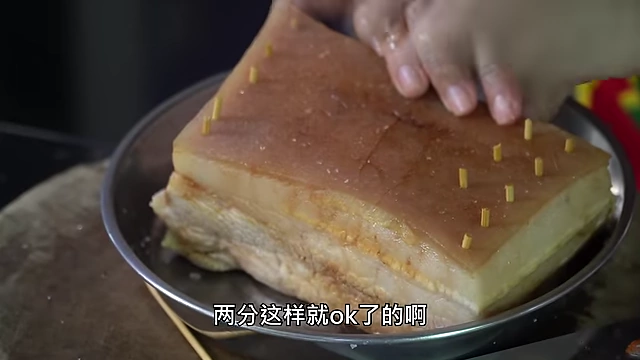
Inserting bamboo sticks to prevent pork belly from curling during frying. [ 00:11:19 ]
- Frying the Pork Belly [11:31][12:17][12:53]
- Place the pork belly, skin-side down, in a cold wok with cold oil. The oil should be just enough to cover the skin.
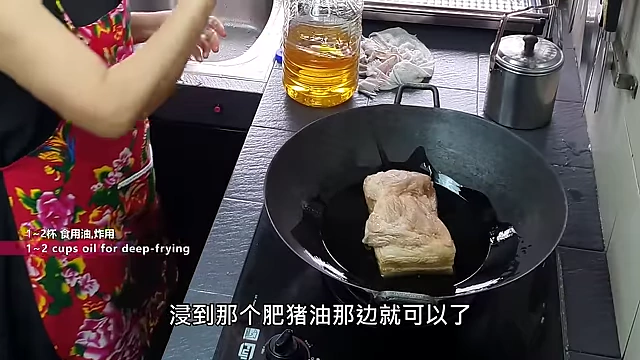
Pork belly placed skin-side down in cold oil. [ 00:11:41 ] - Use high heat and immediately cover the wok with a lid to prevent oil splattering.
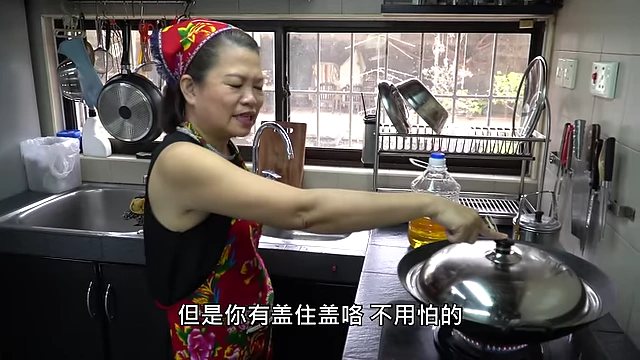
Covering the wok to prevent oil splattering during frying. [ 00:12:12 ] - Fry until the skin turns golden brown and becomes crispy. Listen for the crackling sound to know when it's properly fried.
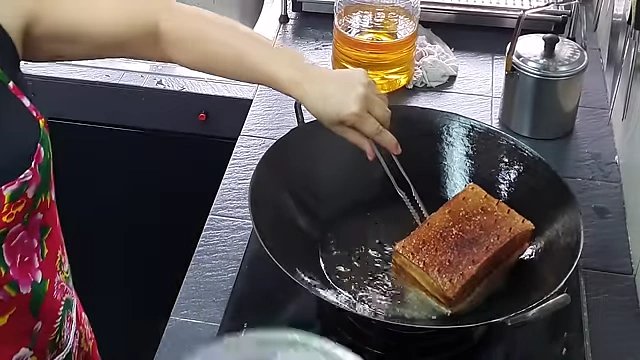
Pork belly skin frying to a golden brown and crispy texture. [ 00:13:10 ] - Once fried, remove the bamboo sticks.

Removing bamboo sticks after frying the pork belly. [ 00:13:35 ]
- Place the pork belly, skin-side down, in a cold wok with cold oil. The oil should be just enough to cover the skin.
- Soaking the Fried Pork Belly [13:37][13:43][16:51]
- Immediately immerse the fried pork belly, skin-side down, into a bowl of ice water (or cold water) for at least 30 minutes.
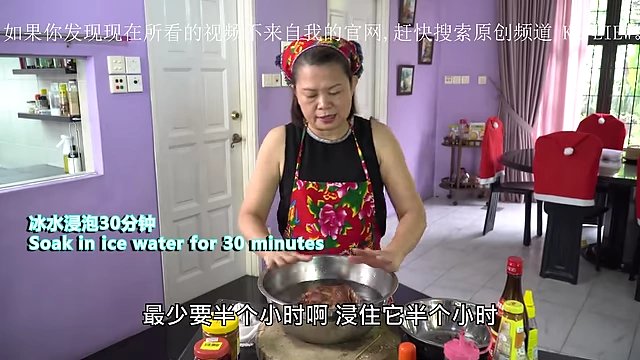
Soaking fried pork belly in ice water for 30 minutes to tenderize. [ 00:13:42 ] - This crucial step softens the meat, helps the skin expand, and makes it gelatinous, preventing a hard, chewy texture.
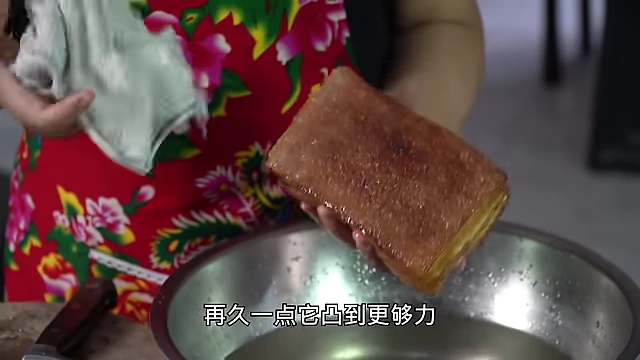
Fried pork belly after soaking, showing the expanded and bubbly skin. [ 00:16:58 ]
- Immediately immerse the fried pork belly, skin-side down, into a bowl of ice water (or cold water) for at least 30 minutes.
Preparing the Taro [6:21]
- Peel 1kg of taro.
- Slice the taro into pieces approximately 1cm thick. Avoid cutting too thin, as thin slices are prone to breaking during steaming.
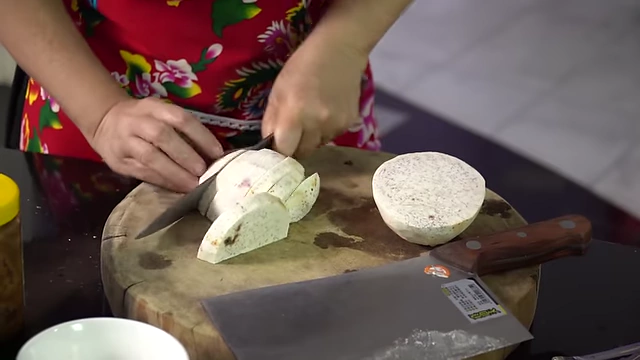
Slicing taro to approximately 1cm thickness. [ 00:07:10 ] - Fry the taro slices until they are softened and lightly golden brown. Frying helps them maintain their shape during steaming and enhances their fragrance.
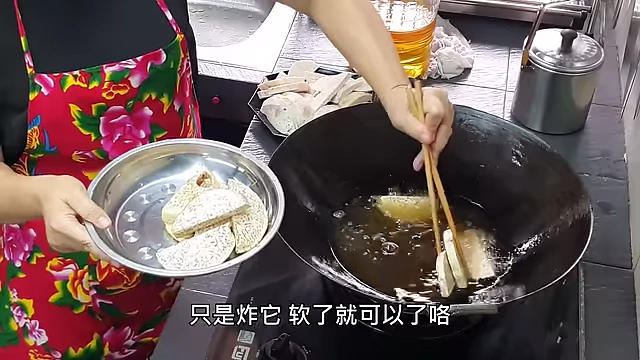
Frying taro slices until softened and lightly golden brown. [ 00:14:08 ]
Making the Signature Sauce [14:12]
- Ingredients:
- 30g shallots (about 4-5 medium capsules), finely chopped.
- 1 tablespoon Bean Sauce (Taucu).
- 4 pieces of fermented red bean curd (South Ru/Hong Furuyu), crushed, including its juice. (Correction from initial 2 pieces to 4 pieces).
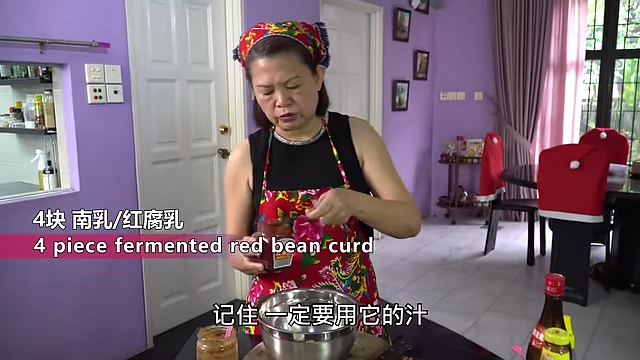
Adding red fermented bean curd and its juice to the sauce mixture. [ 00:14:56 ] 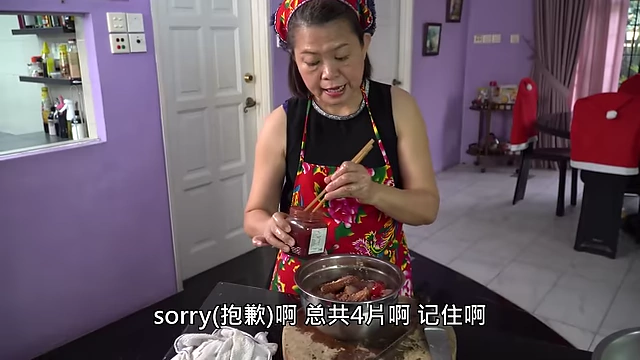
Correcting the amount of fermented red bean curd to 4 pieces for the sauce. [ 00:18:40 ] - ½ teaspoon white pepper.
- ½ teaspoon five-spice powder.
- 3 tablespoons oyster sauce.
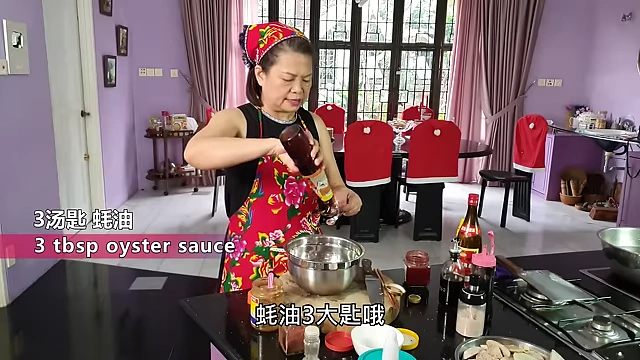
Adding oyster sauce to the seasoning mixture. [ 00:15:50 ] - 2 tablespoons soy sauce (a sweeter variety is preferred).
- 1 tablespoon honey (or sugar).
- 4 tablespoons minced garlic.
- 200ml warm water.
- 2 tablespoons Huadiao wine.
- Preparation:
- Combine all ingredients in a bowl.
- Mix thoroughly until well combined and fragrant.
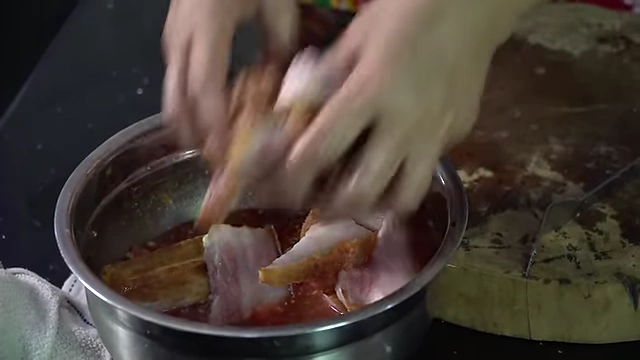
Coating pork belly slices thoroughly in the prepared sauce. [ 00:18:20 ]
Assembling and Steaming the Dish [19:15]
- Slice the soaked pork belly into uniform 1cm thick pieces.
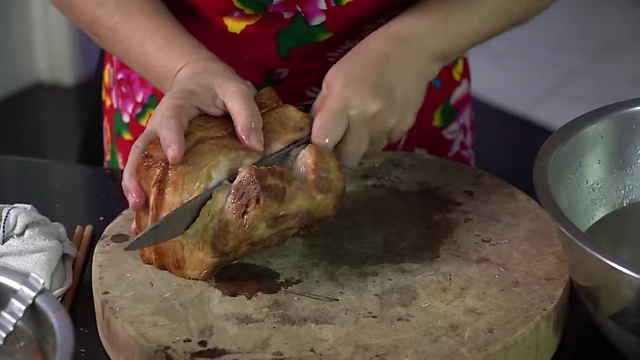
Slicing the soaked pork belly to an appropriate thickness. [ 00:17:13 ] - Dip each pork slice into the prepared sauce, ensuring all sides are thoroughly coated.
- Arrange the pork and taro slices alternately in a heatproof bowl. For presentation, place the pork slices skin-side down first, followed by taro, then pork, and so on.
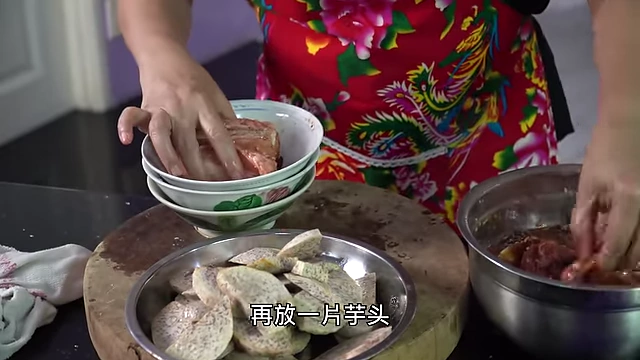
Arranging pork and taro slices alternately in a bowl, skin-side down for presentation. [ 00:19:40 ] - Place larger taro slices in the center and smaller ones around the edges.
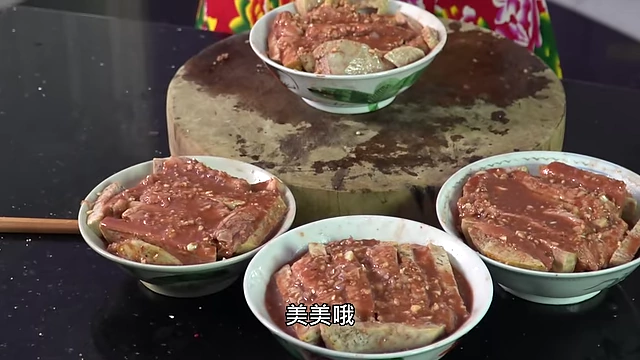
Four bowls prepared with layered pork belly and taro. [ 00:20:29 ] - Pour any remaining sauce evenly over the assembled pork and taro.
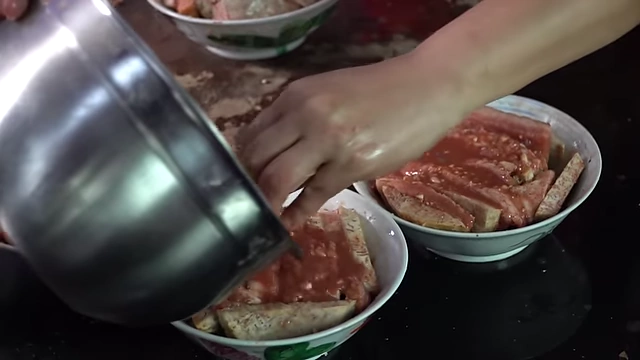
Pouring remaining sauce over the assembled pork and taro. [ 00:20:25 ] - Steaming: Steam the dish for 90 minutes (1.5 hours) on medium heat.
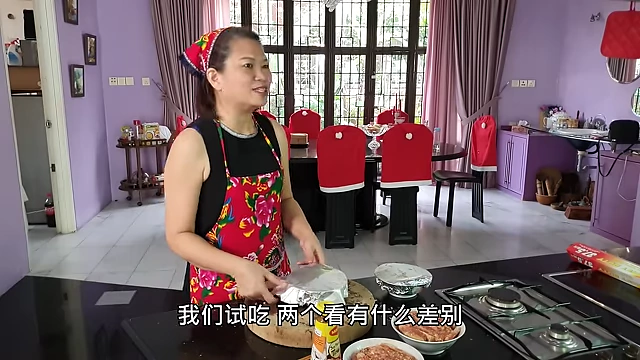
Bowls prepared for steaming; some covered with foil for a taste comparison. [ 00:21:26 ] 
Steaming the pork belly and taro for 90 minutes on medium heat. [ 00:22:10 ] - Steaming Tip: The video demonstrates two methods: steaming with a lid/foil covering the bowl and steaming uncovered.
- Covering the bowl with aluminum foil or blotting paper helps to retain the sauce's concentration, resulting in a richer, less watery sauce and a stronger, sweeter flavor.
- Steaming uncovered may result in more accumulated water, leading to a slightly diluted and saltier taste. The covered method is generally preferred for a more intense flavor.

Comparison of sauce quantity in covered versus uncovered steamed dishes. [ 00:22:39 ] 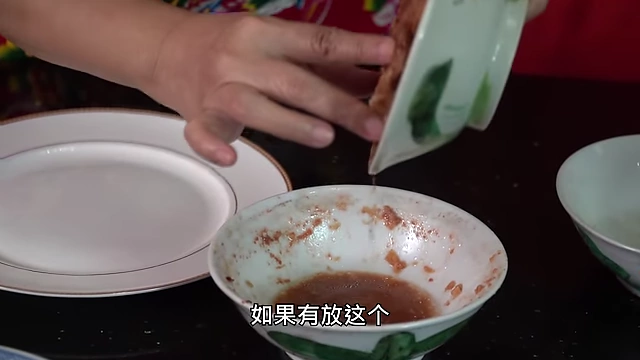
The uncovered dish yields more liquid, resulting in a more diluted sauce. [ 00:23:44 ]
- Steaming Tip: The video demonstrates two methods: steaming with a lid/foil covering the bowl and steaming uncovered.
Serving and Taste Test [22:30]
- Carefully invert the steamed dish onto a serving plate lined with fresh lettuce leaves.
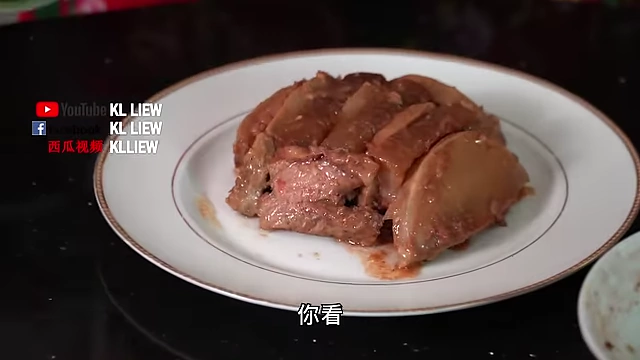
The perfectly inverted Hakka Steamed Pork Belly with Taro. [ 00:24:03 ] - Pour any remaining sauce from the bowl over the beautifully arranged pork and taro.
Plated Hakka Steamed Pork Belly with Taro ready for serving. [ 00:23:20 ] 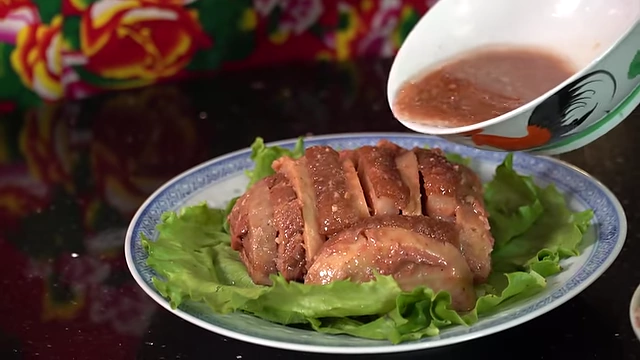
Pouring the concentrated sauce over the plated dish. [ 00:23:30 ] - Garnish the dish with cucumber slices.
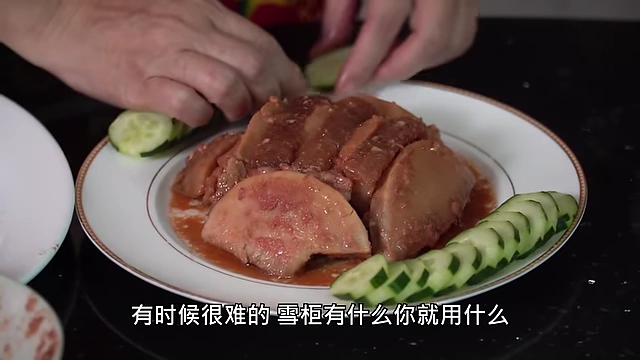
Garnishing the dish with cucumber slices. [ 00:24:27 ] - A taste test comparison between the covered and uncovered steamed versions reveals that the covered version has a richer, more concentrated flavor, while the uncovered version is juicier but tastes slightly saltier due to water dilution. Both methods produce delicious results, allowing for personal preference in flavor intensity.