Examining Donald Trump's New Plan to Address the US Debt Crisis with Cryptocurrency-Backed Treasuries and Gold Revaluation
The video explains the severity of the US national debt, currently at $37.2 trillion, largely due to government overspending. It highlights the challenge of refinancing existing debt and borrowing more, which could lead to higher interest rates and increased interest expenses. Trump's initial plan to reduce government spending, symbolized by the "Doge" initiative, is presented as a failure, as the deficit has worsened despite claims of savings. His new plan comprises two main strategies:
- The GENIUS Act (Cryptocurrency): Requires stablecoins to be backed by US dollars or short-term treasuries, aiming to boost demand for Treasury bills and keep borrowing costs low for the government.
- Gold-Backed Strategies: Proposes issuing zero-coupon gold-backed treasuries and potentially revaluing the US's vast gold reserves to market prices (or higher). Revaluing gold could instantly provide trillions of dollars to the Treasury without congressional approval, reducing the need for new debt and allowing Trump to claim a fulfilled campaign promise.
Ultimately, the video argues these plans are temporary measures to "stall time" and manage symptoms, rather than addressing the core problem of persistent government overspending, which also hinders crucial initiatives like bringing manufacturing back to the US due to high interest rates.
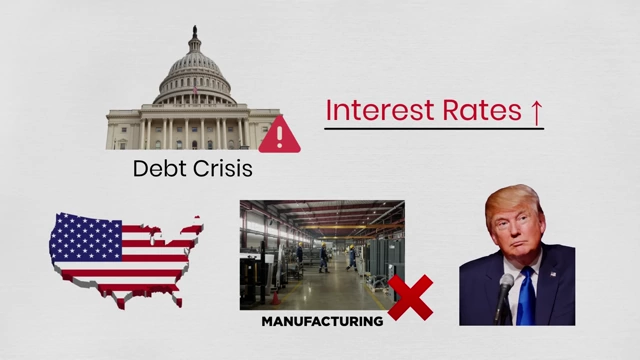
Visual summarizing debt crisis, rising interest rates, and negative impact on manufacturing, including Trump's plan [ 00:14:37 ]
The Escalating US Debt Crisis [0:20]
The United States is currently facing a severe debt crisis, with the federal government's debt reaching $37.2 trillion, equating to over $109,000 per person in America.
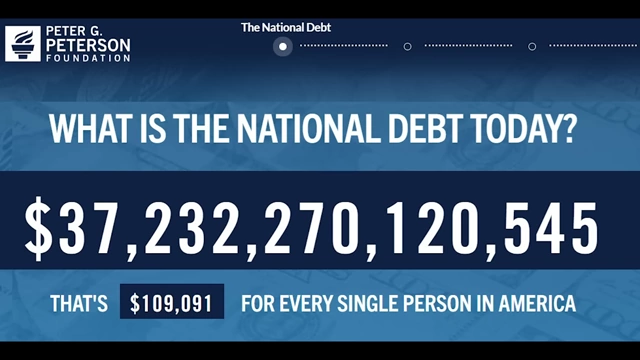
- Causes of Debt: The primary reason for this crisis is the government's consistent habit of spending more money than it receives in revenue. - This overspending necessitates borrowing to cover the deficit.
- Historical Trend: The US national debt has shown a steep, continuous increase over the last 100 years, with projections indicating it will continue to worsen.
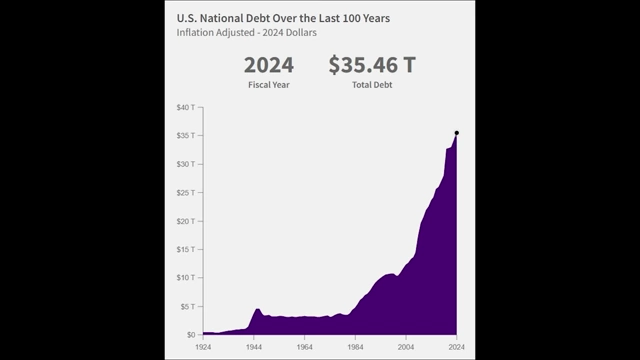
US National Debt over the Last 100 Years [ 00:00:40 ]
How the US Government Borrows Money [0:50]
The government borrows money by issuing "IOUS" in the form of US Treasuries.
- Types of Treasuries:
- Treasury Bills: Short-term (less than 1 year).
- Treasury Notes: Medium-term (2-10 years).
- Treasury Bonds: Long-term (20-30 years).
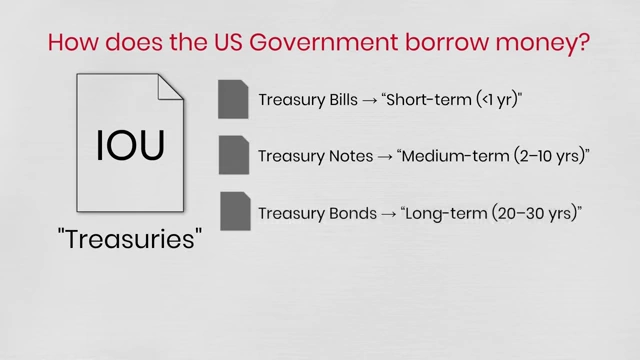
Types of US Treasuries [ 00:01:10 ] - Lenders: Anyone can purchase US Treasuries, including individuals, banks, institutions, and foreign governments, receiving interest in return.
- Upcoming Borrowing Needs: The government needs to borrow an estimated $11 trillion over the next 12 months:
- $9 trillion to refinance old debts.
- $2 trillion to finance current overspending.
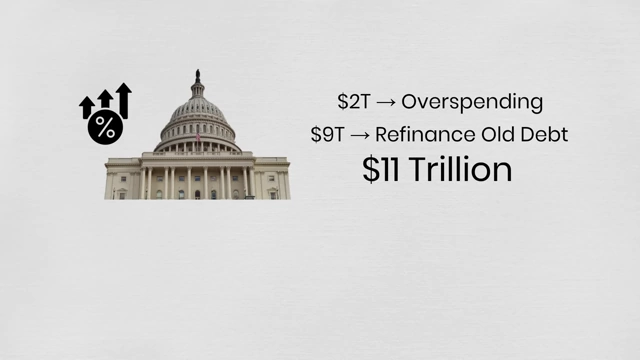
Government's $11 Trillion Borrowing Needs [ 00:02:00 ] - Risk of Higher Interest Rates: If there isn't enough demand for these $11 trillion in Treasuries at current interest rates (e.g., 4%), the government will be forced to offer higher interest rates (e.g., 4.25% to 6%) to attract sufficient lenders.
- Impact: A mere 1% increase in interest rates on $37 trillion of debt would add $370 billion annually to the government's interest expense, a significant sum comparable to a substantial portion of national defense spending.
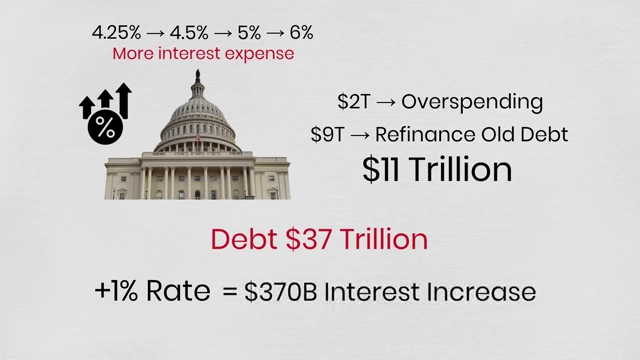
Impact of a 1% Interest Rate Increase on US Debt [ 00:02:50 ]
Trump's Initial Debt Reduction Plan: Spending Cuts (Doge Initiative) [3:00]
President Trump's initial plan to address the debt crisis was to balance government budgets by reducing spending.
- Campaign Promise: Trump campaigned on promises to reduce government spending, balance budgets, and pay down national debt.
- Elon Musk and Doge: Elon Musk was reportedly tasked with spearheading this initiative, aiming to cut government spending by $2 trillion (or at least $1 trillion) annually, a massive undertaking given the government's $7 trillion yearly expenditure.
- Economic Complications of Spending Cuts:
- Government spending is a major component of GDP (Gross Domestic Product).
- Massive spending cuts could trigger a severe recession, leading to lower tax revenue and worsening the debt crisis.
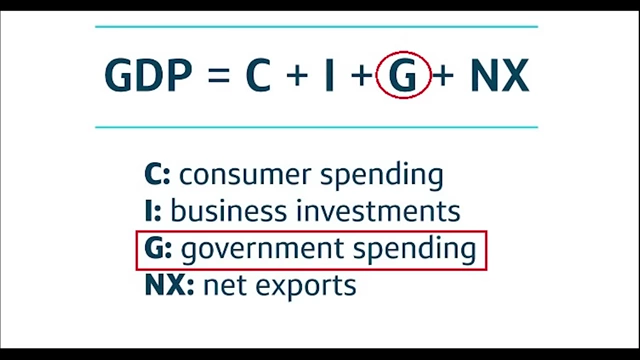
GDP Formula highlighting Government Spending [ 00:04:09 ] - Political Pushback: The initiative faced political opposition from politicians and beneficiaries who desire continued government spending.
Failure of the Initial Plan [3:48]
The "Doge" initiative to cut spending was deemed an "epic and colossal failure."
- Exaggerated Savings: While official government websites might claim billions in savings from Doge, these figures often include estimated and hypothetical savings over long periods, and many reported savings have been found to be inaccurate or erroneous.
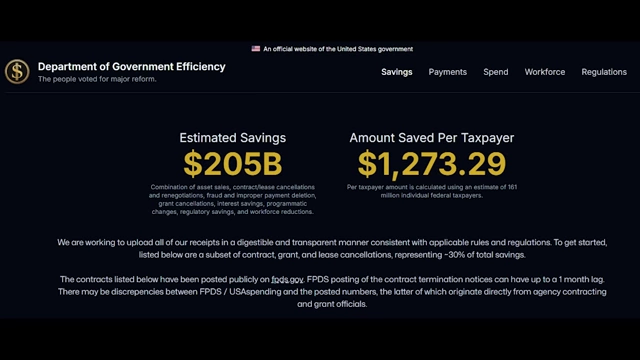
Doge's Estimated Savings (Claimed) [ 00:05:08 ] - Worsening Deficit: Despite claims of savings, the government's year-to-date overspending (deficit) in 2025 (purple line) was worse than in 2024 (green line), indicating that spending cuts were not achieved; rather, overspending increased.
![Deficit Tracker showing current year [<a href="https://youtube.com/watch?v=siKfPK5jhtI&t=2025">2025</a>] deficit exceeding previous years](https://storage.googleapis.com/summarizer-images/images/siKfPK5jhtI/sb0035_t00.05.49.webp)
Deficit Tracker showing current year [<a href="https://youtube.com/watch?v=siKfPK5jhtI&t=2025">2025</a>] deficit exceeding previous years [ 00:05:49 ] - Conclusion: Trump's original plan to reduce spending and balance the books failed.
Trump's New Plan Part 1: Cryptocurrency (The GENIUS Act) [6:58]
Faced with the failure of his initial plan and the ongoing need to increase demand for US Treasuries to keep interest rates low, President Trump introduced a new strategy.
- The GENIUS Act: Signed into law in July 2025, this act supports cryptocurrencies to create demand for Treasury bills.
- Mechanism for Stablecoin Backing:
- The act requires stablecoins (digital representations of the US dollar, like USDC or USDT) to be 100% backed by liquid assets such as US dollars or short-term Treasuries (Treasury bills).
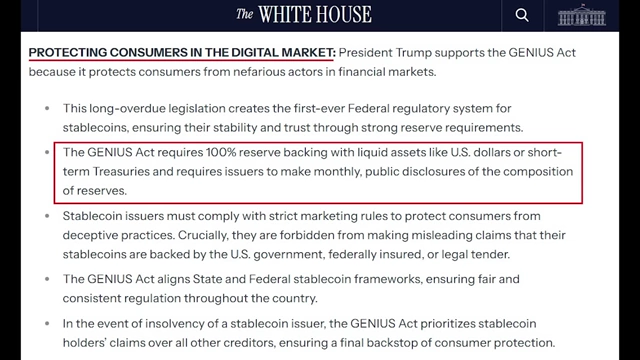
GENIUS Act requires 100% reserve backing for stablecoins [ 00:09:08 ] - How it Creates Demand:
- As the cryptocurrency market grows, the demand for stablecoins increases.
- Increased stablecoin issuance, in turn, drives more demand for the short-term Treasury bills that back them.
- This increased demand for T-bills helps keep their interest rates low, allowing the government to borrow at a cheaper rate for shorter durations. - Crypto Market Growth: The crypto market, currently around $4 trillion with stablecoins making up about $280 billion, is rapidly growing.
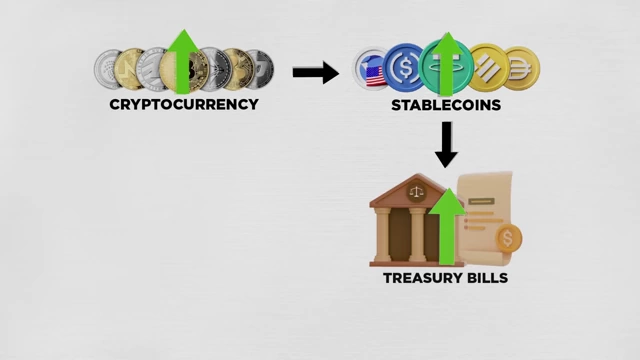
Flowchart showing how cryptocurrency growth increases demand for stablecoins and Treasury bills [ 00:09:28 ] 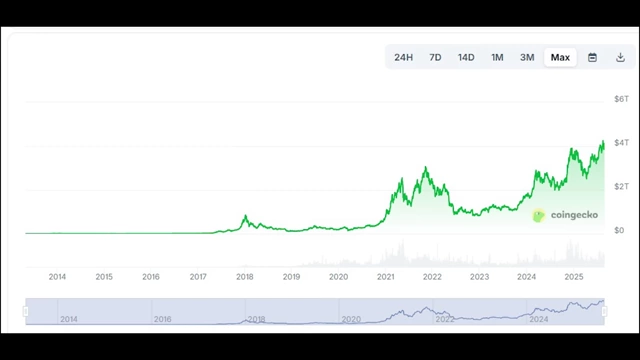
Cryptocurrency Market Capitalization Growth [ 00:09:56 ] - Impact: This growth is expected to create meaningful demand and lower interest rates for shorter-duration treasuries. The Federal Reserve also has more control over short-term interest rates, making this strategy complementary to efforts to lower rates.
Trump's New Plan Part 2: Utilizing Gold Reserves [11:04]
To increase demand for longer-term Treasuries (like 30-year bonds) and further manage debt, two gold-related scenarios are discussed.
- Scenario 1: Gold-Backed Treasuries:
- This plan, influenced by former economic advisor Judy Shelton, involves the government issuing zero-coupon Treasury bonds that pay back in physical gold at maturity (e.g., lend $4,000 now, get 1 ounce of gold in 30 years).
- Benefit: This allows the government to raise money without paying interest and appeals to those seeking a tangible asset.
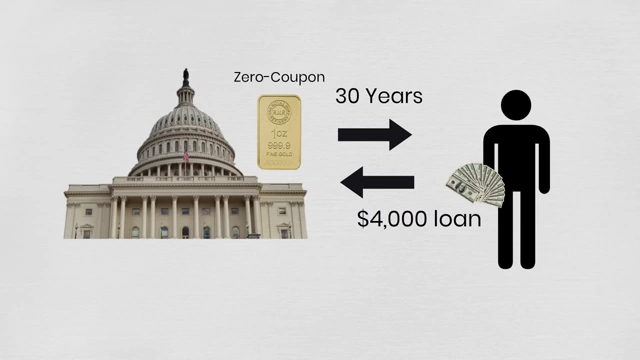
Illustration of a gold-backed treasury bond transaction [ 00:11:45 ] - Scenario 2: Revaluing US Gold Reserves:
- The US government holds 261 million troy ounces of gold, officially valued at $42.2 per troy ounce on its books.
- The current market value is over $3,400 per troy ounce, representing a massive "unrealized gain."
- Mechanism: President Trump could revalue the gold to its market value (or even higher, such as $15,000 per troy ounce, as suggested by some) without congressional approval.
- Result: This revaluation would require the Federal Reserve to print the difference in money and give it to the US Treasury, potentially injecting $4 trillion of "free and clear" money into government coffers. - Benefits: This would reduce the amount of US Treasury bonds needed to be sold by $4 trillion, provide funds for Trump's initiatives, and allow him to claim he paid down national debt. This action has historical precedent in the US.

Headline on Gold Revaluation as a "Nuclear Option" [ 00:13:07 ] - Federal Reserve as Buyer of Last Resort: One possible solution for increasing demand for longer-term Treasuries is for the Federal Reserve to print money and buy the bonds, though this is considered a last resort due to potential loss of faith in the US dollar and intensified dedollarization.
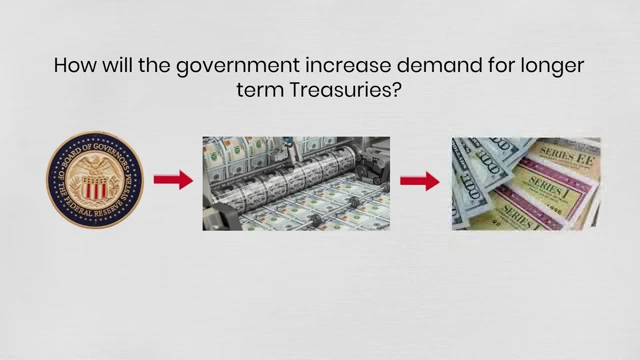
Federal Reserve Printing Money to Buy Treasuries [ 00:10:47 ] - Timing: Many expect significant actions regarding gold around the country's 250th-year anniversary on July 4th, 2026.
Implications and Underlying Issues [14:07]
The debt crisis and associated higher interest rates pose significant challenges beyond just fiscal management.
- Manufacturing Hindrance: High interest rates impede initiatives like bringing manufacturing back to the US, as building factories, equipment, and infrastructure requires affordable financing.

Debt Crisis, Rising Interest Rates, and Impact on Manufacturing [ 00:14:24 ] - Core Problem: The speaker emphasizes that these plans involving crypto and gold are not true solutions but rather temporary measures to "stall time" and "keep the show going." The fundamental problem remains the federal government's persistent overspending.
Visual summarizing debt crisis, rising interest rates, and negative impact on manufacturing, including Trump's plan [ 00:14:37 ]