An In-Depth Analysis of Park Chan-wook's Masterful Misdirection and Visual Storytelling in "Decision to Leave"
This video offers an in-depth analysis of Park Chan-wook's "Decision to Leave," revealing how the director utilizes subtle visual language to convey profound meaning within seemingly mundane scenes.
- Park Chan-wook uses sophisticated visual "tricks" like a mirror in an interrogation room to subtly expose subconscious desires and foreshadow the complex relationship between the detective Hae-jun and suspect Seo-rae.
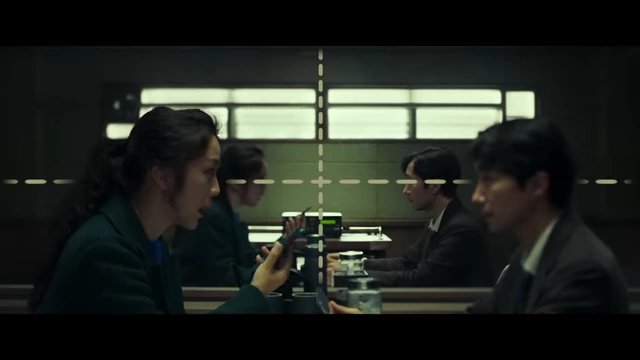
A grid overlay on the interrogation scene, illustrating how the mirror reflections and focus shifts reveal subconscious connections. [ 00:02:10 ] - The film embeds "spoiler shots," such as a sushi box insert and Seo-rae's face in ocean waves, which discreetly hint at character traits and future events, emphasizing the overarching theme of "obscurity."
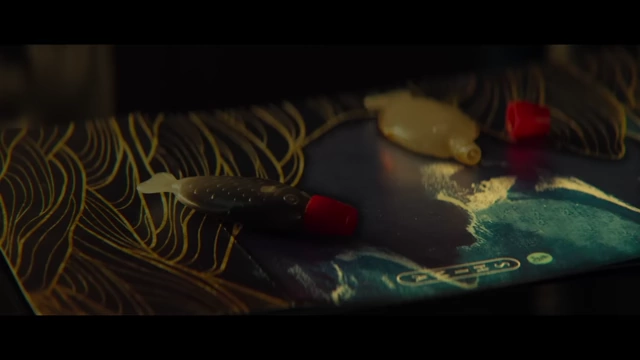
A close-up of a sushi box reveals two distinct lures, symbolizing the characters' contrasting traits but shared destiny. [ 00:05:40 ] - Consistent color symbolism (red, green, blue, turquoise) and vertical camera movements are employed to represent the characters' opposing yet intertwined natures (mountain vs. ocean) and their journey towards either clarity or deeper mystery.
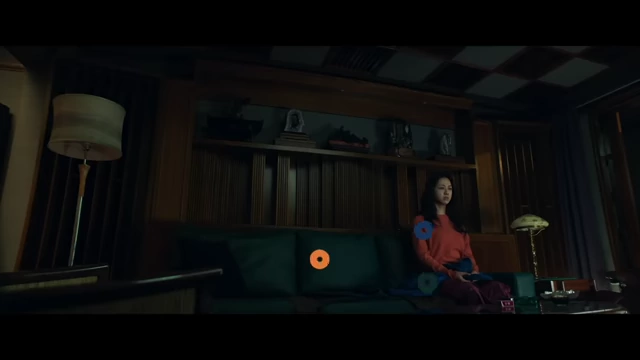
Seo-rae sits on a couch with overlaid circles highlighting the red, green, and blue colors, representing characters' differences and similarities (mountain vs. ocean). [ 00:08:43 ] - Hae-jun's use of eyedrops and the audience's shared experience of visual ambiguity underscore the film's core theme of veiled truths and unresolved perceptions.
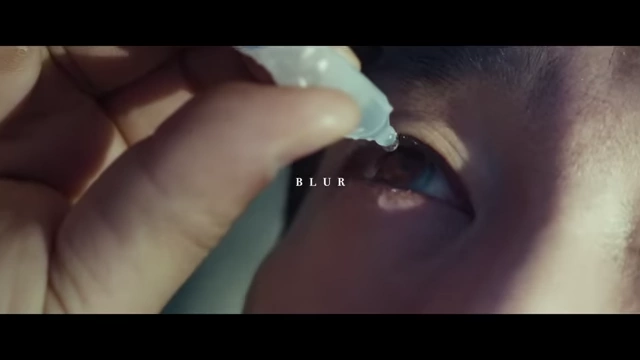
A close-up of an eyedrop blurring the vision, representing the theme of obscurity and Hae-jun's search for clarity. [ 00:07:32 ] - Ultimately, "Decision to Leave" functions as a visual poem, where misdirection serves to express a love that is understood yet unattainable, culminating in a metaphorical "decision to leave" that symbolizes a profound wish to stay.
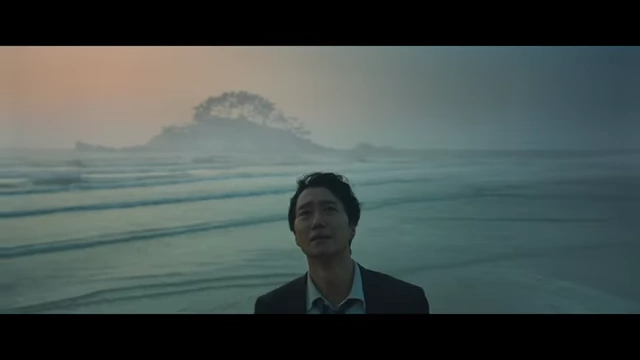
Hae-jun stands on the beach, looking out at the ocean with a distant rock formation resembling a mountain, symbolizing the unresolved connection between him and Seo-rae. [ 00:14:40 ]
Introduction [0:00]
Park Chan-wook, known for his intense and stylish films, demonstrates his true brilliance in "Decision to Leave" by focusing on the mundane, turning ordinary scenes into opportunities for profound visual storytelling. The film functions as a visual poem, expressing emotions through rhythm, color, tone, images, and sounds, constantly clashing complexity with simplicity, clarity with obscurity.
A Boring Scene [1:08]
The video begins by examining a seemingly "boring" interrogation scene between detective Hae-jun and suspect Seo-rae, following her husband's death.
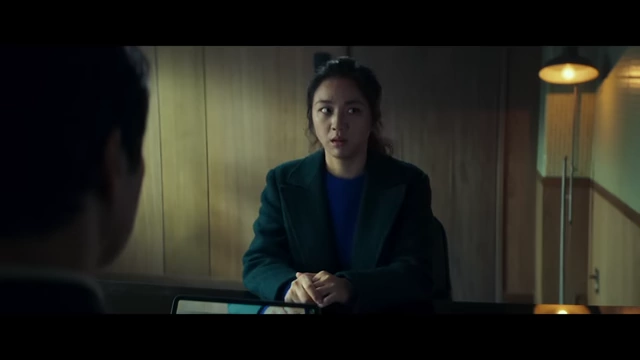
- Such scenes are typically expository, relying on verbal information and often being visually redundant.
- Many films attempt to mitigate this with close-ups, but these often fail to align with the dialogue, leaving the visual aspect uninspired.
The Trick [2:00]
Park Chan-wook ingeniously solves the problem of visual redundancy by placing a mirror behind the characters during the interrogation, creating a separate visual interaction.
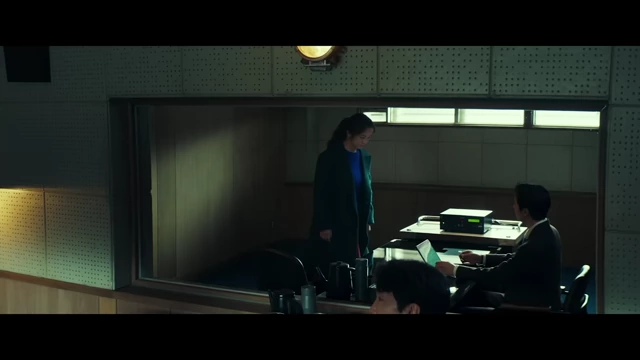
- The shot is divided into four sections: the horizontal axis separates conscious and unconscious elements, while the vertical axis separates the characters.
- Focus Interpretation:
- Horizontal focus indicates connection.
- Vertical focus implies certainty.
- A mismatch shows disconnection.
- A mix of everything requires more context.
- Scene Progression:
- The scene starts with both characters in focus, reflections blurred, a neutral faceoff.
- Focus then alternates between the speaker, making the non-speaker out of focus.
- When Seo-rae speaks Chinese, she is in focus, and Hae-jun, who doesn't understand, is out of focus.
- When the Korean translation plays, Hae-jun is in focus, and Seo-rae is blurred.
- Subconscious Connection: Their reflections switch focus so the speaker faces the other person's reflection, creating a visual imbalance that communicates a subconscious desire for connection and eye-to-eye communication. It's a scene of curiosity, not suspicion.
A grid overlay on the interrogation scene, illustrating how the mirror reflections and focus shifts reveal subconscious connections. [ 00:02:10 ] 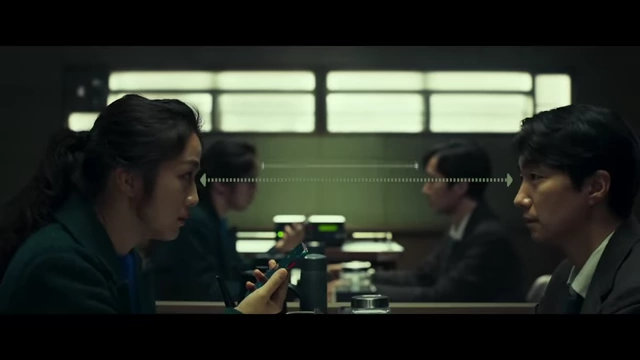
Horizontal dashed lines indicate a focus on connection between Hae-jun and Seo-rae in the mirror reflections. [ 00:02:46 ] - Second Act Departure: In the second act, the focus shifts to the vertical axis, with both versions of a single character in or out of focus, highlighting their ultimate incompatibility.
- This visible world isolates them more than the audible one.
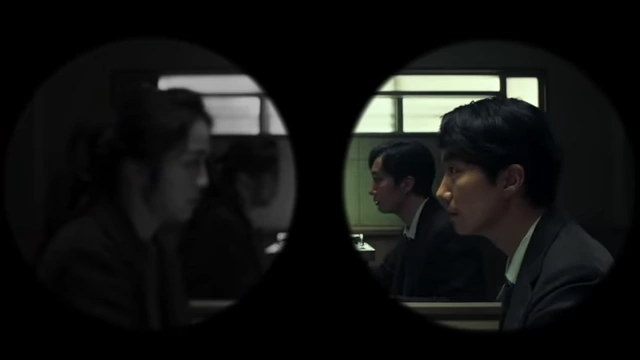
The view through binoculars isolates Hae-jun and Seo-rae, highlighting how the visible world creates disconnection. [ 00:04:02 ]
- This visible world isolates them more than the audible one.
- Pivotal Moment: As Hae-jun praises Seo-rae's Korean, three of the four faces sharpen, leaving Seo-rae's "real self" blurred.
- This signifies Hae-jun and Seo-rae being in sync, but only through a reflection, indicating Seo-rae's realization of Hae-jun's interest.
- The blurred "real Seo-rae" foreshadows their tragic fate and that their relationship will never fully blossom.
- The reflections represent an "inkling of love" – a false hope and an irony, a love born from misunderstanding, fulfilled only through incompleteness, an unresolved resolution.
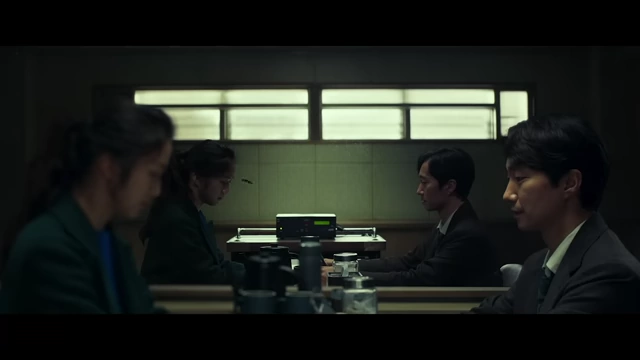
In the mirror shot, three of four faces are sharp, with Seo-rae's real self blurred, foreshadowing their tragic fate. [ 00:04:20 ]
The Spoiler Shots [5:15]
Park Chan-wook embeds "spoiler shots" that visually foreshadow events and character dynamics.
- Sushi Box Insert: A close-up of a sushi box containing two distinct lures (one a worm, one a fish) symbolizes the protagonists' fate.
- The content of the lures describes their opposing traits, while their shared shape signifies they are of the same nature.
- The drawing on the box (waves) foreshadows the film's final act, and the orientation of the lures suggests they are headed toward the same destination.
A close-up of a sushi box reveals two distinct lures, symbolizing the characters' contrasting traits but shared destiny. [ 00:05:40 ] 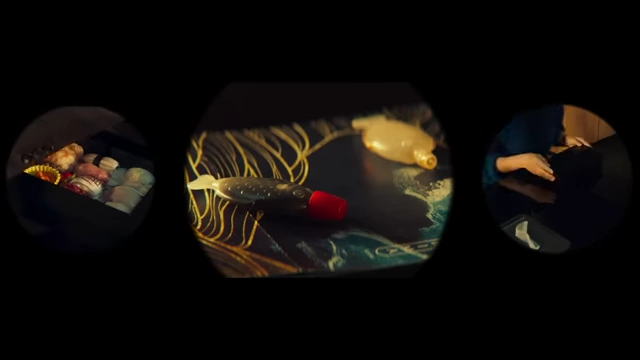
A triptych showing the sushi box, its lures, and Seo-rae's hands, emphasizing hidden visual messages within seemingly ordinary inserts. [ 00:06:03 ]
- Ocean Bird's Eye View: A momentary bird's eye view of the ocean reveals Seo-rae's face in the waves, a fleeting visual message that is easily missed but reinforces the film's hidden depths.
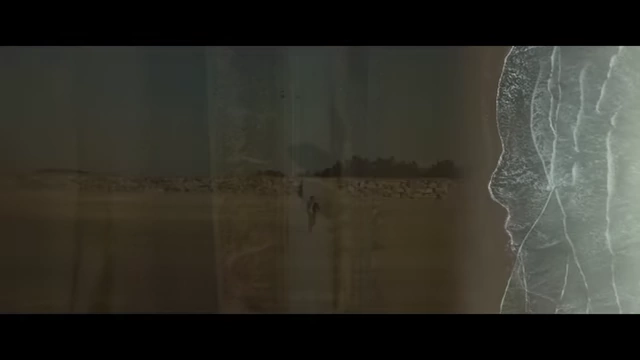
A bird's eye view of ocean waves momentarily reveals Seo-rae's face, hinting at hidden meanings. [ 00:06:20 ]
Misdirection [6:26]
The film's core theme is "obscurity," which is established from the misleading opening shot.
- Opening Scene: The film begins with a violent gunshot sound on a black screen, leading the audience to expect an intense chase. Instead, it transitions to two cops at a shooting range, an anticlimactic scene that ends without revealing the target, setting a precedent for misdirection.
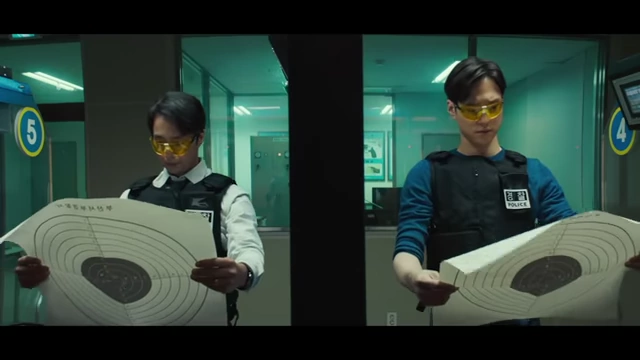
Two police officers hold up paper targets at a shooting range, revealing the anticlimactic reality behind the film's misleading opening gunshot. [ 00:06:46 ] - Theme of Obscurity: This misleading opening is integral to the film's theme, with subsequent elements like a mysterious death, eyedrops that blur before clarifying, and binoculars that eclipse surroundings, all visualizing obscurity.
A close-up of an eyedrop blurring the vision, representing the theme of obscurity and Hae-jun's search for clarity. [ 00:07:32 ]
Actions [7:43]
Hae-jun and Seo-rae's relationship is complex, with their actions and hearts often out of sync, mirroring the discrepancies between words and visual cues.
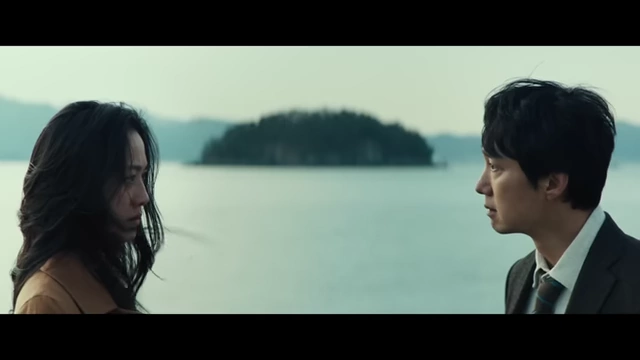
- Syncopated Rhythm: Obsession manifests as a stakeout, private perspectives are stylized as shared experiences, and personal affections are disguised as professionalism.
Repeating Ambiguity [8:20]
The violent clashes between the characters produce a duality of repetition and ambiguity.
- Repetition: Recurring colors, actions, and words highlight their fixation, resemblance, and confessions.
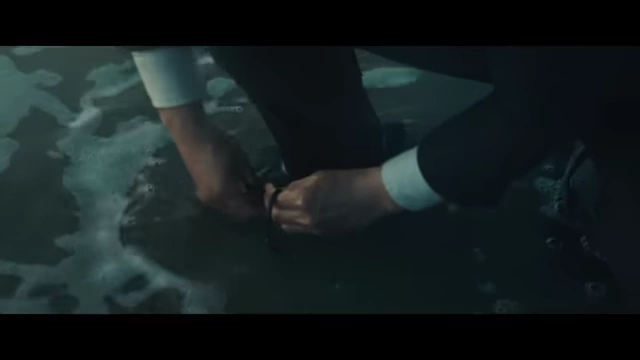
Hae-jun tying his shoelaces by the ocean, an example of recurring actions symbolizing his fixation. [ 00:08:37 ] - Ambiguity: The ambiguity within these same categories underscores their misconnection and misunderstandings.
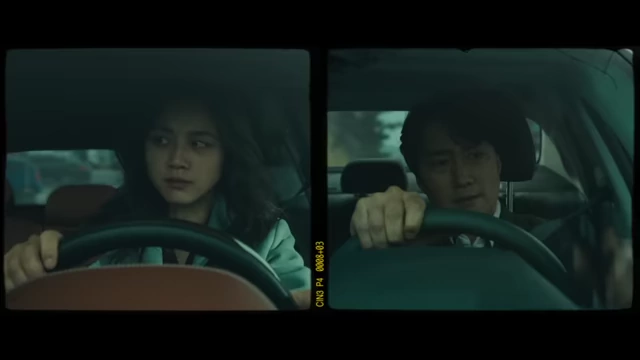
Hae-jun and Seo-rae in separate cars, their mirrored expressions highlighting both their repeating actions and underlying ambiguity. [ 00:08:40 ]
Colors [8:40]
Color symbolism is heavily utilized to represent the characters' fundamental differences and similarities.
- Red, Green, Blue: These colors constantly remind the audience of the characters' differences and similarities, akin to mountains (often associated with green/earth) and oceans (blue/water).
Seo-rae sits on a couch with overlaid circles highlighting the red, green, and blue colors, representing characters' differences and similarities (mountain vs. ocean). [ 00:08:43 ] - Turquoise: The most prevalent color, turquoise, a mix of green and blue, symbolizes the blend of land and water, representing how Hae-jun (mountain) and Seo-rae (ocean) face each other.
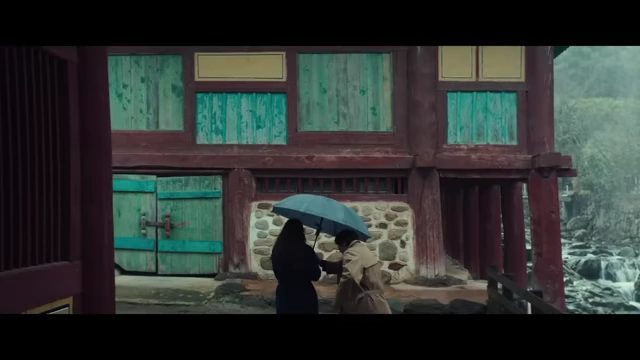
A building with prominent turquoise elements, symbolizing the blend of land and water (mountain and ocean) where the characters interact. [ 00:09:03 ] - Unmixable Colors: Their colors cannot mix, and their languages are too foreign, symbolizing their fundamental distance and their inability to fully converge despite their deep connection. Yet, on a higher, deeper level, they translate and comprehend each other.
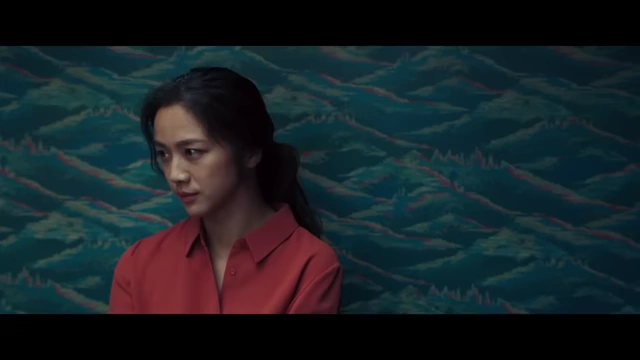
Seo-rae against a wave-patterned turquoise wallpaper, visually representing the mountain/ocean dichotomy and the blend of their worlds. [ 00:09:26 ]
Vertical Movement [10:18]
Vertical camera movements provide the film's only objective perspective amidst the deception.
- Symbolism:
- Upward motion represents a struggle for resolution, like climbing a mountain (the place of answers).
- Downward motion signifies a fall into mystery, like descending into the ocean (the place of loss and uncertainty).
- Character Arcs:
- Hae-jun, a man of the mountains, slowly descends.
- Seo-rae, a woman of the ocean, slowly ascends.
- Initial Encounter: When Hae-jun first meets Seo-rae, the camera tilts upward, visualizing his mountain-like nature and his desire for resolution. They wish to be in each other's places but never truly cross paths.
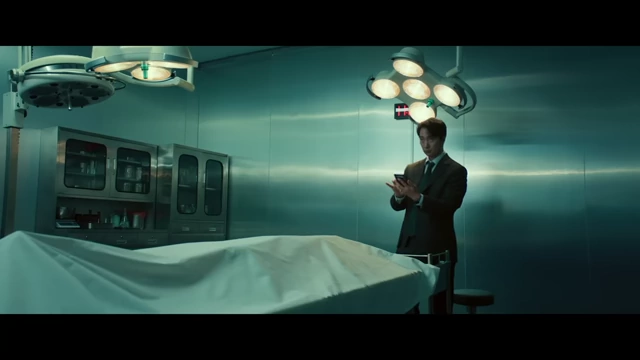
Hae-jun stands in a morgue, with the camera tilting upward, visualizing his mountain-like nature and desire for resolution. [ 00:11:06 ] 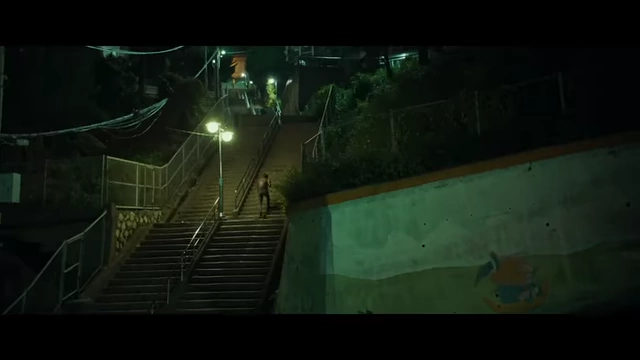
Hae-jun ascends a long flight of stairs, symbolizing a struggle for resolution or climbing a mountain of answers. [ 00:10:47 ] 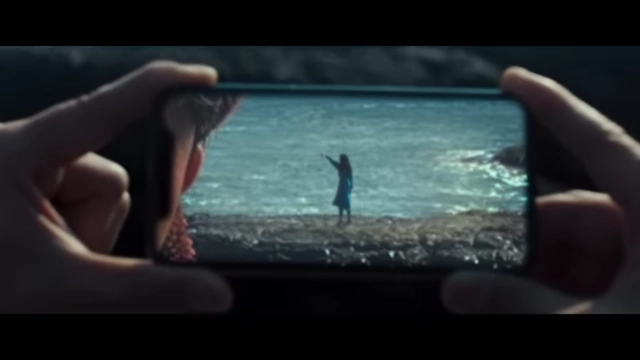
Hae-jun's phone screen displays Seo-rae standing by the ocean, symbolizing his distant and mediated observation of her. [ 00:10:44 ] - Climax: The film's climax sees them tragically missing each other and switching places – Hae-jun from top to bottom, Seo-rae from bottom to top – still enveloped in their symbolic colors.
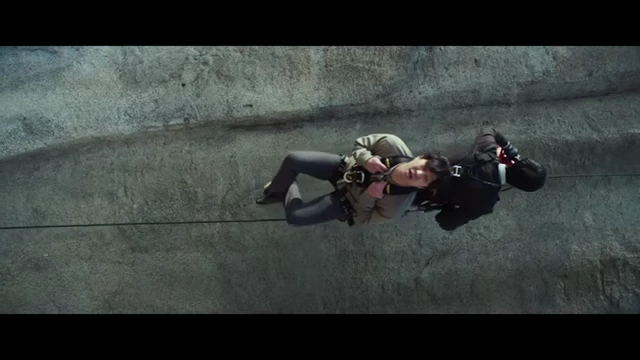
Hae-jun rappels down a cliff, a visual metaphor for his descent into mystery and the film's downward trajectory. [ 00:10:30 ] 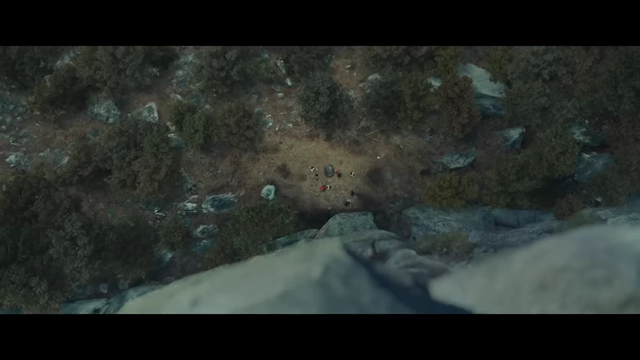
A bird's eye view from the cliff shows people gathered on the ground, symbolizing a fall into mystery. [ 00:10:33 ] - Film's Visual Arc: The entire visual arc of "Decision to Leave" is structured as a vertical movement, starting at a cliff edge and descending into the ocean, but with a momentary "peak" when Seo-rae confesses her love. This "climactic fall" signifies an abrupt and devastating crash rather than a controlled descent.
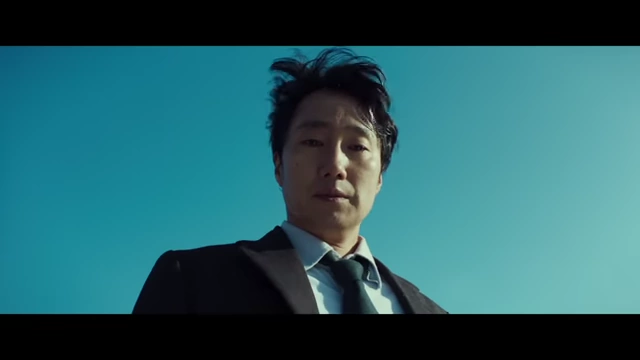
Hae-jun looks down from a height, visually representing a "peak" moment before a metaphorical fall into the ocean. [ 00:11:45 ] 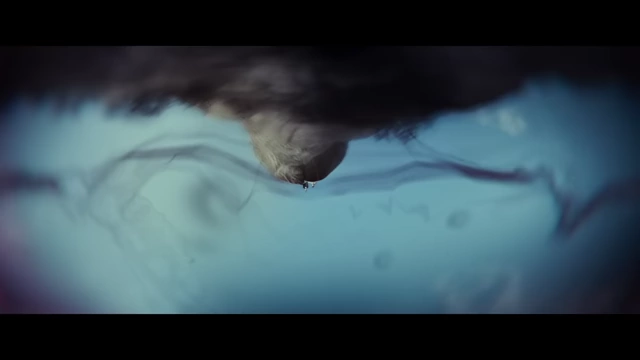
An underwater shot with the camera inverted, symbolizing a fall into mystery and the ocean as a place of uncertainty. [ 00:11:46 ]
Eyedrops [12:14]
"Decision to Leave" intentionally withholds crucial details from the audience, mirroring Hae-jun's own journey.
- Hae-jun's Blindness: The audience follows Hae-jun, a character seeking clarity but blinded by love and suspicion.
- Symbol of Frustration: His use of eyedrops, hoping for an "outside perspective" to see what the dead saw, is a physical manifestation of his frustration. The film similarly blinds the audience.
- Shared Ambiguity: Just as Hae-jun searches for objective truth in vain, the audience is forced to seek answers on screen with no definitive clarity.
- Examples include Seo-rae's dress appearing blue or green, or wallpaper seen as either a mountain or the ocean – only possibilities exist.
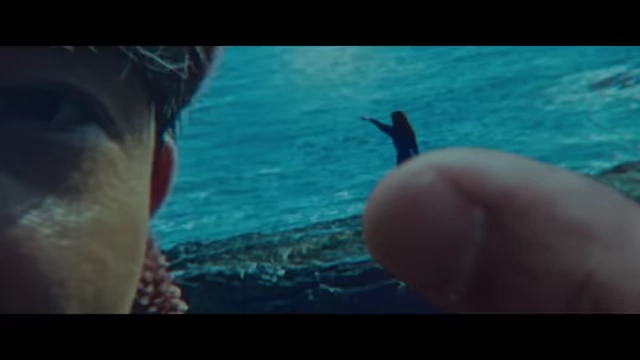
Hae-jun observes Seo-rae from a distance, partially obscuring his vision, reflecting his search for objective truth while being blinded by emotion. [ 00:13:01 ]
- Examples include Seo-rae's dress appearing blue or green, or wallpaper seen as either a mountain or the ocean – only possibilities exist.
- Hae-jun's Fate: Whether eyedrops are used for truth or protection, Hae-jun remains a "mountain of sand," destined to crumble.
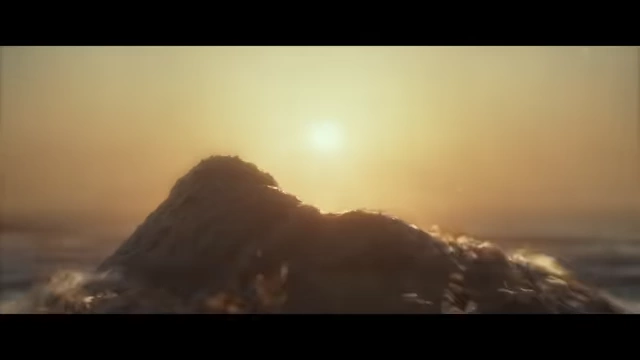
A "mountain of sand" being eroded by waves, symbolizing Hae-jun's fate to crumble when the time comes. [ 00:13:24 ]
The Final Mystery [13:25]
Hae-jun's vulnerability and inability to recognize his own confession of love contribute to the relationship's destruction.
- Hae-jun's Love Language: From his rigid, mountain-like perspective, there was no verbal confession of love. His expression of love was problem-solving, like telling Seo-rae to throw her problem (the phone) into the ocean.
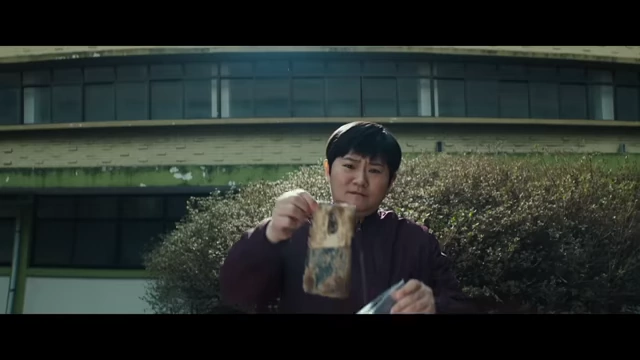
A man holds up a muddy phone, representing the evidence and problem Hae-jun advised Seo-rae to discard into the ocean. [ 00:11:38 ] 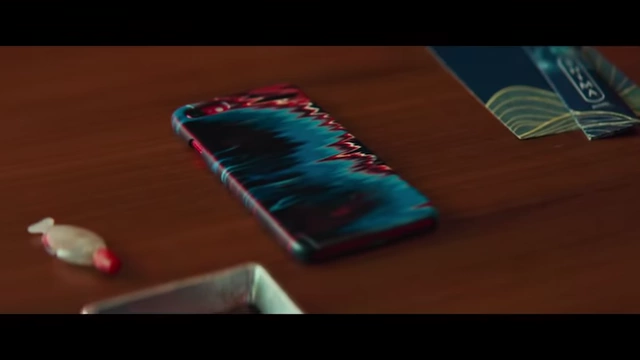
A phone with a vibrant, abstract case design, representing the "problem" that Hae-jun advises Seo-rae to discard. [ 00:14:13 ] - Seo-rae's Understanding: Seo-rae understood this. She responds by "pushing his problems to her, like a jellyfish pushing water to move on," taking his burdens and throwing them into the ocean, as he once advised her.
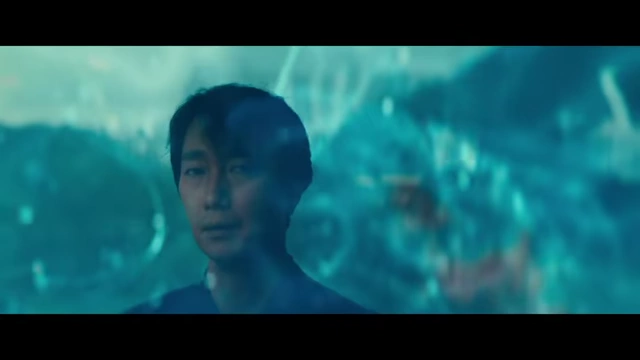
Hae-jun's face reflected through undulating water, visually connecting him to the "jellyfish" metaphor of pushing away problems. [ 00:14:19 ] 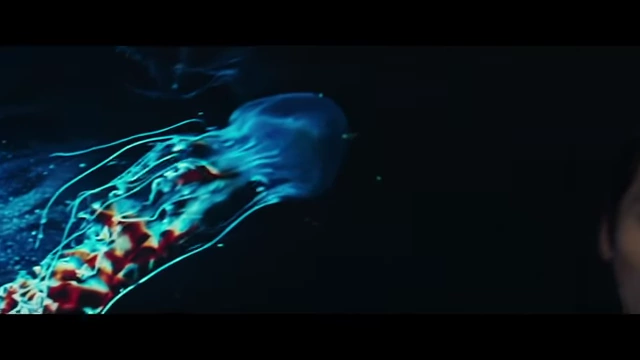
A jellyfish floating in the dark ocean, representing Seo-rae's action of taking Hae-jun's problems and pushing them away. [ 00:14:21 ] - The Ultimate Problem: One by one, he hands his problems to Seo-rae until she becomes the final, ultimate problem.
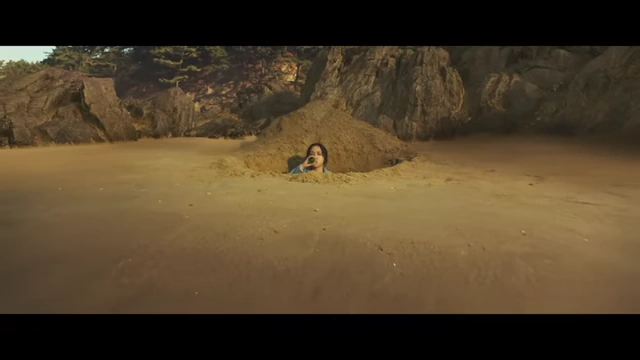
Seo-rae buried up to her neck in sand on the beach, an extreme act symbolizing her taking on Hae-jun's final problem. [ 00:14:32 ]
Decision to Leave [14:42]
Every aspect of "Decision to Leave," from its plot to its theme, is built on obscurity and misdirection.
- Concealed Truth: Through sounds, images, and structure, the film conceals truth from both characters and audience, clouding their vision and leading them astray.
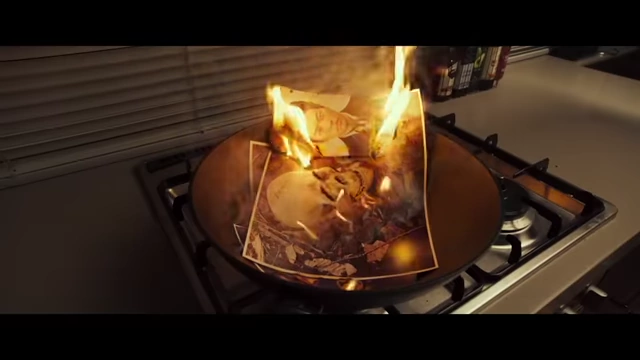
Photographs burning in a pan, symbolizing the destruction of memories and evidence, and the film's theme of obscuring truth. [ 00:15:02 ] - Mutated Message: This misperception creates a blur, a distant echo that mutates the original message.
- Wish to Stay: The film concludes that a simple decision rarely leads to action; some decisions are meant to be kept in the heart. Their "Decision to Leave" was never meant to be fulfilled but was a profound wish to stay.
Hae-jun stands on the beach, looking out at the ocean with a distant rock formation resembling a mountain, symbolizing the unresolved connection between him and Seo-rae. [ 00:14:40 ] 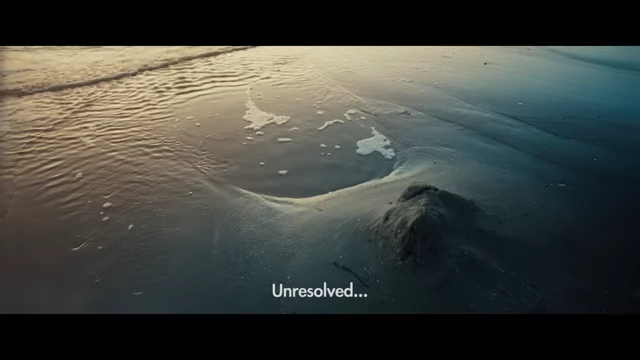
Waves gently recede on the beach, with "Unresolved..." text overlayed, encapsulating the film's ambiguous conclusion. [ 00:14:50 ]