SpaceX Rapidly Prepares for Starship Flight 11, Reveals Mars Landing Strategy, and Other Space Updates
Summary:
This week saw rapid advancements in space exploration, particularly with SpaceX's Starship program, Falcon 9's record-breaking flights, Rocket Lab's Neutron, and Blue Origin's Mars ambitions.
- SpaceX is accelerating towards Starship Flight 11, with Booster 15 (a re-flown booster from Flight 8) already undergoing static fire preparations just weeks after Flight 10's success.
- Elon Musk surprisingly revealed plans for initial uncrewed Starship Mars missions by 2026, aiming to land "on the skirt, NO LEGS!" to gather re-entry and landing control data.
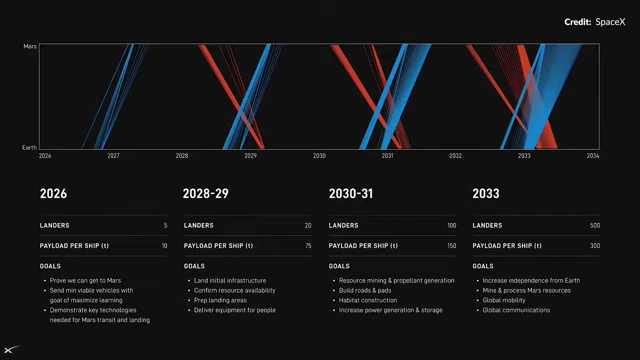
SpaceX Mars mission timeline and goals from 2026 to 2033 [ 00:03:22 ] - Construction at Starbase's Pad 2 is progressing swiftly, including the installation of new stabilizing arms and advanced propellant systems at Masseys.
- Falcon 9 achieved its 500th orbital class rocket launch and landing, and a fairing completed its record 33rd flight, demonstrating exceptional reusability. Starlink now serves over 7 million users.

Starlink satellites with visible lights during fairing separation [ 00:13:39 ] - Rocket Lab unveiled its sleek Neutron launch pad at MARS, with a maiden launch anticipated by year-end, alongside future plans for Venus and crewed missions.
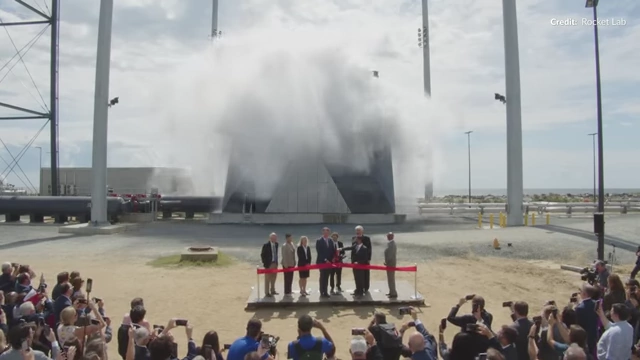
Rocket Lab's water deluge system in action during the Neutron pad unveiling [ 00:19:18 ] - Blue Origin announced its Mars Telecommunications Orbiter (MTO) project for NASA's 2028 Mars mission, leveraging its Blue Ring platform for continuous high-speed Earth-Mars communication.
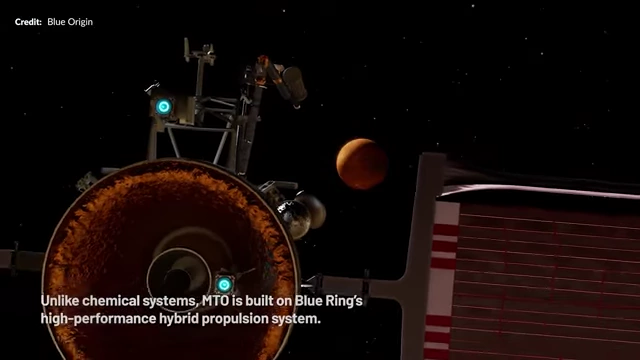
Blue Origin's Mars Telecommunications Orbiter (MTO) concept orbiting Mars [ 00:20:38 ] - A SpaceX Cargo Dragon successfully performed an initial reboost of the International Space Station, increasing its perigee by 1.6 kilometers using its Draco engines.
SpaceX Starship Updates: Accelerating Progress and Martian Ambitions [00:00:00] [00:00:28] [00:03:20]
SpaceX is maintaining an aggressive pace for its Starship program following the successful Flight 10.
Starship Flight 10 Recap & Future Plans [00:00:28]
- Post-flight observations revealed impressive views from Starship.
- Onboard cameras captured the launch ascent plume, clearly showing geographical landmarks like the Brownsville Ship Channel and the US-Mexico border.

Starship launch plume from orbit with geographical markers [ 00:01:00 ] - Subsequent views showed the Starship on its trajectory and the start of reentry with plasma flowing over the vehicle.

Starship re-entry with plasma flow [ 00:01:15 ] - The cargo bay was visible during the flight test, hinting at future payload deployments.
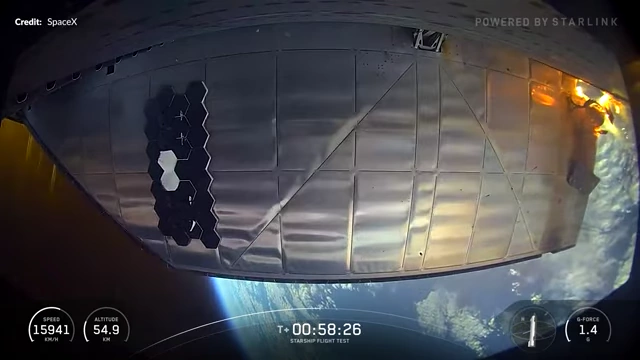
Internal view of Starship's cargo bay during a test [ 00:01:37 ]
- Onboard cameras captured the launch ascent plume, clearly showing geographical landmarks like the Brownsville Ship Channel and the US-Mexico border.
- Optimism for Starship's full reusability by next year remains high after Flight 10's success, which completed all planned objectives and pushed limits.
- Orbital refilling tests are crucial for 2026 Mars mission windows; without them, a Mars test mission would be unlikely.
Mars Landing Strategy: Unconventional Approach for 2026 [00:01:45]
- Elon Musk indicated plans to send initial uncrewed Starships to Mars by next year [2026].
- Surprisingly, these Starships will attempt to land "on the skirt, NO LEGS!"
- This suggests a focus on re-entry and landing control data collection rather than expecting an upright landing.
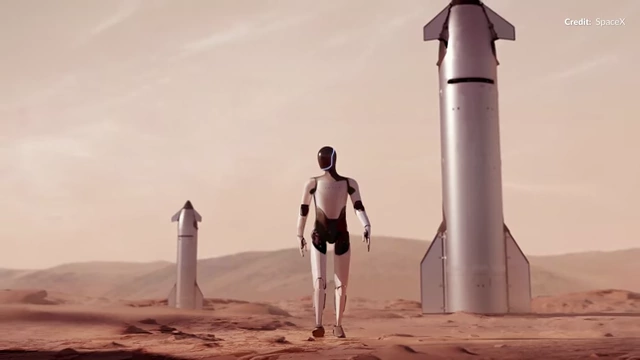
Artist's rendition of Starship attempting to land on Mars without legs [ 00:02:02 ] 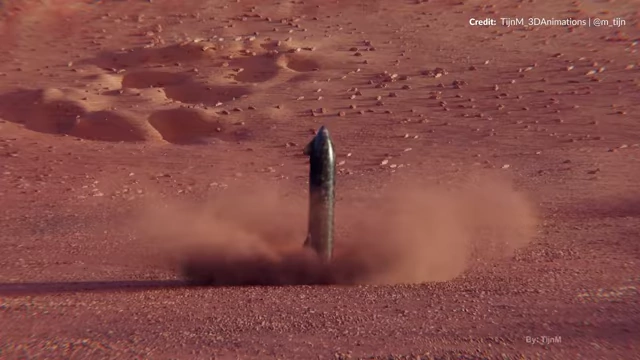
Animation of Starship attempting a "no legs" landing on Mars [ 00:02:38 ] - Communication systems, possibly involving Starlink satellites deployed in Martian orbit, would be critical for transmitting data.
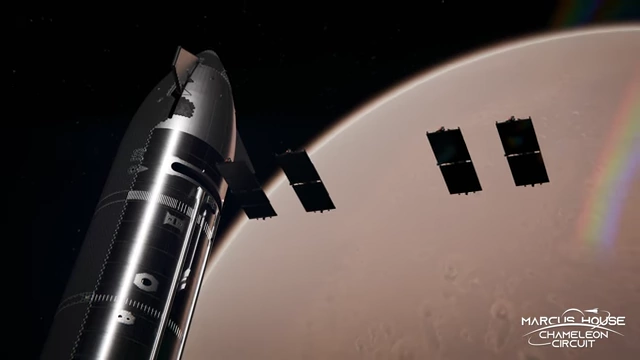
Animation of Starlink satellites deploying from Starship for a Mars mission [ 00:02:47 ]
- This suggests a focus on re-entry and landing control data collection rather than expecting an upright landing.
- Key priorities remain the reliability and reusability of the heat shield, development of Block 3 vehicles, and successful orbital, catch, and refilling test missions.
- The 2028 Mars window is expected to feature more fleshed-out plans, as shown in the timeline presented by Elon Musk.
SpaceX Mars mission timeline and goals from 2026 to 2033 [ 00:03:22 ]
Starship Flight 11 Preparations: Rapid Static Fire and Objectives [00:03:20]
- Booster 15, previously flown on Flight 8, is already being prepared for static fire, less than two weeks after Flight 10. This marks the second time a booster will refly.
- Booster 15's previous flight on Starship Flight 8.
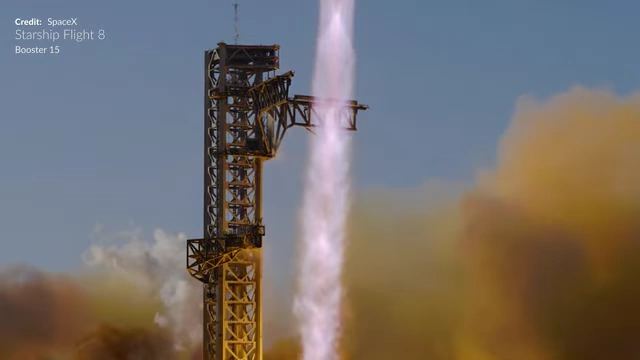
Booster 15 launching during Starship Flight 8, its previous flight [ 00:03:36 ] - The booster transport stand was moved from the Rocket Garden into Megabay 1, and road closures were announced for its rollout to the launch site.
- Booster 15 was staged in the ringyard and began its rollout to the launch site.
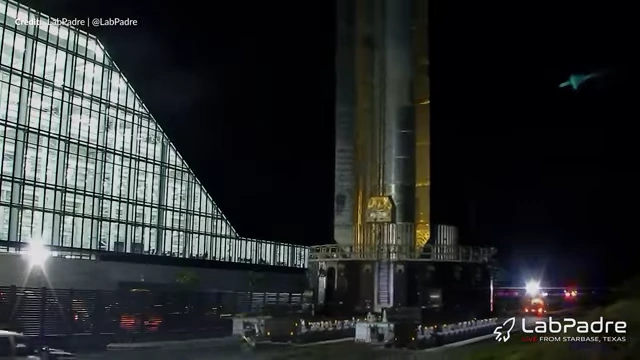
Booster 15 being rolled out to the launch site for static fire [ 00:04:20 ]
- Booster 15's previous flight on Starship Flight 8.
- After the booster's static fire, temporary components will be re-installed for the upper stage Starship to undergo its own static fire.
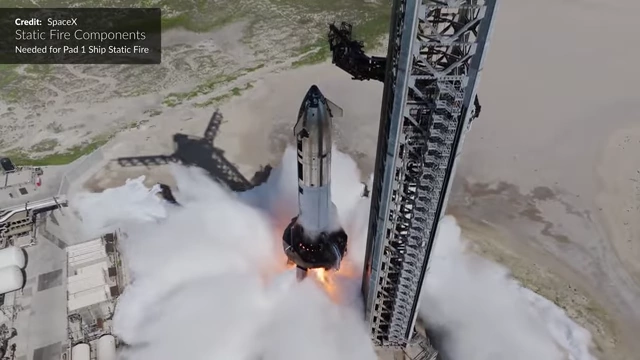
Temporary static fire components installed for Pad 1 Ship static fire tests [ 00:04:32 ] - Flight 11's objectives are unconfirmed, but an orbital flight with Starlink V3 satellite deployment is hoped for, requiring a more significant deorbit burn.
- A collage of key moments from Flight 10 illustrates the success and pushes limits.
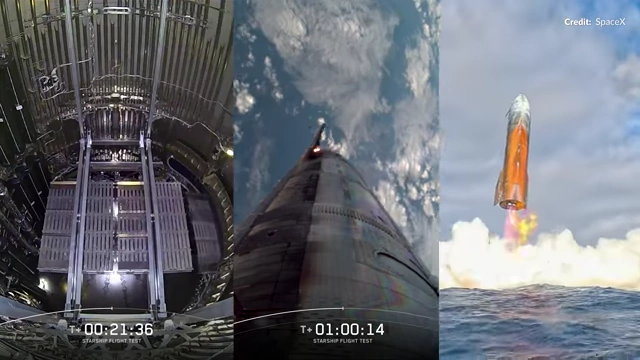
Collage of key moments from Starship Flight 10, including payload deployment test [ 00:04:41 ] - Animation depicting Starlink Version 3 satellite deployment from Starship in orbit.
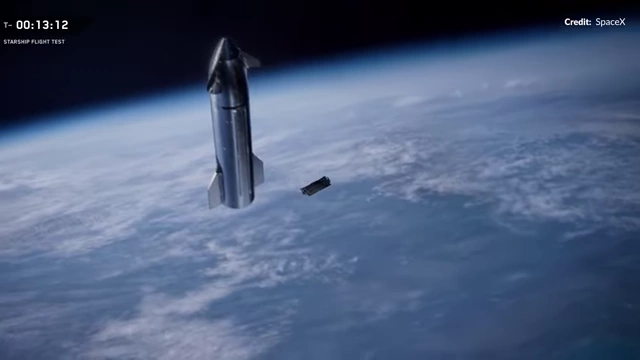
Animation depicting Starlink Version 3 satellite deployment from Starship [ 00:04:55 ] - Raptor engines firing during Starship's deorbit burn.
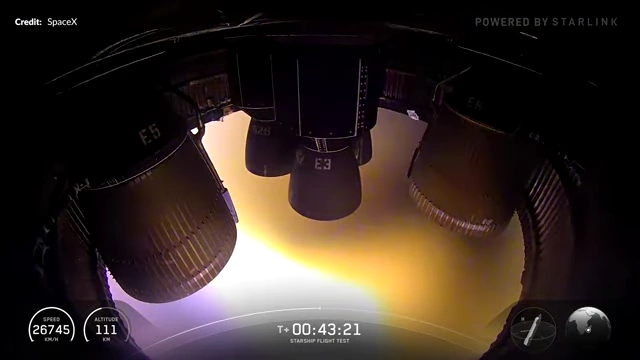
Raptor engines firing during Starship's deorbit burn [ 00:05:11 ] - Internal view of Starship's payload bay, likely for Starlink satellites.
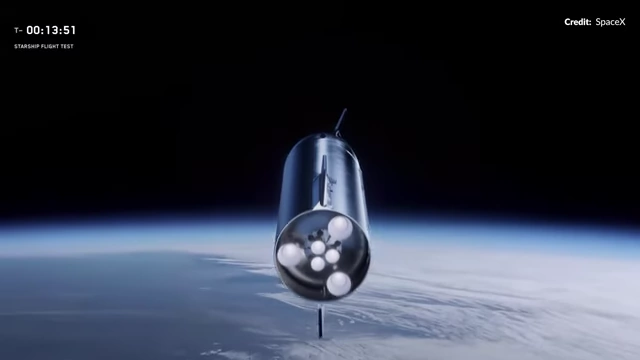
Internal view of Starship's payload bay, likely for Starlink satellites [ 00:05:27 ] - If FAA data indicates issues, Flight 11 might repeat Flight 10's suborbital profile to ensure safe deorbit capabilities for future orbital missions.
- A collage of key moments from Flight 10 illustrates the success and pushes limits.
Starbase Infrastructure and Vehicle Production Developments [00:06:05] [00:08:52]
Construction and testing activities at Starbase are moving quickly to support next-generation Starship operations.
Pad 2 Construction: Enhancements for Rapid Reusability [00:06:08]
- Work on the new launch pad (Pad 2) is advancing rapidly towards certification for next-generation vehicles.
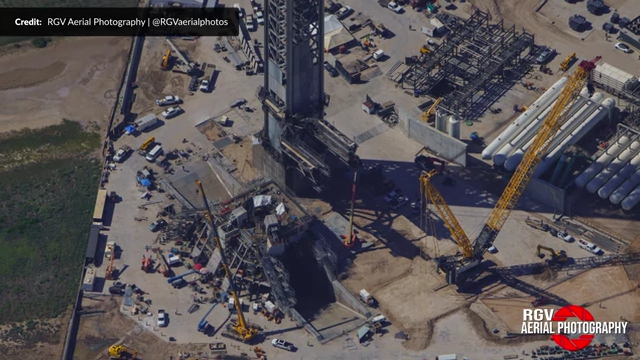
Aerial view of Starbase Pad 2 construction progress [ 00:06:08 ] - Assembly of lower stabilizing arms has begun, crucial for aligning vehicles during stacking.
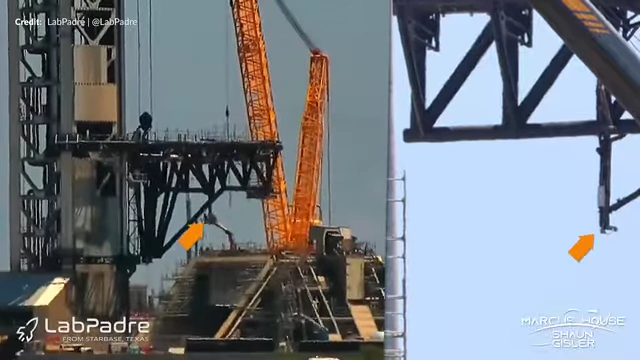
Lower stabilizing arms being assembled for Pad 2, used for vehicle alignment [ 00:06:23 ] - Pad 2 will feature a new ball-and-socket type holddown system, eliminating the need for removable booster stabilizers seen on Pad 1, improving rapid reusability.
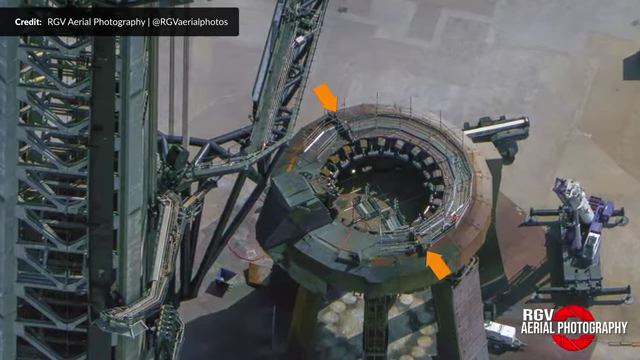
Overview of Pad 1 deck showing removable booster stabilizers [ 00:06:46 ] 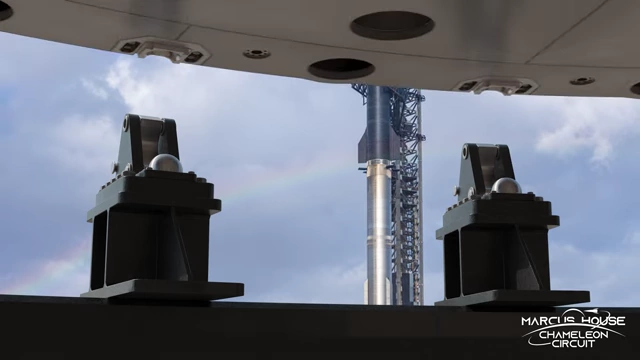
Conceptual animation of the new ball-and-socket type holddown system for Pad 2 [ 00:07:06 ]
- Pad 2 will feature a new ball-and-socket type holddown system, eliminating the need for removable booster stabilizers seen on Pad 1, improving rapid reusability.
- The flame trench wall's final pieces are being lifted, completing the ramps to the launch mount deck.
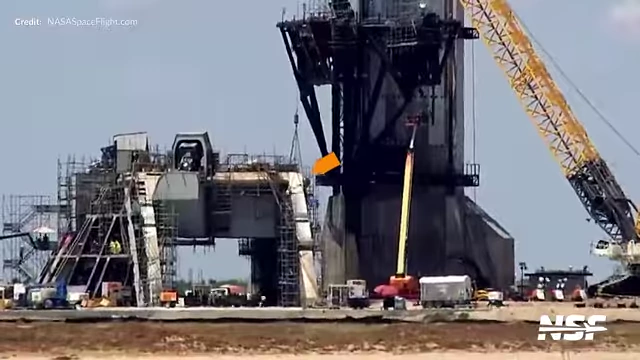
Final pieces of the flame trench wall being lifted into place at Pad 2 [ 00:07:14 ]
Vehicle Production: New Test Tanks and Booster Sections [00:07:20]
- An interesting test tank setup is under development, with a triple barrel section and a forward dome with strengthening stringers being assembled in Megabay 2.
- This test tank is expected to be stacked on a Ship aft section for testing.
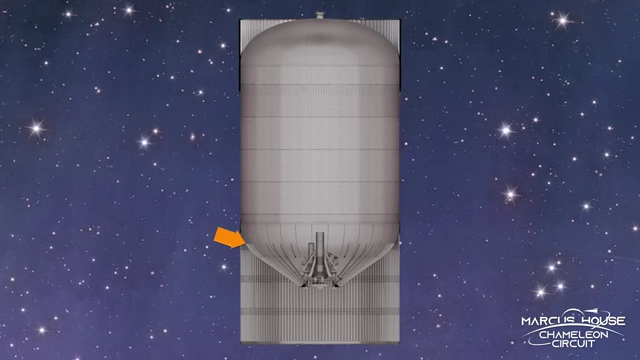
Conceptual diagram of a Starship test tank assembly with a forward dome [ 00:07:59 ]
- This test tank is expected to be stacked on a Ship aft section for testing.
- Another test article featuring a booster forward section with an integrated hot staging dome was rolled out of the Starfactory.
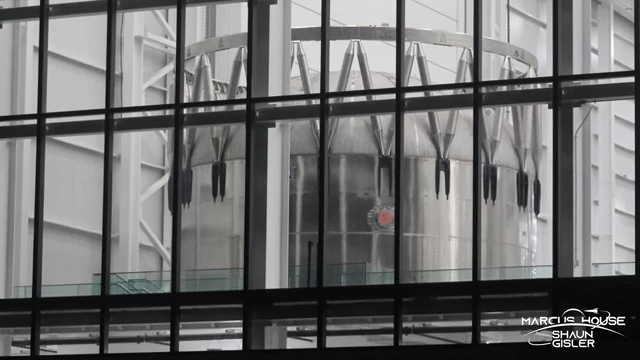
A booster forward section with an integrated hot staging dome being rolled out from the Starfactory [ 00:08:13 ] 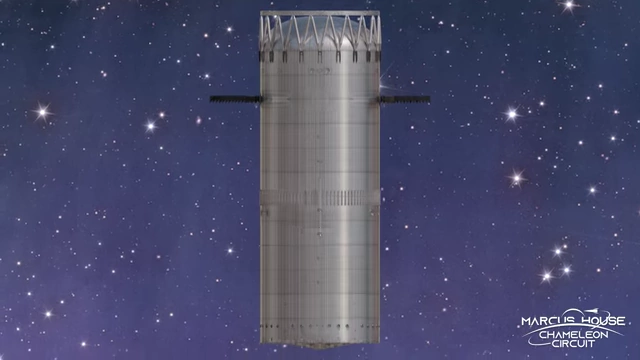
Animation of a test article featuring a booster forward section with an integrated hot staging dome [ 00:08:33 ] - This section, potentially stacked on a Booster aft section (like Booster 18), is likely destined for Pad 2 testing, including "arm slap tests" to verify new designs.
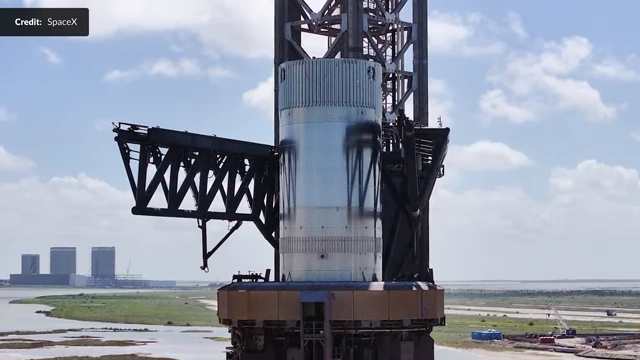
SpaceX performing "arm slap tests" at Pad 1 to verify arm designs [ 00:08:38 ]
- This section, potentially stacked on a Booster aft section (like Booster 18), is likely destined for Pad 2 testing, including "arm slap tests" to verify new designs.
Masseys Test Site: Cryogenic Testing and Propellant Systems [00:08:52]
- Test Tank 17 has undergone at least 6 cryogenic tests, gathering data to allow Booster 18 stacking to continue.
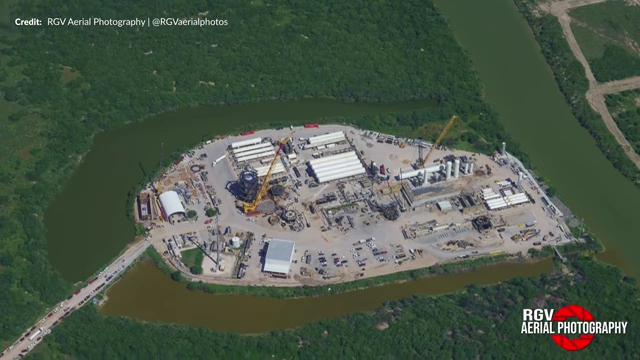
Aerial view of the Masseys Test Site showing ongoing construction and testing areas [ 00:08:55 ] 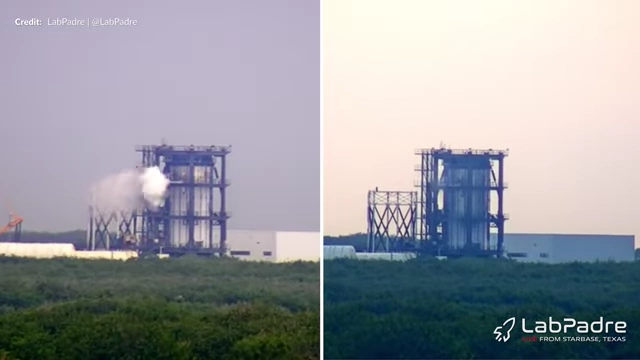
Test Tank 17 undergoing cryogenic testing at Masseys [ 00:09:12 ] - The new Block 3 booster cryogenic testing stand is nearing completion, with cryogenic hoses for quick disconnects now installed.
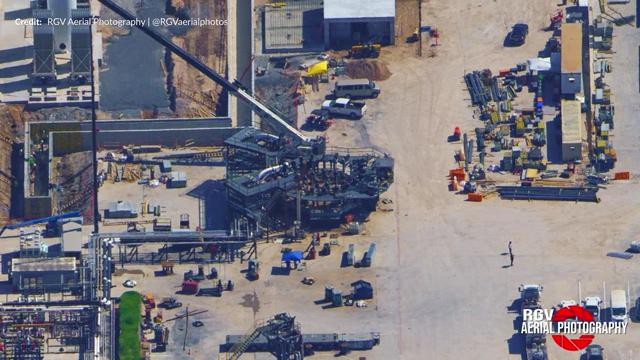
The new Block 3 booster cryogenic testing stand nearing completion at Masseys [ 00:09:21 ] - The propellant culvert is finished, and additional subchillers are being added for quicker liquid oxygen loading.
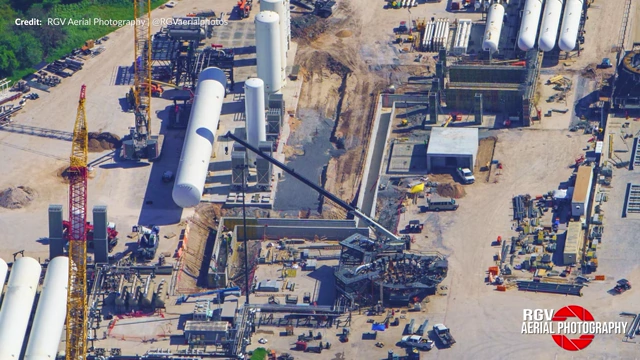
Propellant culvert and additional subchillers being installed for quicker liquid oxygen loading [ 00:09:37 ] - A skid system for the Pad 2 propellant pump farm, including valves and cryogenic pumps, has started appearing, indicating a more efficient setup.
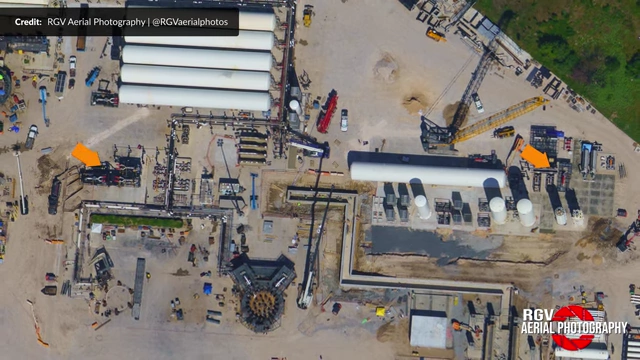
Aerial view of the propellant pump farm skid system appearing at Masseys [ 00:09:49 ] - Construction of the above-ground bunker part, connecting lines to ships via the static fire stand, has begun.

Construction of the above-ground bunker for propellant lines at Masseys [ 00:10:00 ] - The methane tank farm is being rapidly reassembled with horizontal storage tanks and similar skid-type plumbing systems.
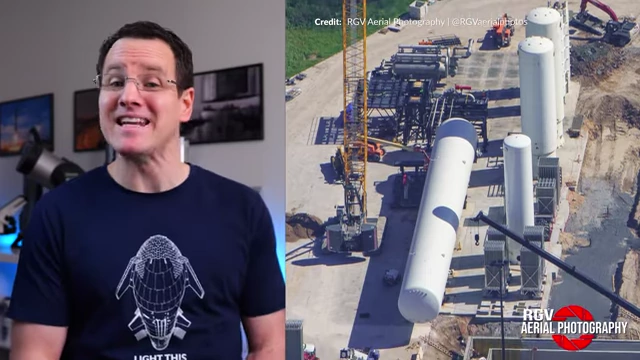
Rapid reassembly of the methane tank farm with a large horizontal storage tank [ 00:10:07 ] 
Plumbing components being staged at Masseys for the new propellant systems [ 00:10:21 ]
Launch Complex 39A (Florida) Development [00:12:05]
- Activity at Launch Complex 39A in Florida includes parts of the launch mount support bunker being lifted.
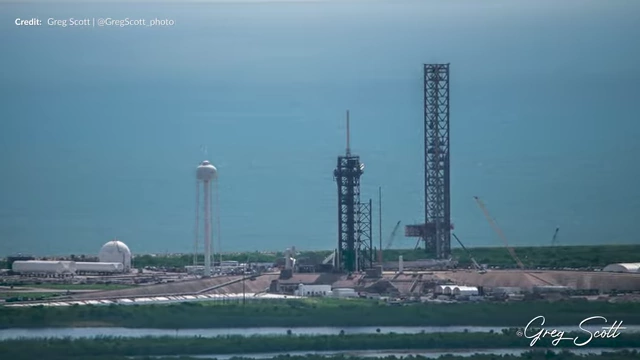
Aerial overview of Launch Complex 39A with Starship infrastructure under construction [ 00:12:10 ] - A new LR11000 crawler crane was raised, suggesting preparations for lifting the actual launch mount.
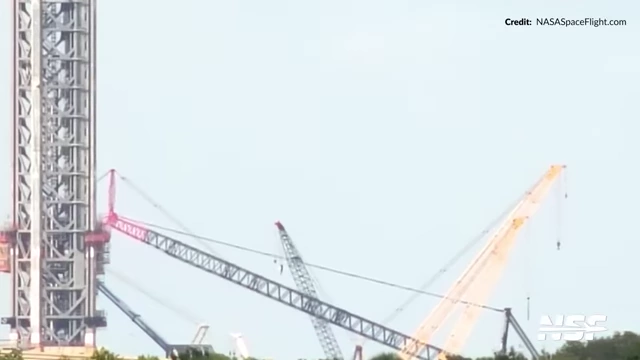
The new LR11000 crawler crane being raised at Launch Complex 39A [ 00:12:19 ] 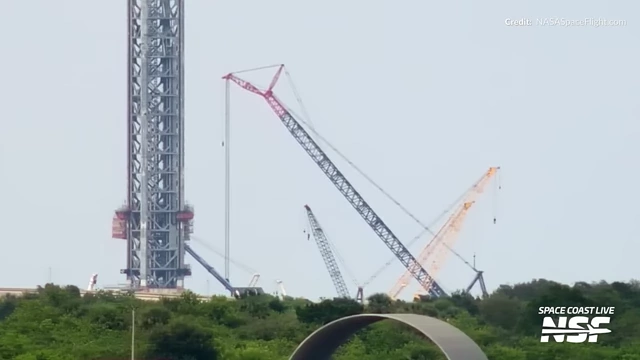
Two large cranes working on construction at Launch Complex 39A [ 00:12:37 ] - The central support frame for the flame trench was seen being transported and potentially lifted into place.
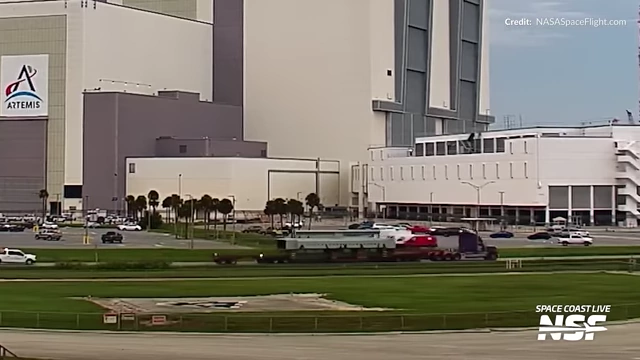
The central support frame for the flame trench being transported to LC-39A [ 00:12:45 ] 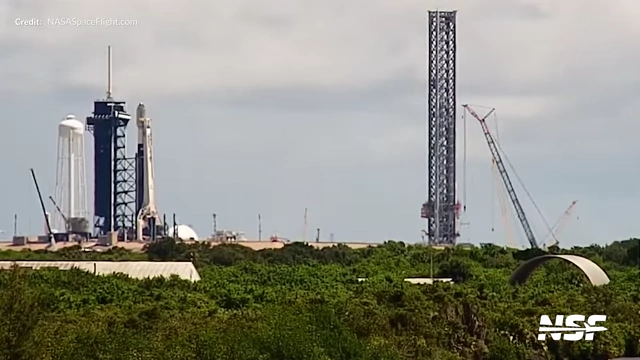
Launch Complex 39A showing the new flame trench support structure in place [ 00:13:05 ]
Falcon 9 and Starlink Milestones [00:13:12]
SpaceX's Falcon 9 continues to break records, and the Starlink constellation expands significantly.
Record-Breaking Falcon 9 Flights [00:13:12]
- Booster 1077 completed its 23rd landing, a record, on the droneship "Just Read the Instructions."
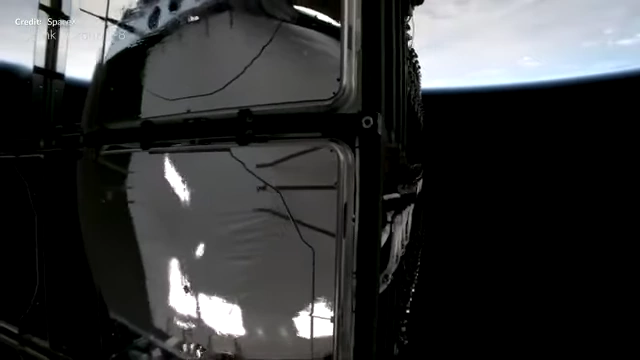
- An intriguing observation was made: lights on the Starlink satellites are now clearly visible during fairing separation, even sporadically within the fairings.
Starlink satellites with visible lights during fairing separation [ 00:13:39 ] - Booster 1077 performing its landing burn.
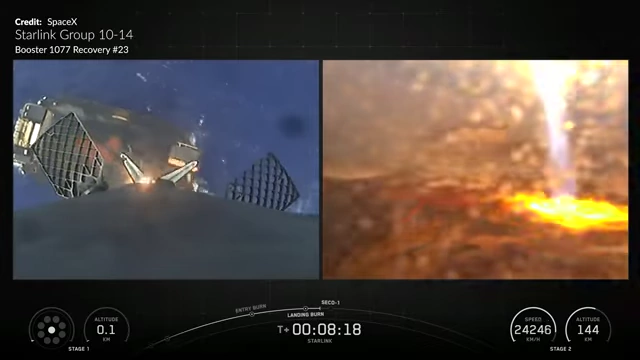
Falcon 9 Booster 1077 performing its landing burn [ 00:14:09 ]
- An intriguing observation was made: lights on the Starlink satellites are now clearly visible during fairing separation, even sporadically within the fairings.
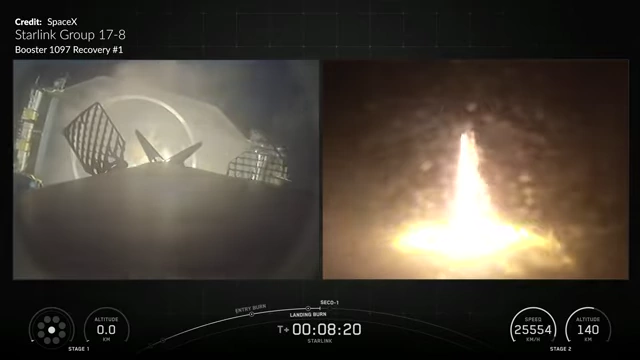
- A brand new Falcon 9 booster, 1097, lifted off from Vandenberg for Group 17-8, marking its very first recovery on "Of Course I Still Love You."
- Booster 1067 achieved its 30th recovery, further solidifying Falcon 9's reusability prowess.
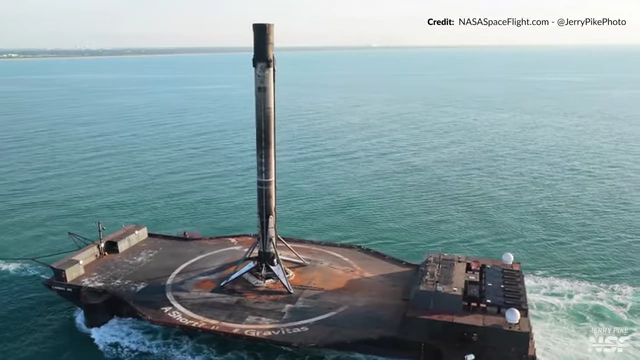
Falcon 9 Booster 1067, a record-breaker with 30 recoveries, returning to port [ 00:15:05 ] - Falcon 9's fairing half (serial 185) completed its 33rd flight, setting a new record and highlighting significant cost savings (estimated $6M per new fairing).
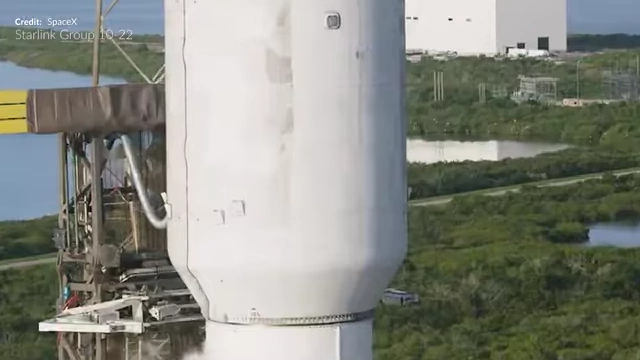
Falcon 9 fairing half with serial number 185, which completed its 33rd flight [ 00:15:42 ] 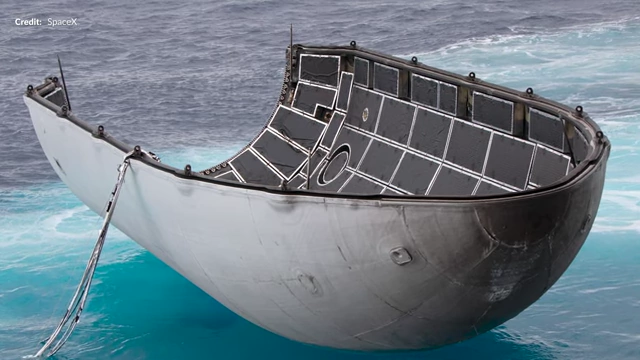
A recovered Falcon 9 fairing half floating in the ocean [ 00:15:54 ] - The week also saw the 500th launch and landing of an orbital-class rocket, a monumental achievement for Falcon 9.
Starlink Network Expansion [00:15:20]
- Starlink is now connecting over 7 million people across approximately 150 countries.
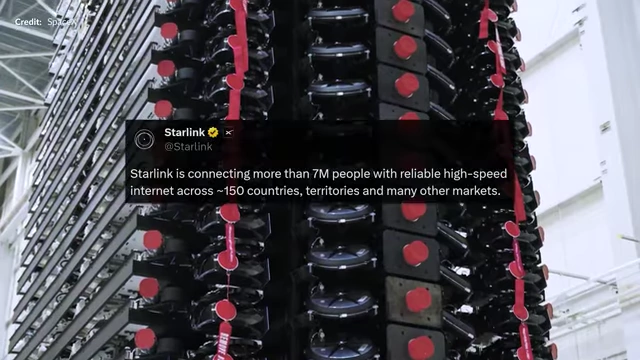
Starlink tweet showing over 7 million people connected in ~150 countries [ 00:15:20 ] 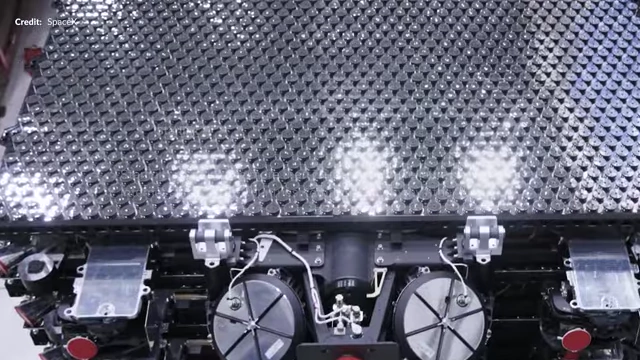
A stack of Starlink satellites inside the fairing [ 00:15:25 ] - Multiple Starlink Group launches occurred, including Group 10-22 (Flight 14 for booster 1083) and Group 10-57 (27th flight).
Other Spaceflight News: Innovations and Martian Ambitions [00:16:23] [00:18:28] [00:20:20] [00:21:57]
Nayuta Space's Black Bird-R: A Unique Recovery Concept [00:16:23]
- Nayuta Space introduced the Black Bird-R, a two-stage, methane-oxygen-fueled rocket, similar in size to Falcon 9 but with a unique recovery method.
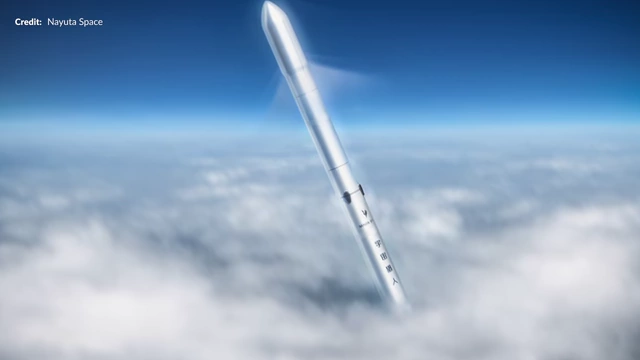
Nayuta Space Black Bird-R rocket during ascent (animation) [ 00:16:53 ] 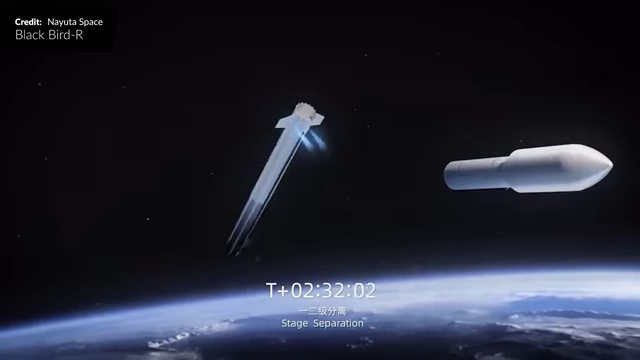
Nayuta Space Black Bird-R rocket during stage separation (animation) [ 00:16:35 ] - It proposes "Aerodynamic Deceleration, Horizontal Landing" (ADHL) using four large flaps for drag.
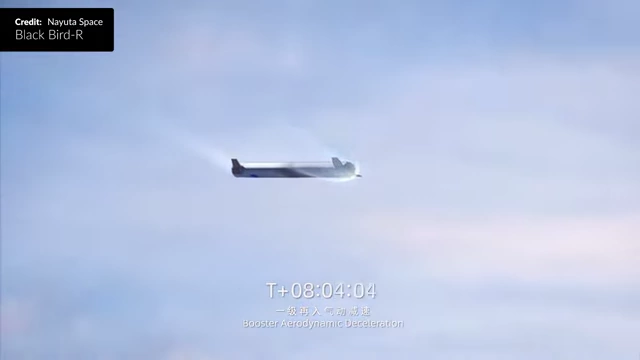
Nayuta Space Black Bird-R booster performing aerodynamic deceleration with large flaps (animation) [ 00:16:45 ] - Before touchdown, an engine ignites to cancel motion, then the booster flips horizontally to land on its flaps with the help of six smaller engines.
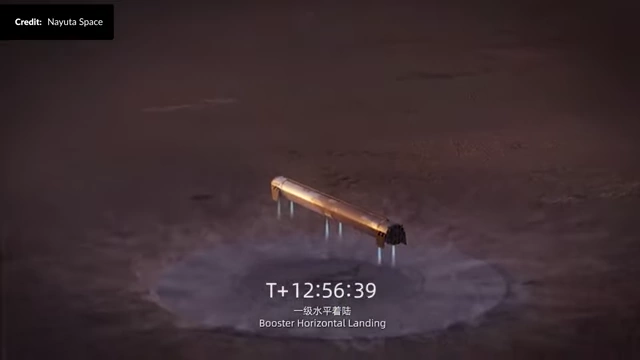
Nayuta Space Black Bird-R booster performing a horizontal landing using small engines and flaps (animation) [ 00:17:28 ]
- Before touchdown, an engine ignites to cancel motion, then the booster flips horizontally to land on its flaps with the help of six smaller engines.
- This complex propulsion setup aims to avoid the need for large landing towers like SpaceX's Mechazilla but introduces its own technical challenges, including propellant routing and structural reinforcement for belly-first entry.
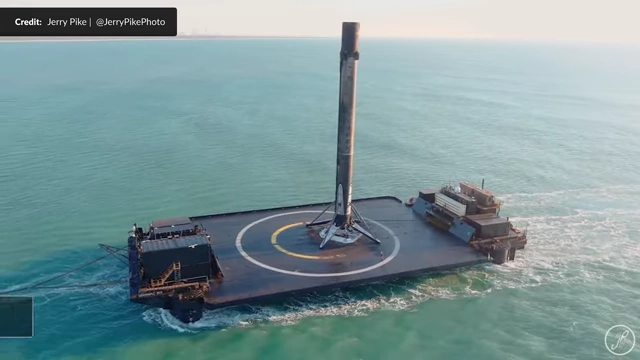
A Falcon 9 booster after landing on a droneship for comparison with Black Bird-R [ 00:16:59 ] 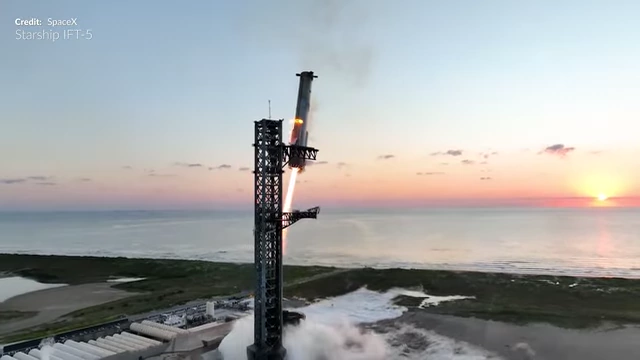
SpaceX Starship on the Mechazilla launch tower for comparison with Black Bird-R recovery [ 00:17:49 ]
Rocket Lab's Neutron: Pad Reveal and Future Goals [00:18:28]
- Rocket Lab unveiled the launch pad for its Neutron rocket at the Mid-Atlantic Regional Spaceport (MARS) in Virginia.
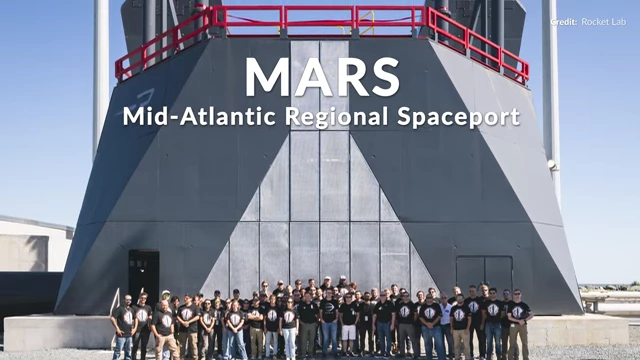
Rocket Lab team at the unveiling of the Neutron launch pad at MARS [ 00:18:40 ] 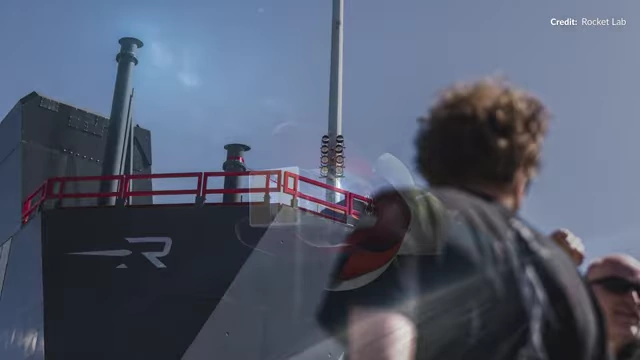
Close-up of Rocket Lab's sleek and minimal Neutron launch pad design [ 00:18:46 ] 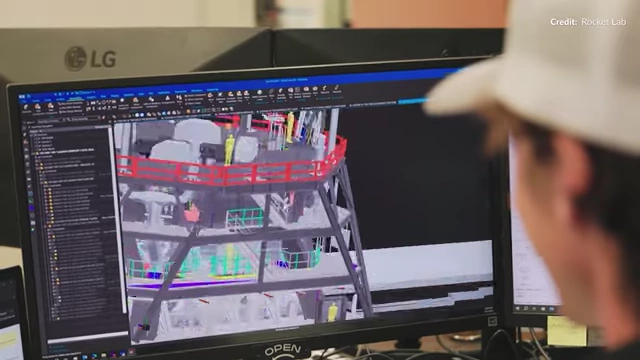
CAD design of Rocket Lab's Neutron launch pad infrastructure [ 00:18:53 ] 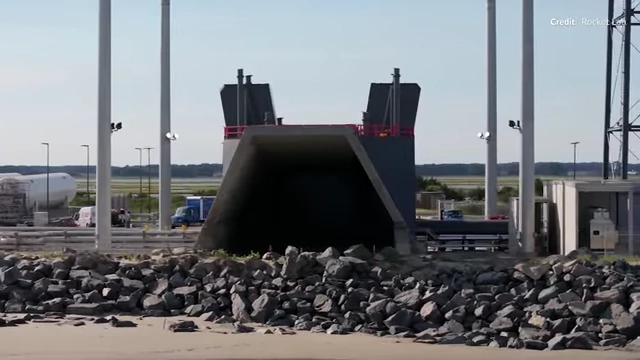
Ground-level view of Rocket Lab's Neutron launch pad [ 00:18:57 ] 
Overhead view of Rocket Lab's Neutron launch pad design [ 00:18:58 ] - The pad features a sleek, minimal design without a tall launch tower, connecting directly to Neutron for propellant loading.
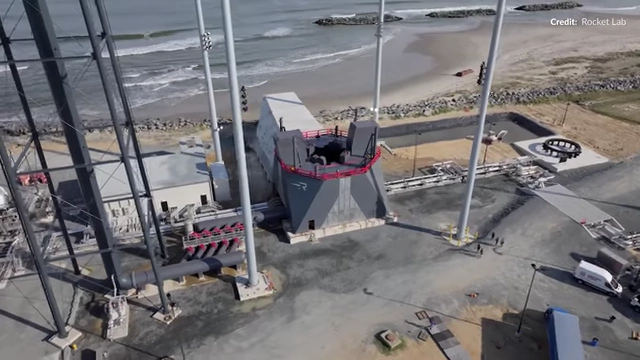
Aerial view of Rocket Lab's Neutron launch pad and surrounding facilities [ 00:19:04 ] - A 61-meter (200-foot) tall water tower provides over 750,000 liters (200,000 gallons) for deluge during launches.
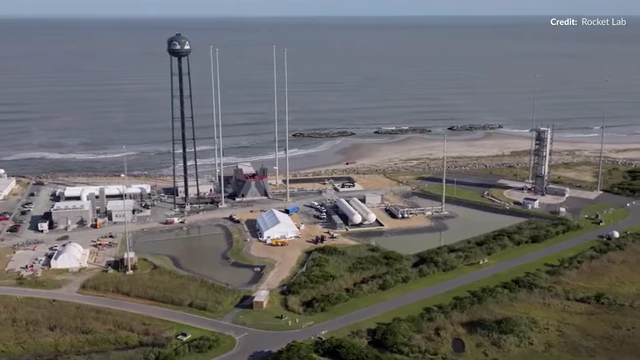
Aerial view of Rocket Lab's Neutron launch site featuring the tall water tower [ 00:19:08 ] - The water deluge system was demonstrated during the unveiling event.
Rocket Lab's water deluge system in action during the Neutron pad unveiling [ 00:19:18 ]
- A 61-meter (200-foot) tall water tower provides over 750,000 liters (200,000 gallons) for deluge during launches.
- The tank farm holds 180,000 gallons of propellant and 45,000 gallons of liquid nitrogen.
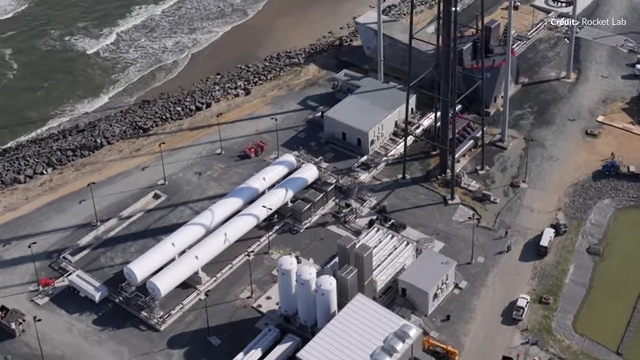
Rocket Lab's tank farm with propellant and liquid nitrogen storage tanks [ 00:19:27 ] 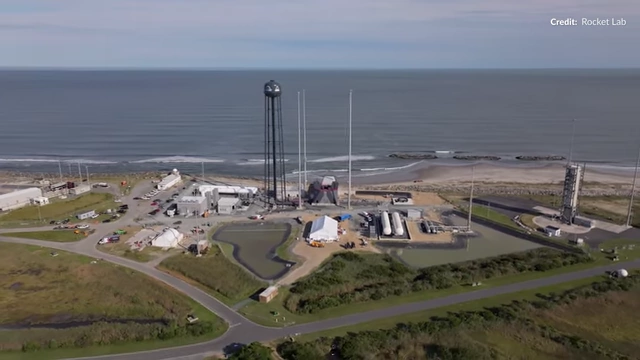
Wide aerial view of the Rocket Lab MARS site with the Neutron pad [ 00:19:32 ] - The first Neutron rocket is expected soon, with a maiden launch potentially by the end of the year.
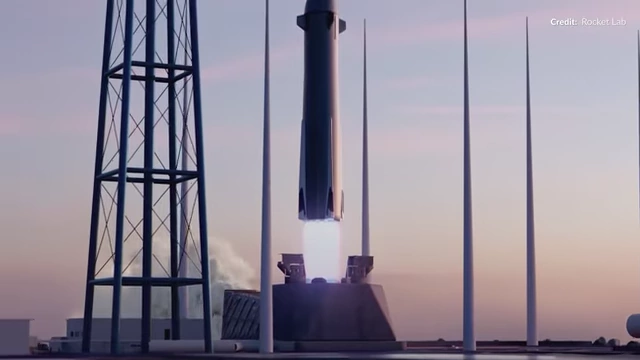
Animation depicting the launch of Rocket Lab's Neutron rocket [ 00:19:36 ] 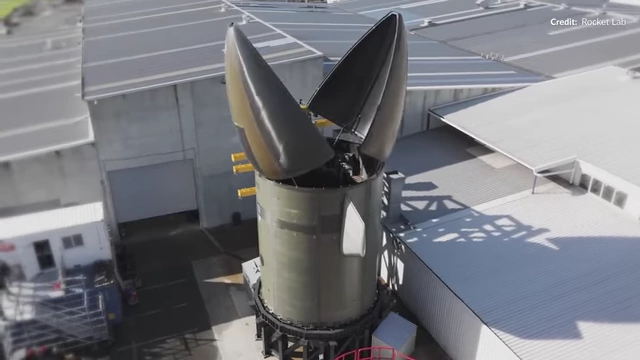
Animation of Rocket Lab Neutron's unique fairing opening [ 00:19:43 ] 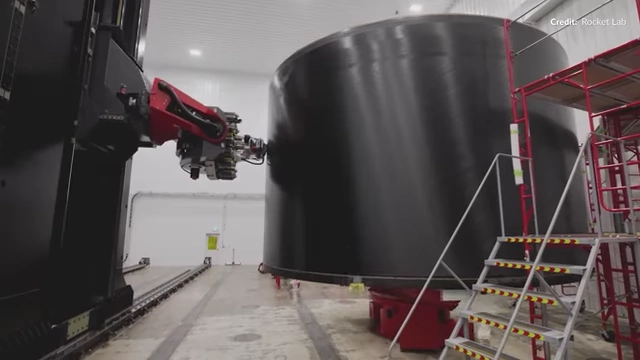
Rocket Lab's automated manufacturing process for Neutron rocket components [ 00:19:44 ] - Rocket Lab aims for Mars and Venus exploration, with Peter Beck, CEO, expressing a long-standing interest in Venus.
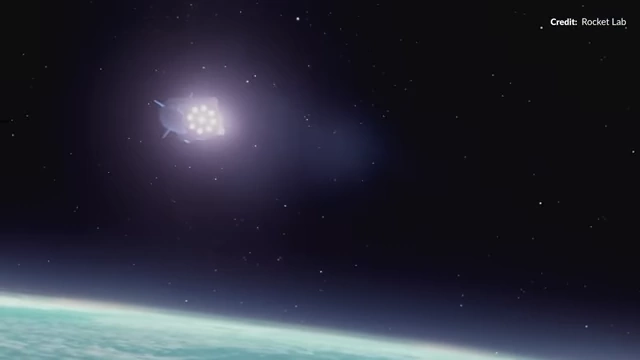
Animation illustrating Rocket Lab's potential Venus exploration mission [ 00:19:50 ] 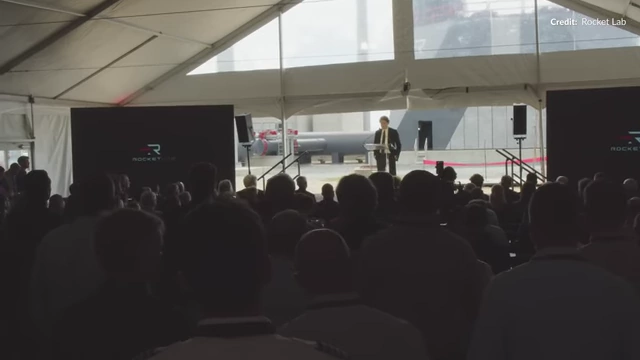
Rocket Lab CEO Peter Beck speaking at the Neutron launch pad unveiling event [ 00:20:00 ] - Future crewed missions are also considered, which would be unique given Neutron's fully enclosed second stage.
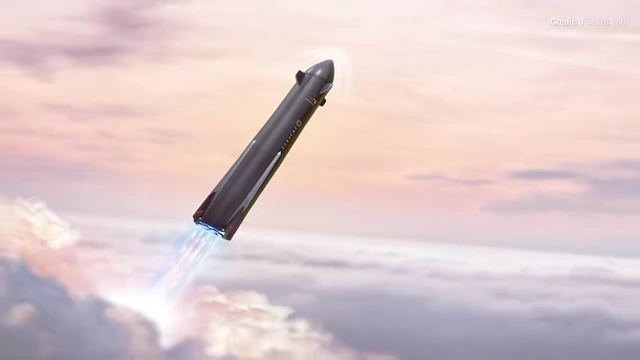
Animation showing Rocket Lab Neutron's fully enclosed second stage with a crew vehicle inside [ 00:20:04 ] 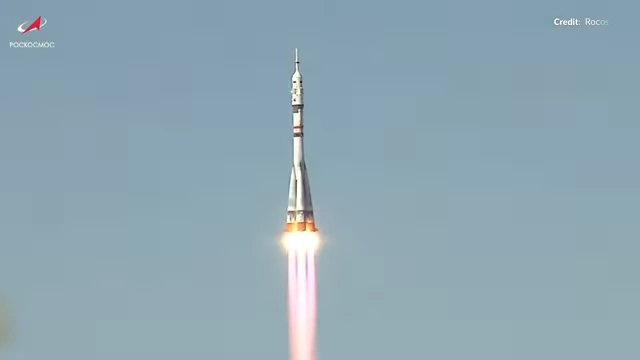
A Soyuz rocket launching, providing context for encapsulated crewed spacecraft [ 00:20:13 ]
Blue Origin's Mars Telecommunications Orbiter for NASA [00:20:20]
- Blue Origin performed a 15-second static fire test of the second stage for the third New Glenn rocket.
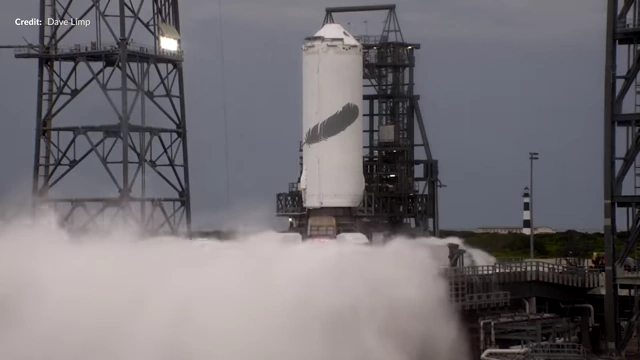
Blue Origin's New Glenn second stage undergoing a static fire test [ 00:20:33 ] - They announced their Mars Telecommunications Orbiter (MTO) project, aiming to participate in NASA’s 2028 Mars mission.
- The MTO aims to create a high-speed, continuous communication relay network between Earth and Mars, supporting both robotic and future human missions.
Blue Origin's Mars Telecommunications Orbiter (MTO) concept orbiting Mars [ 00:20:38 ] - The orbiter utilizes Blue Origin's Blue Ring platform, capable of delivering one metric tonne to Mars orbit, and features a hybrid propulsion system (chemical and solar electric).
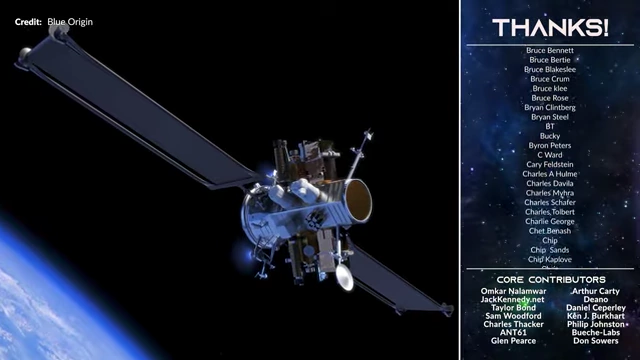
Blue Origin's Blue Ring platform, forming the basis for the Mars Telecommunications Orbiter [ 00:21:26 ] - This approach widens launch windows to Mars.
- Blue Origin's MTO concept deploying UHF relay satellites around Mars.

Blue Origin's MTO concept deploying UHF relay satellites around Mars [ 00:21:54 ] - NASA has allocated $700 million for an MTO, and Blue Origin is vying for the project.
- The orbiter utilizes Blue Origin's Blue Ring platform, capable of delivering one metric tonne to Mars orbit, and features a hybrid propulsion system (chemical and solar electric).
Dragon Reboosts the International Space Station [00:21:57]
- A SpaceX cargo Dragon successfully completed an initial burn using its two Draco engines to reboost the International Space Station.
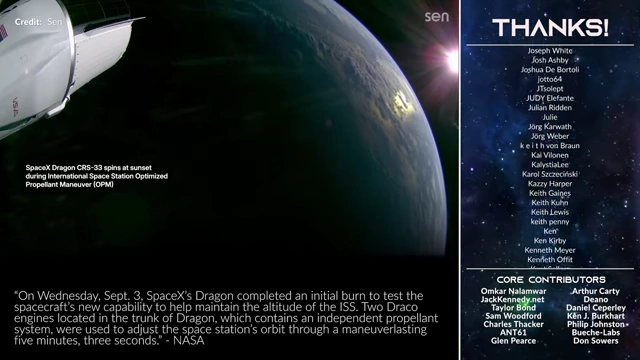
SpaceX Cargo Dragon performing a reboost maneuver for the International Space Station [ 00:21:58 ] - The five-minute burn increased the station's perigee by approximately 1.6 kilometers.
- A series of longer reboost burns are planned for the coming months to maintain the ISS altitude.