The Evolution of Minimalism: From Intentional Living to Elite Status Symbol and the Return of Loud Luxury
- Minimalism, initially a philosophy of intentional living and reducing excess, gained mainstream popularity after the 2008 financial crisis as a response to consumerism.

A news graphic displaying "Recession" and a declining dollar sign, representing the 2008 financial crisis. [ 00:02:00 ] - However, the wealthiest 1% began to adopt a version of minimalism known as "quiet luxury," characterized by understated, yet extremely expensive, items and minimalist aesthetics.

Kim Kardashian's minimalist home, characterized by stark white walls and minimal furniture, suggesting an expensive aesthetic. [ 00:03:04 ] - This elite "minimalism" is exemplified by spaces like Kim Kardashian's home, featuring designer furniture costing hundreds of thousands of dollars, disguising immense wealth as simplicity.

A newspaper clipping headline reads "This Polar Bear Sofa Is Beloved By the Very Rich," with an image of the expensive sofa. [ 00:04:19 ] - Quiet luxury acts as a social filter, where the expense is only recognizable to those "in the know," signaling power through restraint, a concept long practiced by old money families.
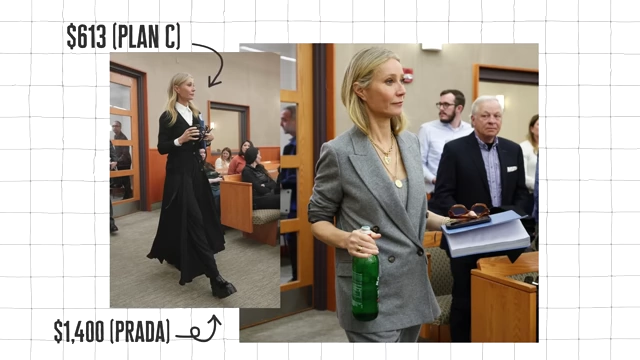
A collage showing Gwyneth Paltrow's courtroom outfits with price tags indicating the high cost of her seemingly basic clothing items. [ 00:06:23 ] - This performative minimalism contradicts the movement's original anti-consumerist intent, becoming another way to flaunt status, just with a different aesthetic.
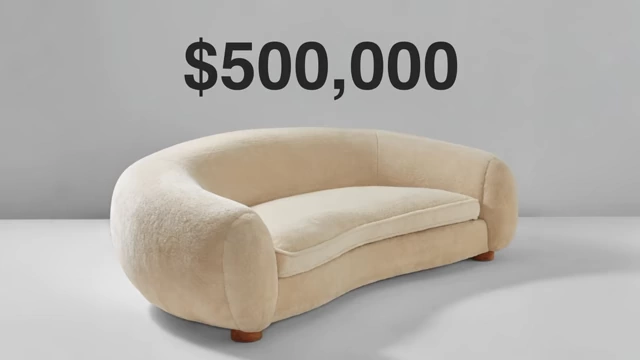
A visual comparison showing a $500,000 sofa next to a similar-looking $1,279 sofa, highlighting the hidden cost of elite minimalism. [ 00:06:48 ] - The video argues that these trends, whether loud or quiet, feed into a cycle of comparison and the constant desire for more, leading to anxiety and discontent.
- Currently, the aesthetic of elite minimalism is fading, with "loud luxury" making a comeback, but the underlying trap of consumerism and status signaling remains a central issue.

A headline announces "The Death of Quiet Luxury: Maximalism is Making its Much-Anticipated Return." [ 00:10:08 ]
The Initial Philosophy and Mainstream Rise of Minimalism [0:00]
Minimalism emerged as a movement promoting intentional living by removing excess, focusing on essential matters, and finding purpose through simplicity.
- Early Adoption and Spread [0:15]
- About a decade ago, minimalism exploded into mainstream conversations, appearing in TED Talks, magazines, documentaries, and YouTube videos.
-

Mark Manson's blog post titled "Minimalism." [ 00:00:01 ] - It transitioned from a niche philosophy to a widespread discussion, offering a practical response to overwhelm and a way to reclaim control.
-

Joshua Fields Millburn and Ryan Nicodemus, "The Minimalists," on stage during a TED Talk, with one holding a box that says "Everything That Remains." [ 00:00:18 ] - Many embraced it to reduce distraction and build more meaningful lives, especially after the 2008 financial crisis.
The Era of Loud Luxury Pre-Minimalism [1:00]
Before the minimalist movement gained traction, the early 2000s were characterized by "loud luxury," where status was overtly displayed.
- Overt Status Symbols [1:09]
- The economy was booming, reality TV was prevalent, and celebrity gossip was widespread, influencing consumer desires.
- The "MTV Cribs" era showcased celebrity homes designed for shock value, often featuring extravagant possessions and grand designs.
- Brands like Louis Vuitton and Gucci used prominent logos as social currency and statements of wealth.
-
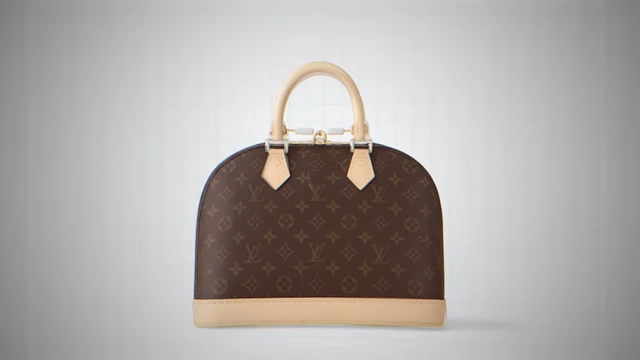
A Louis Vuitton monogrammed handbag, an example of overt branding. [ 00:01:34 ] -
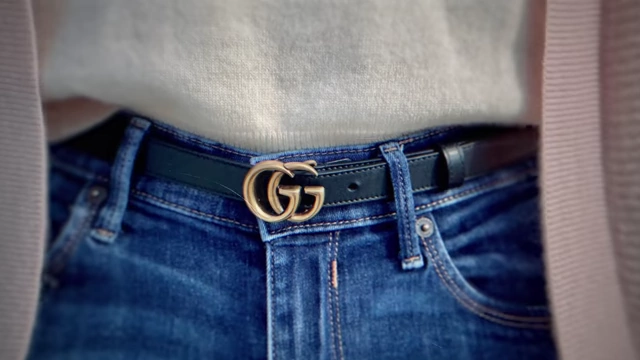
A close-up of a person wearing a Gucci belt with a prominent "GG" logo. [ 00:01:37 ]
- The Drive for More [1:44]
- Advertisers, media, and culture continually sold the idea that more possessions equated to happiness.
- Two-day shipping, fast fashion, and vast online product availability made acquiring goods easier than ever.
Minimalism's Re-emergence Post-2008 Financial Crisis [1:59]
The 2008 financial crisis forced a societal reset, leading many to question the previous definitions of success and consumerism.
- A Shift in Values [2:01]
- Widespread job uncertainty prompted a re-evaluation of life goals beyond material accumulation.
- Minimalism re-emerged as a "quiet rebellion against excess," advocating the principle that "less is more."
-
A news graphic displaying "Recession" and a declining dollar sign, representing the 2008 financial crisis. [ 00:02:00 ] -
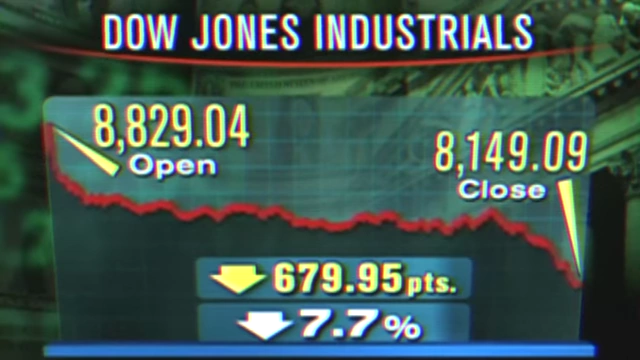
A chart showing the Dow Jones Industrials with a significant decline, indicating economic recession. [ 00:02:02 ]
- Growing Popularity [2:41]
- What began as a fringe idea on early blogs quickly gained traction through bestselling books, viral YouTube videos, and social media decluttering challenges.
The Elite's Appropriation: Performative Minimalism and Quiet Luxury [2:50]
Unexpectedly, the wealthiest individuals, who previously flaunted their status through excess, began adopting minimalism, but with a distinct, luxurious twist.
- Minimalism for the 1% [2:50]
- For the elite, minimalism translated into a sleek, curated aesthetic to display wealth and status subtly, without appearing to try too hard.
- This form of "minimalism" became an aspirational luxury repackaged for a new era, often featuring neutral tones and seemingly empty spaces that masked extreme cost.
-
Kim Kardashian's minimalist home, characterized by stark white walls and minimal furniture, suggesting an expensive aesthetic. [ 00:03:04 ] -

Kim Kardashian standing in front of three luxury cars, all in a matching muted grey color to blend with her minimalist house. [ 00:03:13 ]
- The Absurd Cost of Elite "Simplicity" [4:02]
- Examples like Kim Kardashian's "sitting room" revealed furniture, such as Orus Polair couches, that cost over half a million dollars each, serving as status symbols for the super-rich.
-
A newspaper clipping headline reads "This Polar Bear Sofa Is Beloved By the Very Rich," with an image of the expensive sofa. [ 00:04:19 ] -
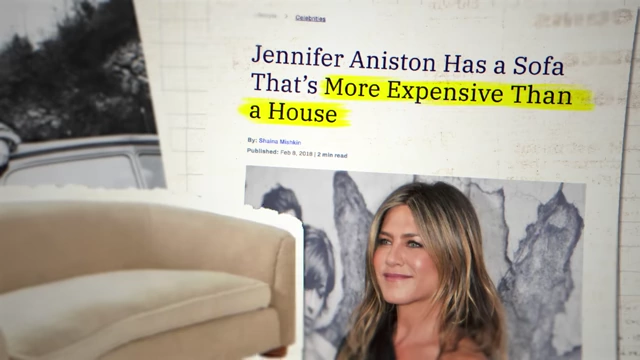
A newspaper clipping headline reads "Jennifer Aniston Has a Sofa That's More Expensive Than a House," highlighted to emphasize the cost. [ 00:04:48 ] -
A visual comparison showing a $500,000 sofa next to a similar-looking $1,279 sofa, highlighting the hidden cost of elite minimalism. [ 00:06:48 ]
- Minimalism's True Meaning [4:56]
- The speaker asserts that true minimalism was never about creating a perfectly empty room or curated aesthetics, but about rejecting the idea that one's worth is tied to possessions or social standing.
- It was conceived as a rebellion against consumerism, distinguishing it from the elite's performative adoption.
Quiet Luxury: A New Form of Status Signaling [5:12]
The elite's subtle, expensive style of minimalism evolved into what is now known as "quiet luxury."
- The Understatement Principle [5:21]
- Paul Fussell's "understatement principle" explains that as one moves up social classes, overt branding disappears, replaced by subtle emblems or no visible trademarks, signaling higher status.
-

Paul Fussell, author of "Class, A Guide Through the American Status System." [ 00:05:24 ] - Old money families historically embraced this principle of subtle wealth display.
-

An old black and white photo of a formal family portrait, representing "old money" families who traditionally practiced understated wealth. [ 00:05:48 ] -

A close-up of a Lacoste alligator logo embroidered on a polo shirt, an example of a subtle emblem signaling status. [ 00:05:39 ]
- Gwyneth Paltrow's Trial as a Case Study [6:05]
- The term "quiet luxury" gained traction during Gwyneth Paltrow's 2023 ski trial, where her seemingly basic outfits were decoded by fashion reporters as highly expensive, understated luxury.
- Her wardrobe included items like a $613 shirt, $1,400 Prada boots, and $58,000 worth of jewelry, which appeared standard to the untrained eye.
-
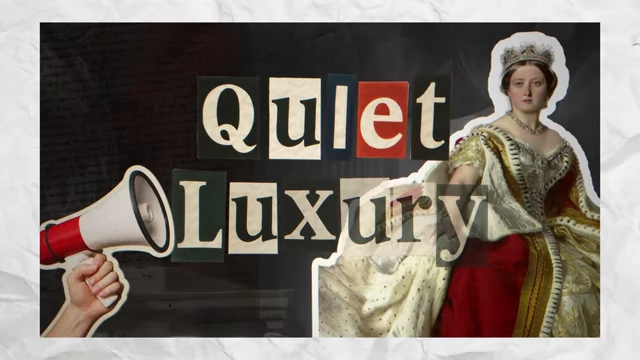
A graphic introducing "Quiet Luxury" with a stylized queen figure making a shushing gesture. [ 00:06:02 ] -
A collage showing Gwyneth Paltrow's courtroom outfits with price tags indicating the high cost of her "basic" clothing items, such as a $613 shirt and $1,400 boots. [ 00:06:23 ]
- Psychology of Quiet Luxury [7:05]
- Quiet luxury signals power through restraint and acts as a social filter: those who recognize the subtle cues are "in the club."
- It suggests that overtly flaunting wealth implies insecurity about one's status; the truly powerful can afford to be quiet.
- The irony is that this elite style, while pretending not to care about status, still reveals insecurities through the immense cost and the desire for subtle recognition.
-

A close-up of a high-end handbag (Hermès Kelly bag), which costs over $10,000, exemplifying an expensive item that signals wealth to those who recognize it. [ 00:08:03 ]
The Cyclical Nature of Trends and the Core Trap of Consumerism [8:42]
Fashion and lifestyle trends are cyclical, with the aesthetic of elite minimalism starting to fade and "loud luxury" making a comeback.
- Return of Loud Luxury [10:07]
- The speaker notes a trend back towards "loud luxury," characterized by bold logos, statement pieces, and unapologetic displays of wealth.
-
A headline announces "The Death of Quiet Luxury: Maximalism is Making its Much-Anticipated Return." [ 00:10:08 ] - Brands like Gucci, Balenciaga, and Versace are again in the spotlight, embraced by celebrities who lean into maximalist branding.
-

A room with bold black and white striped walls and ceiling, and ornate furniture, signifying a return to maximalist or "loud luxury" aesthetics. [ 00:10:07 ]
- The Enduring Trap of Comparison [10:34]
- Regardless of the specific trend (loud or quiet luxury), the underlying motivation remains a system based on comparison, the desire to "keep up," and the constant need for more.
- This cycle of measuring oneself against others and believing one is "behind" leads to anxiety, distraction, and discontent rather than happiness.
- True minimalism offers an "off-ramp" from this cycle, encouraging individuals to step outside the algorithm and status race to determine what truly matters to them.
- Mistaking the aesthetic for the philosophy means one is still participating in consumerism, just in a different style.