Noam Chomsky Explains How Mass Entertainment and Elite Education Serve as Tools of Neoliberal Control
Noam Chomsky's insights reveal how mass entertainment functions as a tool of ideological control under neoliberalism.
- Entertainment as Distraction: Entertainment like TV, sports, and pop culture diverts public attention from crucial issues, reinforcing individualism and consumerism, thus maintaining the status quo.
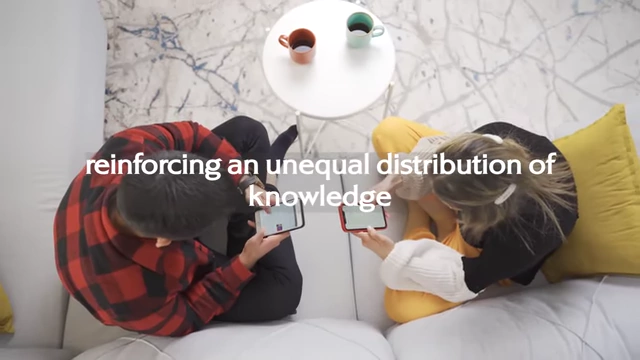
Two people distracted by their phones, illustrating an unequal distribution of knowledge. [ 00:08:50 ] - Elite vs. Mass Education: While the general public is lulled by distractions and vocational training that fosters obedience, elites receive specialized education emphasizing critical thinking, strategy, and understanding power structures.
- The Curriculum of Power: Elite education teaches how to wield power, control markets, and manipulate narratives, contrasting sharply with the sanitized history and simplified economics taught to the masses.
- Democratizing Education: Reclaiming democracy requires a shift to genuinely democratic education that prioritizes critical thinking, historical literacy, and collective action over memorization and individual competition.
- Call to Action: True change comes from below, by exposing the hidden curriculum of power and building communities where citizens are empowered to challenge existing hierarchies.
Entertainment as Ideological Distraction under Neoliberalism [00:00]
Noam Chomsky posits that mass media amusements are not harmless pastimes but a sophisticated tool of ideological control in the age of neoliberalism.
- Purpose of Distraction:
- Dominant powers benefit from the public being occupied with trivial diversions, ensuring people lack time and energy to question governing structures.
- This strategy diverts public attention from important issues through a flood of continuous distractions and insignificant information.
- The more entertained the masses, the less they notice the realities of power, integrating entertainment into the propaganda system.
- Hidden Messages in Culture:
- Popular movies, television shows, and celebrity culture constantly reinforce individualism, competition, and consumerism without questioning the social order.

A coal mining operation from above, illustrating industrial consumption. [ 00:01:49 ] - Corporate-owned media prioritizes entertainment over critical analysis of power structures, filling prime time with spectacles rather than investigative reports on war, injustice, or democratic erosion.
- The public's consciousness is saturated with stories that tacitly uphold the status quo, while systemic critique is marginalized.
- Popular movies, television shows, and celebrity culture constantly reinforce individualism, competition, and consumerism without questioning the social order.
- Sports as a Mechanism of Control:
- The obsession with sports offers something to pay attention to that is of "no importance," preventing worry about things that matter.
- People invest immense intelligence and passion in sports while political discourse remains superficial.

An audience watches speakers on stage, contrasting attention given to political discourse versus sports. [ 00:03:10 ] - Sports serve as training in irrational jingoism, teaching blind loyalty and acceptance of defeat, which are rehearsals for the mentality expected of citizens.
- This diverts energy and acumen that could be used to change society into fantasy competitions.
- Withdrawal into Fantasy Worlds:
- Reality shows, celebrity gossip, and blockbusters offer endless escape but no meaning.
- Citizens, feeling powerless to alter global economies or stop wars, immerse themselves in fictional worlds and digital feeds.

A person using a tablet to shop, symbolizing mental stimulation by sensational narratives rather than policy. [ 00:08:10 ] - This withdrawal is a product of a system that leaves the individual powerless, leading to societal focus on celebrity scandals rather than poverty or peace.
- Entertainment acts as an opiate, numbing collective judgment and validating the idea that no viable alternative to the existing order exists.

A glowing brain with circuitry, representing the numbing of collective judgment. [ 00:06:32 ]
- Complicity of Institutions:
- Every aspect of culture, including schools and universities, participates in this dynamic.
- Education often coaches students to be productive workers over critical thinkers, and history books favor national myths over radical social movements.
- The entire "culture industry" works to keep dissent marginal, operating under the propaganda model where profit and power dictate narratives.

Newspapers with dollar bills, symbolizing how profit and power dictate media narratives. [ 00:07:20 ] - The public's political imagination is managed by keeping them busy with distractions, preventing deep thought about alternatives.
- This functions as a mechanism of social control and depoliticization, quelling broader protest by directing attention to the trivial and personal.

Robotic arms in a factory, illustrating mass entertainment as a mechanism of social control. [ 00:07:40 ]
Elite Education and the Cultural Divide [09:22]
There is a stark cultural contrast between the majority, who are distracted by entertainment, and the political elite, who inhabit a very different cultural space.
- Distinctive Education of Elites:
- Those who profit from distracting the masses rarely partake in that distraction themselves.
- Elites receive specialized education, discuss ideas among themselves, and engage in policy networks.

A person writing in a notebook next to a laptop, symbolizing the specialized education of elites. [ 00:09:30 ] - This is a calculated class strategy; corporate executives designing addictive social media often send their own children to elite schools that limit or ban screens.

A person walking towards modern buildings, signifying a different educational path that rejects screen time. [ 00:12:39 ] - These prestigious institutions focus on rigorous study of political philosophy, economics, history, and strategy, preparing them to govern.
- Dual System of Education:
- Historically, elite education has been about maintaining power, not merely acquiring knowledge.

Silhouetted people in a foggy, illuminated tunnel, representing the hidden nature of elite education focused on maintaining power. [ 00:11:00 ] - Chomsky emphasizes that mass education is a system of "imposed ignorance," while for elites, it's an expansive education to control institutions.
- The general population is trained to follow orders and accept authority, finding solace in entertainment, while elites are trained to lead, think critically, and strategize for long-term dominance.
- Historically, elite education has been about maintaining power, not merely acquiring knowledge.
- Historical Parallels and Modern Hypocrisy:
- The British Empire educated its ruling class sons in classics and politics to govern, while working classes received patriotic entertainment.
- Today's neoliberal societies operate similarly, with Silicon Valley executives sending their children to screen-free schools that emphasize philosophy, logic, and political economy.
- This phenomenon exposes a fundamental, strategic hypocrisy: those at the top know which mental state benefits the status quo and deliberately create "spectator democracy."
- Consequences of Asymmetric Education:
- Mass education is designed to pacify and limit thought, not empower or liberate.
- The average citizen, despite schooling, remains uninformed about societal structures; young people know tasks but not why or for whom.
- The educational system acts as an "elaborate filter" that weeds out independent thinkers and those unwilling to be submissive.

Toggle switches in "on" and "off" positions, illustrating the systematic filtering within the education system. [ 00:13:39 ] - This cultural asymmetry leads to a deeply unequal society where wealth and power concentrate at the top, and the public remains disengaged.
- Crucial decisions are made by informed elites while the broader population debates trivialities, leading to a hollow democracy where citizens vote without informed engagement.
- This systematic erosion of critical thought undermines genuine democracy, which requires a politically conscious and well-informed citizenry.
- Societies slip into controlled apathy, with historical achievements like labor rights being forgotten, as the public is trained to expect little from politics and themselves.
The Curriculum of Power: What Elites Learn and Why It Matters [17:51]
The curriculum reserved for the powerful emphasizes skills explicitly designed for governance and control, starkly contrasting with mass education.
- Core Elements of Elite Education:
- Emphasizes critical thinking, strategic planning, historical literacy, and understanding how institutions operate.
- Explicitly prepares them to govern society, shape its structures, and maintain control over resources and narratives.
- Contrasts with standardized mass education, which prioritizes obedience, memorization, and vocational skills for workers, not leaders.

Hands typing on a laptop with a background of glowing code, symbolizing the rigorous study of political philosophy and strategy by elites. [ 00:10:30 ]
- Economics for the Elite:
- While most citizens learn simplified economic models that obscure inequality, elites deeply study how markets can be controlled, manipulated, and regulated to benefit specific interests.
- Elites understand that "free markets are for the poor," but for the rich, markets are managed, protected by state power, subsidized, and insulated from risk.

A school of fish swimming together, representing how markets are managed and protected by state power for the rich. [ 00:20:39 ] - This equips them to maintain the very conditions of inequality that uphold their privilege.
- Strategic Historical Literacy and Political Philosophy:
- Ordinary citizens receive sanitized versions of history, but elite students study history critically, examining patterns of social unrest, revolutions, labor movements, and imperial strategy to understand what causes societies to rise or fall.
- History for the elite is an "operational manual for governance," preparing them to preemptively respond to potential disruptions.
- Public education promotes simple notions of democracy as mere voting, while elite students study philosophers like Machiavelli and Marx as practical guides to social control and mass psychology.
- Elites are explicitly taught about the "dangers of genuine democracy" (the "tyranny of the majority") and how to structure political systems to prevent real popular influence.

Two silhouetted figures in an office setting, representing how elites are taught to shape public opinion. [ 00:23:39 ] - This "curriculum of power" is a pragmatic education in hypocrisy, teaching how to control the gap between ideology and reality.
- Business Schools and Profit Extraction:
- Elite business schools and MBA programs explicitly teach how to influence policy, undermine regulation, and reshape society in the interest of profit.
- The lesson "The social responsibility of business is to increase its profits" instilled in future leaders leads them to view society as an arena for profit extraction, not community or environmental responsibility.
- Perpetuating Asymmetry and the Hope for Change:
- This curriculum perpetuates a cycle where a small minority controls levers of power (economic, political, cultural), while the majority remains disempowered and depoliticized.

An electricity pylon and power plant, symbolizing the critical levers of power controlled by a minority. [ 00:24:38 ] - Recognizing this hidden curriculum is the first step towards hope, equipping ordinary citizens to challenge and dismantle barriers to knowledge and consciousness.
- Real power resides in numbers, not just knowledge for the few; the crucial question is "what happens when everyone knows?"
- This curriculum perpetuates a cycle where a small minority controls levers of power (economic, political, cultural), while the majority remains disempowered and depoliticized.
Democratizing the Curriculum Reclaiming Education and Power [27:16]
Genuine democracy is impossible without genuinely democratic education, which under neoliberalism has been stripped of its emancipatory function.
- Critique of Current Education:
- Neoliberal education has become vocational training, designed to render individuals compliant, productive, and politically inert.

An interior view of a grand library, representing education being reduced to vocational training. [ 00:28:08 ] - Citizens remain uninformed about governing structures, knowing how to perform tasks but not why or whom they benefit.
- The system filters out independent thinkers, systematically selecting obedience, conformity, and isolated competition.
- Neoliberal education has become vocational training, designed to render individuals compliant, productive, and politically inert.
- Five Pillars of a Democratized Curriculum:
- Prioritize critical thinking over memorization: Education must teach independent thought, questioning assumptions, and rigorous analysis of social structures, constantly interrogating who benefits from prevailing narratives.

A train crossing a high bridge, symbolizing the shift towards independent thought. [ 00:29:48 ] - Foreground historical literacy and systemic analysis: Education must honestly confront complex histories of struggle, dissent, and collective action, showing how ordinary people historically changed society (e.g., labor movements, civil rights). Elites deliberately obscure these patterns to foster helplessness.
- Cultivate solidarity and collective action: Shift from teaching students to see each other as rivals to emphasizing cooperation, mutual aid, and community building, teaching how to succeed together and harness collective strength for social change.
- Reclaim democratic participation as central to education: Schools should become communities of democratic practice where students experience real participation in decision-making, moving beyond a "banking system" of knowledge to a dialogical process.

Sea lions resting on a buoy, representing passive recipients in a "banking system" of education. [ 00:32:48 ] - Break down the separation between classroom and community: Education must engage directly with real local struggles (poverty, inequality, environmental degradation) through active participation and intervention, transforming education into a dynamic process of collective engagement.
- Prioritize critical thinking over memorization: Education must teach independent thought, questioning assumptions, and rigorous analysis of social structures, constantly interrogating who benefits from prevailing narratives.
From Awareness to Action: Building the Alternatives [30:54]
Democratizing education is an active struggle against entrenched interests, requiring collective awareness and sustained action to reclaim power and reshape society.
- Challenging the Narrative of Helplessness:
- The powerful will fiercely resist such democratization as it threatens their dominance.
- Neoliberalism's greatest achievement is eroding hope by conditioning public consciousness into believing genuine change is impossible.
- A democratized education counters this by insisting the future is not pre-ordained, that societies are shaped by collective action, and that ordinary people possess far greater power than they realize.

Factory smoke billowing into the sky, symbolizing the need to expose the hidden privileges of power. [ 00:35:38 ]
- The Path Forward:
- Democratizing education requires active engagement, organized resistance, and sustained pressure from parents, students, educators, and workers.
- Change and progress rarely come as "gifts from above"; they emerge from struggles from below.
- The struggle to democratize education is inseparable from the broader struggle to democratize society itself.
- Exposing the invisible "elite curriculum of power," hidden behind myths of meritocracy and neutral expertise, is the first revolutionary act.
- The true revolution begins in classrooms, communities, and minds, requiring the relentless effort of informed, conscious citizens working together to build a genuinely better world.

A car driving on a vast, flat salt plain, representing a path forward for collective action. [ 00:35:48 ]