How to Take Engaging Travel Photos: Practical Tips from Japan
This video offers practical tips to transform boring travel photos into engaging memories.

- Combat Crowds: Visit popular spots during off-peak hours or use a longer lens to minimize distractions. Alternatively, embrace the crowd by blurring them with slow shutter speeds or wide apertures to add energy.
- Add Depth: Improve composition by consciously adding interesting backgrounds and foreground elements, using objects like trees or buildings to frame your subject.
- Master Bad Weather: Instead of lamenting poor weather, capture unique moments like reflections in puddles or people with umbrellas. Use longer focal lengths to reduce dull skies.
- Enhance Storytelling: Review photos on your camera to refine composition. Shoot in sets of three (wide, main, detail) to convey a richer narrative.
- Capture the Mundane: Photograph everyday scenes and create personal projects (e.g., vending machines) to find unique perspectives beyond famous landmarks.
- Optimize Workflow & Gear: Shoot JPEG+RAW for immediate sharing and later editing, utilizing film simulations for variety. Travel light with essential gear like a CPL filter, collapsible lens hood, dual battery charger, and tabletop tripod, and familiarize yourself with new cameras before your trip. Track your gear with AirTags.
- Strategic Settings & Morning Photo Walks: Use shutter priority mode for creative control over motion, and utilize early mornings for undisturbed photo opportunities, practicing techniques, and experiencing places in a different light.
Enhancing Travel Photos and Enjoying the Journey [00:00:00]
The presenter discusses common frustrations with dull travel photos despite visiting amazing places and shares tips to improve photography skills and overall trip enjoyment. All photos in the video were shot with a simple and compact setup using the Fujifilm X-M5 and two kit lenses.
Handling Crowds at Popular Tourist Spots [00:03:37]
Taking good photos at popular, crowded tourist locations can be challenging, but there are several strategies to overcome this.
- Consider the Timing: [00:03:48]
- Visit popular places during quieter times, such as early mornings or late evenings, to avoid large crowds.

Comparison of the same temple entrance at 3 PM and 6 AM, showing significantly fewer people in the morning. [ 00:03:50 ] - Early mornings provide empty streets in popular areas like market streets.

Comparison of a busy market street at 3 PM and an empty street at 6 AM. [ 00:03:51 ]
- Visit popular places during quieter times, such as early mornings or late evenings, to avoid large crowds.
- Choose the Right Lens: [00:03:55]
- Avoid wide-angle lenses for crowded scenes as they make close-up people appear large and distracting.
- Step back and use a longer focal length lens to make crowds appear smaller and highlight buildings more effectively.

A temple entrance photographed with a 15mm focal length versus a 50mm focal length, demonstrating how a longer lens can compress the scene and make crowds less overwhelming. [ 00:04:10 ]
- Utilize the Crowd: [00:04:13]
- Instead of fighting the crowds, use them to add energy and realism to your photos.
- To make people less distracting, blur them out by shooting with a wide aperture, using a longer focal length, or employing a slower shutter speed for motion blur.

A busy market street with people blurred by motion, creating a dynamic and energetic feel in the photograph. [ 00:04:30 ]
Adding Depth and Story with Layers [00:05:48]
To make a photo more interesting and less "clean but boring," adding layers is a straightforward technique.
- Optimize the Background: [00:06:12]
- Don't just focus on the main subject; observe the background for opportunities to make it more engaging.
- Even small adjustments like moving a few steps or changing focal length can significantly alter the background.

A Maneki-neko statue with and without surrounding context, illustrating the importance of an interesting background. [ 00:06:33 ]
- Incorporate a Foreground: [00:06:40]
- Use elements in the foreground, such as trees, windows, or bridges, to frame your main subject.
- This adds depth and a narrative to the photo, making it more than just a picture of the landmark.

A temple shown without foreground elements and then framed by trees, demonstrating how foreground adds depth. [ 00:06:57 ] - Framing the Tokyo Skytree with nearby architecture creates a more engaging image.

The Tokyo Skytree framed by the surrounding architecture, adding context and depth to the photo. [ 00:07:19 ] - Creative framing, such as using a large ring sculpture, can make a landmark photo unique.

Tokyo Skytree viewed through a large ring sculpture, offering a unique framed perspective of a landmark. [ 00:07:42 ] - Incorporating foreground elements like safety tape can add layers and context to a street scene.

A street scene at night with a car, surrounded by lanterns in the background and a safety tape in the foreground. [ 00:07:46 ]
Capturing Unique Shots in Challenging Weather [00:10:17]
Weather is unpredictable, but adverse conditions can lead to unique photographic opportunities.
- Minimize Dull Sky in Landscapes: [00:10:26]
- If the weather is cloudy or rainy, wide-angle landscape photos often feature a large, uninteresting white sky.
- Use a longer focal length lens to minimize the amount of sky in your composition.

Comparison of two photos taken with 15mm and 43mm focal lengths during cloudy weather, showing how the longer focal length reduces the dull sky. [ 00:10:57 ]
- Embrace Rain-Specific Elements: [00:11:00]
- Look for elements that only appear in the rain, such as people holding umbrellas or reflections in water puddles, especially at night.

People with colorful umbrellas on a rainy street at night, with reflections on the wet ground. [ 00:11:14 ] - Reflections in puddles can create vibrant and interesting compositions.

A vibrant reflection of street lights in a puddle, demonstrating how rain can create interesting visual opportunities at night. [ 00:11:29 ]
- Look for elements that only appear in the rain, such as people holding umbrellas or reflections in water puddles, especially at night.
- Protect Your Camera: [00:11:43]
- Weather-sealed cameras can handle light rain.
- For non-weatherproof cameras, use a plastic bag as a temporary rain cover, ensuring no water gets trapped inside.
Refining Composition and Storytelling [00:15:38]
Our brains enhance real-world experiences, which photos often fail to capture. Improve your photos by consciously refining composition.
- Review and Iterate: [00:16:34]
- After taking a photo, immediately review it on your camera screen.
- Ask yourself: "Can anything be added to make it stronger?" or "Can anything be removed to make it tidier?"
- Adjust your position, focal length, or framing and retake the photo. This trains your eye to spot issues before shooting.
- Shoot in Threes for a Full Story: [00:17:35]
- For each main subject, take at least three photos:
- A wide shot showing the surrounding area for context.
- A standard shot of the main subject.
- A close-up detail shot highlighting an interesting feature.
- Presenting these three photos together helps recreate the context and story your brain naturally processes in real life.

A triptych showing a wide shot of a temple, a focused shot of the temple's structure, and a close-up of its intricate roof details, illustrating the "shoot in threes" concept. [ 00:18:08 ]
- For each main subject, take at least three photos:
Optimizing Your Travel Photography Workflow and Gear [00:21:12]
Efficient photography practices and smart gear choices can greatly enhance your travel experience.
- JPEG + RAW Workflow: [00:21:36]
- Shoot in JPEG + RAW. JPEGs are ready to share immediately, while RAW files provide flexibility for detailed editing later.
- Modern cameras, especially Fujifilm with film simulations, produce beautiful JPEGs straight out of the camera.

Camera menu displaying the option to shoot in "FINE+RAW" for optimal flexibility and immediate sharing. [ 00:21:37 ]
- Film Simulation Bracketing (Fujifilm): [00:22:14]
- This feature allows you to choose up to three different film simulations, and for every photo, the camera generates three JPEGs with those simulations. This offers creative variety without extensive post-processing.

A comparison of the same street scene processed with three different Fujifilm film simulations: Classic Chrome, Velvia, and Monochrome. [ 00:22:37 ]
- This feature allows you to choose up to three different film simulations, and for every photo, the camera generates three JPEGs with those simulations. This offers creative variety without extensive post-processing.
- Travel Light: [00:32:20]
- Avoid overpacking camera gear; one camera and two versatile zoom lenses are often sufficient.
- A lighter setup reduces fatigue, allows for more exploration, and makes you less conspicuous in crowded or potentially less safe environments.

A compact travel photography setup featuring a Fujifilm X-M5 camera with a 15-45mm lens attached and a 50-230mm lens beside it, along with a passport and filter rings. [ 00:33:26 ]
- Familiarize Yourself with New Gear: [00:34:44]
- If purchasing a new camera, do so at least one to two weeks before your trip to become comfortable with its functions.
Essential Travel Photography Accessories [00:36:59]
A few compact and useful accessories can significantly enhance your travel photography.
- CPL Filter (Circular Polarizer): [00:37:19]
- Acts like sunglasses for your camera, reducing reflections, enhancing sky contrast, and boosting color saturation, also allowing you to see through water or glass.

A side-by-side comparison of a building with a CPL filter applied and without, demonstrating how the filter reduces reflections and enhances the sky's appearance. [ 00:37:45 ]
- Acts like sunglasses for your camera, reducing reflections, enhancing sky contrast, and boosting color saturation, also allowing you to see through water or glass.
- Collapsible Rubber Lens Hood: [00:38:04]
- Reduces glare and reflections when shooting through windows (e.g., from a train or plane), being compact and easy to carry.

A split image showing a city night scene taken through a window, comparing the significant reduction in glare and reflection when using a collapsible rubber lens hood. [ 00:38:25 ]
- Reduces glare and reflections when shooting through windows (e.g., from a train or plane), being compact and easy to carry.
- Dual Battery Charger: [00:38:32]
- Allows simultaneous charging of multiple batteries, which is essential for long days of shooting where one battery might not suffice.

A dual battery charger with two batteries inserted, charging next to a camera and a digital clock. [ 00:39:25 ]
- Allows simultaneous charging of multiple batteries, which is essential for long days of shooting where one battery might not suffice.
- Tabletop Tripod: [00:39:38]
- A small, portable tripod for stability, especially useful for long exposure shots or self-portraits when a full-sized tripod is too cumbersome.

A compact tabletop tripod holding a camera on a wooden desk. [ 00:39:55 ]
- A small, portable tripod for stability, especially useful for long exposure shots or self-portraits when a full-sized tripod is too cumbersome.
- Apple AirTag (for iPhone users): [00:40:08]
- Attaching AirTags to your camera bag or gear allows you to track them via your iPhone, providing peace of mind against loss or theft.

An iPhone screen displaying the locations of tracked AirTags, indicating their utility for locating lost items. [ 00:40:25 ]
- Attaching AirTags to your camera bag or gear allows you to track them via your iPhone, providing peace of mind against loss or theft.
- IC Card (Suica/ICOCA): [00:36:25]
- These cards provide a convenient way to pay for trains, buses, and purchases at convenience stores in Japan.

Three Japanese IC cards (Suica, ICOCA), demonstrating useful payment and transit options for travelers. [ 00:36:34 ]
- These cards provide a convenient way to pay for trains, buses, and purchases at convenience stores in Japan.
Capturing Personal and Unique Moments [00:24:05]
Beyond iconic landmarks, the most treasured travel photos often come from everyday moments.
- Focus on the Mundane: [00:25:00]
- Don't just chase famous spots; pay attention to local, everyday places like train stations or quiet streets, as these often evoke stronger personal memories years later.
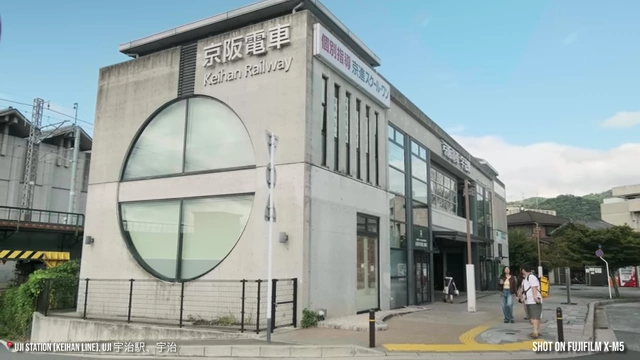
The exterior of a quiet, simple Keihan Railway train station in Uji, Kyoto Prefecture. [ 00:25:27 ] - The unique concrete architecture of Uji station offers interesting photographic subjects.

The interior of Uji train station, highlighting its unique concrete architecture and light patterns. [ 00:25:46 ]
- Don't just chase famous spots; pay attention to local, everyday places like train stations or quiet streets, as these often evoke stronger personal memories years later.
- Undertake a Photo Project: [00:25:47]
- Give yourself a small photography project, like photographing all the vending machines or specific details like manhole covers.
- This encourages noticing details and appreciating everyday beauty, resulting in unique photo series.

A Japanese manhole cover featuring a Pikachu design, serving as an example of a unique and everyday photo project. [ 00:26:17 ]
Optimal Camera Settings for Travel [00:42:31]
Choosing the right camera settings can help balance creativity with the spontaneity of travel.
- Auto or Program (P) Mode for Beginners: [00:42:55]
- For beginners, using auto or program mode allows the camera to handle technical settings, freeing you to focus on composition and enjoying the trip.
- Shutter Priority (S) Mode for Creative Control: [00:43:37]
- This mode allows you to control shutter speed for creative effects:
- High Shutter Speed: Freeze motion (e.g., people, vehicles) in busy scenes.

A person riding a bicycle on a city street, captured with a high shutter speed to freeze the motion. [ 00:43:48 ] - Slow Shutter Speed: Create motion blur to convey movement and energy in a bustling city or a dynamic natural scene.
- Tips for Slow Shutter: Turn on image stabilization (if available) and shoot in burst mode to increase the chance of getting a sharp photo amidst the blur.

A vibrant street scene in Tokyo with blurred people and traffic, captured with a slow shutter speed to convey the city's motion. [ 00:43:54 ]
- Tips for Slow Shutter: Turn on image stabilization (if available) and shoot in burst mode to increase the chance of getting a sharp photo amidst the blur.
- High Shutter Speed: Freeze motion (e.g., people, vehicles) in busy scenes.
- This mode allows you to control shutter speed for creative effects:
The Strategic Morning Photo Walk [00:46:20]
An early morning photo walk is a powerful technique that ties together many photography tips.
- Dedicated Photography Time: [00:47:12]
- Waking up early allows you to photograph undisturbed, without having to rush or make travel companions wait, ideal for practicing composition and experimental techniques.
- Unique Atmosphere and Light: [00:48:13]
- Streets are quieter and less crowded, offering a dramatically different feel compared to midday, with beautiful, soft early morning sunlight.
- This allows for unique shots of popular landmarks or the exploration of local neighborhoods.

A quiet street in Ikebukuro, Tokyo, in the early morning, showcasing the peaceful atmosphere before the crowds. [ 00:48:25 ] - Empty traditional streets in Asakusa offer a serene perspective unavailable during peak hours.

An empty street with traditional Japanese buildings and closed shops in Asakusa, highlighting the serenity of an early morning photo walk. [ 00:48:44 ] - Quiet crosswalks provide clean, graphic compositions in popular areas.
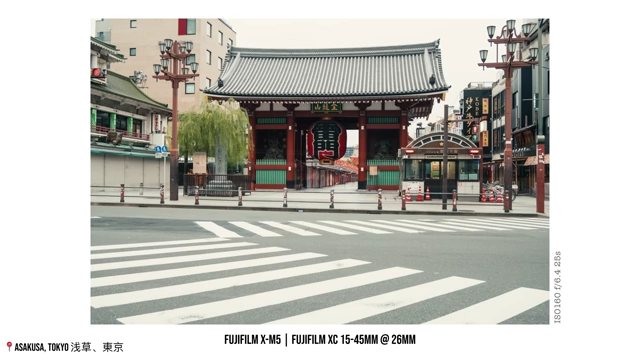
A wide shot of an empty street and crosswalk in Asakusa in the early morning. [ 00:48:45 ]
- Safety Considerations: [00:49:02]
- Always prioritize personal safety when venturing out alone in unfamiliar areas, especially before sunrise, even in safe places like Japan.