Six Life Lessons from Jay Shetty's Interviews with Tom Holland, Kobe Bryant, Emma Watson, Madonna, Selena Gomez, Benny Blanco, and Joe Biden
Jay Shetty celebrates 5 million subscribers by revisiting six profound life lessons gleaned from interviews with extraordinary guests.
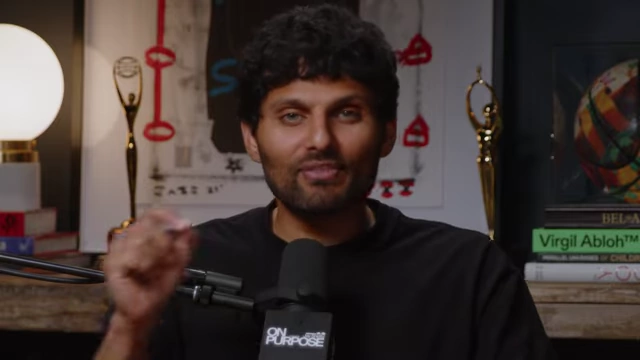
- Tom Holland shared his journey to sobriety, detailing how abstaining from alcohol dramatically improved his sleep, mental clarity, and overall well-being, underscoring the importance of finding healthy alternatives and a supportive community.
- Kobe Bryant emphasized overcoming fear and achieving greatness through consistent, deliberate practice and maintaining curiosity, highlighting the necessity of confronting and unpacking fears.
- Emma Watson discussed building relationships from a place of self-knowledge and wholeness rather than need, and the courage required to ask oneself difficult questions about personal happiness and value alignment.
- Madonna revealed how spirituality, through practices like yoga and Kabbalah, provided essential grounding and purpose amidst the demands of fame, asserting that true success is built on internal fulfillment.
- Benny Blanco and Selena Gomez illustrated a mature approach to relationships, focusing on open communication, respecting each other's need for space, active listening, and mutual validation during disagreements.
- President Joe Biden reflected on finding strength through immense personal loss and grief, stressing the irreplaceable role of family and community support, and the simple yet powerful act of being present for others.
Introduction [00:00]
Jay Shetty celebrates the milestone of 5 million YouTube subscribers for his "On Purpose" podcast by revisiting some of the most significant moments and life-changing lessons shared by his extraordinary guests, including artists, world leaders, athletes, visionaries, and experts. These conversations offer insights into building greatness, transforming vulnerability into strength, and the role of love and resilience in shaping our lives.
Tom Holland: The Challenges and Benefits of Sobriety [01:31]
Jay Shetty recounts his interview with Tom Holland, who shared his deeply personal decision to quit drinking.

- Initial Struggle with Dry January [01:44]
- Tom Holland initially decided on a "dry January" after a boozy Christmas vacation.
- He found himself constantly thinking about drinking, checking the clock for when it would be acceptable to have a drink, which "really scared" him.
- This led him to extend his sobriety to two months, hoping to prove he didn't have a problem.
- Realizing Alcohol's Impact [02:34]
- After two months, Tom was still struggling with social situations and felt he couldn't enjoy himself without alcohol, deepening his concern about an alcohol problem.
- He decided to aim for six months of sobriety, leading up to his birthday on June 1st.
- By the end of six months, he felt the happiest he had ever been, experiencing improved sleep, better problem-solving abilities, enhanced mental clarity, and overall health and fitness.
- He questioned why he had been "enslaved" to drinking, recalling feeling pressure to drink at work events and within certain social communities like rugby.
- Finding Replacements and Support [03:55]
- Tom discovered healthy replacements for alcohol, such as an electrolyte-rich beer, which he considers a positive change.
- He was fortunate to have a supportive circle of friends who never pressured him to drink.
- He refrains from telling others they "should get sober" but encourages them to drink less if it benefits their well-being.
- He enjoys being the designated driver, ensuring his friends get home safely, and sees it as a way to be a dependable person.
- Jay Shetty's Perspective on Alternatives and Community [06:49]
- Jay Shetty, who has been sober for 17 years, relates to Tom's experience of realizing alcohol's negative impact on behavior and personal growth.
- He notes that relying on natural qualities and skills rather than alcohol for social interaction led to being liked and respected for his true self.
- Jay highlights two key takeaways from Tom's story:
- Finding alternatives: Drawing from his monk life, Jay explains the concept of "higher taste" – that one can only give up a "lower taste" if a "higher taste" (a beneficial replacement) is found.
- Community and dialogue: The importance of connecting with others who have navigated similar journeys, sharing experiences, vulnerabilities, and support.
Kobe Bryant: Overcoming Emotions and Pursuing Greatness [16:59]
Jay Shetty reflects on his inspiring conversation with the late Kobe Bryant, focusing on the "Mamba Mentality."
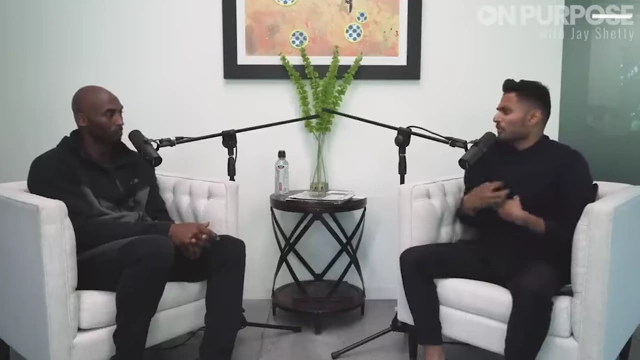
- Being Still Amidst Emotions [17:21]
- Kobe advocated for stillness, recognizing that emotions come and go.
- The key is to accept and embrace emotions rather than being controlled by them.
- Unpacking Fear [17:42]
- Instead of suppressing fear, Kobe suggested stepping back and asking "What am I afraid of?" to unpack it.
- By breaking down fear into its components (e.g., missing a shot, embarrassment, negative talk), one realizes that often, these fears are "nothing more than your imagination."
- Growth Through Trial and Error [19:26]
- Kobe emphasized that life is a "journey of evolution" through trial and error, with constant improvement and curiosity.
- The process of "figuring out" is more important than the immediate results.
- He criticized the youth sports culture that prioritizes immediate wins over holistic player development.
- Long-Term Perspective on Development [21:03]
- Kobe's strategic thinking developed from his experience growing up in Italy, where he was a scrawny kid who couldn't compete physically.
- He learned to look long-term, focusing on incremental improvements each year to eventually catch up to and surpass his peers.
- This cultivated an ability to see beyond short-term gains, focusing on developing individuals as whole beings.
Emma Watson: Building Relationships from Wholeness and Asking Hard Questions [00:24:28]
Jay Shetty recalls his conversation with Emma Watson, highlighting her insights on relationships and self-inquiry.

- Understanding the Difference Between Wanting and Needing [00:24:28]
- Emma emphasizes building relationships from a place of "wholeness, not need."
- She consciously chose not to marry younger because she might have married someone out of need, not true wanting, without fully knowing herself.
- Her mother taught her to "want to be with someone because you want them, not because you need them."
- Being "complete on your own" or "satisfied" allows one to attract partners from a place of peace, knowing what genuinely adds to one's happiness.
- The Power of Asking Yourself Hard Questions [26:32]
- Emma shared that one of the hardest questions she had to ask herself was: "You right now have the career and the life that looks like the dream, but are you really happy, Emma? Are you really healthy? Is this really what you want?"
- Admitting she wasn't happy despite external success was "one of the scariest things" because it meant walking away from something the world highly valued without knowing what was next.
- More recently, she's asked herself if she's truly living her values and aligning with what she preaches, identifying areas where she falls short and committing to act with integrity.
Madonna: How Spirituality and Success Work Together [30:08]
Jay Shetty shares his impactful conversation with Madonna about the role of spirituality in her life.

- Seeking Answers Beyond Fame and Fortune [32:24]
- Madonna revealed that despite achieving immense success, fame, and fortune, she felt a void and wasn't truly happy, leading her to seek deeper answers.
- She was intrigued by a Buddhist roommate's confidence and calm demeanor, attributing it to her spiritual practice.
- Discovery of Kabbalah and Yoga [33:43]
- Her spiritual journey evolved, including Ashtanga yoga and Sanskrit study, where she learned about the calming effects of breath and ancient vibrations.
- A yoga teacher's lesson on "desire and detachment" resonated deeply: wanting good things is natural, but attachment leads to suffering if they are lost.
- Becoming pregnant with her first daughter, Lola, triggered a profound realization that she was responsible for another human and needed to find a stronger sense of purpose beyond her driven, ambitious self.
- This led her to discover Kabbalah, a philosophy that gave her courage and a real sense of purpose beyond temporary desires like wealth or popularity.
- Spirituality as a Compass for Purpose [37:29]
- Madonna firmly believes that spirituality and success are intertwined, stating, "You need to be spiritual to be successful. Success is having a spiritual life. Period."
- She found that her spiritual path provided a grounding force and a compass that guided her through her career, marriage, and friendships.
- Her experience echoes Jay's own journey, where meeting monks at a young age gave his life a much-needed compass and altered its trajectory.
Benny Blanco and Selena Gomez: Setting Healthy Boundaries in Relationships [00:43:35]
Jay Shetty describes his conversation with Benny Blanco and Selena Gomez, highlighting their mature approach to love and conflict.

- Mature Communication and Taking Space [44:02]
- Benny and Selena demonstrate mature communication by acknowledging irritation and asking for space (e.g., 25 minutes) when needed.
- This practice, coupled with clear boundaries, allows them to maintain individual independence while remaining connected.
- Jay emphasizes that this isn't about perfection but about the maturity to navigate disagreements respectfully, such as acknowledging the need for space and supporting each other through it.
- Inspiring Each Other's Growth [44:54]
- They find inspiration in each other's drive and passions, actively listening and engaging with what the other person is doing.
- Their different personalities complement each other, allowing them to workshop situations and offer diverse perspectives.
- Learning from Past Experiences [49:10]
- Selena admits to being reactive in past relationships and took five years alone to "collect herself" and learn lessons.
- She emphasizes that past experiences, good or bad, are valuable lessons to build a better future relationship.
- Benny encourages patience and active listening, avoiding the urge to "win" an argument, which only creates resentment.
- Listening and Validating Feelings [51:09]
- They highlight the importance of validating a partner's feelings, even if one doesn't agree with the source of frustration.
- Benny suggests physical touch, like holding hands or hugging, during difficult conversations to foster connection and calm.
- Sometimes, a partner just needs to "complain about something, and that's okay," reinforcing the idea that presence and listening are often more crucial than immediate solutions.
President Joe Biden: Finding Strength Through Loss and Grief [54:37]
Jay Shetty recounts his conversation with President Joe Biden, focusing on coping with loss and the power of presence.

- The Epidemic of Loneliness and Anxiety [55:53]
- President Biden and Jay Shetty discuss the prevalent anxiety and loneliness among young people today.
- He mentions Admiral Vivek Murthy's findings on the high percentage of youth experiencing loneliness.
- The Power of Presence and Support [56:15]
- Biden emphasizes that simple gestures of "just touching, just showing up" can significantly ease anxiety.
- He shares his son Beau's advice to always make time for calls or visits when someone is struggling, a lesson he fully grasped after Beau's passing.
- His own experiences with tragic loss (his first wife and daughter, and later Beau) were made bearable by the "overwhelming advantage" of a close and supportive family (sister, brother, best friend) who moved in to help him raise his children.
- Family as a Foundation for Resilience [57:25]
- Biden highlights his family's rule of always stopping what they're doing to listen if a child has a problem, ensuring they know they are the most important thing.
- He maintains daily contact (text or call) with his grandchildren, reinforcing their importance in his life.
- Jay underscores that this kind of social support is a strong predictor of resilience in the face of trauma.
- The President's message is that helping doesn't require perfect words or solutions, but rather presence—reaching out, showing up, and listening fully so loved ones know they matter and don't have to face struggles alone.