My Top Reads of 2025: A Deep Dive into Noir, Classic Literature, Comics, and Crime Fiction
Summary:
This video presents the speaker's favorite books read in 2025, amidst adapting to life with a newborn. The list includes:
- James Ellroy's "The Black Dahlia": A brilliant, kinetic noir set in post-WWII LA, exploring a real murder case with deeply flawed characters.
- Clarice Lispector's "Near to the Wild Heart": An impressionistic and sensory Brazilian debut novel, offering a subjective and lyrically unique reading experience.
- Mary V. Dearborn's "Ernest Hemingway" biography alongside Hemingway's short stories: Provides context for his semi-autobiographical work, highlighting his influential language and complex, self-destructive personality.
- Mark Waid and Alex Ross's "Kingdom Come": A DC comic praised for its stunning, realistic watercolor art and a story about declining superhero values.
- Lawrence Block's "Matthew Scudder" series (e.g., "A Ticket to the Boneyard"): A philosophical, dry, and cynical private detective series following an alcoholic ex-cop through a changing New York.
- Donald E. Westlake's "The Ax": A powerfully relevant crime novel about a laid-off man who murders his job competition, sharply critiquing economic desperation and flawed logic.

Video title card: The best books I read in 2025 [ 00:00:54 ]
Introduction & Book Club Announcement [0:00]
![Text announcing the 'carry a book [<a href="https://youtube.com/watch?v=vrjtiGPVpjw&t=2026">2026</a>]' book club](https://storage.googleapis.com/summarizer-images/images/vrjtiGPVpjw/sc0001_t00.00.13.webp)
- The speaker announces the launch of a book club starting in 2026, reading one book per month.
- Membership is available through Patreon, with tiers starting at $2 for access to everything, and a $5 tier allowing members to vote on future book selections.
- A free membership tier is also available.

Patreon membership tiers for the book club [ 00:00:19 ]
- Reflects on 2025 as a transformative reading year, influenced by having a newborn and adapting reading habits to mobile devices.
- Mentions exploring new genres, including comic books, for the first time.
James Ellroy's The LA Quartet [0:54]
- Introduces James Ellroy as a legendary noir crime fiction writer.
- Focuses on "The Black Dahlia" [1:09], the first book in his acclaimed LA Quartet.
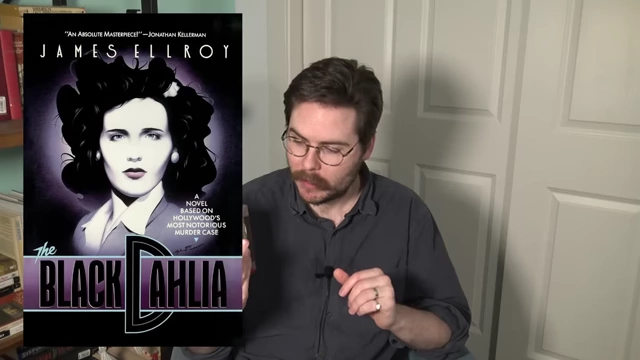
Cover of James Ellroy's 'The Black Dahlia' [ 00:01:10 ] - The novel is set immediately after World War II in Los Angeles.
- It's based on the real and famous unsolved murder case of Elizabeth Short.
- Ellroy's writing is described as brilliant and on par with masters like Raymond Chandler and Dashiell Hammett.
- Characters are not necessarily likable but are deeply flawed and realistic portrayals of police officers and detectives of that era.
- The book features an unconventional structure, dedicating a significant section to character development, including a vividly described boxing match, before the murder occurs, creating a kinetic, cinematic reading experience.
- Focuses on "The Black Dahlia" [1:09], the first book in his acclaimed LA Quartet.
- The speaker looks forward to reading "The Big Nowhere" in 2026, noting that Ellroy's later writing becomes even more distinctive, stripped-back, and punchy.
Clarice Lispector's Near to the Wild Heart [2:10]
- Discovers Clarice Lispector, a Brazilian novelist experiencing a popular resurgence.
- Highlights her first novel, "Near to the Wild Heart" [2:23], written when she was in her early twenties (22 or 23).
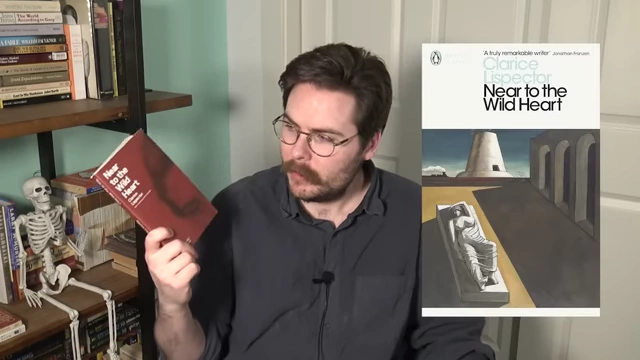
Cover of Clarice Lispector's 'Near to the Wild Heart' [ 00:02:15 ] - Her writing is characterized as very modern, impressionistic, and sensory, focusing on subjective reality rather than a shared objective one, drawing comparisons to James Joyce.
- The story follows a woman's life and marriage, including an affair, presented as a richly personal melodrama.
- The chapters are notably short.
- Although translated from Portuguese, the English version successfully captures Lispector's unique, lyrical style, which can be halting and grammatically unconventional yet remains compelling.
- Highlights her first novel, "Near to the Wild Heart" [2:23], written when she was in her early twenties (22 or 23).
- Recommends the book for readers seeking a fresh linguistic experience and a departure from traditional narrative modes.
Ernest Hemingway [3:32]
- Discusses Mary V. Dearborn's biography, "Ernest Hemingway" [3:27].

Cover of 'Ernest Hemingway: A Biography' by Mary V. Dearborn [ 00:00:45 ] - Praises the biography for deeply connecting Hemingway's life to his semi-autobiographical literary works.
- The speaker read many of Hemingway's short stories for the first time, gaining new context from the biography.
- Mentions iconic stories like "The Short Happy Life of Francis Macomber" and "The Snows of Kilimanjaro."
- Notes the widespread consensus that Hemingway's short stories, especially his early ones like "The Big Two-Hearted River," are fantastic.
- Appreciates the refreshing clarity of Hemingway's language and his immense influence on 20th-century literature.
- Explores Hemingway's complex and often sad personal traits:
- His self-destructive tendencies and mental health issues.
- His charisma that attracted many friends, who he often betrayed or resented for their kindness (e.g., F. Scott Fitzgerald).
- Learning about his political involvement, particularly in the Spanish Civil War, alongside his stories, offered a broader understanding of 20th-century history.
Mark Waid and Alex Ross's Kingdom Come [5:38]
- Discusses the DC comic book "Kingdom Come" by Mark Waid and Alex Ross.
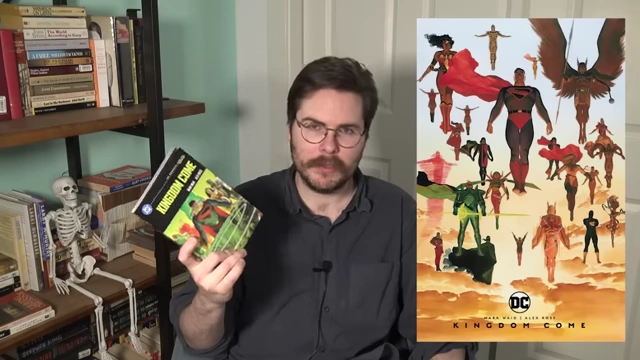
Cover of 'Kingdom Come' by Mark Waid and Alex Ross [ 00:05:49 ] - Alex Ross's artwork is highly praised as "incredibly good" [5:50].
- The art consists of detailed, realistic watercolor paintings, described as unique for a comic book.
- The speaker regrets buying a compact edition and recommends a larger, glossy version to fully appreciate the art.
- The story's premise involves a future where new superheroes lack the noble values of their predecessors.
- Superman must re-emerge to guide them towards being "good guys" again.
- Despite some "silly" elements, the narrative contains deeply heartfelt and sincere moments, questioning the presence of kindness and goodness among heroes.
- Alex Ross's artwork is highly praised as "incredibly good" [5:50].
Lawrence Block's A Ticket to the Boneyard [6:48]
- Continues reading Lawrence Block's Matthew Scudder private detective series.
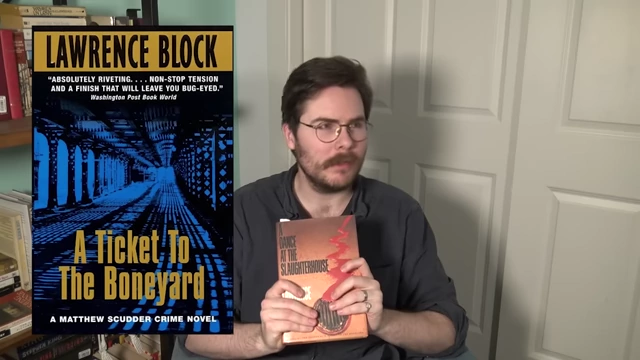
Cover of Lawrence Block's 'A Ticket to the Boneyard' shown as an overlay [ 00:06:58 ] - Matthew Scudder is a classic New York-based private detective, a former policeman, and an alcoholic.
- He is haunted by guilt from accidentally killing a child in the line of duty.
- The series tracks his life, from active drinking in the first five books to becoming sober in "Eight Million Ways to Die."
- It portrays New York City evolving and Scudder building new relationships, including an unlikely friendship with an Irish gangster.
- Specifically highlights "A Ticket to the Boneyard" [7:00].
- This book features an unhinged killer pursuing Scudder, a classic pulpy plot executed in Block's distinct style.
- The books are surprisingly philosophical, dry, restrained, cynical, and possess a dark humor that resonates with the speaker.
- Matthew Scudder is a classic New York-based private detective, a former policeman, and an alcoholic.
- Recommends starting the series with "The Sins of the Fathers" [8:31].
Donald E. Westlake's The Ax [8:35]
- Discusses "The Ax" by Donald E. Westlake, which was adapted into the movie "No Other Choice."
- Donald E. Westlake is celebrated as a prolific and wonderful writer of crime novels, using multiple pseudonyms like Richard Stark (known for the hard-boiled Parker series).
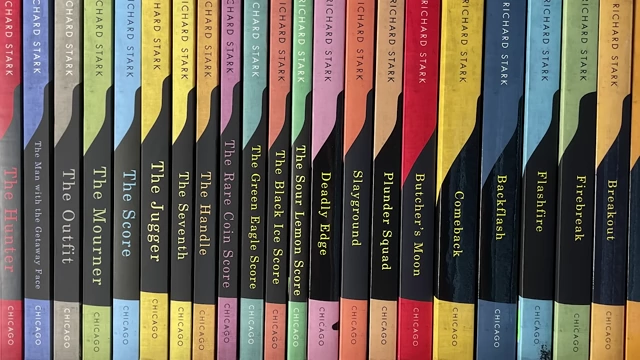
A collection of Richard Stark's Parker series books by Donald E. Westlake [ 00:09:13 ] - "The Ax," written in the 1990s, is described as still highly relevant and powerful.
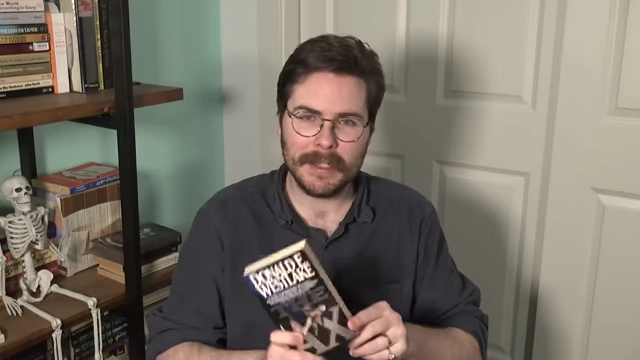
The book cover for 'The Ax' by Donald E. Westlake [ 00:09:27 ] - The plot centers on a laid-off paper company employee who decides to murder his competition for a job position.
- It explores an "ultimate defeatist mindset" or "grindset mindset" [9:44].
- The protagonist creates a fake job advertisement to identify his strongest competitors, then systematically kills them.
- His self-justification for these murders is depicted as "upsetting but so real," and the level of violence escalates throughout the story.
- The character exhibits a fascinating delusion: he recognizes societal problems (CEOs, stockholders) but shifts his focus to eliminating his immediate "personal problem"—his job rivals.
- Donald E. Westlake is celebrated as a prolific and wonderful writer of crime novels, using multiple pseudonyms like Richard Stark (known for the hard-boiled Parker series).
- The speaker praises both the book for its brilliance and the movie adaptation for updating the themes effectively for the modern era, touching on concepts like AI and automation.