How the "Big Paper Planning Day" Science Fair Board Method Helps ADHD Individuals Plan Life and Achieve Goals
The "Big Paper Planning Day" (BPP) method offers a visual, self-compassionate approach to life planning, especially beneficial for individuals with ADHD, leveraging an experimental mindset.
- It utilizes large science fair boards and school supplies, tapping into novelty to maintain motivation every three months.
- The process involves four key steps: establishing vision and values through exercises, setting abstract goals (focusing on "why"), creating action menus for high and low energy days, and setting realistic, data-rooted targets viewed as monthly micro-experiments.
- Unlike rigid SMART goals, BPP emphasizes an iterative and experimental mindset, reframing life as an experiment with continuous learning.
- This method helps individuals develop a self-identity as consistent achievers by accommodating natural energy fluctuations and focusing on actions within their control.
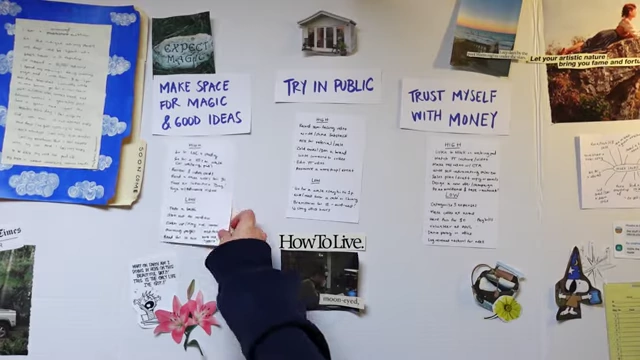
The evolving Big Paper Planning board featuring abstract goals and their corresponding action menus. [ 00:00:15 ]
Big Paper Planning Day Introduction [00:00]
The speaker introduces her unique life planning method using a giant trifold science fair board, calling it "Big Paper Planning Day." She does this quarterly, individually and with a group, and believes it promotes an experimental mindset towards life.
- The method is designed to be less rigid and more self-compassionate, abstract, and creative, especially for those who struggle with traditional planning.
- It emphasizes visual thinking and "big paper" mind mapping, which helps with object permanence for those who need visual cues.
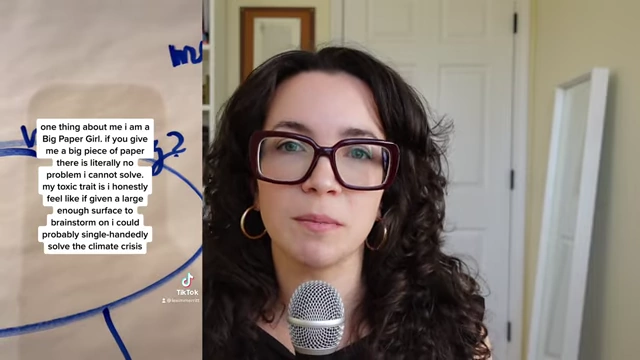
The speaker's philosophy on using large paper for problem-solving and planning. [ 00:04:29 ] - The process was developed from the speaker's personal experience of needing a different approach to planning due to her ADHD and the ineffectiveness of conventional goal-setting.
Why "Just do it!" Didn't Work for Me [01:51]
The speaker, who is self-employed and has ADHD, shares her struggles with traditional productivity advice like "just do it" and SMART goals.
- Her journey into self-employment was an accommodation for her ADHD, not a planned career move.
- Traditional advice often failed her, leading to feelings of inconsistency and self-deprecating thoughts.
- She found alternative inspiration in design thinking, which emphasizes experimentation and iteration, applying it to "life design."
- The tangible and visual nature of big paper planning appeals to her, helping her to "believe in her body" that life is an experiment.
What Materials Do I Need? [05:56]
The core materials for Big Paper Planning Day are simple and leverage the motivational power of novelty.
- Essential Materials:
- A big piece of paper (like a trifold science fair board).
- Writing instruments.
- Your brain.
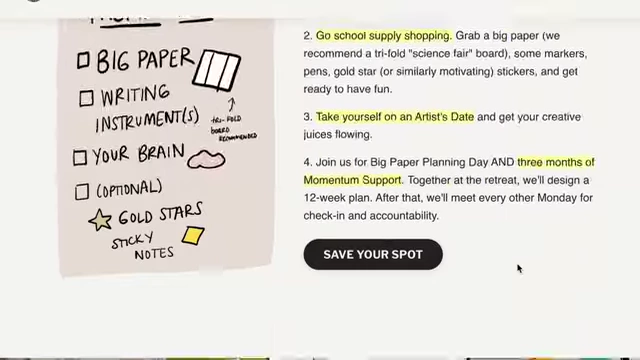
A checklist of essential and optional materials for Big Paper Planning Day, including a trifold board and gold stars. [ 00:00:22 ]
- Optional Materials:
- Gold stars.
- Sticky notes.
- Gel pens or other craft supplies that evoke a sense of a new beginning.
- The act of school supply shopping and indulging in new supplies is intentionally part of the process, tapping into the novelty-seeking aspect often present in ADHD.
- This reframes the science fair board from a source of past procrastination anxiety into an exciting tool for fresh starts.
Why Every Three Months? [06:13]
The quarterly cycle of Big Paper Planning Day is deliberately structured to harness the power of novelty and continuous iteration.
- Novelty is a strong motivator, particularly for individuals with ADHD.
- Instead of waiting for a yearly reset (like New Year's), this method provides a fresh start every three months (similar to a "12-week year").
- This cycle encourages reflection on what was learned and what needs to change, promoting an iterative and experimental mindset.
- It combines this manufactured novelty with the life design approach and the literal visual symbol of a science fair board, reinforcing that the next three months are an experiment.
Step One: Vision & Values [07:24]
The first step focuses on establishing a clear vision and identifying core values.
- Visioning Exercise:
- Write a list of 11 desired things.
- Write a diary entry in the present tense from a day in your life where you have achieved these 11 things. This helps connect with the "desired state" of being.
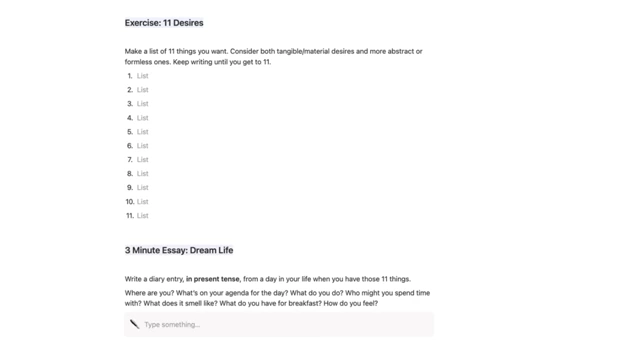
The '11 Desires' and 'Dream Life Essay' exercise used to define vision. [ 00:07:45 ]
- Time Constraint: This planning is specifically for the next three months, acknowledging that not all long-term desires will manifest within this short period.
- Values Identification: The desired things are seen as representative symbols of deeper values or feelings the individual wants to experience.
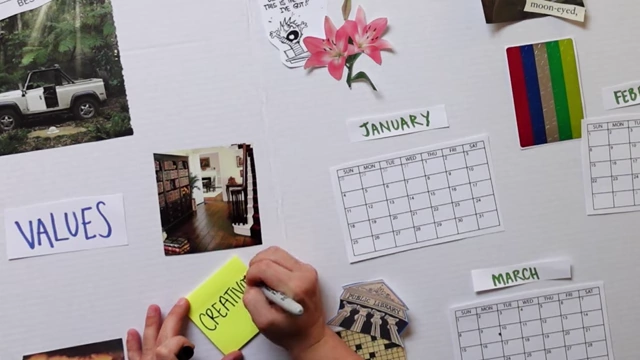
Adding 'Creativity' as a value to be experimented with during the planning period. [ 00:09:20 ] - The process involves identifying core values and often experimenting with one new value (e.g., beauty, discipline, dignity) for the upcoming quarter.
Step Two: Abstract Goals [09:43]
This step moves away from traditional SMART goals and focuses on "abstract goals."
- Abstract Goals Explained:
- Defined as a "desired state of being," rather than concrete, measurable outcomes.
- They focus on the "why" behind desires. For example, instead of "buy a house with a pool," the abstract goal might be the feeling of security or relaxation associated with it.
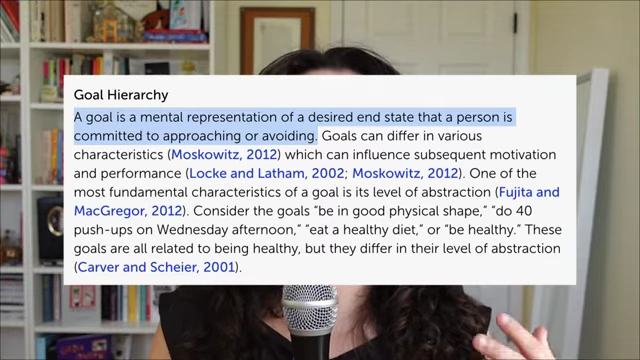
Definition of 'Goal Hierarchy' explaining abstract goals as a desired end state. [ 00:10:03 ]
- Example Abstract Goals: The speaker shares her recent abstract goals: "trust myself with money," "create space for magic and good ideas," and "try in public."
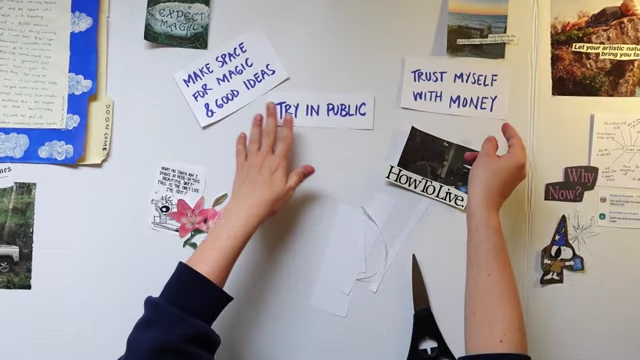
The three abstract goals: 'Make Space for Magic & Good Ideas,' 'Try in Public,' and 'Trust Myself with Money,' placed on the board. [ 00:10:27 ] - Core Motivation: Abstract goals capture core motivation and the desired feeling or experience, making the process intrinsically rewarding rather than solely focused on external achievements.
- This approach avoids the demotivation that can come from feeling constantly far away from concrete, long-term goals.
Step Three: Action Menus [10:38]
Action menus are designed to make abstract goals concrete and achievable regardless of energy levels.
- Purpose: For each abstract goal, an action menu lists various actions that contribute to achieving that goal.
- High and Low Energy Options: Crucially, each menu includes options for both high-energy days and low-energy days.
- High Energy Examples: Read inspiring content, write, ask for referrals, cold email, design new offers, edit videos.
- Low Energy Examples: Go for a walk, make coffee at home, brainstorm, volunteer, dance party in office, log expenses.
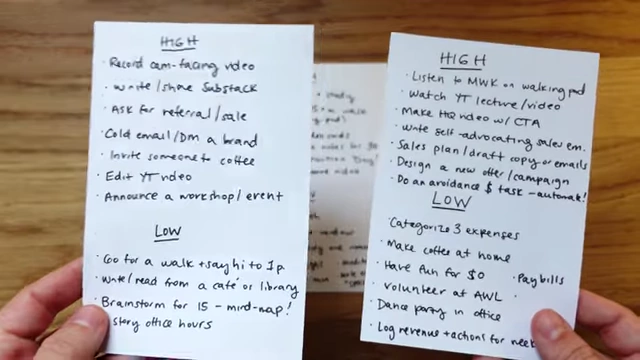
Detailed action menus for 'High' and 'Low' energy days, listing various tasks. [ 00:11:46 ]
- Visual Cues: These menus serve as visual prompts, ensuring that even on difficult days, there are accessible actions that align with the abstract goals.
- Immediate Achievement: When any action from the menu is completed, it immediately counts as achieving the abstract goal, fostering a sense of accomplishment rather than endless pursuit.
The Identity Shift [13:33]
A significant benefit of Big Paper Planning Day is the shift in self-identity it fosters.
- Strengthening Identity: The method helps individuals see themselves as people who consistently achieve their goals.
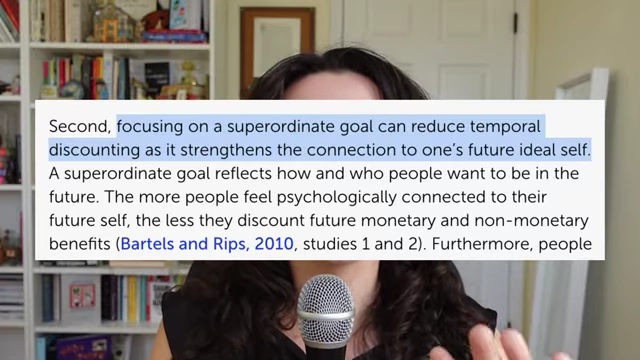
Explanation of how superordinate goals strengthen connection to one's future ideal self, reducing temporal discounting. [ 00:13:08 ] - Overcoming Negative Self-Perception: The speaker recounts her past identity as "flaky," "forgetful," and "messy" due to ADHD. This planning system provides tangible evidence that she can stick to things and achieve.
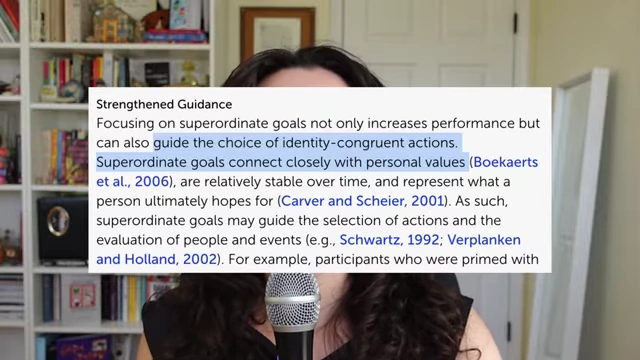
Research on superordinate goals guiding identity-congruent actions and connecting with personal values. [ 00:13:56 ] - Gold Stars: The practice of giving oneself "gold stars" for small actions, like making coffee at home, reinforces the identity of someone who trusts themselves with money, for example.
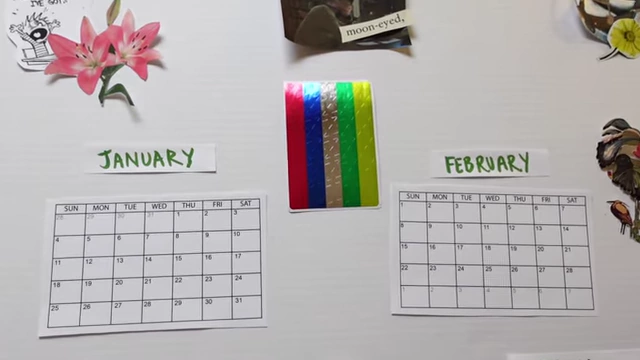
Monthly calendars (January, February, March, April) used for tracking progress on the Big Paper Planning board. [ 00:14:55 ] 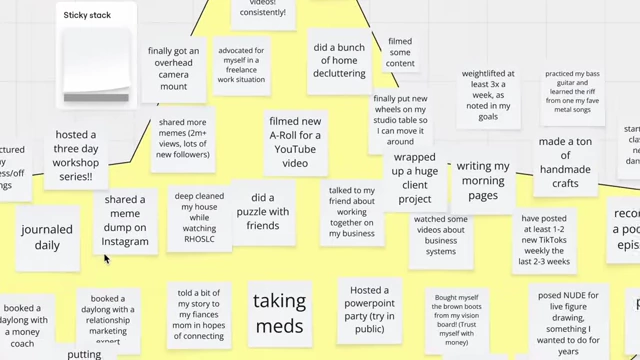
A digital 'sticky stack' illustrating the accumulation of 'gold stars' for completed actions. [ 00:15:11 ] - By repeatedly demonstrating to oneself that even small actions contribute to larger abstract goals, the internal narrative changes from one of failure to one of consistent progress.
Step Four: Results & Targets [15:16]
While focused on abstract goals, the method also incorporates concrete targets and results, but with an experimental perspective.
- Monthly Micro-Experiments: Since planning is quarterly, each month is treated as a micro-experiment.
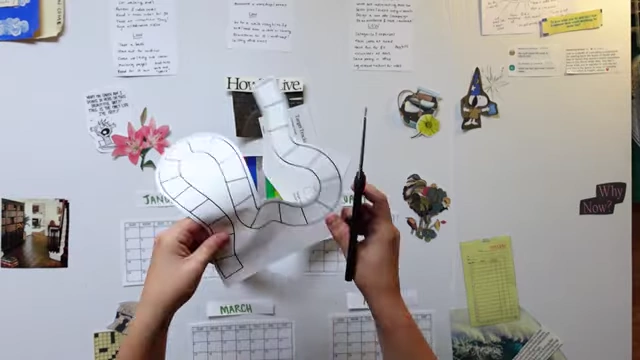
Cutting out a game-board-like path for visually tracking monthly micro-experiments and targets. [ 00:15:15 ] - Hypothesis Setting: For specific targets (e.g., gym visits, revenue), a hypothesis is made (e.g., "I will go to the gym 15 times over the next four weeks").
- Flexibility: This allows for fluctuation (e.g., more gym visits one week, fewer the next) and accommodates natural energy cycles (like menstrual cycles), avoiding rigid daily expectations.
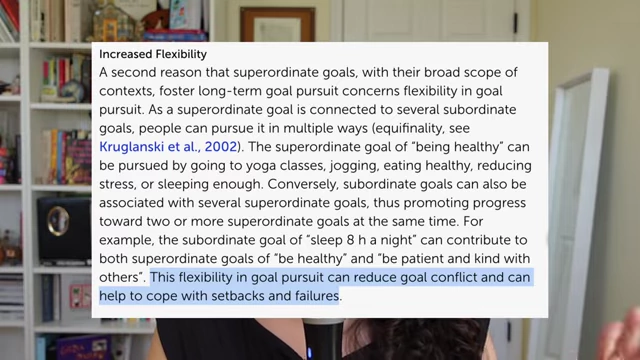
Description of how increased flexibility in goal pursuit reduces conflict and helps cope with setbacks. [ 00:17:14 ] - Educated Guesses: Targets are encouraged to be "educated guesses" rooted in past data and realistic expectations, rather than arbitrary numbers that set one up for disappointment.
- This approach views results as outcomes of experiments, providing data for future iterations rather than failures.
Consistency = Accommodation [18:32]
The overall philosophy emphasizes that true consistency comes from accommodation and focusing on one's locus of control.
- Locus of Control: The method distinguishes between things within one's control (actions) and things outside of it (results).
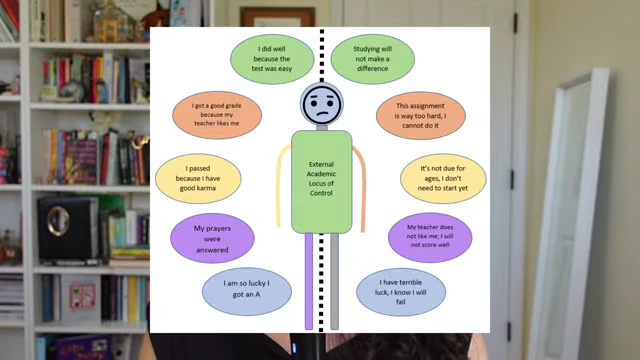
A diagram illustrating an external academic locus of control, showing beliefs about factors outside one's control. [ 00:18:42 ] - Accommodation for Consistency: Consistency in action is achieved through accommodating individual needs, such as varying energy levels, using tools like action menus with high/low energy options.
- Self-Compassion: This fosters self-compassion, allowing individuals to see themselves as capable of doing good things, even on challenging days.
- Fair Target Setting: When setting outcome-based targets (like revenue), it's crucial to identify all actions within one's control that influence that outcome, rather than expecting results to appear magically.
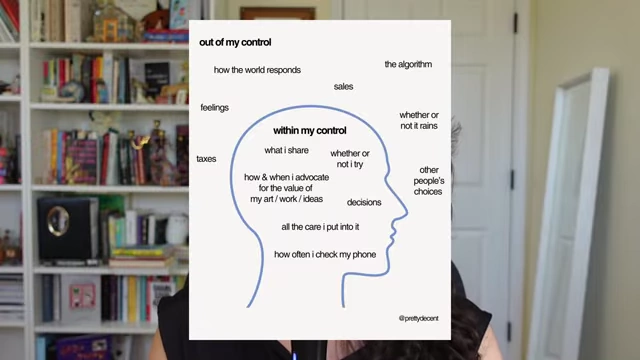
A visual representation distinguishing between factors 'within my control' and 'out of my control' in life planning. [ 00:19:55 ] - Big Paper Planning Day is presented as an accommodating, self-compassionate, and empowering alternative to traditional, often patriarchal, productivity methods.