This Vsauce video explores the various ways a person's existence and influence persist after their physical death, coining them as different "ghosts."
The Solar Corona Ghost: Your personal legacy, including memories, digital footprint, and hereditary traits, shining on like the sun's corona during an eclipse.
The Nominal Ghost: The endurance of your name, highlighting historical examples like Kushim and Gal-Sal, and how modern archiving can prolong a name's presence.
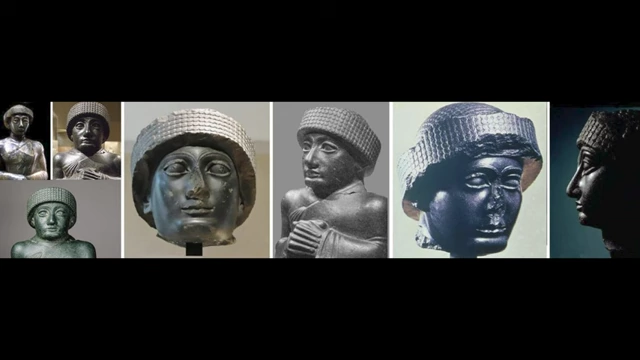
The Likeness Ghost: The survival of your visual representation, exemplified by ancient statues of Gudea, the earliest known illustrated person.
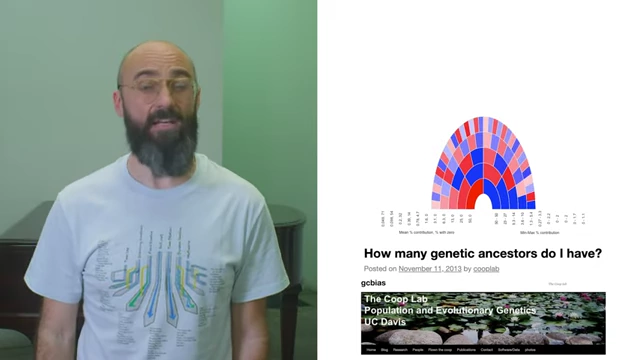
The Genetic Ghost: The diminishing presence of your unique genetic code in future generations, eventually becoming undetectable in distant descendants.
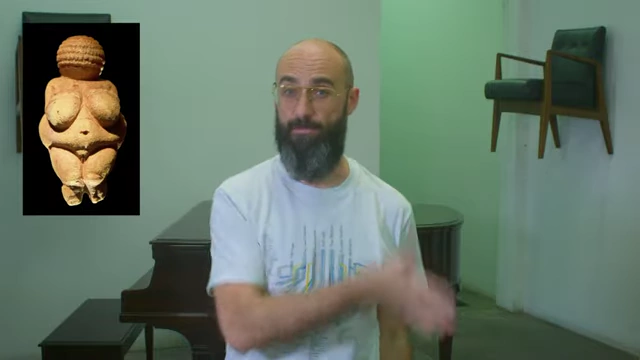
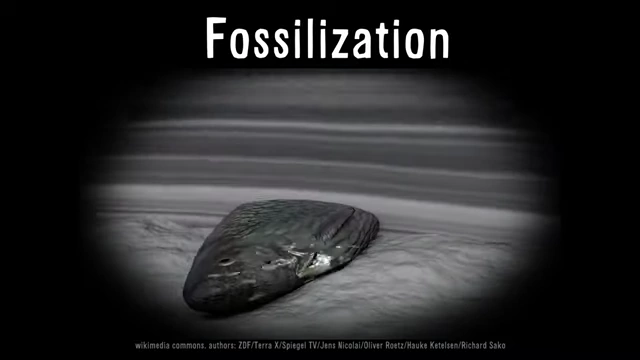
The Fossil Ghost: The extremely rare chance of your physical remains becoming a fossil, with specific geological conditions increasing the likelihood, and the ultimate longevity of human traces sent into space, like the Voyager Golden Records.
The Ripple Ghost: The anonymous, long-term impact of your actions through the butterfly effect, irrevocably altering the universe in subtle ways.
Documentality: How modern life increasingly records every interaction, turning daily existence into pervasive documentation, leading to a state of "living as ghosts" through digital avatars and persistent data, satisfying humanity's inherent drive for "unsettledness" and the continuous pursuit of "what's next."
The speaker surrounded by bags of flour, illustrating the 117 billion people who have ever lived.
[
00:01:19
]
Introduction: The Scope of Human Existence and Connection [00:00:01]
The vastness of human population and individual uniqueness:
A 5 lb bag of refined flour contains about 2.7 billion individual specks, meaning three bags could represent every human alive today (8.1 billion). [00:00:04]
Graph showing the distribution of flour particle sizes with an average of 82.67 microns.
[
00:00:08
]
Just 33 yes/no questions could uniquely identify any single person out of the 8.1 billion people on Earth. [00:00:40]
Approximately 117 billion people have ever been born. [00:01:12]
The speaker surrounded by bags of flour, illustrating the 117 billion people who have ever lived.
[
00:01:19
]
An individual will only meet a tiny fraction of the total human population, making everyone a stranger to most of their own species. [00:01:22]
Introduction to the concept of "ghosts": The video explores how individuals will be forgotten, the "ghosts" that surround us, and how they are becoming increasingly prominent. [00:01:29]
The Solar Corona Ghost: Lingering Traces and Memories [00:01:38]
Analogy to the solar corona visible during an eclipse:
The solar corona is a hot layer of ionized gas normally outshone by the sun but becomes visible during an eclipse. [00:01:41]
A total solar eclipse with a bright corona visible around the blacked-out sun, representing a person's lingering influence.
[
00:02:00
]
Similarly, when a person is "eclipsed" (dies), their own "corona" remains. [00:02:00]
Personal "corona" includes memories, digital data, and hereditary traits: This refers to the lasting memories people have, personal belongings, emails, texts, physical traits inherited by children, and incidental appearances in strangers' photos. [00:02:03]
Douglas Hofstadter's concept of a personal "solar corona": This phrase makes a cosmological phenomenon personal by including an individual's lingering influence. [00:02:23]
The Nominal Ghost: The Legacy of Your Name [00:03:40]
The idea of dying twice: People are often reminded that they die twice: once when their heart stops, and again when their name is spoken for the last time. [00:03:49]
The oldest known written names:
Kushim: The earliest written name found on a 5,000-year-old tablet, believed to be the first named character in human written history, though it might refer to an office rather than a person. [00:04:02]
Gal-Sal, En-Pap X, and Sukkal-Gir: Names from a slightly later tablet, definitively identified as individuals, representing strong contenders for avoiding the "second death." [00:04:25]
A comparison of two ancient cuneiform tablets, showcasing "Kushim" and later identified individuals "Gal-Sal," "En-Pap-X," and "Sukkal-Gir."
[
00:04:40
]
Modern technology's potential for names to last longer: Current archival practices and technologies could allow names to persist as long as these ancient ones. [00:04:41]
The speaker's personal experience with digital "fame" and truth: The speaker discusses how online information about his birthplace (Stillwell vs. Kansas City) influences his "nominal ghost" and the dilemma of correcting a minor inaccuracy that prolongs his digital presence. [00:05:21]
An interactive globe displaying the most famous person born in various locations based on Wikipedia data.
[
00:05:05
]
The Likeness Ghost: Visual Representation Through Time [00:05:51]
The persistence of images and figurative portrayals: Even if a name is forgotten, images can endure as a "likeness ghost." [00:05:54]
Gudea, the earliest known illustrated person with realistic depictions:
Gudea was an ancient Sumerian ruler from over 4,000 years ago. [00:06:16]
27 statues of him have been found in southern Iraq, notable for their craftsmanship and realistic detail. [00:06:23]
Unlike earlier, more abstract human forms, Gudea's statues are consistent and widely spread, suggesting they accurately represent his actual appearance. [00:06:36]
An abstract ancient human figure, contrasting with the realistic depictions of Gudea.
[
00:06:31
]
A montage of various statues of Gudea, highlighting the consistency and realism of his historical likeness.
[
00:06:40
]
The Genetic Ghost: Biological Inheritance [00:07:00]
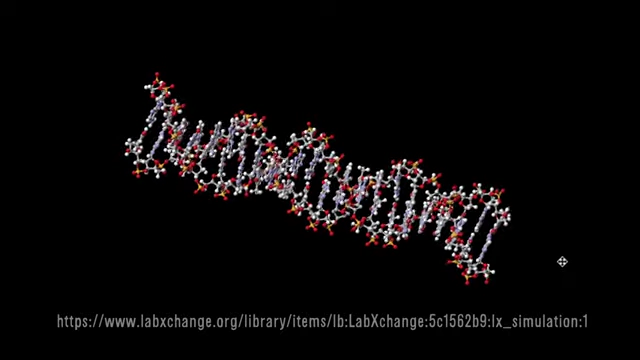
Genetic variations passed to descendants: Personal genomic variations can be carried on by descendants. [00:07:03]
A 3D interactive model of a DNA double helix.
[
00:07:08
]
The diminishing percentage of unique genetic code in future generations:
Grandkids inherit approximately 23-27% of one's unique genetic code. [00:07:18]
After several generations, descendants may be no more genetically similar to an individual than any stranger. [00:07:35]
The concept of being "genetically left behind": It becomes possible for no personal chunks of one's genome to be present in descendants, much like baby teeth serving a purpose then being set aside. [00:07:43]
A chart illustrating the diminishing percentage of unique genetic code passed down through generations.
[
00:07:34
]
The Fossil Ghost and Beyond: Long-Term Physical Traces [00:08:12]
The rarity of fossilization and optimal conditions:
Fossilization, the mineralizing of bones into rocky ghosts, is exceedingly rare. [00:08:24]
A visual representation of the fossilization process, where bones are mineralized into rocky forms.
[
00:08:30
]
Less than 0.1% of a species ever becomes fossilized. [00:08:34]
Optimal conditions include rapid, deep burial without a coffin, under the seafloor of still water, at low elevation with swift sediment deposits and low oxygen levels. [00:08:54]
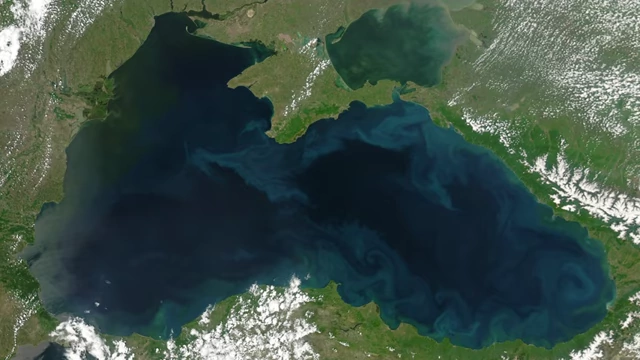
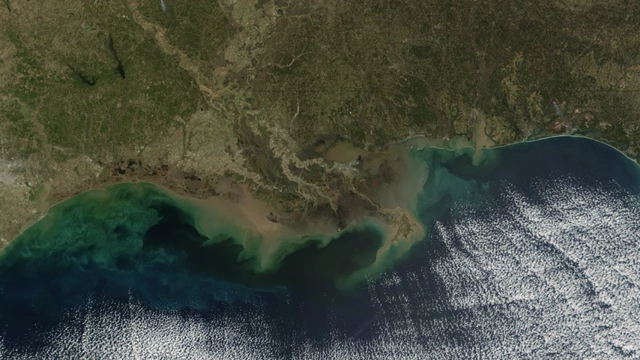
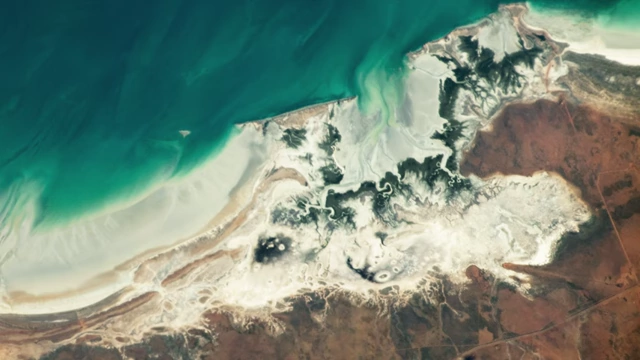
Locations conducive to fossilization: Parts of the Black Sea, the Gulf of Mexico (where the Mississippi disgorges), and mangrove swamps along Australia's northern coast. [00:09:08]
An aerial view of the Black Sea, identified as an ideal location for fossilization due to its low oxygen levels and still waters.
[
00:09:10
]
An aerial view of the Gulf of Mexico, where the Mississippi River disgorges sediment, creating conditions conducive to fossilization.
[
00:09:12
]
An aerial view of mangrove swamps along Australia's northern coast, highlighted as prime locations for fossilization.
[
00:09:16
]
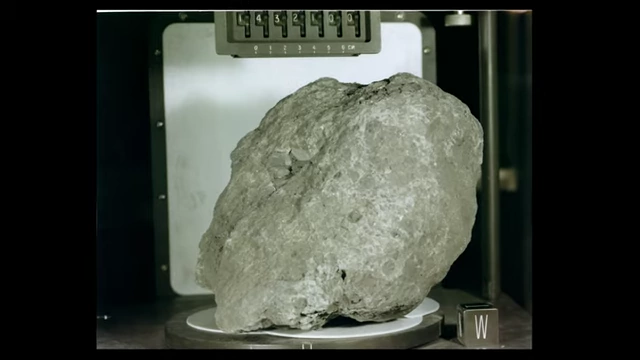
The moon as a more stable location for relics: The oldest unchanged piece of Earth was found on the moon, where geological activity is less destructive, suggesting monuments there could last longer. [00:09:32]
"Big Bertha," a lunar rock sample believed to be the oldest unchanged piece of Earth, found on the moon.
[
00:09:35
]
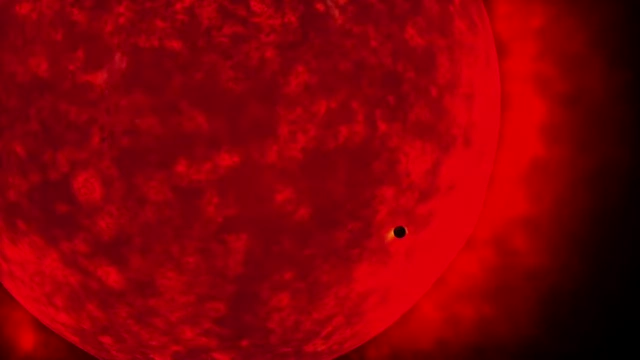
Space for ultimate longevity: A copper disc coated in aluminum and gold floating through space, like the Golden Records aboard the Voyager spacecraft, could exist for trillions of years, potentially outlasting the last star. [00:09:56]
An artist's rendition of our sun expanding into a red giant, illustrating its eventual engulfment of Earth and Moon.
[
00:09:52
]
A 3D interactive view of the Voyager 1 spacecraft, highlighting its Golden Record, designed to last for trillions of years in space.
[
00:10:07
]
The Ripple Ghost: Anonymous Immortality Through Action [00:10:14]
The "diffused domino effect" of one's actions: This is the final type of ghost, representing the lasting impact of actions, even if forgotten by name or likeness. [00:10:19]
The butterfly effect ensuring anonymous, minute immortality: People in the future might benefit from a tree you planted without knowing who planted it. [00:10:30]
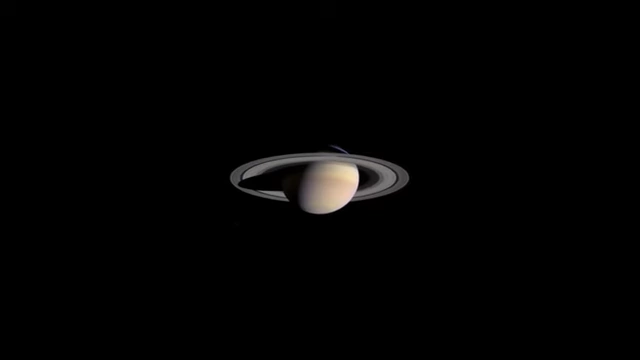
How one's existence irrevocably changes the universe: Even an individual's mass subtly affects celestial bodies like Saturn, contributing to the ultimate arrangement of matter in the universe. [00:10:37]
A view of Saturn, illustrating how a person's mass subtly affects celestial bodies and their eventual arrangements.
[
00:10:45
]
The persistence of existence without remembrance: While there may be no minds to remember, an individual's impact won't be annihilated when the universe reaches heat death. [00:11:02]
Documentality: Living as Ghosts in the Digital Age [00:13:10]
Maurizio Ferraris's concept of "documentality" – life as documentation: This term describes the extent to which modern day-to-day life happens as documentation. [00:13:10]
The book "Documentality: Why It Is Necessary to Leave Traces" by Maurizio Ferraris.
[
00:13:10
]
The pervasive nature of recording and "pre-remembered" information:
In a highly documental society, nearly every transaction, click, step, memory, word, or action is recorded or enters the world already "pre-remembered" as a high-fidelity, timestamped, cataloged artifact. [00:13:23]
A map illustrating the spread and strength of a WiFi signal within a house, symbolizing invisible "ghosts" or traces.
[
00:12:27
]
This leads to a feeling of more things having been said than could be said, and more ways things have been than could be. [00:13:47]
Incomplete documentality: Despite widespread documentation, our estimates of the human population still have a 2-3% margin of error, and many deceased individuals remain unidentified. [00:14:03]
Examples include the discovery of previously unknown plane crashes during the search for Steve Fossett, and the unearthing of other bodies during the search for Gabby Petito. [00:14:21]
A news headline reporting that the search for Steve Fossett uncovered the wrecks of eight other small planes.
[
00:14:32
]
News headlines detailing how searches for Gabby Petito and her boyfriend led to the discovery of other human remains.
[
00:14:43
]
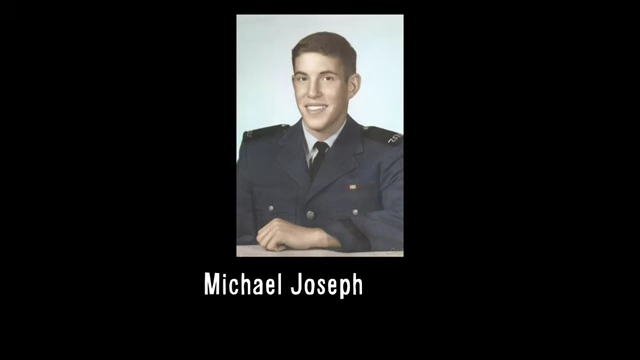
The Vietnam War "unknown soldier" was identified by DNA in 1998, showing that even anonymity can be undone by persistent data. [00:14:50]
The Tomb of the Unknown Soldier at Arlington National Cemetery.
[
00:14:56
]
A burial ceremony at the Tomb of the Unknown Soldier in 1984.
[
00:14:58
]
A portrait of Michael Joseph Blassie, the unknown soldier identified through DNA in 1998.
[
00:15:04
]
The relationship between Michelle Carter and Conrad Roy existed almost entirely through thousands of text messages, demonstrating how an entire human relationship can be an "undying document." [00:15:06]
A partial spreadsheet displaying thousands of text messages exchanged between Michelle Carter and Conrad Roy, which served as the primary evidence in their case.
[
00:15:17
]
The shift to experiencing life through documentation:
The internet is a "haunted house" of avatars and messages from both the living and the dead. [00:12:48]
A dynamic collage of various social media feeds and phone screens, representing the pervasive "ghost portals" of digital documentation.
[
00:12:49
]
People spend an average of over 7 hours a day on "ghost portals" (screens). [00:12:46]
A graph illustrating how the percentage of couples meeting online has changed over time, alongside articles discussing mobile phone ownership statistics.
[
00:13:05
]
When people instinctively watch events through phones, it's not a lack of living in the moment, but a modern way of being in the moment, where one's digital presence (account, like, post, view) becomes part of the experience. [00:16:00]
People holding up their smartphones to record an event, illustrating the modern way of "being in the moment" through digital documentation.
[
00:16:00
]
Frederick Douglas and Sojourner Truth understood the power of photographic images (figural ghosts) for empowerment. [00:16:37]
Portraits of Frederick Douglass and Sojourner Truth, who strategically used photographic images to empower themselves.
[
00:16:46
]
Neil Postman's "information action ratio": This concept, though predating the internet, describes how constant streams of information can lead to irrelevance, where one stares for hours and remembers nothing, because the information doesn't inspire action or provide solutions. [00:17:50]
The book "Amusing Ourselves to Death" by Neil Postman, which discusses the information action ratio.
[
00:17:17
]
The innate human desire for "unsettledness" and seeking the "next" thing:
The constant scroll of digital content is not an abomination but a "niche we evolved to thrive in," as human brains evolved to seek possibilities and new experiences. [00:18:04]
Evolution selected imagination in humans because "no one was eating possibilities." [00:19:26]
Early hominids survived climatic change not by waiting for natural selection, but by "resolution" – picturing and manipulating an analog world in their minds. [00:19:32]
A map illustrating the Wallace Line, a biogeographical boundary in Southeast Asia, which Homo Erectus crossed, demonstrating humanity's ancestral drive to explore beyond known boundaries.
[
00:18:19
]
A realistic model of Homo Erectus, representing early hominids who relied on mental "resolution" to survive climatic change.
[
00:19:33
]
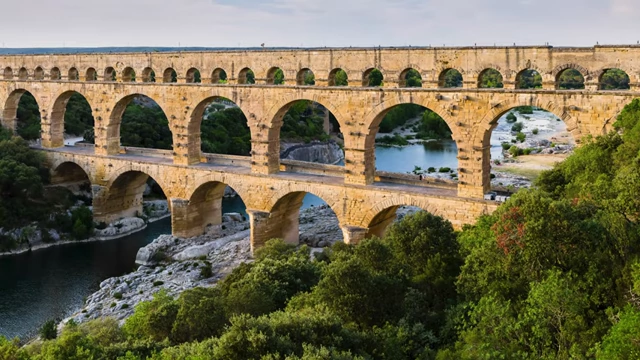
The Pont du Gard, a Roman aqueduct, showcasing ancient human engineering to bring water where needed.
[
00:20:06
]
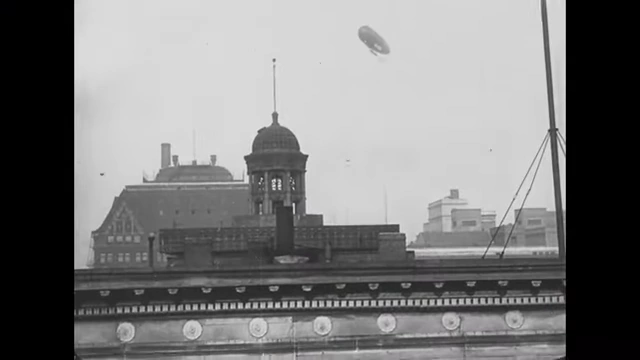
A view of Chicago filmed from a dirigible, illustrating how humans have expanded their presence and made the world their home.
[
00:20:14
]
A world map displaying population density, illustrating the widespread presence of humans across the globe.
[
00:20:17
]
The contrast between ancestral travails and modern safe digital exploration: Binge-watching or scrolling are modern forms of "unsettling" experiences, offering novelty without the dangers faced by ancestors crossing formidable natural barriers. [00:20:24]
"Amusing ourselves to life" rather than death: The internet provides a bounty of mental "torques and vales" and "pushes that spin us around but don't move us anywhere," leading to a "longer, scarier life" of constant engagement without physical movement or resolution. [00:21:00]