Linus Tech Tips Upgrades Home Theater Audio to Wired System, Comparing Sony HT-A9 Wireless to Sony AV Receiver with SVS Speakers
Linus details his ongoing frustration with the Sony HT-A9 wireless surround sound system, which, despite its impressive spatial audio and flexibility, suffers from persistent wireless audio dropouts and cracking. This unreliability prompts an upgrade to a traditional wired home theater setup. The new system includes a Sony STR-AZ5000ES AV receiver, SVS Prime Satellite and Elevation speakers, and an SVS 3000 Micro subwoofer. The video covers the challenging installation process, including running wires and calibrating the new system, which utilizes the TV as a center channel. A comparison reveals that while the HT-A9 offered slightly better sound positioning, the new wired system provides superior clarity, significantly deeper bass, and crucially, reliable, uninterrupted audio, making it a preferred "side-grade" despite the increased cost and effort.
The Persistent Problem with Wireless Home Audio [0:00]
Linus expresses ongoing dissatisfaction with the audio setup in his family room, citing issues like echoing hardwood floors, challenging speaker placement, and an angled room.

- The Sony HT-A9 wireless surround sound system, despite its advanced 360 spatial sound mapping technology and microphone-equipped speakers designed to adapt to any room, suffered from consistent wireless audio cut-outs and cracking.

An animation illustrating Sony's 360 Spatial Sound Mapping technology [ 00:00:31 ] - After over a year of issues, including a failed firmware update, Linus decides to abandon the wireless system in favor of a wired setup for reliability.
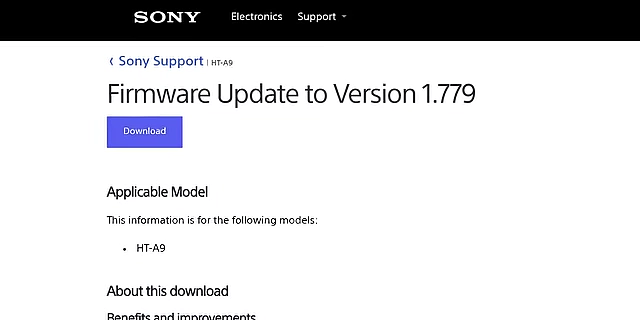
The Sony Support page for a firmware update to the HT-A9 system [ 00:00:49 ]
Evaluating the Sony HT-A9 System [1:24]
The HT-A9 system had notable advantages but critical flaws.
- Pros of HT-A9:
- Aesthetically pleasing design.
- Surprisingly good sound quality, especially considering the difficult room acoustics.
- Exceptional flexibility in placement and renter-friendly due to its wireless nature.
- When functional, it delivered a genuinely great and unique surround sound experience.
- Cons of HT-A9:
- The fundamental issue was the unreliable wireless audio, leading to cut-outs and a ruined movie experience.
- A major design flaw was the lack of an option to connect speakers via wires, which would have resolved the connectivity problems.
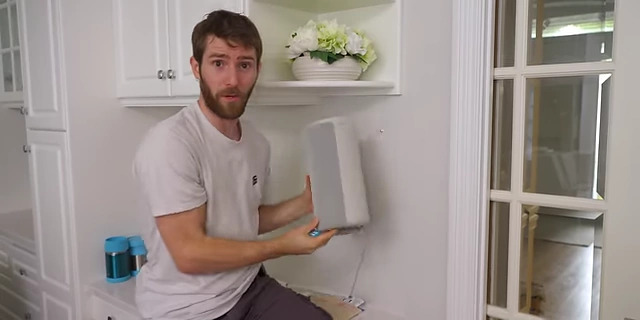
Linus demonstrates the lack of wired input on the Sony HT-A9 speaker [ 00:03:00 ]
- Initial Audio Demonstration (HT-A9): An audio demo using a Head and Torso Simulator (HATS) showcased the HT-A9's impressive surround sound capabilities when it was working correctly.
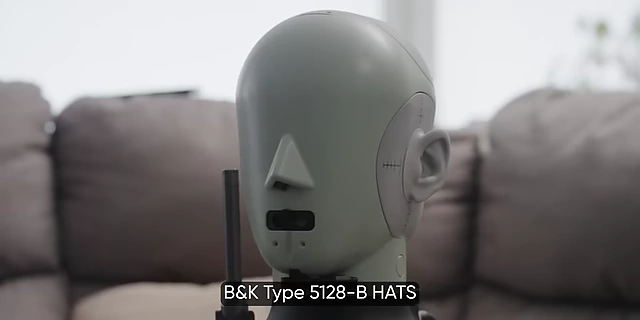
A B&K Type 5128-B HATS (Head and Torso Simulator) used for audio testing [ 00:01:55 ]
The Transition to a Wired System: Components and Challenges [3:25]
Sony provided a new AV receiver, the STR-AZ5000ES, which claims to feature similar 360 spatial sound mapping technology, but designed for traditional wired speakers.
- New Components:
- Sony STR-AZ5000ES AV Receiver.
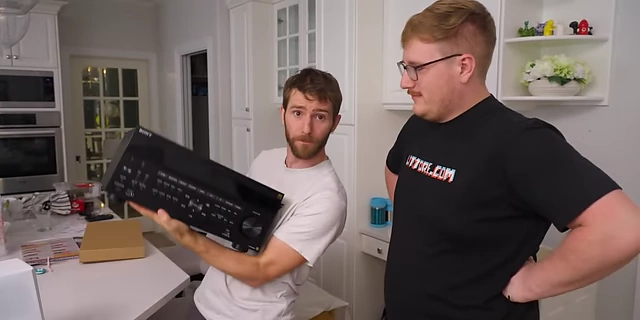
Linus holding the new Sony STR-AZ5000ES AV receiver [ 00:03:30 ] - SVS Prime Satellite Speakers.
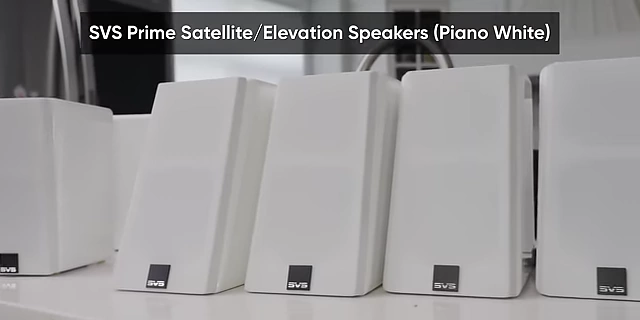
Multiple SVS Prime Satellite/Elevation Speakers in Piano White [ 00:03:47 ] - SVS Prime Elevation Speakers (for height channels).
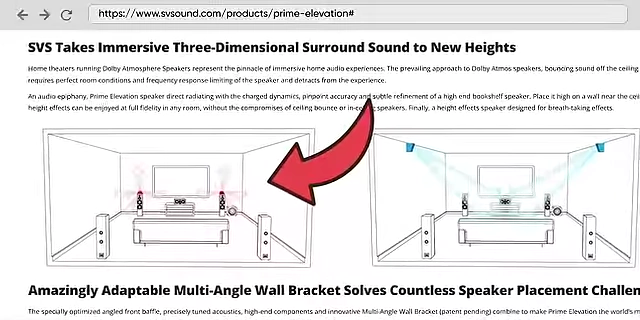
A diagram showing how SVS Prime Elevation speakers can be used as height channels or bounce sound off the ceiling [ 00:05:11 ] - SVS 3000 Micro Sealed Subwoofer (compact yet powerful).
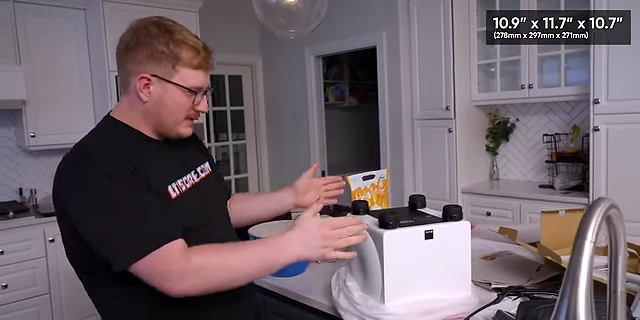
A man next to the SVS 3000 Micro subwoofer, showing its dimensions of 10.9" x 11.7" x 10.7" [ 00:11:26 ]
- Sony STR-AZ5000ES AV Receiver.
- Installation Challenges:
- The room's angled walls and architectural features made running wires and placing speakers discreetly difficult.
- The "Wife Approval Factor" was a significant consideration, particularly for placing ceiling-mounted height speakers.
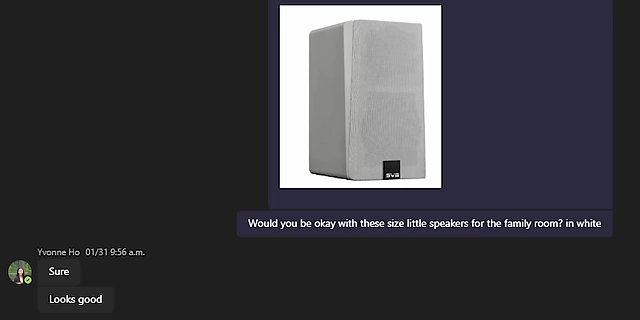
A message from Yvonne (Linus's wife) approving the appearance of the small speakers in white [ 00:05:59 ] - Jamie Pilkey, an LMG Inventory Master and former Geek Squad Technician, assisted with the installation.
- Solutions involved using thin cable channels that blend with the wall to hide wires.
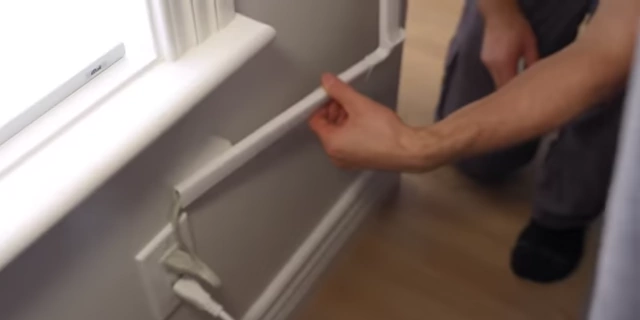
Damaged drywall on the wall during the speaker wire installation [ 00:07:19 ] 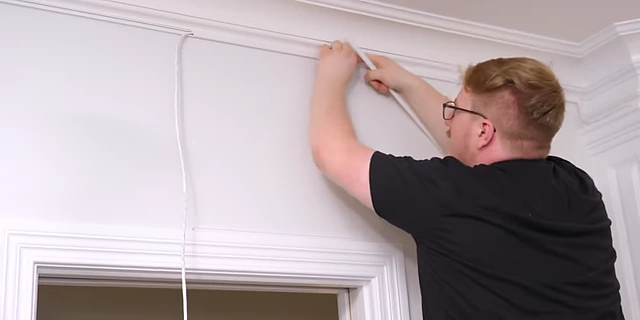
A close-up of thin cable channels being installed along the wall to hide speaker wires [ 00:08:35 ] - Accidental damage to drywall occurred during installation.
- Speaker Placement:
- Front and surround speakers were positioned.
- Height speakers (SVS Prime Elevations) were planned for ceiling installation, firing downwards.
- Center Channel: The Sony A95K QD-OLED 65" TV was integrated as the center channel, a feature supported by this specific TV model, allowing speaker wires to connect directly to the receiver.
Calibrating the New Wired Setup [12:05]
The calibration process for the new receiver was more involved than plug-and-play.
- Multi-Point Calibration: The receiver used an included microphone for room correction, requiring measurements from two different positions in the listening area for its 360 spatial sound mapping.
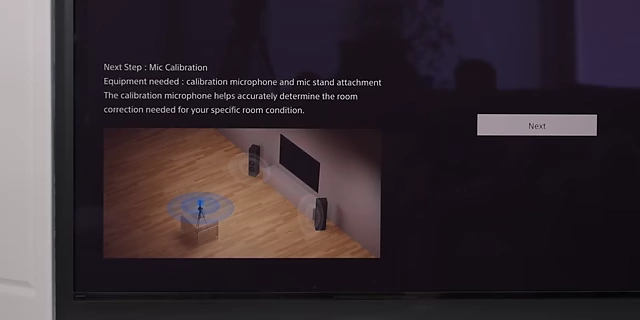
An onscreen guide for microphone placement during audio calibration [ 00:12:38 ] - The Sony STR-AZ5000ES AV receiver costs $2,099.99 USD.
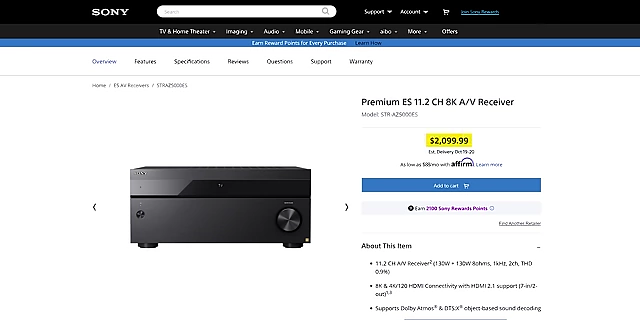
The price of the Sony STR-AZ5000ES AV Receiver shown on Sony's website [ 00:12:55 ] - Room measurements, including distance from the screen and screen height, were manually entered into the system.
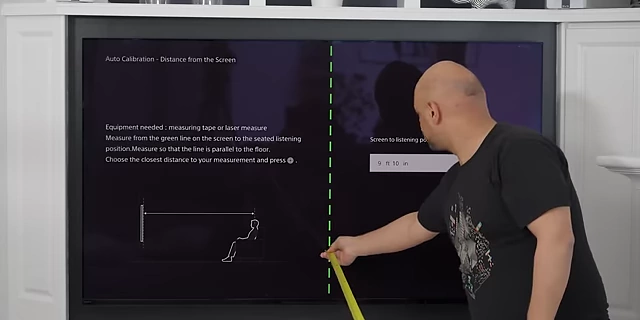
A screen showing the auto-calibration setup for measuring the distance from the screen to the listening position [ 00:13:36 ]
- The Sony STR-AZ5000ES AV receiver costs $2,099.99 USD.
- Speaker Configuration:
- The TV was selected as the center speaker.
- The system allowed for "phantom surround back" speakers, simulating rear audio despite no physical speakers being present in the back.
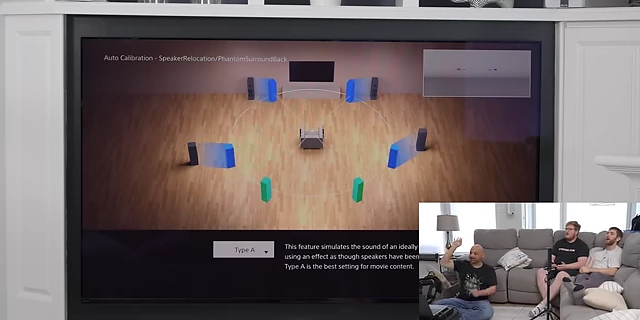
A calibration screen showing the "phantom surround back" feature, which simulates rear speakers [ 00:14:17 ] - It also offered options to optimize frequency characteristics based on Sony's listening room profile, with the "Engineer" setting replicating Sony's developed listening room.
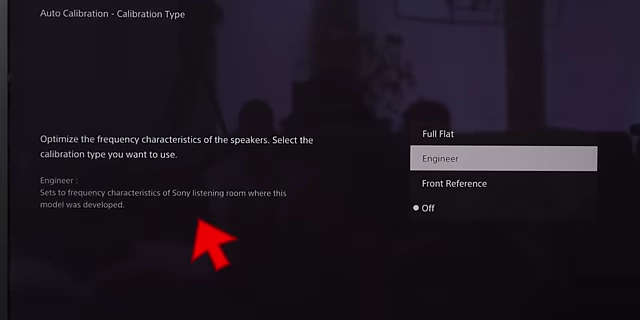
The auto-calibration screen offering "Engineer" as a setting to optimize frequency characteristics [ 00:14:38 ]
- Manual Adjustments:
- The auto-calibration initially set all speakers to "large," which means bass is not routed to the subwoofer. This was manually corrected to "small" for all speakers to ensure optimal bass performance from the subwoofer.
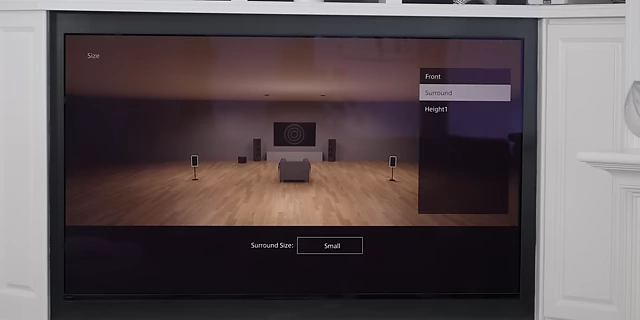
The speaker configuration screen showing "Surround Size: Small" selected for the surround speakers [ 00:16:01 ] - The crossover frequency was manually set to 70-80Hz, slightly above the speakers' rated minimum frequency response (e.g., 69Hz for Prime Satellites).
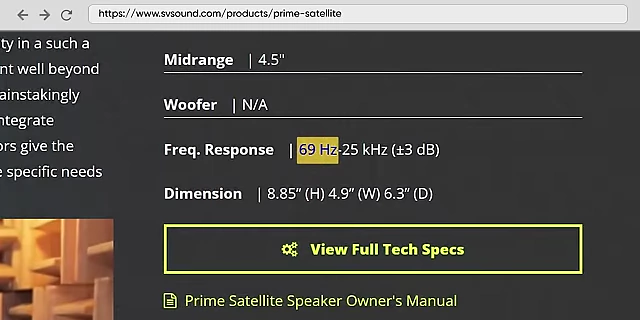
The frequency response specification for the SVS Prime Satellite speaker, highlighting its 69 Hz - 25 kHz range [ 00:16:17 ] 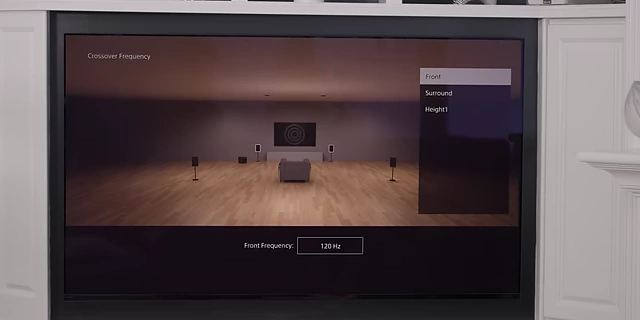
The crossover frequency setting for the front speakers set to 120 Hz during calibration [ 00:16:25 ]
- The auto-calibration initially set all speakers to "large," which means bass is not routed to the subwoofer. This was manually corrected to "small" for all speakers to ensure optimal bass performance from the subwoofer.
Performance Comparison and Conclusion [16:49]
After calibration, the new system underwent testing and a direct comparison with the old HT-A9.
- New System Audio Demo: The new system provided a more immersive and smoother sound experience, with convincing virtual rear effects, despite the absence of physical rear speakers.
- Top Gun Maverick Demo: Highlighted the excellent immersion but also revealed a slightly weak center channel from the TV, suggesting a dedicated center speaker might be beneficial.
- Blind Listening Test: Linus correctly identified the HT-A9 as having better sound positioning (due to its native 360 mapping), but overall preferred the new system.
- Frequency Response Analysis:
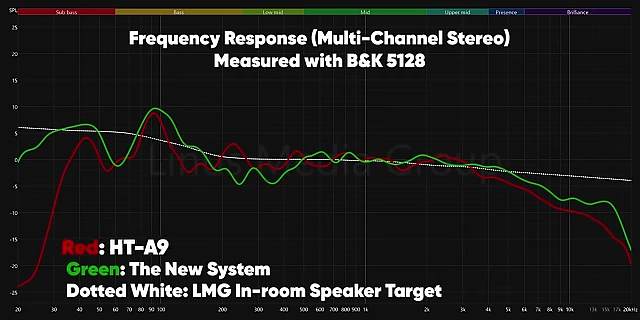
- A graph comparing the frequency response showed the new system (green line) had significantly better bass extension (reaching down to 25Hz compared to 40Hz for the HT-A9, red line).
- The new system also exhibited slightly improved treble and a frequency response curve that was closer to the target (dotted white line) across the spectrum, indicating a "really well balanced" sound.
Frequency Response graph comparing the HT-A9 (red) and the new wired system (green) against the LMG in-room speaker target (dotted white) [ 00:19:36 ]
- Final Verdict:
- While the HT-A9 offered superior sound correction and positioning when it worked, its unreliability (audio cut-outs) was a critical failure.
- The new wired system delivered enhanced clarity, dramatically better bass, and, most importantly, consistent, uninterrupted audio.
- Linus considers the switch a successful "side-grade," prioritizing reliability and overall sound quality over the HT-A9's theoretical positioning advantage, even if it meant higher cost and more installation effort. The effectiveness of the virtual rear channels in the new system was a pleasant surprise.