This video provides a complete guide for home cooks on stocking and organizing their pantry, emphasizing how it saves money, time, and reduces cooking friction. It covers essential pantry items, offers cost-saving tips, and details a four-step organization process for an efficient and enjoyable cooking space.
Speaker in front of a well-stocked and organized pantry
[
00:00:41
]
Why Every Home Cook Needs a Well-Stocked Pantry [0:54]
A well-stocked and organized pantry offers significant benefits to home cooks:
Saves Money and Time:
- Eliminates extra trips to the grocery store.
- Reduces reliance on expensive takeout or delivery.
- Encourages cooking more at home, leading to less food waste.
Reduces Cooking Friction:
- Makes cooking easier by having ingredients readily visible and accessible.
- Prevents frantic searching for items while cooking, improving the overall cooking experience.
A well-stocked pantry saves money and time and reduces cooking friction
[
00:01:00
]
The video outlines 69 unique cooking-focused pantry items, noting that the specific needs will vary by individual cooking habits. A master list with attributes like food type, cooking role, prices, and storage notes is available as a resource.
Master spreadsheet of 69 pantry items with food type, cooking roles, prices, and storage notes
[
00:00:19
]
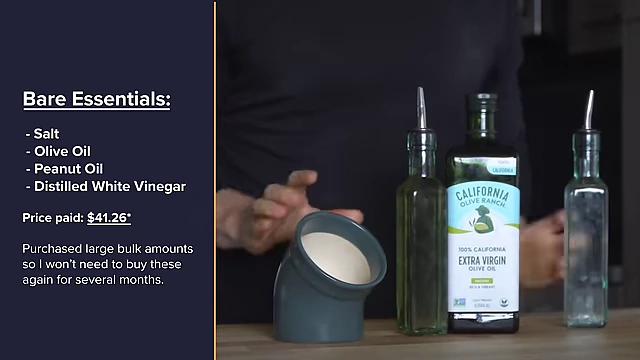
Bare Essentials: Salt, Fat, and Acid [3:01]
- Salt: Coarse Kosher salt (Morton's or Diamond Crystal) is recommended as the daily driver due to its versatility and ability to amplify flavors.
- Fats: At a minimum, two types are needed:
High smoke point oil for frying (e.g., peanut oil).
Flavoring oil for dressings and finishing (e.g., extra virgin olive oil).
Acid: Distilled white vinegar is preferred for its neutral taste, making it suitable for almost any dish and pickling without forcing a specific cuisine.
Summary of bare essentials, including salt, olive oil, peanut oil, and distilled white vinegar, with their total cost
[
00:04:08
]
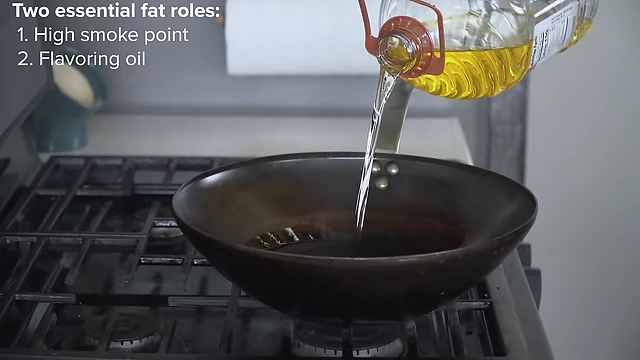
Two essential fat roles are high smoke point oil and flavoring oil
[
00:03:27
]
Distilled white vinegar is neutral in taste, making it suitable for almost any dish
[
00:03:55
]
Spices [4:14]
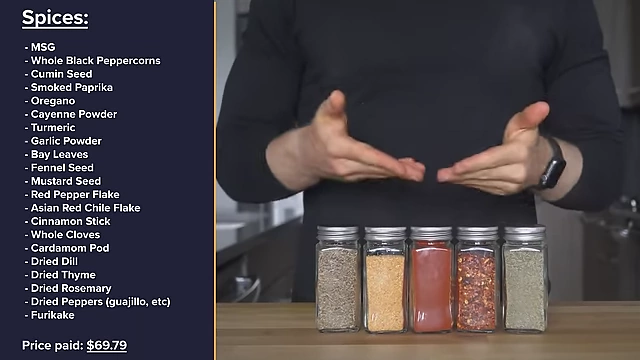
- A starter list of 5-8 spices includes whole cumin seed, coarse garlic powder, smoked paprika, red chili flake, and oregano.
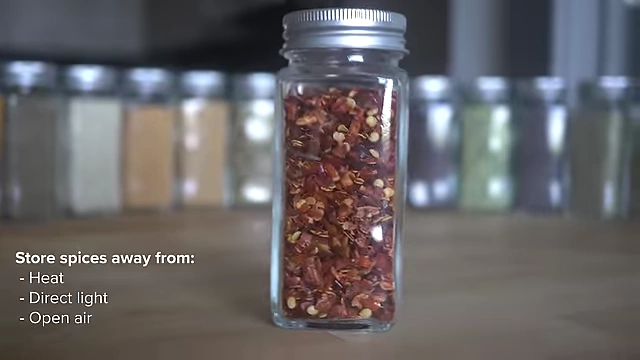
- Storage: Store spices in closed containers away from light, heat, and air to maintain potency.
A list of recommended spices for a well-stocked pantry with their total cost
[
00:04:24
]
Comparison of whole spices, which last a year or more, and ground spices, which lose aroma in 3-6 months
[
00:04:28
]
Store spices away from heat, direct light, and open air to maintain freshness
[
00:04:34
]
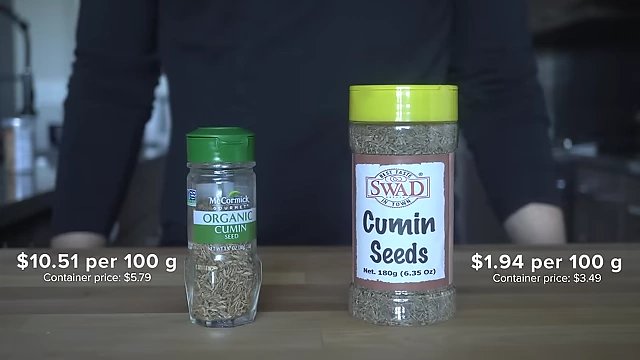
- Purchasing Tip: Ethnic grocery stores (Asian or Indian) offer significantly better deals on bulk spices compared to major supermarkets.
Price comparison for cumin seeds from a major grocery store versus an ethnic store
[
00:04:48
]
Vinegars [4:53]
- Beyond distilled white, recommended vinegars include balsamic, red wine, and black vinegar (especially for Asian/Chinese cuisines).
- Vinegars add sourness and acidity to various dishes.
A list of essential vinegars for a pantry, including distilled white, balsamic, red wine, and black, with their total cost
[
00:04:58
]
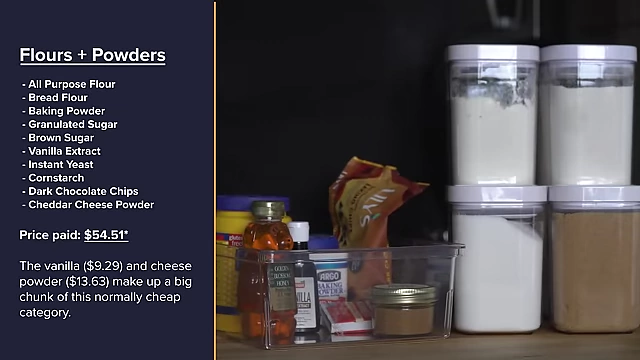
Flours + Powders [5:14]
- Primarily for baking: all-purpose flour, bread flour, granulated sugar, brown sugar, baking powder, vanilla extract, instant yeast, cornstarch, honey, and dark chocolate chips.
A list of essential flours and powders for baking, along with their total cost
[
00:05:25
]
- Pro Tips:
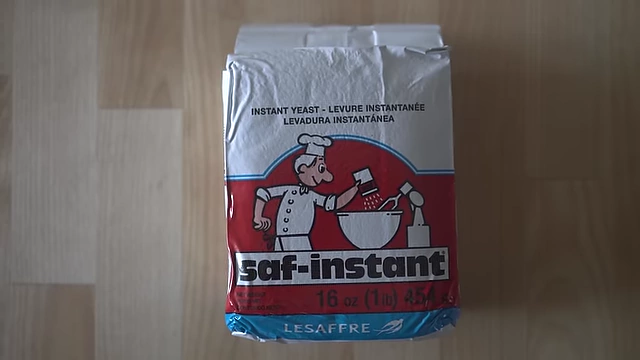
Purchase one-pound bags of instant yeast; it stores almost indefinitely in the freezer.
Cheddar cheese powder is great for popcorn or emergency cheese sauces.
A jar of Better Cheddar Cheese Powder
[
00:05:45
]
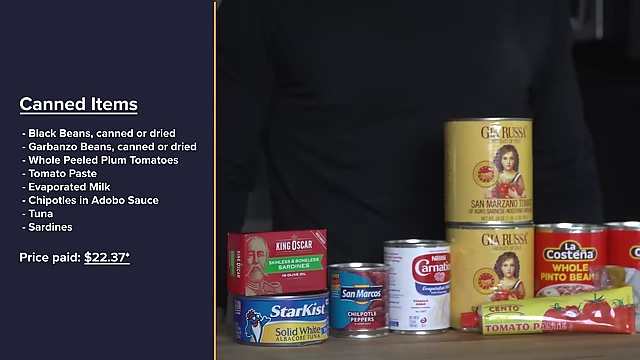
Canned Items [5:51]
- Includes canned or dried black beans and garbanzo beans.
- Whole peeled plum tomatoes are essential, with San Marzano tomatoes being a sweeter option for sauces.
- Other essentials: tube of tomato paste, evaporated milk (for quick mac and cheese), chipotles in adobo, and canned tuna/sardines for quick meals.
A collection of canned items including beans, tomatoes, tomato paste, evaporated milk, and fish, with their total cost
[
00:06:11
]
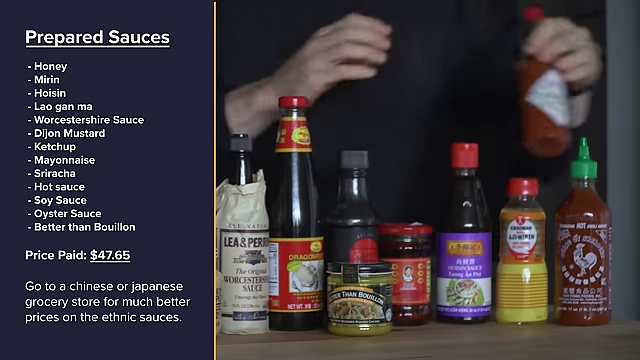
Prepared Sauces [6:17]
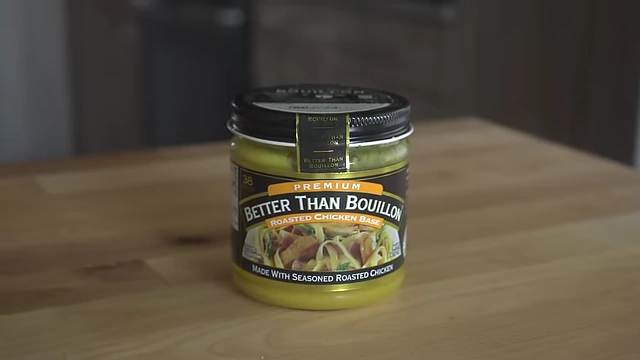
- These versatile sauces last long and expand flavor profiles: mirin, hoisin, Lao Gan Ma (chili crisp), soy sauce, oyster sauce, Worcestershire sauce, Dijon mustard, ketchup, mayonnaise, sriracha, hot sauce, and Better Than Bouillon (highly recommended for stock).
A variety of prepared sauces, including Asian and Western condiments, with their total cost
[
00:06:35
]
A jar of Better Than Bouillon roasted chicken base
[
00:06:44
]
Grains + Rice [6:46]
- Pasta: Bronze-cut dried pasta is recommended for its superior texture and sauce-holding ability.
Comparison of Teflon die pasta versus bronze die pasta, highlighting texture differences
[
00:06:57
]
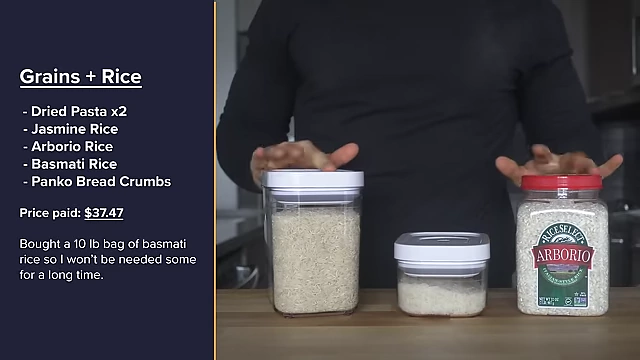
- Rice: Jasmine, basmati, and arborio rice serve different culinary purposes.
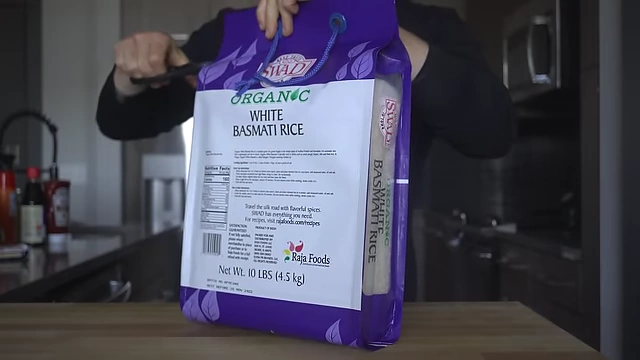
- Purchasing Tip: For frequent rice eaters, buying large bags (e.g., 10lb basmati rice for $16) from Indian grocery stores is much cheaper.
A list of essential grains and rice, including dried pasta, jasmine, arborio, and basmati rice, with their total cost
[
00:07:05
]
A large 10 lb bag of organic white basmati rice
[
00:07:12
]
- Panko bread crumbs are also useful.
Root Vegetables [7:16]
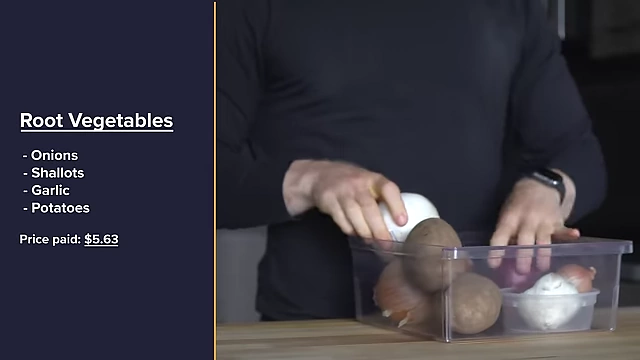
- Onions, shallots, garlic, and potatoes can be stored in the pantry at room temperature, no refrigeration needed.
A clear bin filled with various root vegetables including onions, shallots, garlic, and potatoes, with their total cost
[
00:07:24
]
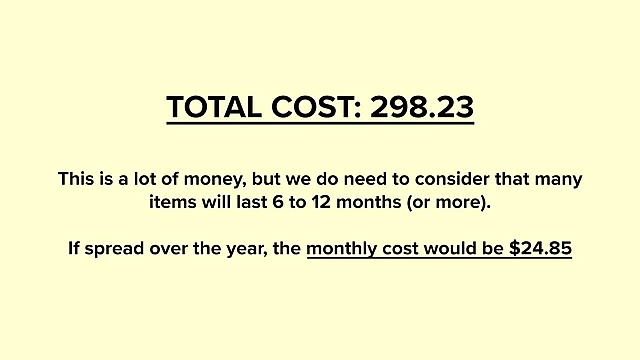
Total Cost: The presenter spent $298.23 to fully stock their pantry.
Investment Approach: This is an upfront investment. Many items last 6 to 12 months or more, making the monthly cost relatively low (estimated $24.85 if spread over a year).
The total cost to stock the pantry is $298.23, which equates to $24.85 per month spread over a year
[
00:07:35
]
Gradual Stocking: Do not buy everything at once. Prioritize items based on your cooking frequency and preferred cuisines.
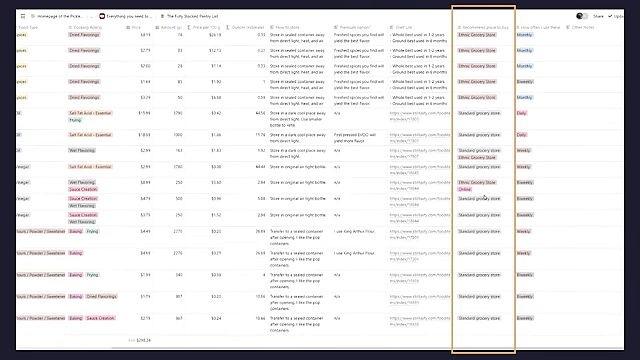
Utilize the Shopping List: The provided master list with detailed attributes helps in making informed purchasing decisions and identifying where to find the best prices (e.g., major supermarket vs. ethnic grocery store).
The shopping list indicates recommended places to buy items, such as ethnic grocery stores or standard supermarkets, to get better prices
[
00:08:27
]
Proper storage and organization are as crucial as acquiring the items.
Outline for how to store and organize the pantry in three parts
[
00:08:56
]
Benefits of Organization:
- Extends Shelf Life: Correct storage methods increase ingredient longevity.
- Prevents Duplicates: Clearly seeing items prevents accidental repurchase.
- Saves Time: Quick access to ingredients during cooking.
- Enhances Enjoyment: A well-organized pantry "sparks cooking joy" and reduces stress.
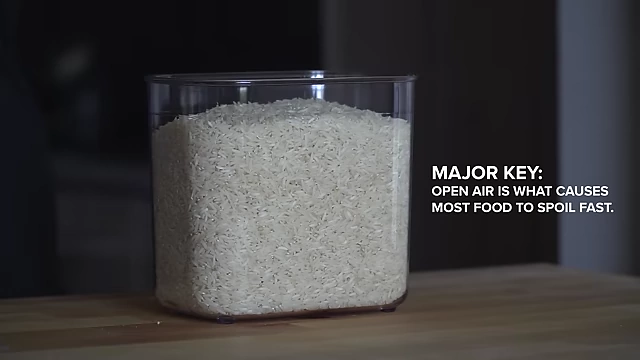
Key Storage Rule: Minimize Air Contact [9:30]
- Open air accelerates spoilage through oxidation and allows pests (like pantry moths) to enter.
Open air is the major key to what causes most food to spoil fast
[
00:09:36
]
- Transfer ingredients like flour, sugar, and rice into smaller, airtight containers.
- Utilize pop containers with tight seals for bulk items.
A pop container with a tight seal, designed for airtight storage
[
00:10:07
]
- Refill smaller, frequently used oil bottles from larger, stored containers.
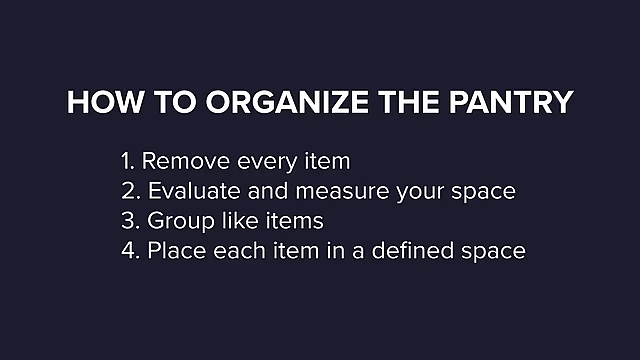
4-Step Organization Process [11:04]
1. Remove Every Item [11:04]: Start with an empty space to get a clear overview.
2. Evaluate and Measure Your Space [11:21]: Understand the dimensions and limitations of your cabinets or drawers. Adjust shelves if necessary to maximize usable space and accessibility.
Four steps to organize the pantry: remove every item, evaluate space, group items, and place items
[
00:11:05
]
An empty pantry cabinet with adjustable shelves, ready for organization
[
00:11:24
]
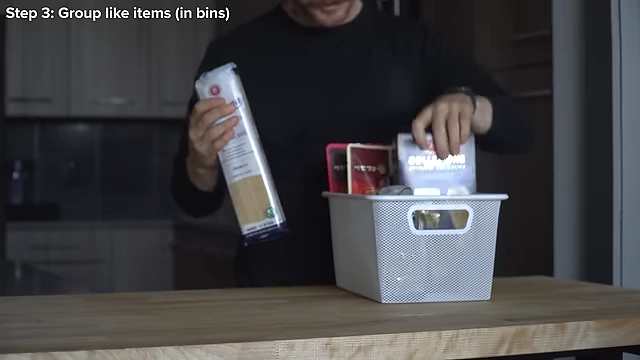
3. Group Like Items [12:06]: Use simple bins or crates to categorize and contain similar items (e.g., canned goods, sauces, baking items).
Grouping dried pasta into a white mesh bin
[
00:12:07
]
4. Place Each Item in a Defined Space [12:33]: Arrange grouped items strategically for easy visibility and access.
Example Setup:
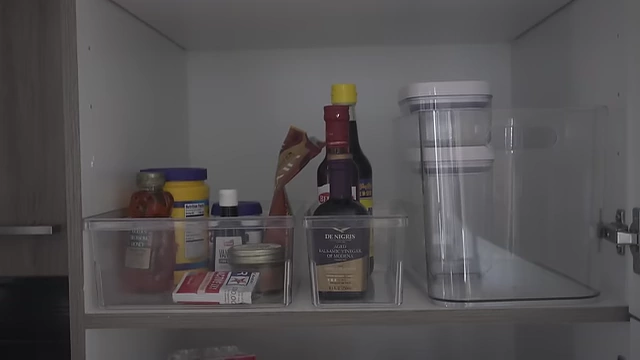
Top shelf: Flours and rice in pop containers (single row).
Middle shelf: Baking items in a clear bin, vinegars, with room for growth.
An organized pantry shelf with clear bins for baking items, vinegars, and pop containers for flour and rice
[
00:12:46
]
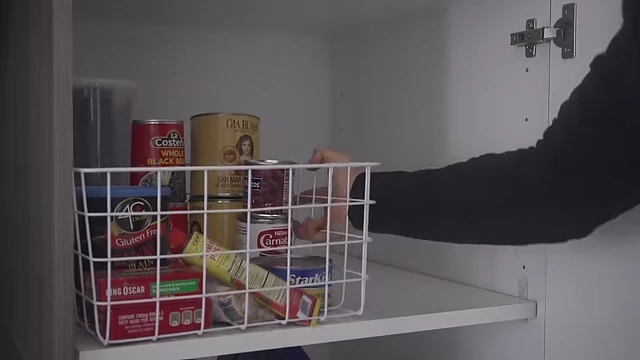
Lower shelf: Large crate for canned goods, smaller crate for prepared sauces.
A shelf with a white wire bin containing canned goods
[
00:12:13
]
Bottom section: Large crate for refill items (vinegar jug, bulk oil, large rice bags), smaller crate for dried pasta.
A pantry shelf with a large wire bin for bulk refill items and a smaller bin for dried pasta
[
00:13:00
]
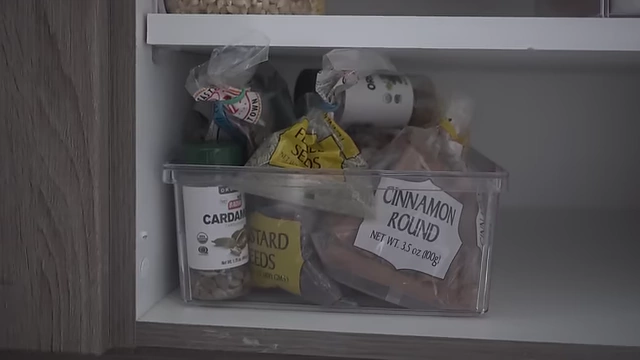
Bottom drawer: Root vegetables, with overflow spices for refilling.
A clear bin storing overflow spices for refilling bottles
[
00:13:13
]
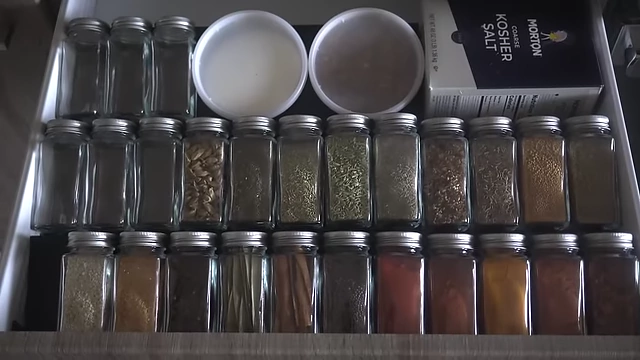
Spice drawer: Uniform spice bottles arranged for clear visualization.
An organized spice drawer with uniform bottles and a salt container
[
00:13:23
]
Stovetop area: Salt pig, pepper grinder, and oils kept nearby but away from direct heat.
Small bottles of olive oil and peanut oil stored on the kitchen counter away from heat
[
00:13:30
]