The Modern Job Market: Why Finding Employment is Difficult Despite Low Unemployment Statistics
Despite official low unemployment rates, finding a job is extremely challenging due to large-scale layoffs, companies "hoarding staff" by drastically slowing new hires, and extreme competition for available positions. The reported U3 unemployment statistics are misleading, as they exclude a significant number of "discouraged" or "underemployed" workers. The job search is further complicated and demoralized by "ghost jobs" and the prevalent use of AI in both applying and hiring processes. This environment creates a bifurcated labor market where those with jobs are stable, while those without face an increasingly difficult and competitive landscape.

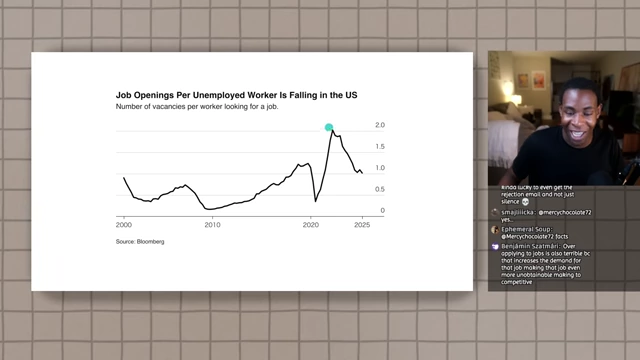

The Job Market Paradox [00:00:00]
The video addresses the paradox of a seemingly low unemployment rate coexisting with the widespread difficulty in finding jobs.
- Recent layoffs
- Major companies have announced significant job cuts or hiring freezes.

Microsoft Lays Off 6,000 Workers [ 00:00:09 ] - EY, one of the biggest finance companies, delayed the start dates for its newest batch of recruits for the third year in a row.

EY Delays Start Dates for Consulting Recruits [ 00:00:17 ] - Walmart has also fired 1500 people.
- Major companies have announced significant job cuts or hiring freezes.
- Official statistics vs. reality
- US unemployment is reported at a low 4.2%, considered full employment by economists, with job growth often surpassing expectations (e.g., 228,000 new jobs in March).
US Unemployment Rate [ 00:00:30 ] 
US Employment Growth: Change in Nonfarm Payrolls [ 00:00:47 ] - However, this does not align with the experience of job seekers, who face extreme competition.
- Case study of Dominic Joyce: Applied for over 100 jobs to get one final interview, resorting to working as an Amazon driver.

Dominic Joyce's Job Search Experience [ 00:01:15 ] - Many individuals report applying for hundreds of jobs with little to no response or frequent rejections.
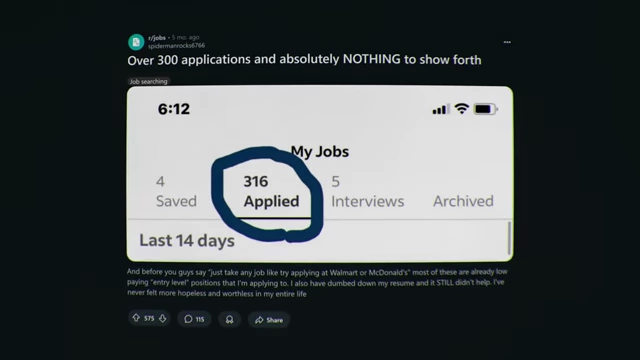
Reddit Post: Over 300 Applications and Nothing [ 00:01:51 ] 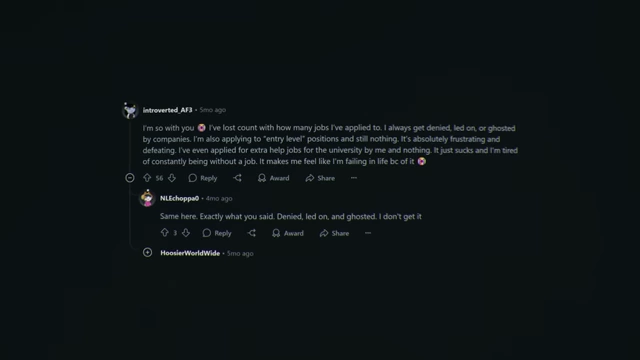
Reddit Comments: Frustration with Job Search [ 00:01:58 ]
- Case study of Dominic Joyce: Applied for over 100 jobs to get one final interview, resorting to working as an Amazon driver.
- US unemployment is reported at a low 4.2%, considered full employment by economists, with job growth often surpassing expectations (e.g., 228,000 new jobs in March).
Behind the Pandemic Hiring Boom [00:01:59]
The current situation is traced back to the pandemic era's unique job market.
- Surge in demand and hiring
- After COVID restrictions eased, consumer demand surged, leading industries, especially tech, to hire aggressively in 2021-2022.
- Companies assumed the pandemic-driven demand would be permanent.
- Low interest rates
- Historically low interest rates encouraged companies to take on debt for expansion and hiring.
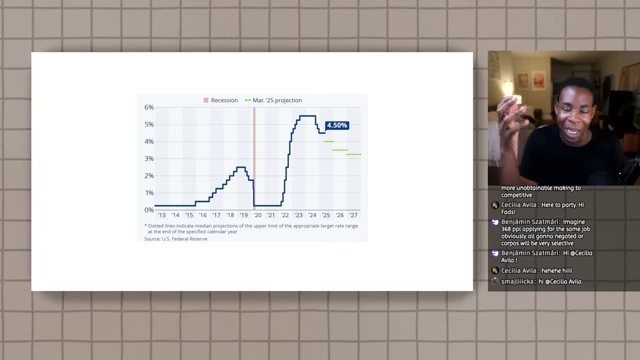
US Federal Reserve Interest Rate Projections [ 00:03:20 ]
- Historically low interest rates encouraged companies to take on debt for expansion and hiring.
- The "Great Resignation"
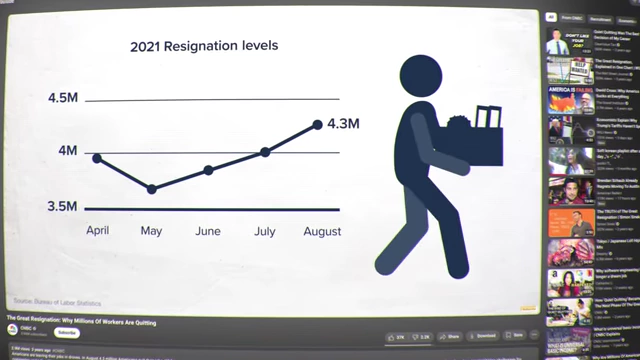
The Shift: Slowed Hiring and Increased Competition [00:03:02]
The economic landscape changed rapidly, leading to the current "low hiring" environment.
- Macroeconomic factors
- Global events like the war in Ukraine increased oil prices, slowing economic activity.
- Rising interest rates made it harder for companies to borrow for hiring.
- People returning to work reduced demand for certain tech services, ending the "infinite money tap" for tech companies.
- Company response: Hoarding staff and slow hiring
- Instead of mass layoffs (except in tech), many companies opted to drastically slow down new hiring, letting natural attrition reduce their workforce.
- This strategy is described as "hoarding staff" until economic outlooks become clearer.
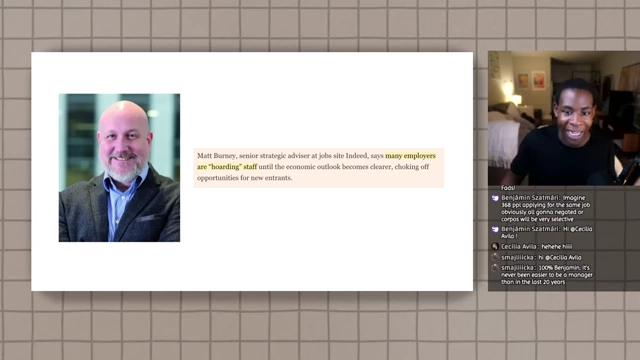
Indeed Senior Strategic Adviser Matt Burney on Hoarding Staff [ 00:04:16 ] - The monthly hiring rate in the US during Q1 2025 was the slowest in over a decade.
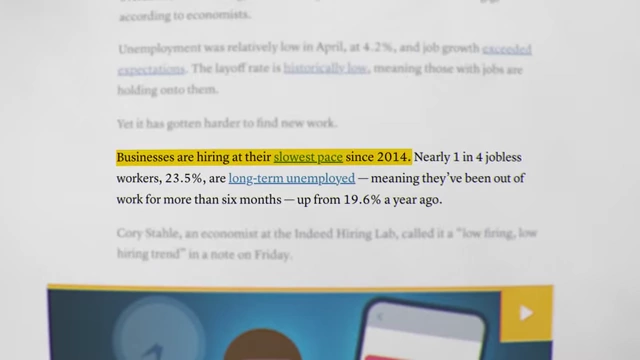
Businesses Are Hiring at Their Slowest Pace Since 2014 [ 00:04:35 ] - This has created a "freezing" labor market where people with jobs are stable, but those without are in limbo.
Comparison of Job Stability vs. Limbo [ 00:06:30 ] 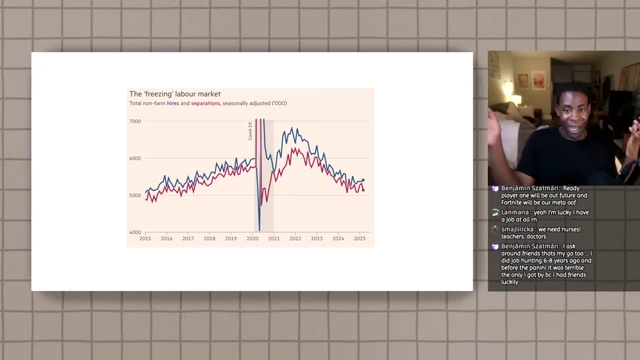
Total Non-Farm Hires and Separations [ 00:09:19 ]
- Extreme competition
- For those without jobs, the market is ultra-competitive, with an average of 140 applications per job across all graduate sectors in the UK.
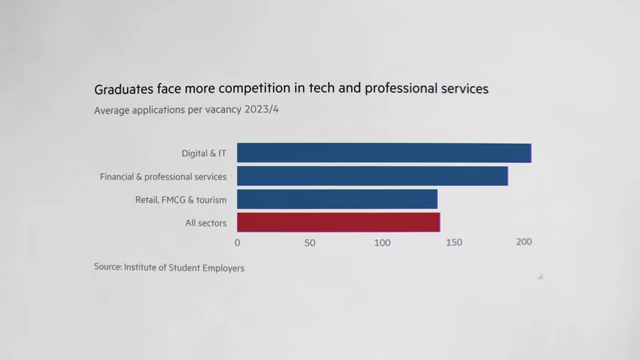
Graduates Face More Competition Across All Sectors [ 00:07:05 ]
- For those without jobs, the market is ultra-competitive, with an average of 140 applications per job across all graduate sectors in the UK.
The Demoralizing Job Search and AI's Role [00:07:42]
The process of job hunting has become demoralizing, partly due to technological shifts and increased competition.
- Lack of feedback
- Job seekers often receive no response or only automated rejections, adding to frustration.
- Use of AI in job applications
- The perceived "rigged game" of the job market has led some applicants to use AI tools (e.g., Cluely) to generate interview answers or solve programming questions, leveling the playing field against companies using AI in hiring.

Cluely: AI for Job Interviews [ 00:08:50 ]
- The perceived "rigged game" of the job market has led some applicants to use AI tools (e.g., Cluely) to generate interview answers or solve programming questions, leveling the playing field against companies using AI in hiring.
- "Ghost jobs"
- Companies sometimes advertise positions that do not genuinely exist, primarily to gauge interest, leading to a "pointless" cycle of AI-generated applications being reviewed by AI hiring managers for non-existent roles.
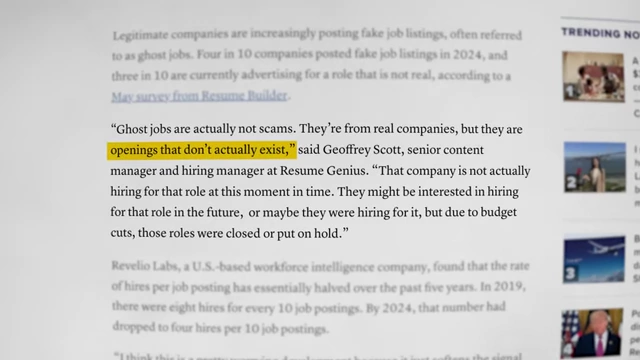
Ghost Jobs: Openings That Don't Actually Exist [ 00:08:46 ]
- Companies sometimes advertise positions that do not genuinely exist, primarily to gauge interest, leading to a "pointless" cycle of AI-generated applications being reviewed by AI hiring managers for non-existent roles.
Misleading Unemployment Statistics [00:09:42]
The official unemployment rate, U3, does not fully reflect the true state of joblessness.
- Limitations of U3 unemployment rate
- The U3 rate only counts people who are jobless and have actively sought employment in the past four weeks.
- This excludes:
- Individuals who have given up looking due to lack of jobs ("discouraged workers").
- Part-time workers seeking full-time employment ("underemployed").
- Those not looking for work in the last four weeks ("marginally attached").

Categories of Excluded Workers: Marginally Attached, Discouraged, Underemployed [ 00:11:00 ]
- Definition of "employed"
- Officially, working just 1 hour of paid work per week or 15 hours of unpaid work for a family business can count someone as employed.
- Broader measures and government incentives
- The Bureau of Labor Statistics publishes more exhaustive metrics (e.g., U6), which show a higher unemployment rate (e.g., 7.8% compared to 4.2% U3).
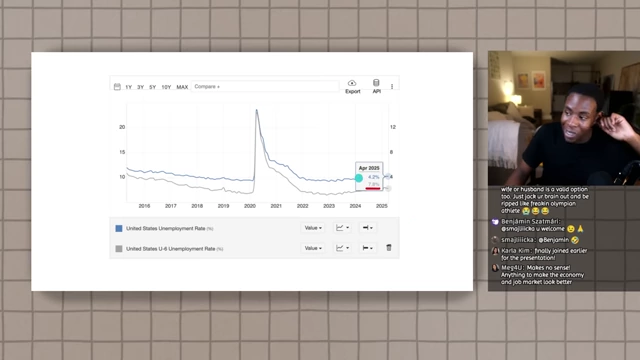
US Unemployment Rate U3 vs U6 [ 00:13:03 ] 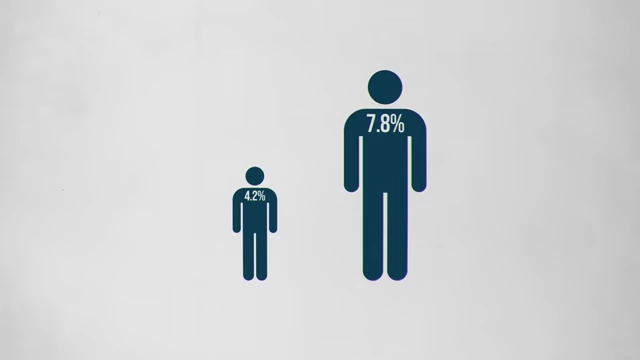
Comparison of U3 and U6 Unemployment Rates [ 00:13:14 ] - Governments typically report the U3 rate because it presents a more favorable economic picture, having little incentive to highlight higher numbers.
- China's youth jobless rate saw a dramatic improvement after changing its reporting methodology to exclude students.
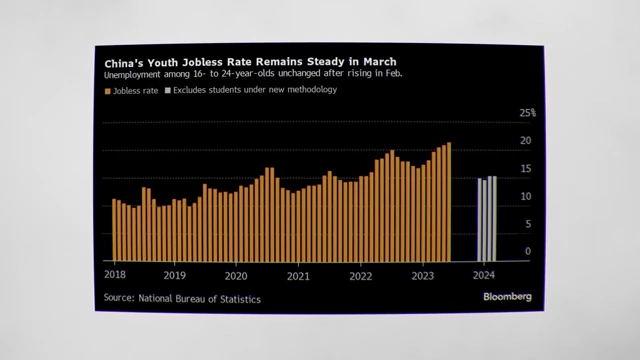
China's Youth Jobless Rate Excluding Students [ 00:13:44 ]
- The Bureau of Labor Statistics publishes more exhaustive metrics (e.g., U6), which show a higher unemployment rate (e.g., 7.8% compared to 4.2% U3).
- Declining labor force participation
- In countries like Canada and the US, the labor force participation rate (percentage of people working or actively seeking work) has been steadily declining for decades. This makes unemployment numbers appear lower as fewer people are counted as "looking for work."
- In the UK, data quality issues with the labor force survey response rate raise questions about the accuracy of reported unemployment figures.
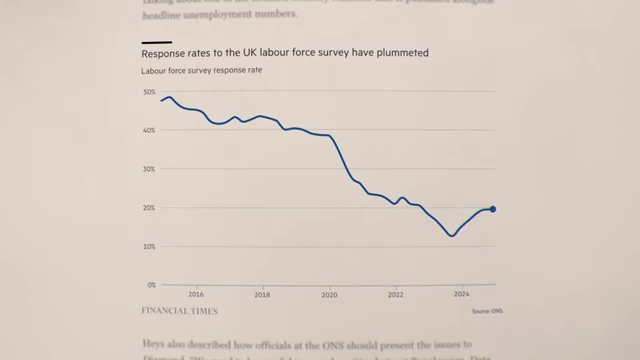
Response Rates to UK Labour Force Survey Plummeted [ 00:14:09 ]
Long-Term Implications [00:14:31]
The current labor market trends have concerning long-term consequences.
- Impact on young graduates
- Recent graduates are disproportionately affected, being twice as likely to be unemployed compared to older graduates, as entry-level positions are often the first to be cut during hiring freezes.
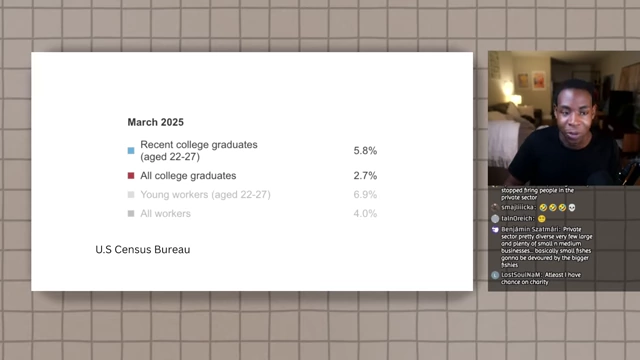
Unemployment Rate for Recent College Graduates vs. All College Graduates [ 00:07:30 ]
- Recent graduates are disproportionately affected, being twice as likely to be unemployed compared to older graduates, as entry-level positions are often the first to be cut during hiring freezes.
- Future workforce
- The lack of entry-level opportunities and potential AI replacement of junior roles raises questions about how companies will find experienced senior staff in 10-20 years.
- Broader societal impact
- Prolonged joblessness exacerbates social isolation among young people.