Comprehensive Self-Improvement Course: Strategies for Productivity, Motivation, and Resilience
This comprehensive course consolidates key self-improvement principles across 12 parts, offering practical strategies to enhance personal growth. It covers:
- Overcoming Procrastination: Acknowledging fear, establishing personal "why," removing distractions, and taking immediate, small actions.
- Stopping Overthinking and Self-Doubt: Reframing goals, practicing meditation, journaling thoughts, and embracing discomfort to foster confidence.
- Improving Focus: Preparing the environment, optimizing sleep and work times, removing electronics, and understanding realistic focus durations.
- Managing Anxiety about New Beginnings: Acknowledging fear, accepting potential failure, pursuing learning over success, and cultivating excitement.
- Mastering Consistency: Making detailed plans, setting milestones, dedicating specific time blocks, and forgiving setbacks while persisting.
- Building Self-Discipline: Using meditation, short work bursts, daily practice, and accountability partners.
- Developing Resilience: Being proactive, protecting downtime, reframing adversity, building relationships, and focusing on controllable aspects.
- Studying Without Motivation: Connecting studying to larger goals, optimizing environment, using study partners, and gamifying the learning process.
- Persisting Without Visible Results: Setting re-evaluation dates, seeing failures as learning, enjoying the process, and celebrating small victories.
- Evidence-Based Study Tips: Emphasizing active recall, spaced repetition, and interleaving over re-reading.
- Getting Out of a Rut: Acknowledging dissatisfaction, understanding dopamine's role, initiating small actions to build momentum.
- Effective Weekly Planning: Utilizing mental inventory, time blocking, and daily reflections (morning/evening) for structured productivity, always celebrating accomplishments.
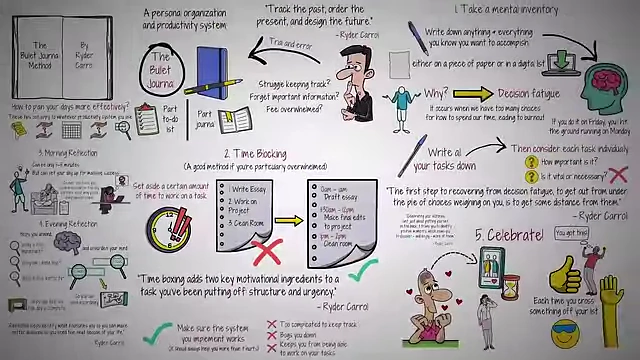
An illustrative overview of effective weekly planning strategies, showcasing the detailed visual summaries found throughout the course. [ 01:36:33 ]
Part 1: How to Avoid Procrastination [0:00:00]
Procrastination often stems from fear, particularly the fear of failure, which leads to high expectations and anxiety. To avoid these feelings, our minds seek short-term, instant gratification through distractions.
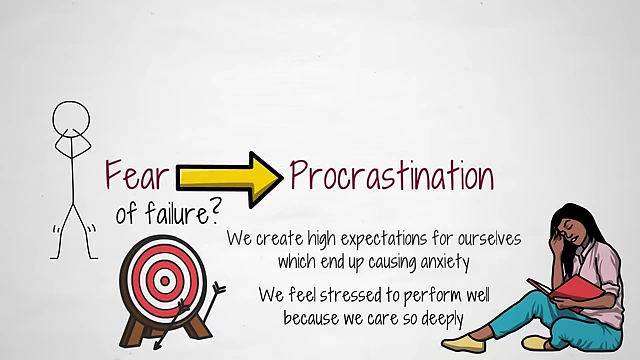
- Understanding Procrastination
- Procrastination is a product of fear, not an enjoyment of stress.
- Fear of failure, high self-expectations, and anxiety lead to delaying tasks.
- Our minds seek immediate stress relief through distractions, setting us up for more pain later.
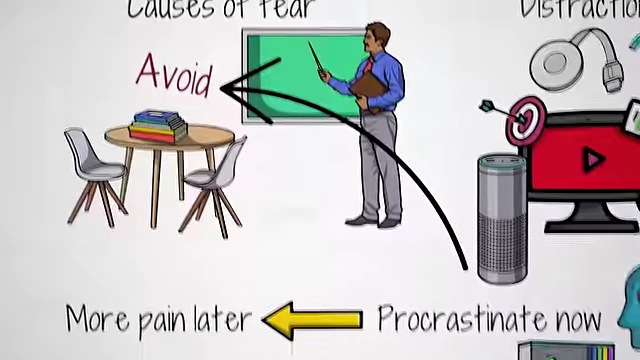
Diagram illustrating that avoiding tasks due to fear leads to seeking distractions, providing short-term relief but more pain later. [ 00:03:22 ] - "Productive procrastination" involves doing less important tasks to feel busy while avoiding crucial ones.
- Procrastination is especially detrimental for tasks without strict deadlines (e.g., fitness, career changes), preventing us from reaching full potential.
- 4 Steps to Avoid Procrastination
- Acknowledge Your Fear:
- Identify why a task causes stress (e.g., high expectations, pressure from past work).
- Confronting this fear helps recognize its hold on you.

Questions to ask yourself to acknowledge the underlying fear causing procrastination. [ 00:04:30 ]
- Establish Your "Why?":
- Define your reasons for wanting to stop procrastinating (e.g., next level of success, integrity, future free time).
- Understanding consequences of continued procrastination.
- Replace anxiety of failure with excitement about rewards or fear of negative outcomes if you don't act.

Diagram showing the shift from anxiety of failure to excitement about rewards or fear of negative outcomes. [ 00:05:20 ]
- Remove Distractions:
- Create a productive environment by eliminating all distractions.
- Example: Turn off your phone and put it away to avoid social media temptation.
- Take Immediate Action:
- Start working on the task as soon as you think about procrastinating, even if it's a small amount.
- It's easier to continue a task than to start from scratch.
- Techniques for immediate action:
- Set a 5-minute timer to work on a small part of the project.
- Gradually increase work time, eventually using the Pomodoro Method (25 minutes work, 5 minutes break).
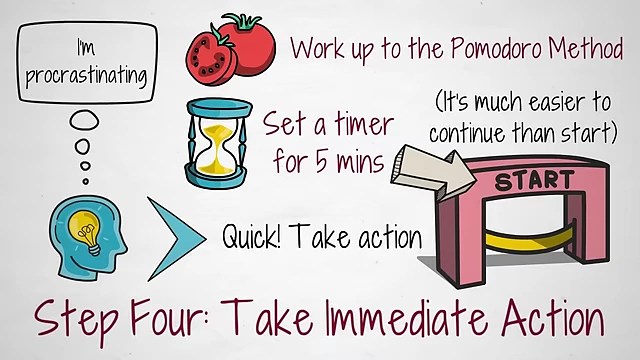
Steps to take immediate action, including setting a 5-minute timer and working up to the Pomodoro Method. [ 00:06:40 ]
- Acknowledge Your Fear:
- Conclusion: Courage Over Procrastination
- Shift from a reactive to an active state when facing tasks.
- The opposite of procrastination is courage; examining habits with determination helps overcome them.
Part 2: How to Stop Overthinking and Overcome Self-Doubt [0:07:47]
We often sabotage our own progress by overthinking and succumbing to self-doubt, much like a ship's crew mutinying despite a clear course to riches.

- The Problem with Overthinking and Self-Doubt
- Overthinking leads to self-sabotage, casting doubt, and reverting to old habits.

An illustration of a ship's crew mutinying, symbolizing self-sabotage due to overthinking and self-doubt. [ 00:07:58 ] - We avoid taking crucial actions (e.g., starting a business, dating) due to internal "mutiny."
- This prevents us from achieving happiness and fulfillment.
- Overthinking leads to self-sabotage, casting doubt, and reverting to old habits.
- 8 Ways to Overcome Self-Doubt
- Change the Way You Think About Goals:
- Avoid breaking down goals into overwhelming micro-steps (e.g., 12 steps to go to the gym).
- Think of the action as one big "chunk" (e.g., "just going to the gym") to reduce emotional overwhelm.

A quote from Tony Robbins' "Awaken the Giant Within" explaining how breaking goals into too many micro-steps can lead to overwhelm. [ 00:10:26 ] 
Visualizing a goal as one large "chunk" instead of overwhelming micro-steps to reduce overthinking. [ 00:11:00 ]
- Remember Others Are Self-Absorbed:
- Realize people are mostly focused on their own lives, reducing fear of judgment.
- This provides liberation from external expectations.
- Try Meditation:
- Clears the mind and centers emotions.
- Exhale self-doubt and anxieties, inhale energy and determination.
- Even a few minutes can produce significant results (use meditation apps).

Benefits of meditation: clearing the mind, centering emotions, and exhaling self-doubt while inhaling determination. [ 00:11:50 ]
- Journal Your Thoughts:
- Write down all buzzing thoughts to clear your head.
- Re-read and "debunk" fears by asking critical questions (e.g., "Is this fear really worth keeping me from trying something new?").

Critical questions to ask when journaling to debunk fears and anxieties. [ 00:12:39 ]
- Talk Out Loud:
- If journaling isn't preferred, discuss thoughts with a trusted person.
- Airing thoughts reduces their power and might offer new insights.

Visual representing talking with a trusted person to air thoughts and feelings, reducing their power. [ 00:13:03 ]
- Embrace Your Self-Doubt:
- Accept discomfort, embarrassment, and the possibility of failure.
- Adopt a learning mindset: failure is a part of the process and a redirection.
- Plan to "do it wrong first" to let go of perfectionism.

Strategies to embrace self-doubt, including accepting discomfort and adopting a learning mindset. [ 00:13:39 ]
- Most Importantly: Take Action Anyway!:
- Acting despite self-doubt stops overthinking, moves you toward goals, and builds momentum.
- Each action makes the next easier, reinforcing confidence.

The positive outcomes of taking action despite self-doubt, such as stopping overthinking and building momentum. [ 00:14:29 ]
- Repeat, Repeat, Repeat:
- Continuously take action until self-confidence replaces self-doubt.
- Self-doubt is a habit, but so is self-confidence; consistent action breaks the former and builds the latter.

Emphasizing the continuous repetition of actions to build self-confidence and break self-doubt habits. [ 00:14:53 ]
- Final Thought: Don't let self-doubt prevent you from trying something meaningful.
- Change the Way You Think About Goals:
Part 3: How to Stop Losing Focus [0:15:28]
Losing focus is common due to distractions like social media, and can be addressed by learning and practicing focusing techniques.

- Causes of Losing Focus
- Social media apps are designed for prolonged engagement, providing quick dopamine hits and constant notifications.

A visual progression from working intently to being distracted by a smartphone. [ 00:15:42 ] 
Diagram showing the inverse relationship between increased social media usage and decreased productivity. [ 00:15:49 ] 
Icons representing likes, comments, and notifications that provide quick dopamine hits, leading to constant distraction. [ 00:15:58 ] - Difficult or anxiety-inducing tasks make it easy to turn to social media for escape.
- Distracting environments, lack of mental preparation, and absence of effective systems contribute to focus loss.
- Social media apps are designed for prolonged engagement, providing quick dopamine hits and constant notifications.
- 11 Ways to Improve Focus
- Prepare Before You Begin:
- Mentally and environmentally prepare for intense focus.
- Write a specific to-do list the night before (e.g., "memorize 20 Spanish words" instead of "study Spanish"). This prepares your brain while you sleep.

Comparison of specific vs. general task descriptions for a to-do list, emphasizing clarity for better focus. [ 00:17:29 ]
- Get Enough Sleep:
- Poor sleep severely hinders focus.
- If sleep-deprived, take 10-minute naps between tasks to regain energy.
- Choose Your Most Energized Time:
- Identify if you're a morning or evening person for peak productivity.
- Schedule your most demanding tasks during these times.

Scheduling demanding tasks during peak energized times, whether morning or evening. [ 00:18:29 ]
- Find the Right Place to Work:
- Extroverts might thrive in coffee shops; introverts may prefer quiet home offices.
- Change your workspace periodically to stimulate your brain.
- Have a Clean Workspace:
- Remove non-relevant items to avoid task-switching temptation.
- Turn Off Distracting Electronics:
- Place phones in another room or drawer ("out of sight, out of mind").
- On computers, turn off notifications, use full-screen mode, hide bookmark bars.

The importance of turning off and removing distracting electronics like phones to improve focus. [ 00:19:39 ]
- Pre-Work Breathing Exercises & Review:
- Take a few minutes before starting to calm your mind and review your to-do list.
- Visualize task completion to boost motivation and transition to focus.
- Healthy Snacks and Drinks:
- Avoid reliance on caffeine or sugary foods; nourish yourself with a healthy diet.

Comparison of healthy snacks and water versus caffeine and sugary foods for sustained focus. [ 00:20:49 ]
- Avoid reliance on caffeine or sugary foods; nourish yourself with a healthy diet.
- Calming Background Sounds:
- Classical music, nature sounds, or ambient noise can aid focus, memory, and performance.
- Realistic Expectations for Focus Time:
- Intense focus is exhausting; 3-4 hours of productive work per day is typical, not 8 hours straight.
- Take regular "brain breaks" and move around to prevent burnout.

Scheduling productive work hours on a calendar, showing that 3-4 hours of intense focus per day is realistic. [ 00:21:42 ] 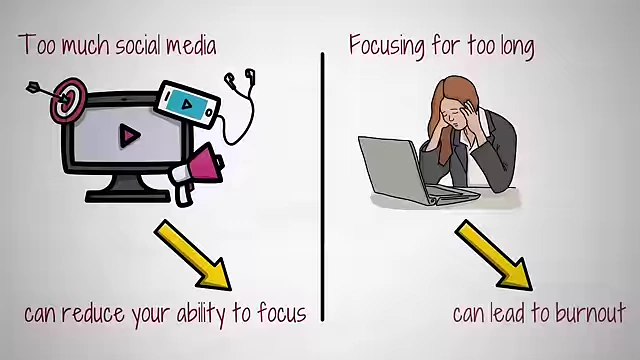
Contrasting the effects of excessive social media use (reduced focus) with prolonged focusing (burnout). [ 00:22:49 ]
- Conclusion: Consistent practice of these techniques will build focusing capacity, but remember to prioritize breaks and health to avoid burnout.
- Prepare Before You Begin:
Part 4: How to Stop Feeling Anxious About Starting Something New [0:23:28]
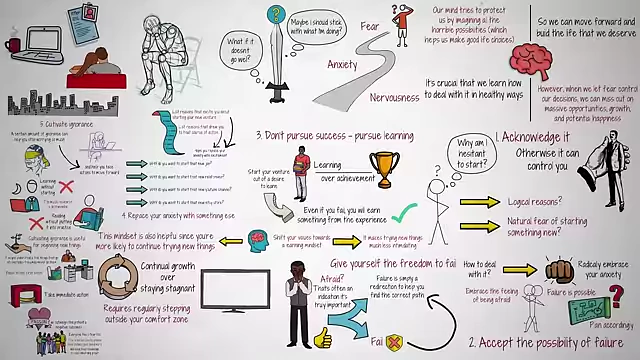
Anxiety about new beginnings is a universal human experience, often a "double-edged sword" of fearing both failure in the new and losing out on the familiar. Overcoming this requires courage and strategic mindset shifts.
- Understanding Anxiety About New Beginnings
- Fear, anxiety, and nervousness are fundamental aspects of life, especially when facing new paths.
- Our minds' protective instinct imagines worst-case scenarios, which can hinder growth and opportunities if fear controls decisions.
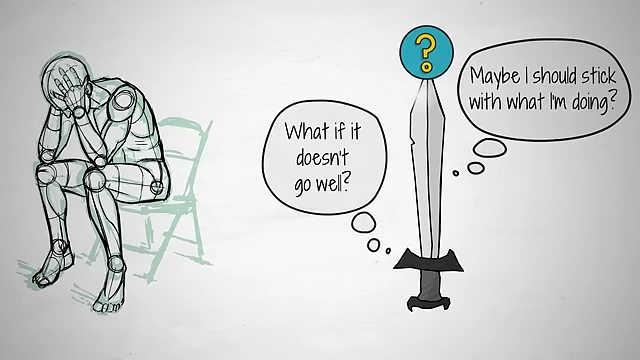
The "double-edged sword" of anxiety, representing the fear of a new venture failing versus the fear of giving up current stability. [ 00:23:59 ] 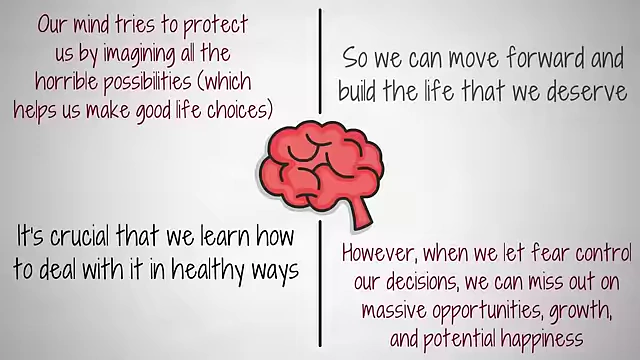
Illustration of the mind's protective instinct imagining worst-case scenarios, potentially hindering growth and opportunities. [ 00:24:48 ] - The dilemma: anxiety about a new venture failing vs. fear of giving up current stability.
- 5 Ways to Deal with Anxiety
- Acknowledge It:
- Reflect on whether your hesitation is based on logical reasons or simply the natural fear of the unknown.
- Unacknowledged fear easily takes control.
- Accept the Possibility of Failure:
- Embrace discomfort, embarrassment, and accept that failure is a possibility.
- Plan on doing it "wrong first" to release the pressure of perfection.
- View failure as a redirection, not a reflection of self-worth.
- Being afraid often signals the importance of what you're trying to do.
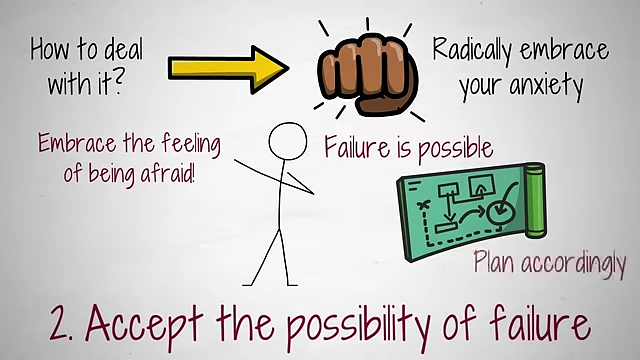
Strategies for dealing with anxiety by embracing discomfort, accepting failure, and planning for imperfections. [ 00:25:48 ]
- Don’t Pursue Success – Pursue Learning:
- Orient your life around learning rather than achievement.
- If your goal is to learn, then any outcome (success or failure) provides valuable experience.
- This mindset reduces intimidation and fosters continual growth by regularly stepping outside your comfort zone.
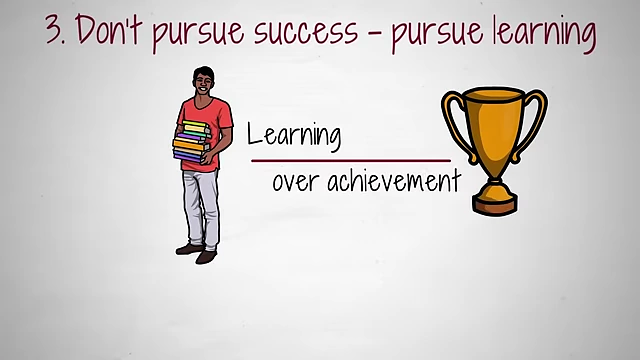
Prioritizing learning over achievement to reduce intimidation and foster continuous growth. [ 00:26:48 ]
- Replace Your Anxiety with Excitement:
- Identify and list all the reasons that excite you about starting your new venture.
- Focusing on positive potential outcomes shifts your emotional state from anxiety to excitement.

Creating a list of exciting reasons for a new venture to replace anxiety with positive emotions. [ 00:28:08 ]
- Cultivate Ignorance:
- Avoid "too much research" as it can be a form of procrastination and lead to overwhelm.

Visual differentiating between learning through excessive research without action and the need to apply knowledge. [ 00:28:48 ] - Many large tasks seem impossible if you know every step upfront (e.g., filmmaking, starting a business).
- Focus only on the immediate first steps to reduce feelings of being overwhelmed.
- Avoid "too much research" as it can be a form of procrastination and lead to overwhelm.
- Acknowledge It:
- Take Action Anyway!
- When you're passionate, your drive will outweigh potential negative outcomes; not starting is the worst scenario.
The importance of taking immediate action, as passion will outweigh potential negative outcomes. [ 00:29:58 ] - Everyone experiences fear and failure; successful people simply persist more.
- Just do it scared.
- When you're passionate, your drive will outweigh potential negative outcomes; not starting is the worst scenario.
Part 5: How to Master Consistency to Achieve Your Goals [0:30:50]
Consistency is paramount for achieving goals, much like a diligent student who completes all homework assignments regardless of immediate talent. It requires viewing goals as mandatory and sustained effort over time.

- The Power of Consistency
- Consistent effort, like completing 100% of homework, leads to greater success regardless of innate ability.
- To achieve goals, consistency must be mastered by treating goals as mandatory, not optional.
- 8 Ways to Master Consistency
- Make a Plan:
- Create a detailed timeline with start dates, end dates, and specific actions.
- Example: For weight loss, define exercise routine and nutrition plan.

Comparing a teacher's lesson plan to a personal goal plan with a timeline, start, end, and specific actions. [ 00:32:38 ]
- Create Milestones:
- Break down large goals into smaller, achievable milestones.
- Celebrate each milestone to feel progress and maintain momentum.
- Example: Tracking savings in increments towards a larger financial goal.
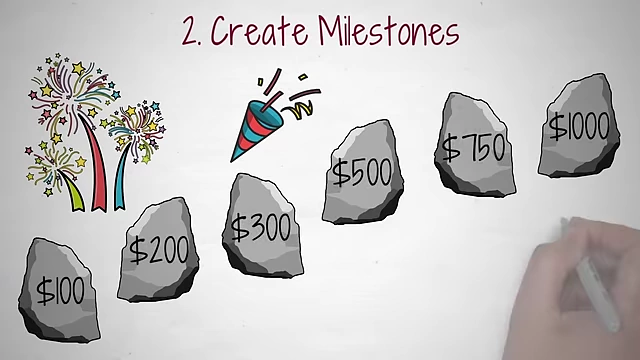
Breaking down large goals into smaller, celebrated milestones to maintain momentum. [ 00:33:08 ]
- Actually Make Time for Your Goals:
- Block out dedicated, non-negotiable time slots for working on your goals daily.
- Example: 8 AM to 10 AM is only for painting if that’s your goal.

Dedicating non-negotiable time slots for working on goals, like "8 AM to 10 AM is *only* for painting." [ 00:33:38 ]
- Only Worry About the Present Moment:
- Avoid becoming overwhelmed by focusing too much on the future.
- Concentrate on what actions you can take right now to be consistent.

Emphasizing focusing on present actions to maintain consistency rather than being overwhelmed by future thoughts. [ 00:34:18 ]
- Stop Negotiating with Yourself:
- Recognize internal arguments to avoid work (e.g., "I'll do half my workout").
- Treat your commitments as mandatory and push through negotiations.
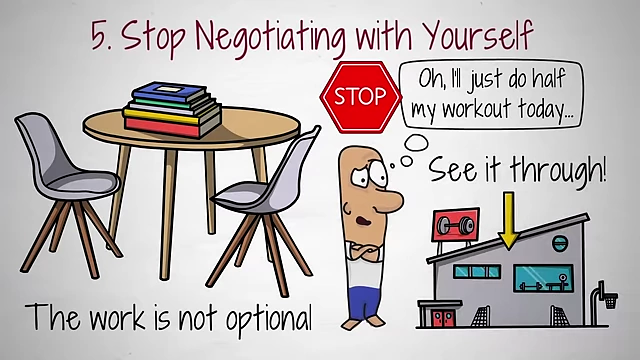
Visual representing internal negotiation to avoid tasks and the imperative to stop and commit to goals. [ 00:34:58 ]
- Revisit Your Goals Often:
- Keep your goals and their underlying "why" (motivations) fresh in your mind.
- Use journaling, sticky notes, or alarms.
- Visualize the feelings of accomplishing your goal to maintain emotional drive.

Methods to frequently revisit goals, such as journaling, sticky notes, and alarms. [ 00:35:18 ]
- Forgive Your Failures (And then Keep Going):
- Mistakes are inevitable; grant yourself grace instead of self-demoralizing.
- Learn from setbacks by asking "What happened? How can I prevent it next time?".
- The most crucial step is to keep going despite failures. Persistence outweighs perfection.

Strategies for forgiving failures, learning from setbacks, and persisting despite mistakes. [ 00:36:57 ]
- Do It Anyway:
- Cultivate inner resolve to push through challenges and lack of motivation.
- Force yourself to do the work even when you dread it; motivation often follows action.
- Example: Writing, practicing an instrument, lifting weights.

Cultivating inner resolve to push through lack of motivation and "do it anyway." [ 00:37:57 ]
- Make a Plan:
- Conclusion: The Stone Mason Analogy
- Consistent small efforts, like a stone mason hitting a boulder, eventually lead to significant breakthroughs.
- Results may not be immediately visible, but persistent effort, coupled with learning and enjoyment of the journey, will eventually pay off.
Part 6: How to Build Self-Discipline [0:39:02]
Self-discipline is a challenging but essential component of success, enabling us to persist towards goals even when initial excitement fades. It's built through consistent, small acts of courage.

- The Importance of Self-Discipline
- Self-discipline is often difficult and painful, as our brains naturally try to avoid it.
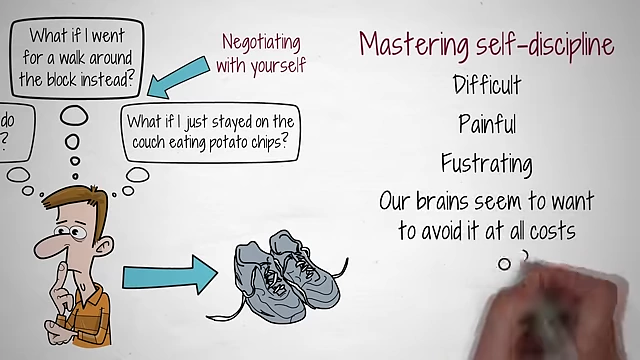
Describing self-discipline as difficult, painful, and frustrating, often avoided by the brain. [ 00:40:05 ] - However, it is the fundamental key to achieving most goals, both big and small.
- Like sculpting a marble statue, big achievements require thousands of small, consistent efforts over time.
- Self-discipline takes over when initial excitement and motivation wane, ensuring continued progress.

The analogy of sculpting Michelangelo's David to illustrate how self-discipline enables consistent small efforts when initial excitement wanes. [ 00:41:57 ]
- Self-discipline is often difficult and painful, as our brains naturally try to avoid it.
- 7 Tricks and Practices for Building Self-Discipline
- Meditation:
- Clears the mind, focuses energy, and calms emotions.
- Practice for as little as 5 minutes daily (using apps can help).
- Helps build focus and self-discipline, especially when feeling overwhelmed.

Meditation helps clear the mind, focus energy, and calm emotions, aiding in building self-discipline. [ 00:42:37 ]
- Just Work for 15 Minutes:
- Overcome feelings of overwhelm by committing to work on a task for just 15 minutes.
- This reduces the mental barrier to starting; whatever gets done in that time is a win.
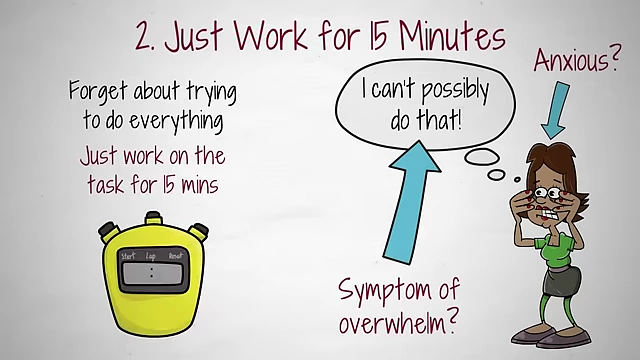
Overcoming overwhelm by committing to work on a task for just 15 minutes. [ 00:43:17 ]
- Do It Every Day!:
- Commit to working on a task for a short period (e.g., 15 minutes) every single day.
- This removes guesswork and internal negotiation, making the action non-optional.
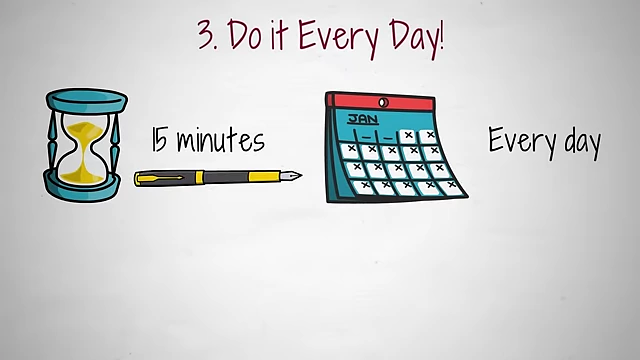
Committing to daily work on a task (e.g., 15 minutes) to remove guesswork and internal negotiation. [ 00:43:37 ]
- Do the Very First Thing:
- Break down overwhelming tasks into their absolute smallest first step.
- Focus solely on that initial micro-action (e.g., turning on your computer, opening a browser).
- This builds momentum and reduces hesitation.

Breaking down overwhelming tasks into the smallest first step, like turning on a computer for website building. [ 00:44:37 ]
- Countdown From 10:
- When feeling unmotivated, mentally count down from 10.
- Commit to taking immediate action, no matter how small, once you reach "1." This psychological trick aids initiation.
- Make Really Good Friends (Accountability Buddies):
- Surround yourself with friends who will hold you accountable.
- Ideally, find friends with similar goals to schedule work together and introduce healthy competition.
- External accountability increases the likelihood of adherence.

The benefit of having accountability buddies, especially those with similar goals, to foster healthy competition. [ 00:45:37 ]
- Have a Consistent Life:
- Maintain regular routines (sleep schedule, meal times, engaging activities).
- Consistency in daily life helps stabilize emotions, providing the energy and motivation needed for self-discipline.
- Avoid dramatic mood swings that can jeopardize discipline.

Maintaining consistent daily routines (sleep, meals, engaging activities) to stabilize emotions and support self-discipline. [ 00:46:17 ]
- Meditation:
- Conclusion: A Lifelong Journey
- Building self-discipline is a long-term process, requiring time and consistent effort.

Visualizing self-discipline as a lifelong journey built through consistent, small choices and effort. [ 00:47:13 ] - It's about making small, courageous daily choices that accumulate into significant progress.
- Self-discipline is the foundation for building careers, health, and dreams, especially when motivation is lacking.
- Building self-discipline is a long-term process, requiring time and consistent effort.
Part 7: How to Build & Develop Resilience [0:47:39]
Life inevitably brings hardships, both big and small. Resilience is the crucial ability to recover from these challenges, showing grit and determination to move forward. It is not an innate trait but a skill that must be built and developed over time through conscious effort.
- Defining Resilience
- Resilience is the capacity to bounce back and progress after experiencing tragedy or challenges.
- It embodies grit and determination, a refusal to quit, and the belief that you will ultimately be okay.
- This skill is not inborn; it needs to be cultivated through mindset shifts, practice, and healthy habits.

Resilience is a skill developed through mindset shifts, practice, and healthy habits. [ 00:48:56 ]
- 10 Ways to Build Your Resilience
- Be Proactive:
- Address problems directly and immediately rather than allowing them to worsen.
- Focus on taking action to minimize damage or fix issues, shifting away from negative thought spirals.

Being proactive by facing problems head-on and focusing on immediate action rather than negative thoughts. [ 00:49:36 ]
- Protect Your Downtime:
- Ensure adequate rest and recovery to have the energy needed to confront problems effectively.
- Dedicate daily time for self-reflection, meditation, or self-care.

The importance of protecting downtime for rest and self-care to have energy for confronting problems. [ 00:50:16 ]
- Change Your Mindset About Adversity:
- Reframe challenges as opportunities for growth instead of problems.
- Ask "What can I learn from this?" rather than "Why is this happening to me?" to engage productive thinking.

Reframing challenges as opportunities for growth by asking "What can I learn from this?" instead of "Why is this happening to me?". [ 00:50:56 ]
- Build Relationships:
- Develop strong, healthy relationships with trusted friends and family for emotional support and encouragement.
- Invest time in these connections; they become invaluable during difficult times.

Developing strong relationships with trusted friends and family for emotional support during difficult times. [ 00:51:26 ]
- Focus on the Present:
- Practice mindful awareness, redirecting thoughts from past mistakes or future worries to the "here and now."
- Control what you can in the present moment, as past and future are beyond your control.
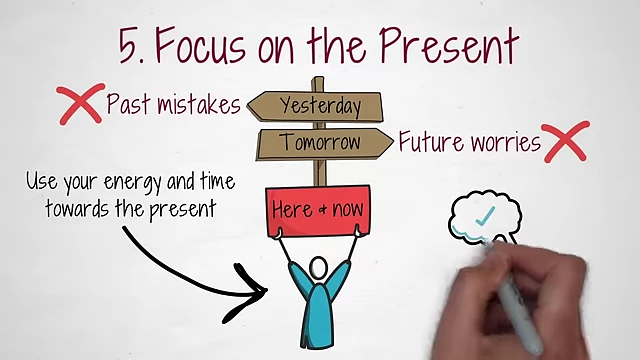
Practicing mindful awareness by focusing on the "here and now," redirecting thoughts from past mistakes or future worries. [ 00:52:06 ]
- Know That Life Isn’t Fair:
- Accept that hardship is a universal human experience; you are not alone in your struggles.
- This acceptance frees you from dwelling on unfairness and allows you to focus on actionable steps.

Accepting that life isn't fair and that hardship is universal, allowing focus on controllable aspects. [ 00:53:06 ]
- Stay Flexible:
- Understand that resilience involves adaptability and creativity, not rigid steadfastness.
- Be prepared to "pivot" and find alternative paths to your goals when faced with obstacles.

Resilience involves flexibility and creativity, being prepared to "pivot" and find alternative paths to goals. [ 00:53:56 ]
- Focus on What You Can Change:
- Recognize your personal power to influence your circumstances, rather than blaming external factors.
- Adopt a proactive mindset to rise to challenges, shedding a defeatist attitude.

Contrasting blaming the environment with focusing on personal power to influence circumstances and rise to challenges. [ 00:54:36 ]
- Be Grateful:
- Counteract negativity, a major killer of resilience, by practicing gratitude daily.
- List three things you are grateful for each day to shift your attention to positive aspects of life.

Practicing daily gratitude to counteract negativity and shift attention to positive aspects of life. [ 00:55:16 ]
- Practice Resilience In the Wild:
- Deliberately seek out challenges to build your capacity for resilience.
- Examples: 30-day challenges, applying for many jobs (and facing rejection), taking cold showers.
- Repeatedly putting yourself out there teaches you to fear failure less.

Seeking out challenges like 30-day challenges or cold showers to build capacity for resilience. [ 00:55:46 ]
- Be Proactive:
- Conclusion: An Invaluable Skill
- Resilience is one of life's most important skills, allowing us to navigate adversity, frustration, and heartbreak.
- Being resilient means spending less time affected by losses and more time appreciating life's joys.
Part 8: How to Make Yourself Study When You Don't Have Any Motivation [0:56:39]
Lack of motivation for studying is a common frustration, often stemming from overwhelming tasks. However, studying can be made stress-free, structured, and even enjoyable through various strategies.

- The Challenge of Studying Without Motivation
- Exams loom, but motivation to study is absent, making the task feel overwhelming, impossible, or never-ending.
- The amorphous nature of "studying" can lead to panic, fear, and shutdown.
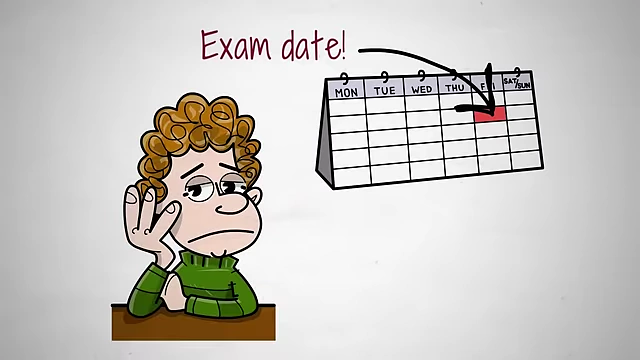
Visualizing the frustration of an approaching exam date coupled with a complete lack of motivation to study. [ 00:56:46 ]
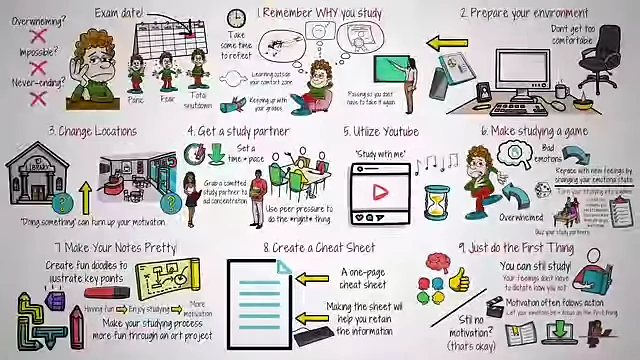
- 9 Strategies to Motivate Yourself to Study
- Remember WHY You Study:
- Before starting, reflect on your core reasons: career goals, maintaining GPA, passing a specific class, or simply learning something new.
- Even for uninteresting subjects, find a "why" to strengthen emotional resolve.
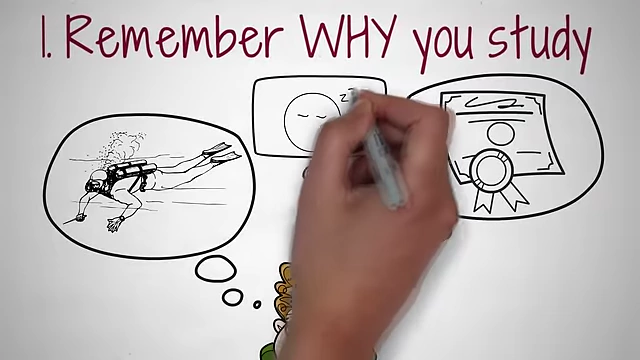
Reflecting on core reasons for studying, such as career goals or passing a specific class. [ 00:57:46 ] 
Diverse reasons for studying, including maintaining grades, passing classes, and learning new things outside one's comfort zone. [ 00:58:20 ]
- Prepare Your Environment:
- Optimize your workspace for focus: clean and tidy desk, calming ambiance (candle, soft music/ambient noise).
- Remove all distractions (cell phones, clutter).
- Ensure a posture that encourages work (e.g., sitting upright at a desk).
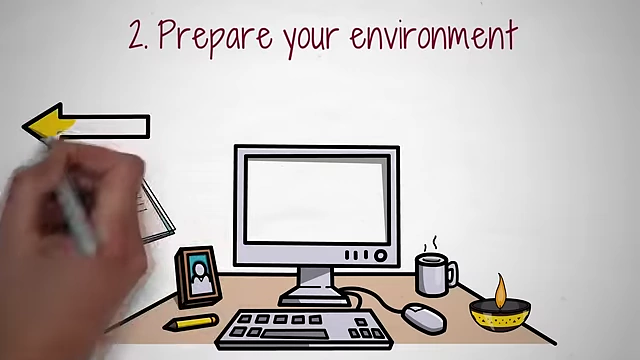
Optimizing a study environment by cleaning the desk, using calming ambient noise, and removing distractions. [ 00:59:06 ]
- Change Locations:
- If your usual spot feels stale, move to a new environment like a library, coffee shop, or even a different room at home.
- A new setting can refresh your brain and boost motivation.
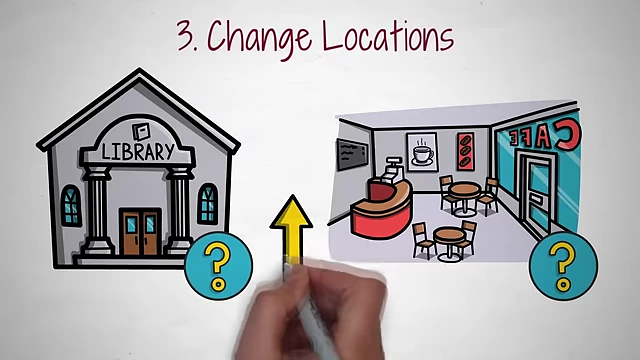
Changing study locations, such as a library or coffee shop, to refresh the brain and boost motivation. [ 00:59:46 ]
- Get a Study Partner:
- Leverage peer pressure by studying with a partner committed to working.
- Schedule specific times and places to meet for accountability.

Leveraging peer pressure by studying with a committed partner for accountability. [ 01:00:26 ]
- Utilize YouTube "Study with Me" Videos:
- These videos simulate studying with others, provide ambient sounds/music, and often include timers.
- A great option when an in-person partner isn't available.
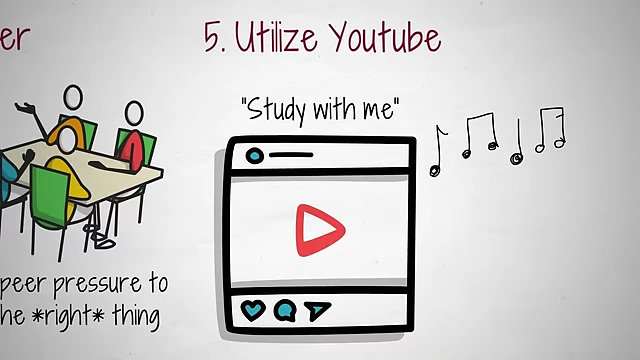
Utilizing "study with me" YouTube videos to simulate companionship, provide ambient sounds, and aid focus with timers. [ 01:00:55 ]
- Make Studying a Game:
- Replace feelings of overwhelm with engagement by gamifying your study process.
- Focus on winning the "game" rather than stressing about the end result.
- Ideas: Quiz study partners, use flashcards with points, or check off concepts as you master them.
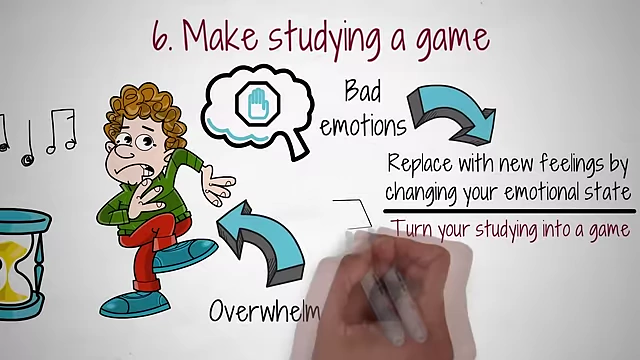
Replacing negative feelings of overwhelm with engagement by turning studying into a game. [ 01:01:35 ] 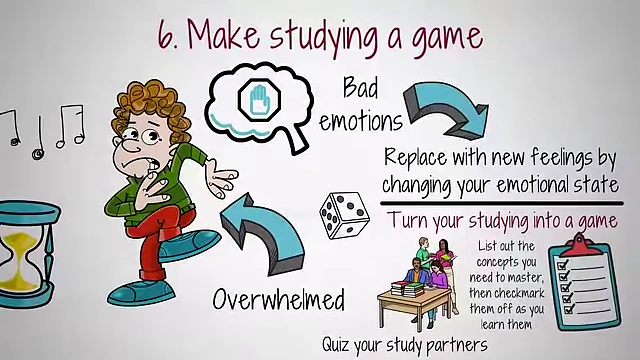
Gamifying studying by quizzing partners, using flashcards with points, or checking off mastered concepts. [ 01:02:21 ]
- Make Your Notes Pretty!:
- Turn note-taking into an art project with doodles, interesting designs, fonts, and colors.
- Enjoying the process itself increases motivation. No need for "Pinterest-worthy" perfection.
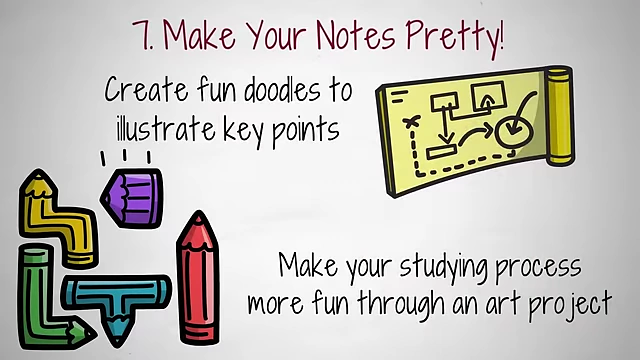
Turning note-taking into an art project with doodles, designs, and colors to increase enjoyment and motivation. [ 01:02:45 ]
- Create a Cheat Sheet:
- Challenge yourself to condense all relevant information onto a single page.
- The act of creating the cheat sheet itself enhances retention, making it a powerful learning tool even if not used during the exam.

Creating a one-page cheat sheet as a challenge to condense information, aiding retention. [ 01:03:15 ]
- Just Do the First Thing:
- When motivation is completely absent, acknowledge it, accept it, and then take the smallest possible initial action.
- Example: Open a book, turn on a laptop, take out a pen.
- Motivation often follows action; getting started can surprisingly trigger further drive.
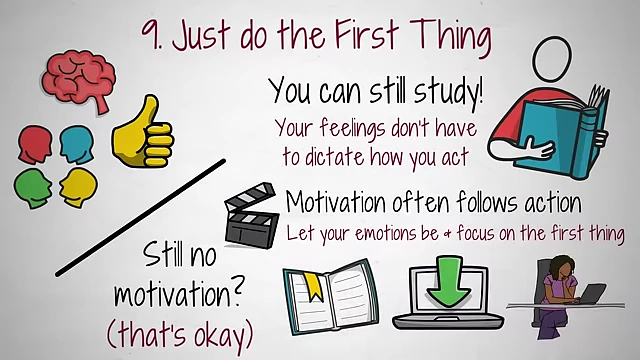
Emphasizing that motivation often follows action, encouraging taking the smallest initial step to start studying. [ 01:04:45 ]
- Remember WHY You Study:
- Evidence-Based Study Tips (from "Make It Stick")
- Active Recall: Practice retrieving information from memory (e.g., practice tests, flashcards) to strengthen neural pathways.
- Spaced Repetition: Distribute studying over time instead of cramming, leading to better mastery and longer retention.
- Interleaving: Mix different topics during study sessions, which improves performance on final tests despite potentially harder initial learning.
- Embrace Difficulties:
- Learning is more robust and lasts longer when it's harder and requires more effort.
- A positive attitude, even when struggling with flashcards or quizzes, is key to maintaining study habits and achieving success.
Part 9: How to Keep Going (Even When You Don’t See Any Results) [1:05:02]
It's common to work diligently towards a goal and see no immediate results, leading to frustration and self-doubt. However, much like an iceberg, significant progress can be happening below the surface. Sustained effort and strategic mindset shifts are crucial to persist until results emerge.
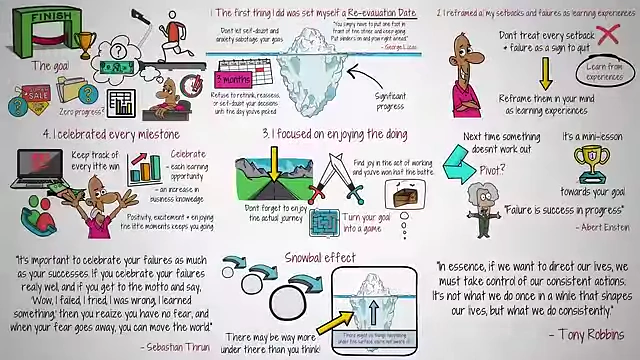
- The "Iceberg" of Progress
- Goals often require prolonged effort before visible results appear; most progress occurs "below the surface."
- Self-doubt and anxiety can derail efforts, making it seem like no progress is being made.
- The experience of freelancing without immediate clients illustrates this struggle.
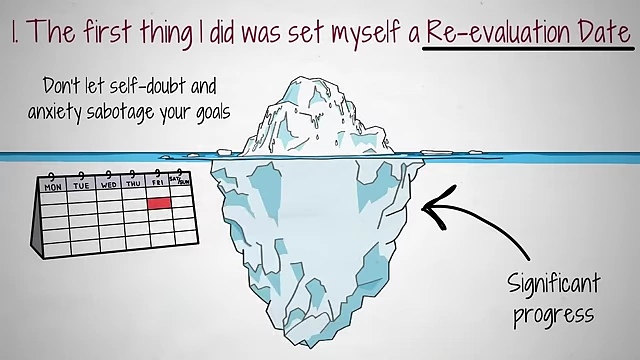
The "iceberg" analogy illustrating that significant progress often occurs unseen below the surface, even without immediate visible results. [ 01:07:05 ]
- 4 Key Strategies to Keep Going Without Visible Results
- Set a Re-evaluation Date:
- Choose a specific future date to reassess your progress, refusing to self-doubt until then.
- This provides a clear timeframe for focused effort without premature quitting.
- As George Lucas said, "Put blinders on and plow right ahead."
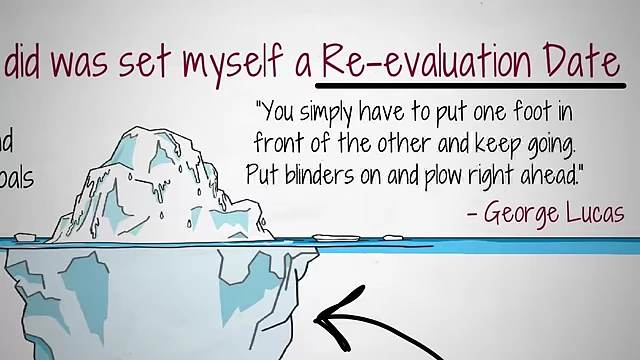
George Lucas quote emphasizing persistence: "You simply have to put one foot in front of the other and keep going. Put blinders on and plow right ahead." [ 01:07:35 ]
- Reframe Setbacks as Learning Experiences:
- View failures and difficulties not as reasons to quit, but as valuable mini-lessons or indicators to pivot.
- This lessens the personal impact of failure and makes the journey feel more like a solvable game or challenge.
- Albert Einstein's perspective: "Failure is success in progress."
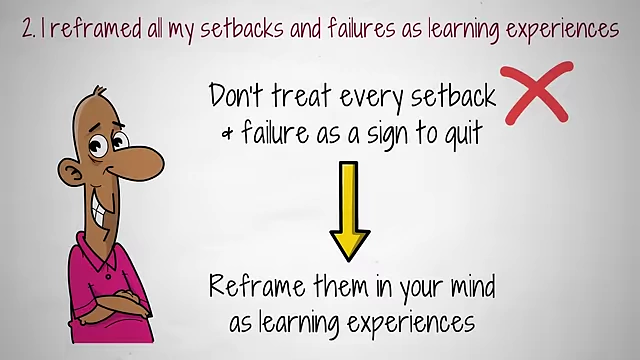
Reframing setbacks and failures as valuable learning experiences rather than reasons to quit. [ 01:08:15 ]
- Focus on Enjoying the Doing:
- Don't get so caught up in results that you forget to find joy in the actual process.
- Turn your goal into a game or a puzzle to enjoy the challenge, rather than solely focusing on the "prize."
- A positive experience during the work itself maintains motivation and prevents resentment.

Visualizing a goal as a solvable maze or puzzle to focus on enjoying the process rather than just the end result. [ 01:09:45 ]
- Celebrate Every Milestone (Even Tiny Ones!):
- Actively track and celebrate every small achievement or "win," no matter how insignificant it seems.
- This creates positivity and excitement, acting as fuel to keep momentum going.
- Also celebrate learning opportunities, acknowledging growth in knowledge and self-discipline.
- Sebastian Thrun: "Celebrate your failures as much as your successes... when your fear goes away, you can move the world."
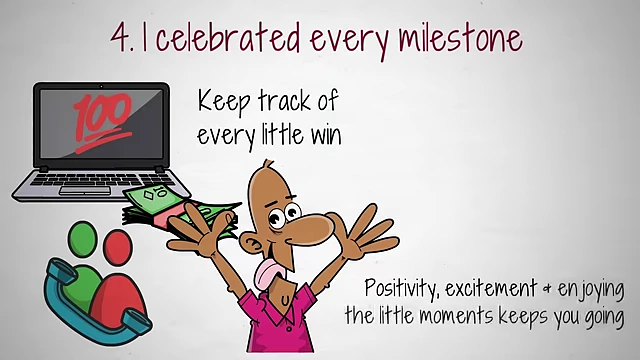
Actively tracking and celebrating every small achievement to create positivity and maintain momentum. [ 01:10:35 ]
- Set a Re-evaluation Date:
- Conclusion: Consistency Shapes Our Lives
- Consistent actions, not sporadic efforts, truly shape our lives (Tony Robbins).
- Initial efforts form an "iceberg" of underlying knowledge and skills that eventually break through.
- Focus on learning, growing, and enjoying the process, even when immediate results are absent, knowing that consistency will eventually yield success.
Part 10: How to Study for Exams: Evidence-Based tips [1:12:47]
Traditional study methods like re-reading are often ineffective. Evidence-based strategies such as active recall, spaced repetition, and interleaving, while sometimes feeling more difficult, lead to stronger, longer-lasting learning and improved exam performance.
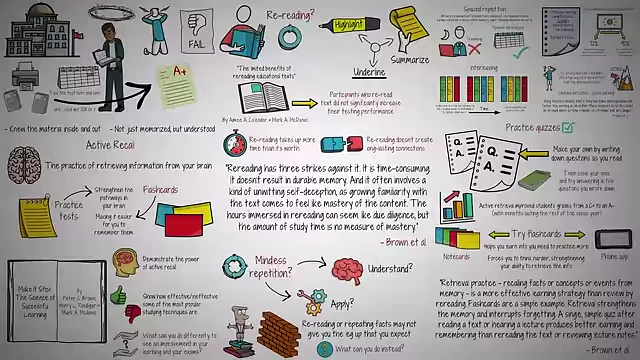
- Ineffective Study Techniques
- Re-reading, Highlighting, Underlining, Summarizing:
- Studies show these methods do not significantly improve testing performance.

Research showing that re-reading, highlighting, underlining, and summarizing do not significantly improve testing performance. [ 01:15:54 ] - They are time-consuming and create a false sense of mastery ("unwitting self-deception").

Quote from Brown et al. explaining that re-reading is time-consuming, doesn't build durable memory, and causes self-deception. [ 01:16:39 ] - They don't require active engagement, leading to poor memory retention.
- Studies show these methods do not significantly improve testing performance.
- Mindless Repetition:
- Simply repeating facts doesn't guarantee understanding or the ability to apply the information in different contexts.
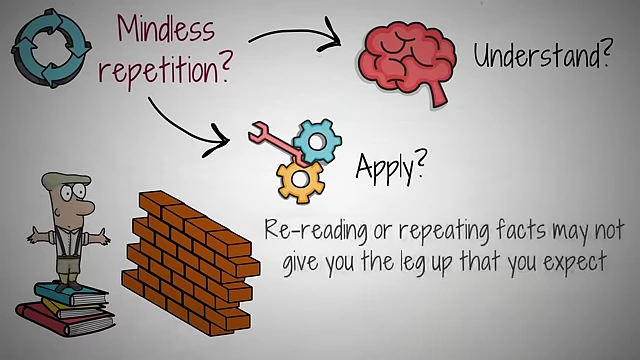
Mindless repetition does not guarantee understanding or the ability to apply information in different contexts. [ 01:17:04 ]
- Simply repeating facts doesn't guarantee understanding or the ability to apply the information in different contexts.
- Re-reading, Highlighting, Underlining, Summarizing:
- Effective, Evidence-Based Study Techniques
- 1. Active Recall (or Active Retrieval):
- Definition: The practice of retrieving information from memory. This strengthens neural pathways.
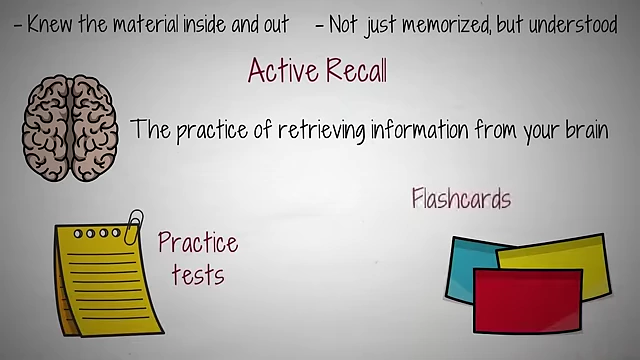
Active recall techniques like practice tests and flashcards strengthen neural pathways for better memory and retention. [ 01:14:24 ] 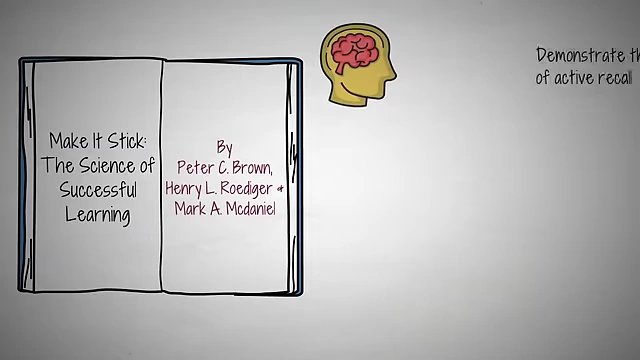
The book "Make It Stick: The Science of Successful Learning" by Peter C. Brown et al., cited for evidence-based study techniques. [ 01:14:46 ] - Methods:
- Practice Tests: The most effective method. Use quizzes provided by teachers or create your own questions while reading. Close the book and answer.
- Flashcards: Create digital or physical flashcards. This helps identify known vs. unknown information and forces deeper thinking.

Quote from Brown et al. on the effectiveness of retrieval practice for learning and memory. [ 01:17:25 ] 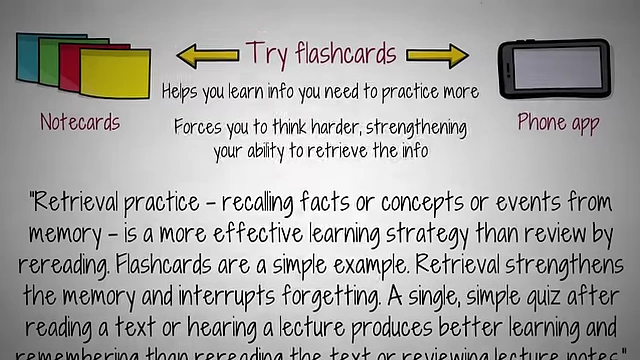
Using flashcards (physical or app-based) to practice active recall, identifying known vs. unknown information. [ 01:18:11 ]
- Benefits: Significantly improves learning and retention; studies show grades can improve from C+ to A-.
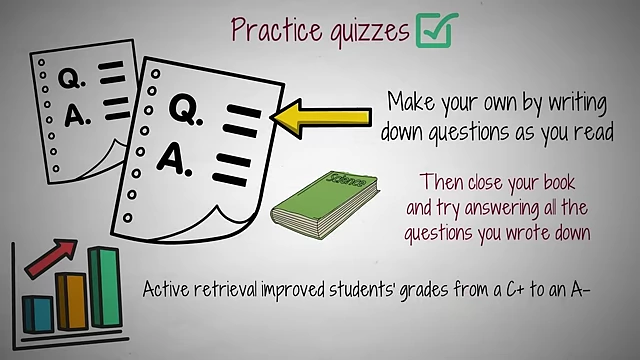
Creating and using practice quizzes for active retrieval, shown to improve student grades significantly. [ 01:18:54 ]
- Definition: The practice of retrieving information from memory. This strengthens neural pathways.
- 2. Spaced Repetition:
- Definition: Spreading out study sessions over time instead of "cramming."
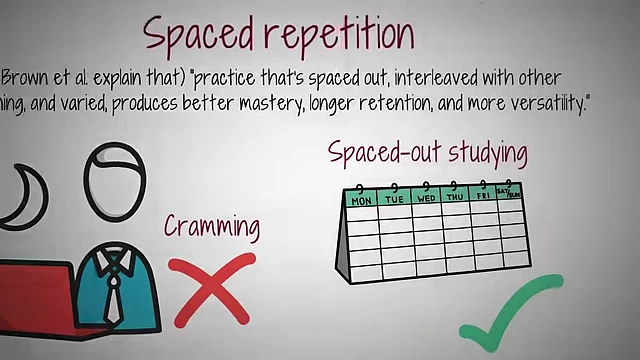
Spaced repetition, distributing study sessions over time, is more effective than cramming for better mastery and longer retention. [ 01:19:34 ] - Benefits: Produces better mastery, longer retention, and more versatility in applying knowledge.
- Evidence: Experiments show spacing is more effective than massing (cramming) for the majority of learners.
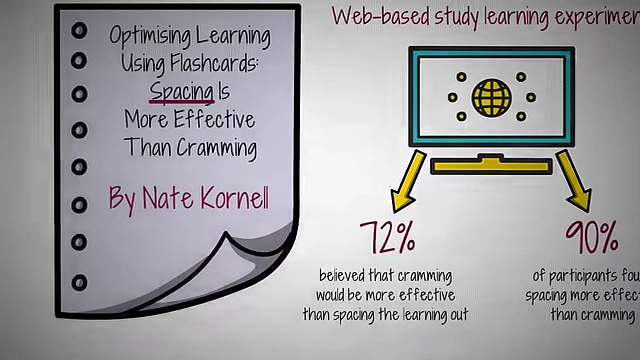
Results from Nate Kornell's study demonstrating that spacing learning is more effective than cramming for most participants. [ 01:20:06 ]
- Definition: Spreading out study sessions over time instead of "cramming."
- 3. Interleaving:
- Definition: Combining different topics or subjects together during a single study session, rather than blocking them separately.
- Benefits: While it may lead to slightly worse performance during study sessions, it results in higher performance on final tests due to better discrimination between concepts.
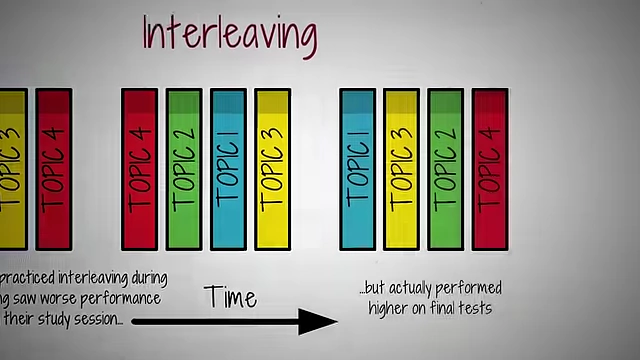
Interleaving, combining different topics during study, improves final test performance despite potentially harder initial learning. [ 01:20:31 ]
- 1. Active Recall (or Active Retrieval):
- Embrace Difficulties for Stronger Learning
- Counterintuitively, when learning feels harder and requires more effort, the information sticks better and lasts longer.
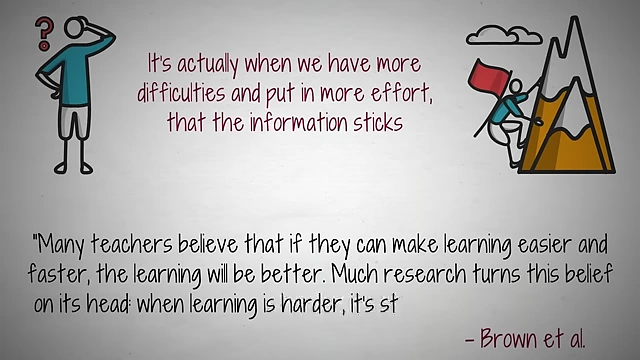
Quote from Brown et al.: "when learning is harder, it's stronger and lasts longer." [ 01:20:54 ] - View not getting an answer right as a sign that you are actively learning.
- A positive attitude, even when struggling with flashcards or quizzes, is key to maintaining study habits and achieving success.
- Counterintuitively, when learning feels harder and requires more effort, the information sticks better and lasts longer.
Part 11: How to Get Out of a Rut, Fast! [1:21:32]
Being in a rut, characterized by low energy, lack of motivation, and neglected responsibilities, is a common experience. Breaking free requires acknowledging dissatisfaction, understanding the role of dopamine, and taking deliberate, small actions to regain momentum.
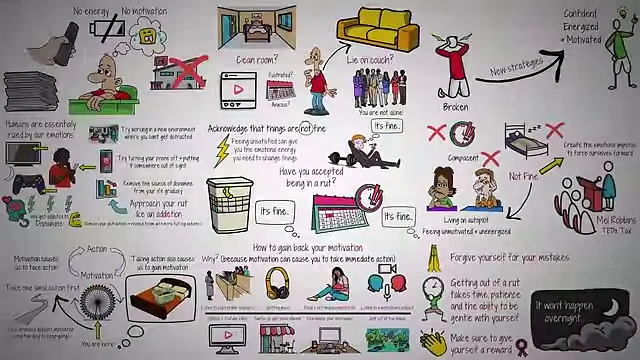
- Recognizing and Breaking the Rut
- A rut manifests as piled-up chores, unfinished work, skipped workouts, and excessive screen time (TV, TikTok, video games).
- It leads to a lack of energy and motivation, and a feeling of being "stuck."

Visual representation of being in a rut, characterized by low energy, no motivation, piled-up work, and excessive screen time. [ 01:21:54 ] - Many people experience ruts; it's not a sign of being "broken."
- 4 Tactics to Get Out of a Rut
- Realize You Are NOT Fine:
- Stop telling yourself "it's fine" (e.g., about dirty laundry, missed deadlines).
- Acknowledge dissatisfaction with your current state to create the emotional impetus needed for change. Complacency maintains the rut.
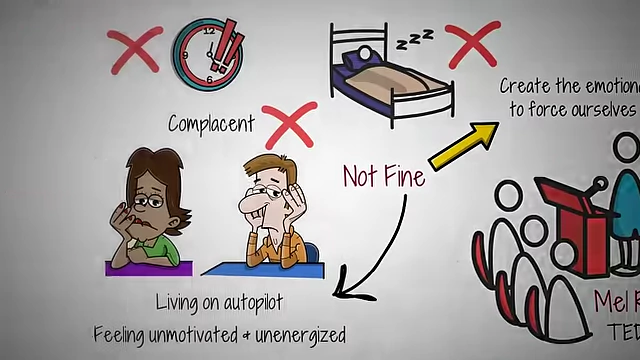
Acknowledging that you are "NOT fine" to create the emotional impetus needed to break free from a rut. [ 01:23:57 ] - Feeling unsatisfied can provide the necessary emotional energy to take action.
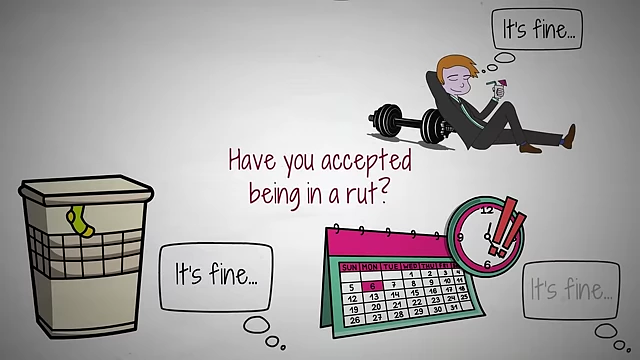
Illustrations depicting how subconsciously accepting a rut (e.g., dirty laundry, missed workouts) maintains it. [ 01:24:15 ]
- Understand Dopamine and Addiction:
- Activities like watching TV, scrolling on phones, or playing video games provide quick dopamine hits, leading to addiction.
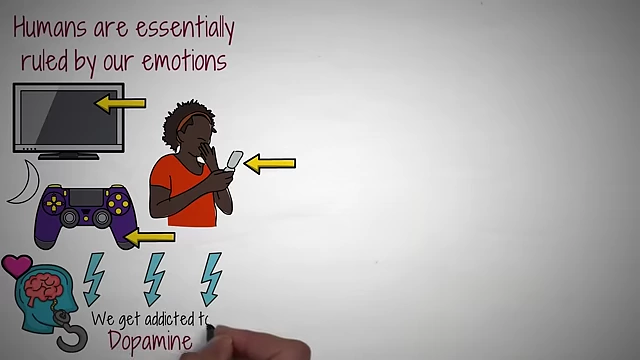
Visualizing how TV, phones, and video games provide quick dopamine hits, leading to addiction. [ 01:25:15 ] - This addiction makes it hard to quit and confront responsibilities.
- Approach your rut like an addiction: Gradually remove sources of instant dopamine (e.g., turn off phone, work in distraction-free environments like a library).
- Replace these distractions with more fulfilling activities.
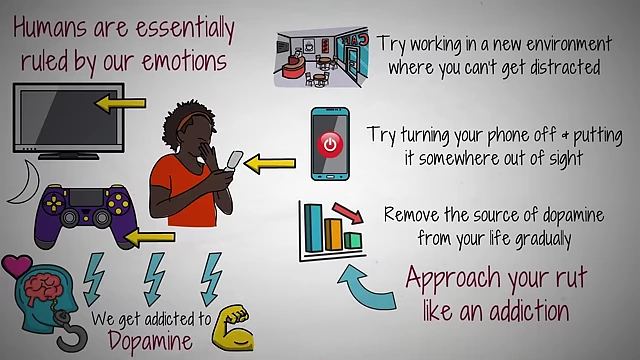
Understanding dopamine's role in addiction to distractions and strategies to gradually remove these sources and replace them with fulfilling activities. [ 01:25:43 ]
- Activities like watching TV, scrolling on phones, or playing video games provide quick dopamine hits, leading to addiction.
- Motivation Follows Action:
- Don't wait for motivation to appear before taking action. The relationship between motivation and action is cyclical.
- If you're stuck, take one small action first (e.g., fold one piece of laundry, open a book).
- This small action often kickstarts motivation, leading to more action.
- Reward yourself for completing the small action to generate self-induced dopamine, keeping the cycle moving.
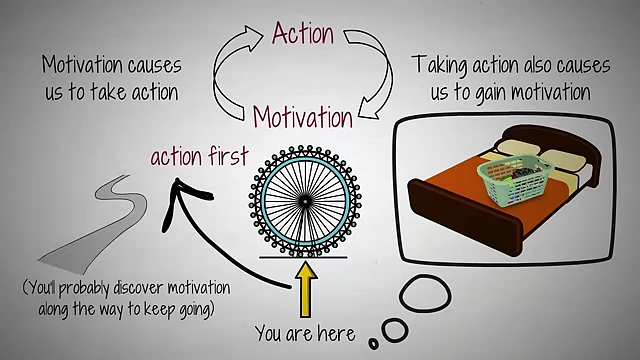
The cyclical relationship where motivation follows action, encouraging small initial steps to kickstart momentum and motivation. [ 01:26:33 ]
- Proactively Gain Motivation (If Needed):
- If you need a preliminary boost, seek out inspirational content: listen to speakers, uplifting music, read self-improvement books, or watch motivational videos.
- Change your environment: switch up your workspace, reorganize, or get out of the house to combat staleness.
- The goal is to improve your emotional state just enough to prompt that initial action.

Strategies to proactively gain motivation, such as consuming inspirational content or changing environments. [ 01:27:33 ]
- Realize You Are NOT Fine:
- Patience and Self-Compassion:
- Getting out of a rut doesn't happen overnight; it requires time, patience, and self-gentleness.
- Forgive your mistakes and don't expect immediate 110% effort.
- Celebrate every small task completed to reinforce positive feelings and build momentum. Eventually, you'll rediscover productivity and energy.
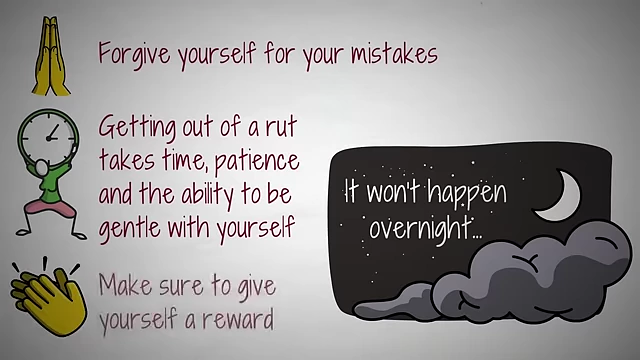
Emphasizing patience, self-compassion, and celebrating small accomplishments when getting out of a rut. [ 01:28:13 ]
Part 12: How To Plan Your Week Effectively [1:28:44]
Effective weekly planning, inspired by Ryder Carroll's Bullet Journal Method, involves structured reflection and task management to combat decision fatigue and maximize productivity.
- The Bullet Journal Method & Effective Planning
- Ryder Carroll's Bullet Journal is a pen-and-notebook system designed to "track the past, order the present, and design the future."
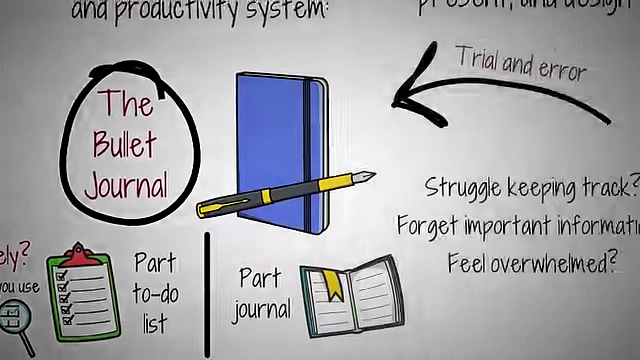
Introduction to the Bullet Journal Method by Ryder Carroll as a system for organization and productivity. [ 01:30:11 ] - Its principles are applicable to any productivity system (digital or analog).
- Ryder Carroll's Bullet Journal is a pen-and-notebook system designed to "track the past, order the present, and design the future."
- 5 Tips for Effective Weekly Planning
- Take a Mental Inventory:
- Before the week starts (e.g., on Friday), write down everything you want to accomplish.
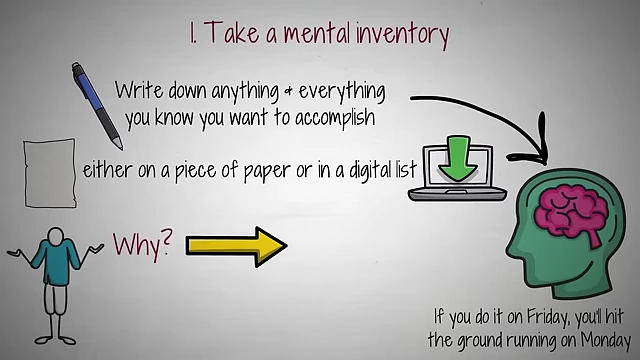
Taking a mental inventory by writing down all tasks to combat decision fatigue and prepare for the week. [ 01:30:53 ] - This externalizes tasks from your mind, combating "decision fatigue" (burnout from too many choices).
- Review each task for importance (vital? necessary?) and eliminate those that don't truly matter.
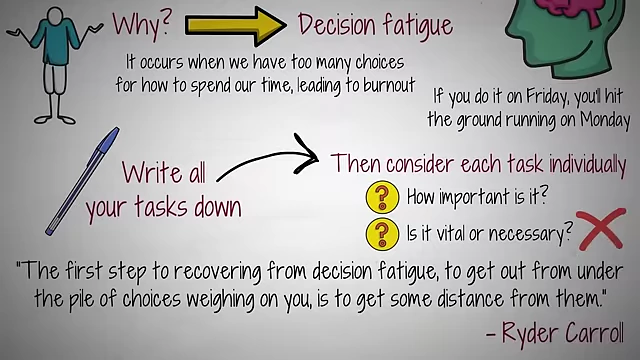
Evaluating the importance of each task in a mental inventory to prioritize and eliminate non-essential items. [ 01:31:46 ]
- Before the week starts (e.g., on Friday), write down everything you want to accomplish.
- Time Blocking:
- Assign specific time slots for each task, transforming a generic to-do list into a structured schedule.
- Example: "10 AM - 11 AM: Draft essay" instead of "Write Essay."
- This method adds structure and urgency, helping you focus and complete tasks within allocated time.
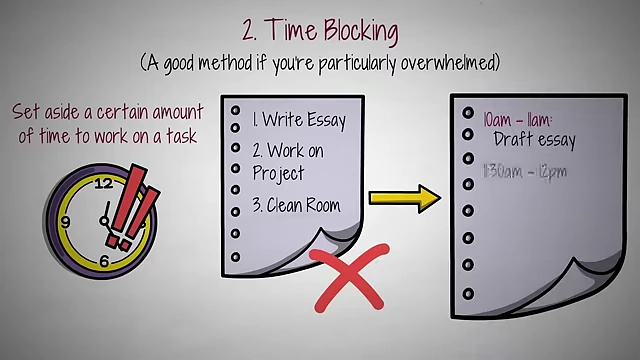
Illustrating time blocking by transforming a generic to-do list into a structured schedule with assigned time slots. [ 01:32:33 ]
- Morning Reflection:
- Dedicate 5-15 minutes each morning to review your daily tasks.
- Reflect on "why" you are doing each task and visualize its completion to boost motivation.
- This calms your mind and prepares you for focused work.

Practicing morning reflection to review daily tasks, reflect on "why," and visualize completion for motivation. [ 01:33:23 ]
- Evening Reflection:
- At the end of the day, review completed tasks and reflect on their importance and priority.
- Mark tasks as done and migrate uncompleted tasks to another day.
- This provides a sense of completion for the day and clarifies priorities for future planning.
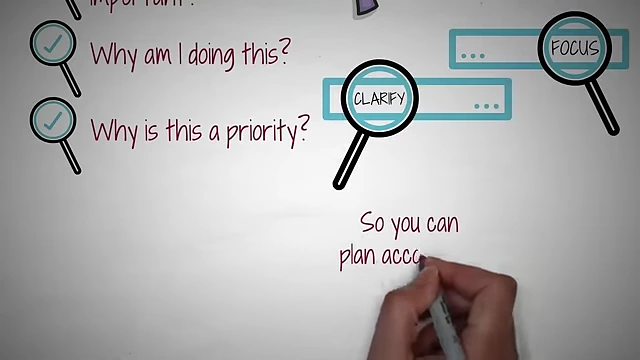
Evening reflection to review completed tasks, clarify priorities, and achieve mental closure for the day. [ 01:34:17 ]
- Celebrate!:
- Acknowledge and celebrate every completed task, no matter how small.
- This creates a dopamine release, reinforcing positive behavior and training your brain to seek out and enjoy productive moments.
- Small gestures (high-five, fist pump) for minor tasks, larger celebrations for major achievements.

Celebrating every completed task, no matter how small, to create a dopamine release and reinforce positive behavior. [ 01:35:23 ]
- Take a Mental Inventory:
- Choosing the Right System
- The most crucial aspect of any productivity system is that it works for you.
- Avoid systems that are too complicated, overwhelming, or hinder your ability to work.
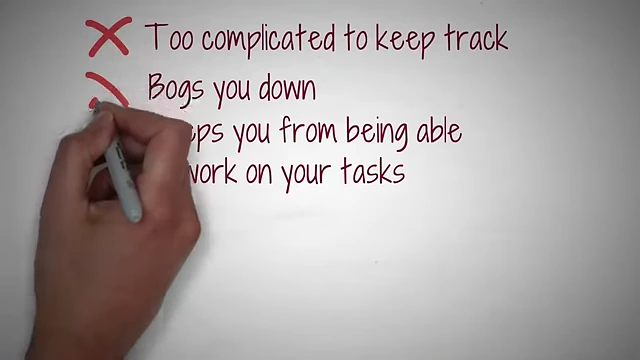
Criteria for an ineffective productivity system: too complicated, bogs you down, or hinders work. [ 01:36:15 ] - Experiment with tips and tools, keeping what helps and discarding what creates friction or frustration.