Elon Musk's Lawsuit Against Ad Cartel Exposes Global Efforts to Suppress Right-Wing Media and Influence Brazilian Judiciary
- The video explores the unseen forces allegedly influencing Brazilian Supreme Court justices Gilmar Mendes and Alexandre de Moraes, particularly their resistance to right-wing political shifts.
- It links this to Elon Musk's 2022 acquisition of Twitter (now X) and the subsequent boycott initiated by GARM (Global Alliance for Responsible Media), an organization of major advertising agencies.

News headline reporting on the ad cartel's collusion with foreign governments against Elon Musk's Twitter. [ 00:00:00 ] - GARM, composed of powerful brands like Procter & Gamble and Unilever, aimed to stop advertising on X, claiming the platform no longer had "fact-checking" and was not left-leaning.
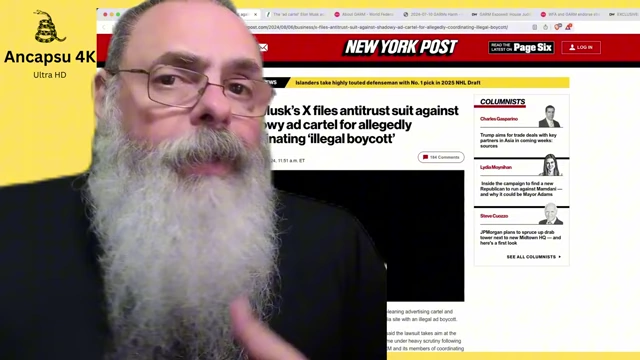
New York Post article detailing Elon Musk's antitrust lawsuit against the "woke" ad cartel. [ 00:04:40 ] - Musk retaliated with a significant antitrust lawsuit against these entities, including GARM's parent, the World Federation of Advertisers (WFA).
- Legal discovery in the US lawsuit exposed emails revealing a coordinated effort by these advertising cartels to collude with foreign governments, notably the European Union, to enact legislation against and restrict right-wing media outlets and platforms like X.
- The U.S. House of Representatives Judiciary Committee is concurrently investigating these collusive practices.
- The speaker suggests that the same wealthy and powerful "aristocratic" groups influencing the EU and boycotting X are likely providing the financial and political support for Brazilian officials like Alexandre de Moraes to maintain their current stance and defy opposition.
- The Federal Trade Commission (FTC) has also intervened, securing agreements for political neutrality from some of these advertising groups.
- Ultimately, the video asserts that while legal actions accelerate exposure, the brands aligning with a leftist agenda would face inevitable financial losses by alienating the broader population.
The Brazilian Political Landscape and the STF's Resistance [0:00]
The video seeks to identify the entities influencing Brazilian Supreme Court (STF) justices, specifically Alexandre de Moraes and Gilmar Mendes, and their perceived opposition to the right-wing political movement in Brazil.
- The Puzzle of STF's Power: [0:04]
- Despite a clear shift of the Brazilian population towards the right, the STF continues to exert significant power and resistance against this political direction.
- This suggests powerful, undisclosed backing, potentially strong enough to even risk confrontation with international figures like Donald Trump. [0:44]
The Genesis of the Conflict: Elon Musk Acquires Twitter (X) and the GARM Boycott [1:15]
The core of the investigation began outside Brazil, stemming from Elon Musk's purchase of Twitter (renamed X) and the subsequent actions of a global advertising alliance.
- GARM's Formation and Objectives: [1:19]
- A group named GARM (Global Alliance for Responsible Media) was formed, uniting major global advertising agencies.
- Their stated aim was to boycott media outlets deemed "inappropriate," which primarily targeted right-wing platforms and content. [1:37]
- The Boycott Against X: [3:27]
- When Elon Musk acquired Twitter in 2022, left-leaning individuals and organizations became concerned, as Twitter was historically a dominant platform for news and opinion-makers, largely controlled by the left. [3:31]
- Many major brands and advertising agencies ceased advertising on X, citing concerns about "fact-checking" and X's shift away from its previous left-wing bias. [4:28]
A New York Post article stating that Elon Musk's X filed an antitrust suit against a "woke" ad cartel for allegedly coordinating an "illegal boycott." [ 00:04:40 ]
Elon Musk's Legal Counterattack and the Exposure of the Ad Cartel [4:47]
Elon Musk, a figure with significant financial resources, did not succumb to the boycott, instead launching a formidable legal challenge.
- Antitrust Lawsuit: [4:50]
- GARM's Demise: [8:40]
- Faced with Musk's aggressive legal action, GARM eventually dissolved, acknowledging the strength of X's lawsuit. [9:40]
- The legal battle escalated to target the World Federation of Advertisers (WFA), which was the overarching entity behind GARM. [10:01]

A news article summarizing how the advertising industry cartel, featuring images of Jim Jordan and Elon Musk, was involved in censoring speech. [ 00:15:39 ]
Unveiling the Global Advertising Oligopoly and Their Agenda [10:51]
The information obtained through Musk's lawsuit revealed the true extent and nature of the advertising cartel's operations and political motivations.
- Key Players in the Cartel: [10:53]
- The primary brands involved included Procter & Gamble, Mars, Unilever, and Diageo, often operating through a complex network of sub-companies. [11:02]
- Major marketing and advertising agencies, forming a significant "advertising oligopoly," were also central, including GroupM, WPP, Omnicom, Publicis Groupe, IPG, Dentsu, and Havas. [11:22]
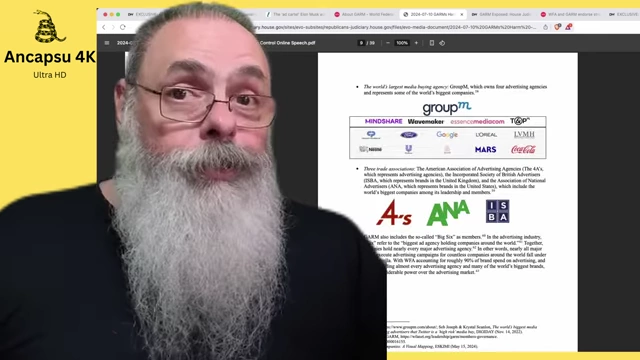
A detailed excerpt from a Judiciary Committee report listing major advertising agencies and brands, including GroupM, Unilever, Nestlé, and Coca-Cola. [ 00:10:48 ]
- Tactics of Suppression: [14:18]
- The cartel's scheme involved blackmailing both brands and media companies to force a left-leaning political alignment.
- They blacklisted right-wing publications like The Daily Wire, categorizing them as sources of "conspiracy theories," and threatened newspapers with loss of advertising if they didn't comply with their agenda. [14:27]
- The exposed emails showed an overtly leftist agenda, including support for movements like Black Lives Matter. [14:29]

An excerpt from the report indicating that the Daily Wire was included on a "high-risk global exclusion list" categorized as "conspiracy theories." [ 00:15:27 ]
The Alarming Connection: Collusion with Foreign Governments [16:27]
A critical revelation from the discovery process was the direct collusion between the advertising cartel and foreign governments.
- Influence on the European Union: [16:27]
- Emails explicitly showed communications with officials in the European Union, pressuring them to pass stringent "fake news" laws. [16:29]
- This pressure led to the EU threatening to ban or block Twitter if it did not conform to GARM's demands. [17:38]
- The World Federation of Advertisers (WFA) and GARM openly endorsed the strengthening of the EU Code of Practice on Disinformation. [19:21]

An email excerpt from the report indicating that the European Commission was working to push Twitter on issues requested by GARM. [ 00:17:27 ] 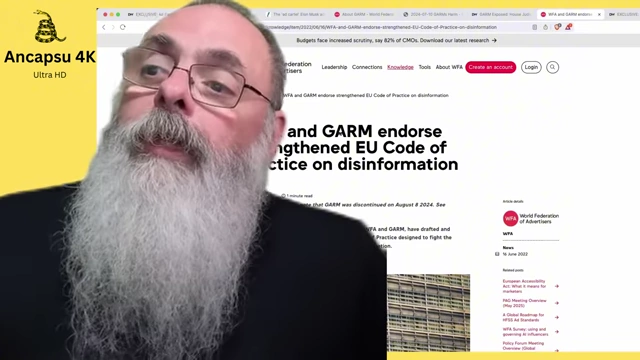
A webpage headline announcing that the WFA and GARM endorse the strengthened EU Code of Practice on disinformation. [ 00:19:22 ]
- Moraes's International Backing: [17:49]
- Given the cartel's success in influencing the European Union, the speaker argues it is highly probable they are providing substantial financial and political support to Alexandre de Moraes.
- This backing would explain Moraes's perceived defiance even in the face of potential sanctions from figures like Donald Trump. [18:19]
- The U.S. House of Representatives Judiciary Committee, which is investigating the global ad cartel, is also the same body investigating Alexandre de Moraes's actions in Brazil, reinforcing the alleged connection. [10:10]
The Role of US Authorities and the Inevitable Market Correction [19:34]
Beyond Musk's lawsuit, US regulatory bodies have also stepped in to address the cartel's actions.
- FTC Intervention: [19:34]
- The US Federal Trade Commission (FTC) secured a landmark agreement to end political collusion in the advertising industry. [19:37]
- The FTC demanded political neutrality from major advertising groups like OMI Group and IPG. [19:57]
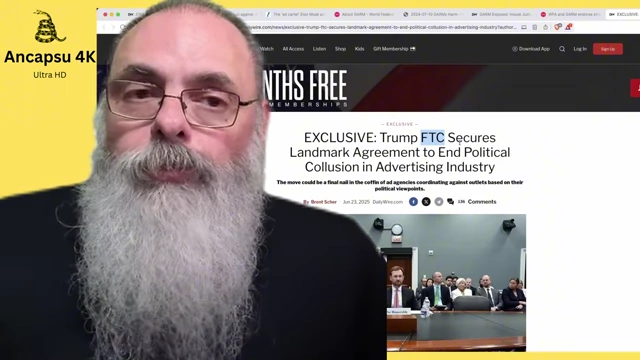
A news article stating that the Trump FTC secured a landmark agreement to end political collusion in the advertising industry. [ 00:19:37 ]
- Market Dynamics vs. Political Agendas: [20:06]
- The speaker asserts that while government intervention (like the FTC's) accelerates the process, it is ultimately inevitable that brands pursuing a leftist political agenda will suffer financially.
- By alienating a significant portion of the population, these brands lose market share to competitors, making their politically-driven actions unsustainable in the long run. [20:23]